See all recent commentary
(simplified and organized)
See recent popular posts
Categories
Merry Christmas!

See all recent commentary
(simplified and organized)
See recent popular posts

If you live in Maine, you may now grow your own food. The right to do so has been safeguarded in the state constitution.
If you have the right to life and to sustain your life, surely you have a right to farm. As we all know, though, governments regularly find excuses to interfere with all kinds of peaceful activities.
So this past November, Maine voters passed a constitutional amendment authored by Rep. Billy Bob Faulkingham (whose energetic campaigns for freedom have previously caught Common Sense notice) and proposed by the legislature.
Maine’s Right to Food Amendment makes clear that “All individuals have a natural, inherent and unalienable . . . right to save and exchange seeds and the right to grow, raise, harvest, produce and consume . . . as long as an individual does not commit trespassing, theft, poaching or other abuses of private property rights public lands or natural resources in the harvesting, production or acquisition of food.” (So there’s no California-style de facto “right” to loot.)
Foes of the amendment worry that it will enable people to bypass regulations.
Let’s hope so.
Don’t we want the new law to ban governments in Maine from banning agriculture for the sake of “esthetics,” protecting Big Milk, or any other rationalization for foiling farming on a person’s own property?
And for the idea to spread to the other states, where far too often the scales of justice don’t properly consider the citizen’s right to produce food against the bureaucrat’s regulations frustrating same.
This is Common Sense. I’m Paul Jacob.
See all recent commentary
(simplified and organized)
See recent popular posts
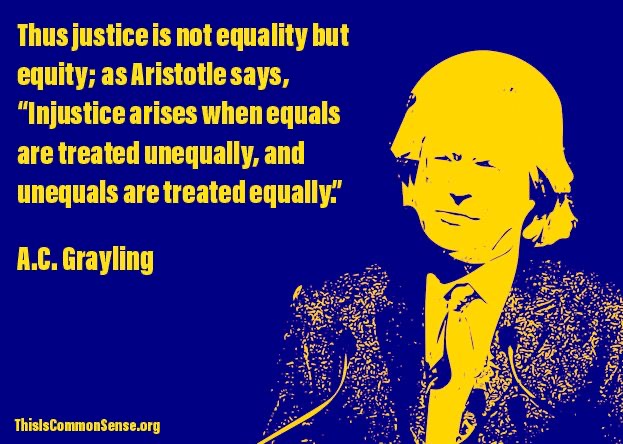
Thus justice is not equality but equity; as Aristotle says, “Injustice arises when equals are treated unequally, and unequals are treated equally.”
A.C. Grayling, “Protest,” Life, Sex, and Ideas (2002).
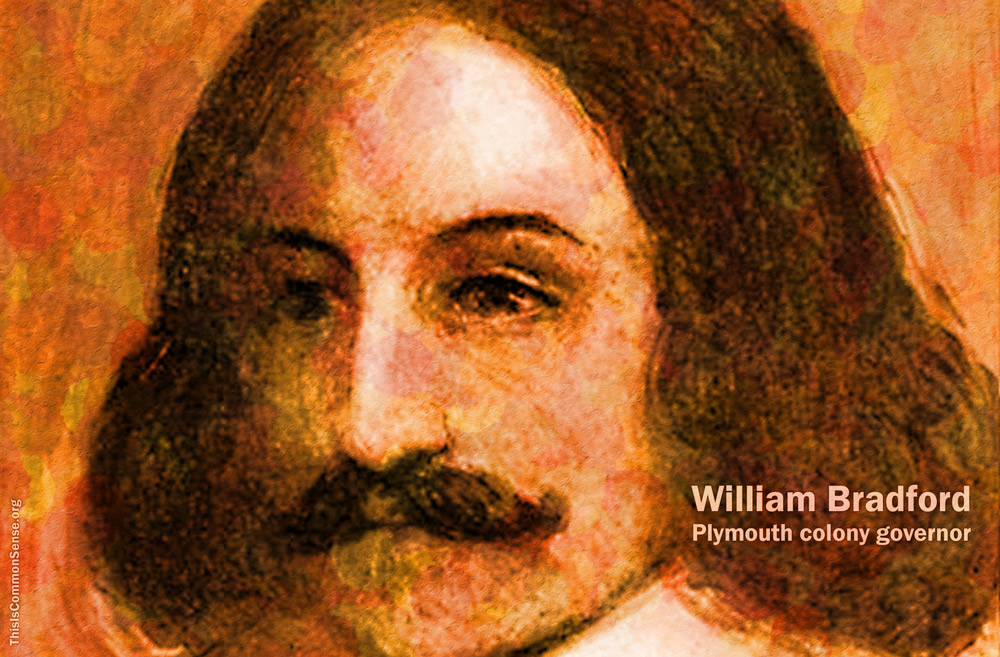
The times may not seem to indicate jubilations and thanksgivings, but any time is a good time to practice gratitude — to those who deserve it, and on a more basic level, too — so, regardless of the pandemic, the misguided responses, social unrest, racial mistrust, the threat of totalitarianism and war, remember: things could be worse.
At Thanksgiving, especially, it might do us good to consult William Bradford’s account* of the History of “Plimoth Plantation,” a document that recounts how his fellow Pilgrim settlers established, endured, barely survived, recovered, and eventually thrived in Massachusetts.
By the spring of 1623 — a little over three years after first settlement in Plymouth — things were going badly. Bradford writes of the tragic situation:
[M]any sould away their cloathes and bed coverings; others (so base were they) became servants to [the] Indeans, and would cutt them woode & fetch them water, for a cap full of corne; others fell to plaine stealing, both night & day, from [the] Indeans, of which they greevosly complained. In [the] end, they came to that misery, that some starved & dyed with could & hunger.
The problem? The colony had been engaging in something very like communism.
The experience that was had in this comone course and condition, tried sundrie years, and that amongst godly and sober men, may well evince the vanitie of that conceite of Platos & other ancients, applauded by some of later times; — that [the] taking away of propertie, and bringing in comunitie into a comone wealth, would make them happy and florishing; as if they were wiser then God.
Bradford relates the consequences of common property:
For this comunitie (so farr as it was) was found to breed much confusion & discontent, and retard much imploymet that would have been to their benefite and comforte. For [the] yong-men that were most able and fitte for labour & service did repine that they should spend their time & streingth to worke for other mens wives and children, with out any recompence. The strong, or man of parts, had no more in devission of victails & cloaths, then he that was weake and not able to doe a quarter [the] other could; this was thought injuestice. The aged and graver men to be ranked and equalised in labours, and victails, cloaths, &c., with [the] meaner & yonger sorte, thought it some indignite & disrespect unto them. And for mens wives to be commanded to doe servise for other men, as dresing their meate, washing their cloaths, &c., they deemd it a kind of slaverie, neither could many husbands well brooke it.
Yes, the s-word: Slavery. Common property was mutual slavery.
The solution? The plan for society that Bradford attributed to God. He brooked no pleading that common property didn’t work because of corruption, sin. As he put it, “seeing all men have this corruption in them, God in his wisdome saw another course fiter for them.” The course? I’ll use a word of coined by Robert Poole, one of the founders of Reason magazine: Privatization.
Basically, what the Pilgrims privatized was land, and the fruits thereof, assigning to
every family a parcell of land, according to the proportion of their number for that end, only for present use (but made no devission for inheritance), and ranged all boys & youth under some familie. This had very good success; for it made all hands very industrious, so as much more corne was planted then other waise would have bene by any means [the] Govror any other could use, and saved him a great deall of trouble, and gave farr better contente. The women now wente willingly into [the] feild, and tooke their litle-ons with them to set corne, which before would aledg weaknes, and inabilitie; whom to have compelled would have bene thought great tiranie and oppression.
Thus began the years of bounty in Massachusetts. There’s much more in Bradford’s account worth reading, including the increasingly tragic relations with the native Americans. And, indeed, one learns from reading such first-hand accounts how imperfect a creature is man.
But it is obvious that some systems of property and governance work better than others, and, on the day that our government has set forth as a day of Thanksgiving, it is worth being thankful for living in a land that has upheld — to at least some degree — the system of private property that America’s Pilgrim’s learned to see as God’s “fitter course” for corruptible man.
This is Common Sense. I’m Paul Jacob.
* This episode of Common Sense is adapted from this site’s 2011 Thanksgiving message.
See all recent commentary
(simplified and organized)
See recent popular posts
On November 16, 1532, Francisco Pizarro and his men captured Inca Emperor Atahualpa at the Battle of Cajamarca.
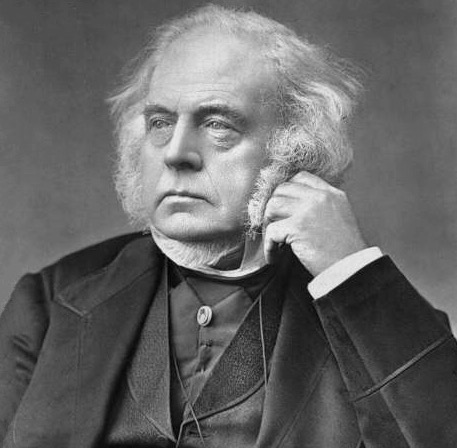
In 1811 on this date, John Bright (pictured above), English academic and politician, Chancellor of the Duchy of Lancaster, was born. Bright (d. 1889), famously worked with Richard Cobden against the Corn Laws (repealed in 1846) as well as for the Cobden–Chevalier Treaty of 1860, which ushered in freer trade and closer interdependence between Britain and France.

The secessionists won.
Last year, I reported on the seemingly quixotic attempt by rural Oregonians to divorce themselves, politically, from the cosmopolitan woke-crazies in Portland, Salem and Eugene by voting via initiative, county by county, to leave to form a “Greater Idaho” with the neighboring state. Well, those secesh ballots were cast on the 18th, and voters in Malheur, Sherman, Grant, Baker, and Lake counties “approved various measures that require county officials to take steps to look into moving the Idaho border west to incorporate the counties.”
The Epoch Times story, from which I learned the news, is oddly titled “Oregon Counties Vote to Secede Into Idaho.”
Well, one doesn’t secede into anything, one secedes from.
The plan is, after secession, to accede into Idaho.
The opposite concept of secession being accession.
Disgruntled rural Oregonians are begging their governments to allow a double maneuver: secede-then-accede.
The secessionists won the vote, but what happens next? The idea that the Democratic-controlled state government in Salem would allow this is a stretch. And though Idaho’s Republican governor hasn’t pooh-poohed the idea, no guarantee there, either. Plus, the deal would take congressional approval.
Still, the secede-accede strategy makes sense — political bodies are less kludgy if made up of somewhat like-minded people, not people who cannot stand each others’ guts. The sad truth of government today is that the malign intent of many is not “Divide and Conquer” but “Lump Us All Together and Glory in Making Our Opponents Pay and Pay and Pay for What They Hate.”
Arguably, this is driving us crazy.
And some to secession . . . and into new states.
This is Common Sense. I’m Paul Jacob.
See all recent commentary
(simplified and organized)
See recent popular posts

Californian voters have largely reversed an assault on “gig” workers in that state by passing Proposition 22.
Prop 22 is a response to Assembly Bill 5, enacted in California in 2019. The idea was to reclassify many freelancers so that companies could no longer treat them as independent contractors. Instead, to keep giving them work, companies would have to convert erstwhile freelancers to regular employees.
Doing so would mean paying additional costs. Instead, many companies simply stopped working with California-based freelancers. Freelancers of all ideological stripes protested the new law.
Rideshare firms Uber and Lyft were a major target of the legislation. Cabbies who work with them are contractors, not employees. Because of AB5, Uber and Lyft have been on the verge of leaving California — meaning a “victory” only for unions and others who hate market competition.
Now these firms, and many freelancers, can apparently keep operating in the state.
Mission accomplished?
Not so fast. A national version of AB5 sits in Congress, lying in wait. It has been endorsed by House Speaker Nancy Pelosi, 215 Democratic co-sponsors, and Joe Biden, who may or may not be the next president of these not-so-United States. (Recounts are being conducted and allegations of election fraud are being investigated.)
If we end up with a President Biden, he may well push for a national version of AB5. Especially if the Democrats get at least 50 U.S. Senators after runoffs in Georgia are decided.
Stay vigilant. Protect our right to work.
This is Common Sense. I’m Paul Jacob.
See all recent commentary
(simplified and organized)
See recent popular posts

Paul Jacob about why Joe waits, China stalks, the WHO walks back, and more:
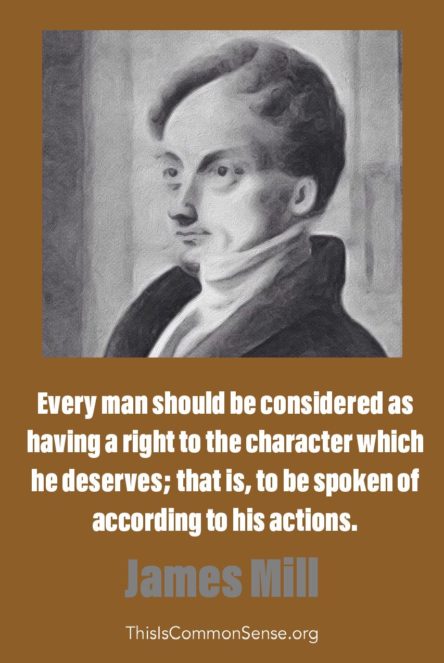
Every man should be considered as having a right to the character which he deserves; that is, to be spoken of according to his actions.