On December 23, 2007, an agreement was reached for the Kingdom of Nepal to be abolished and the country to become a federal republic with the Prime Minister becoming head of state.
Categories
Kingdom’s End
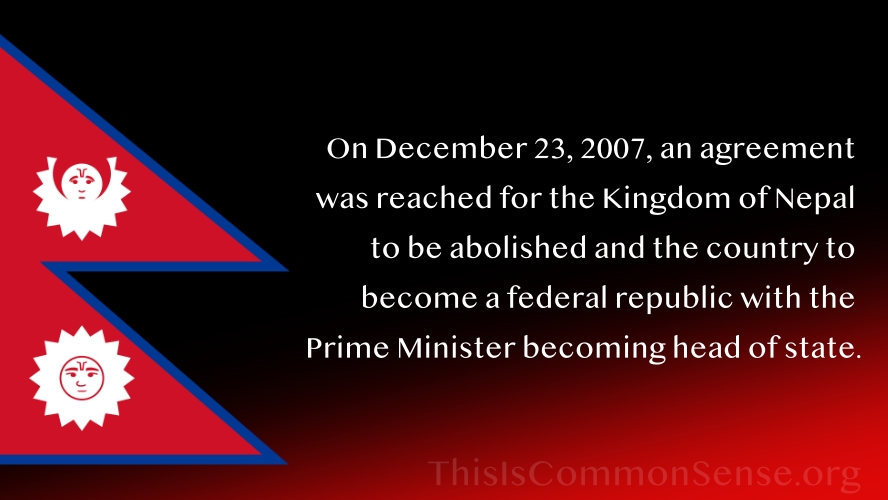
On December 23, 2007, an agreement was reached for the Kingdom of Nepal to be abolished and the country to become a federal republic with the Prime Minister becoming head of state.
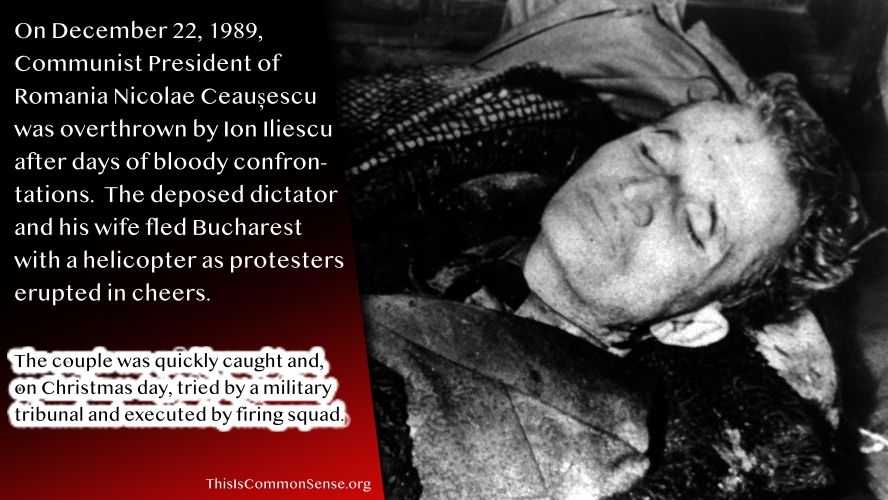
On December 22, 1989, Communist President of Romania Nicolae Ceaușescu was overthrown by Ion Iliescu after days of bloody confrontations. The deposed dictator and his wife fled Bucharest with a helicopter as protesters erupted in cheers.
The couple was quickly caught and, on Christmas day, tried by a military tribunal and executed by firing squad.
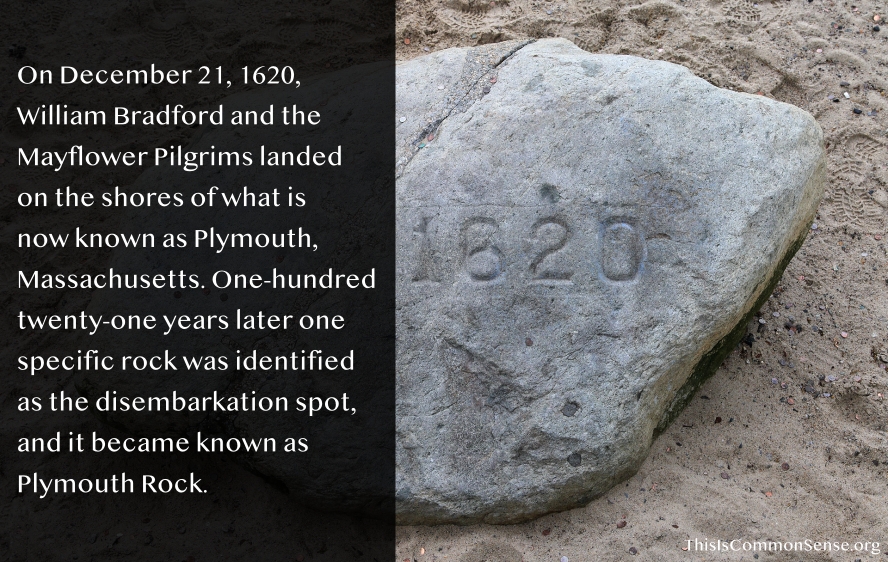
On December 21, 1620, William Bradford and the Mayflower Pilgrims landed on the shores of what is now known as Plymouth, Massachusetts. One-hundred twenty-one years later one specific rock was identified as the disembarkation spot, and it became known as Plymouth Rock.
American settlers in Nacogdoches, Mexican Texas, declared their independence on December 21, 1826, starting the Fredonian Rebellion.
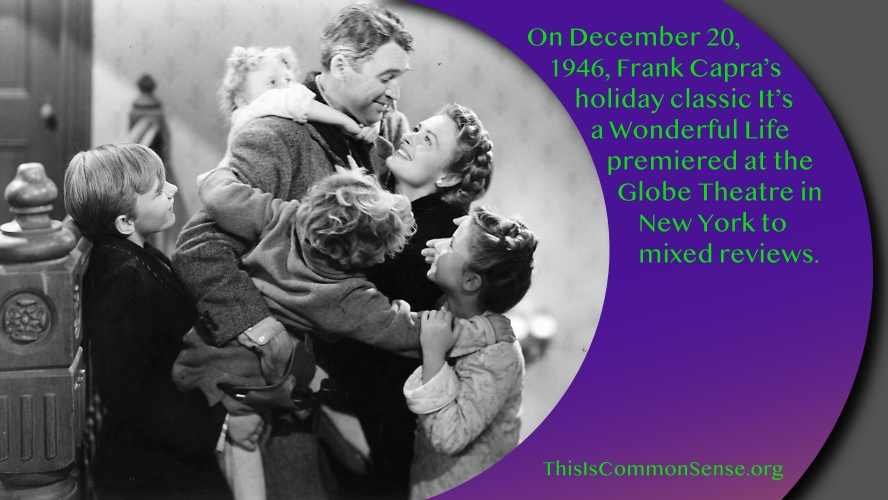
On December 20, 1946, Frank Capra’s holiday classic It’s a Wonderful Life premiered at the Globe Theatre in New York to mixed reviews. It has since become not merely a cult classic, but an almost universally beloved film.
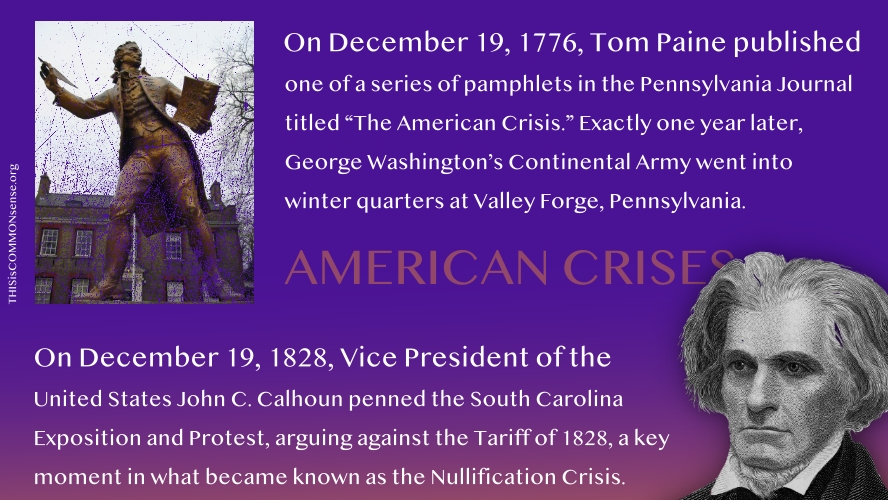
On December 19, 1776, Tom Paine published one of a series of pamphlets in the Pennsylvania Journal titled The American Crisis. Exactly one year later, George Washington’s Continental Army went into winter quarters at Valley Forge, Pennsylvania.
On December 19, 1828, Vice President of the United States John C. Calhoun penned the South Carolina Exposition and Protest, arguing against the Tariff of 1828, a key moment in what became known as the Nullification Crisis.
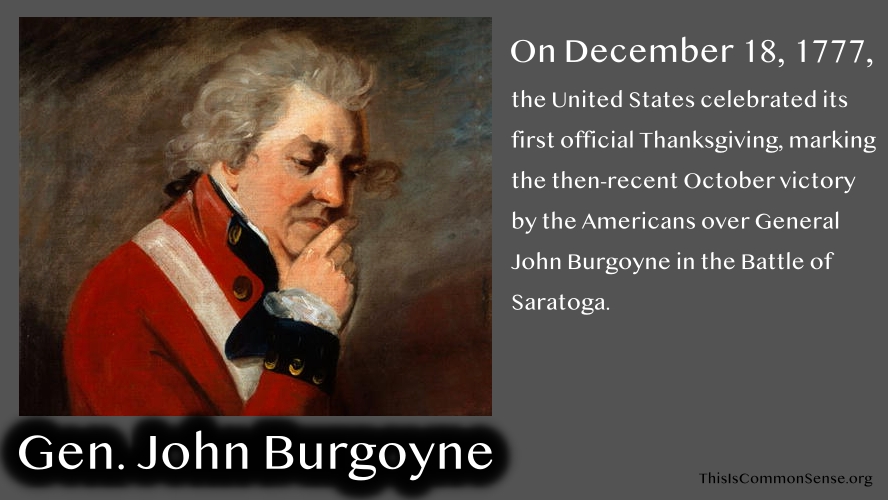
On December 18, 1777, the United States celebrated its first official Thanksgiving, marking the then-recent October victory by the Americans over General John Burgoyne in the Battle of Saratoga.
On December 17, 1777, France formally recognized the United States of America.
The 17th of December, 1819, was the day Simon Bolivar declared the independence of the Republic of Gran Colombia in Angostura.
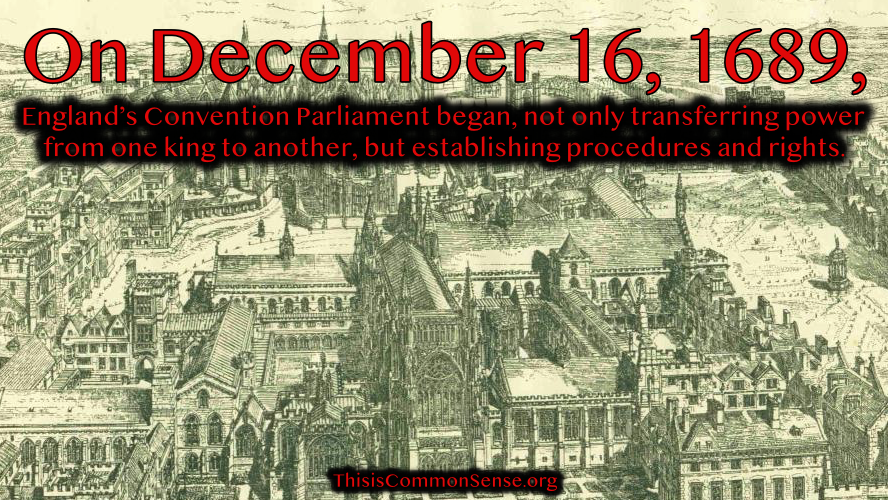
On December 16, 1689, England’s Convention Parliament began, not only transferring power from one king to another, but establishing procedures and rights.
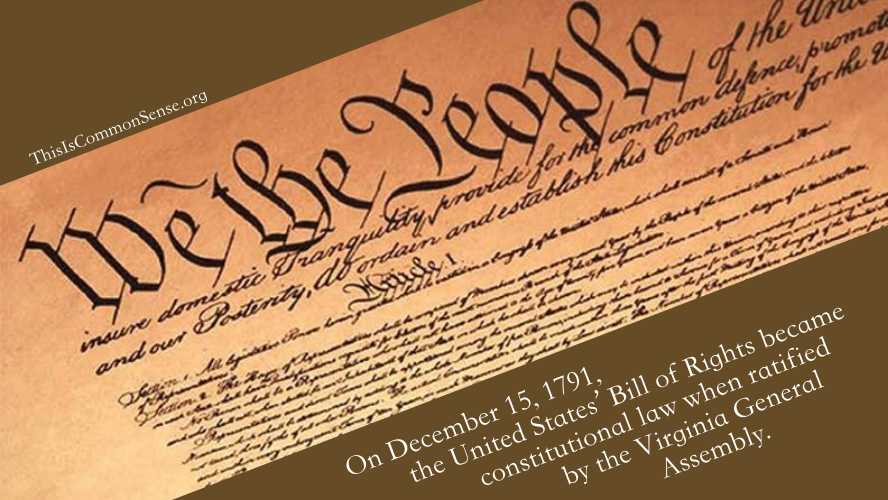
On December 15, 1791, the United States’ Bill of Rights became constitutional law when ratified by the Virginia General Assembly.
On December 15 in 1933, the Twenty-first Amendment to the United States Constitution officially became effective, repealing the Eighteenth Amendment that had, by enabling the Volstead Act, prohibited the sale, manufacture, and transportation of alcohol for any other than medical and industrial uses.
December 15 birthdays include that of Pehr Evind Svinhufvud af Qvalstad, 1861, first Head of State of independent Finland, serving in this capacity first as leader of the Senate and then as Protector, or Regent. In 1930 he became Prime Minister, and in 1931 was elected President, leaving office in 1937.
During the Civil War of 1918, his anti-socialist refugee government, Valkoiset, or “Whites,” opposed the “Reds,” a Social Democrat Party faction, for control of the government as it transitioned from Russian rule as a Grand Duchy, to independent status.
He died in 1944.
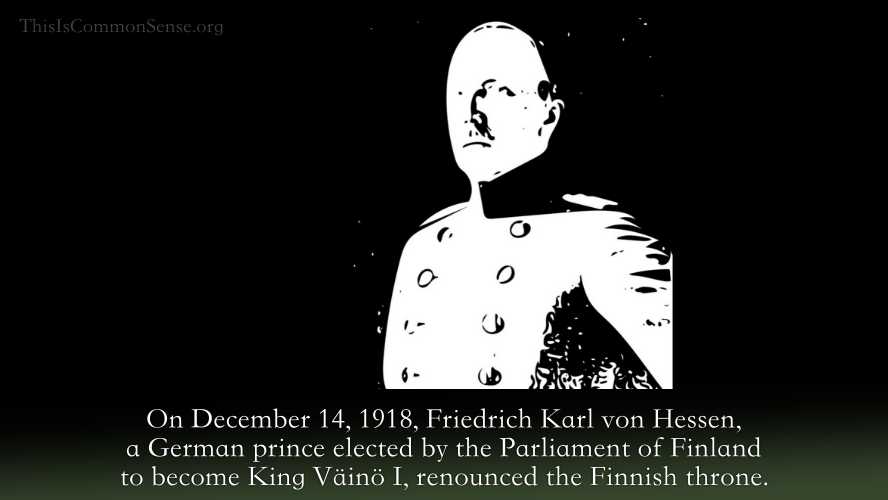
On December 14, 1918, Friedrich Karl von Hessen, a German prince elected by the Parliament of Finland to become King Väinö I, renounced the Finnish throne.
In 1939, on this date, the Soviet Union was expelled from the League of Nations for invading Finland and starting the Winter War.
On December 14, 1819, Alabama became the 22nd state of these United States.