Categories
Today

Alchian & Lehrer

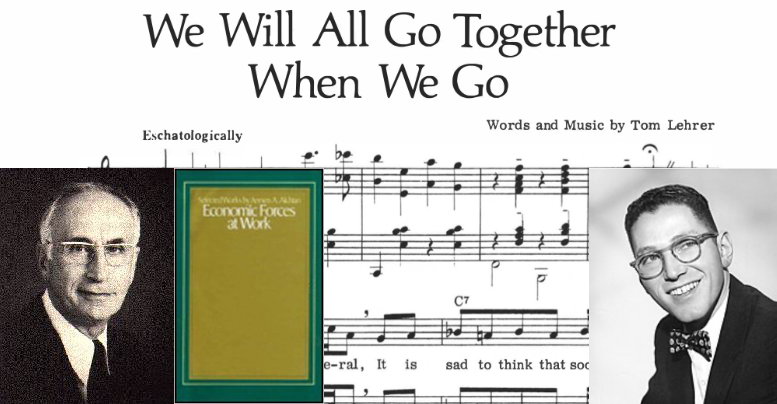
On April 12, 1914, American economist Armen Alchian was born. His contributions to economic theory and teaching were many and varied — his textbook, co-authored with William R. Allen, University Economics (also titled Exchange and Production), was widely considered one of the finest intermediate texts in microeconomics — but he remains perhaps best known for his work on property rights.

Alchian died in 2014, in late February, at the age of 99.

Fourteen years later, on April 9, 1928, American mathematician, singer-songwriter, satirist, and pianist Tom Lehrer was born. He is best known for the pithy, humorous songs he recorded in the 1950s and ’60s, often parodying popular song forms, though he usually created original melodies when doing so. Standouts in black humor as in “I Hold Your Hand in Mine,” “The Irish Ballad,” and “Poisoning Pigeons in the Park” vie for fan attention with songs dealing with social and political issues of the day, particularly when he wrote for the U.S. version of the television show That Was the Week That Was. These latter included “Pollution,” “We Will All Go Together When We Go” (a rousing nuclear Armageddon anthem), “Werner von Braun” (an arch look at America’s paperclip hero), and “The Vatican Rag” (memorializing Vatican III reforms).

In October and November of 2020, Mr. Lehrer relinquished all his musical works into the public domain. See his still-existing website Tom Lehrer Songs.
Categories
Today

Buchenwald

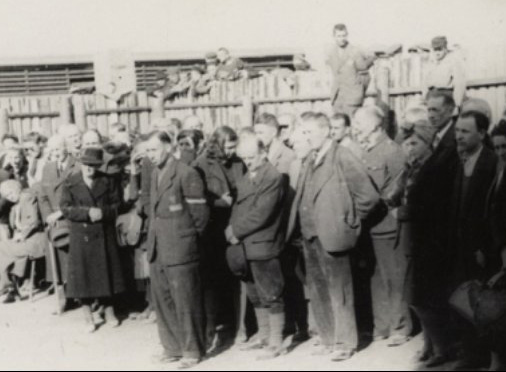
On April 11, 1945, the American Third Army liberated the Buchenwald concentration camp, near Weimar, Germany, a camp that would later be judged second only to Auschwitz in the horrors it imposed on its prisoners.

Among those in the camp saved by the American soldiers was Elie Wiesel, who would go on to win the Nobel Peace Prize in 1986.


Shown in photograph: German citizens ushered to the camp by American soldiers, post-conquest.

Categories
Today

Good Friday Agreement

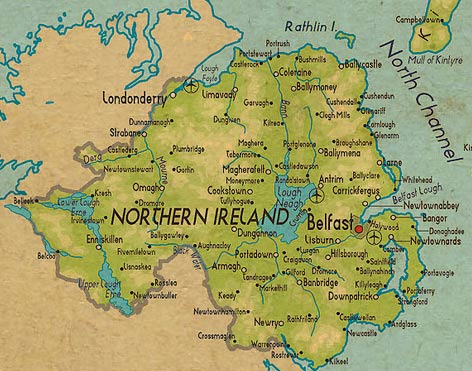
On April 10, 1998, the Northern Ireland peace talks ended with an historic agreement, dubbed the Belfast, or Good Friday Agreement. The accord was reached after nearly two years of talks and 30 years of conflict.

The agreement was approved by voters across the island of Ireland in two referendums held on May 22, 1998. The agreement came into force on December 2, 1999. 

Categories
Today

Independence Maintained, Gained

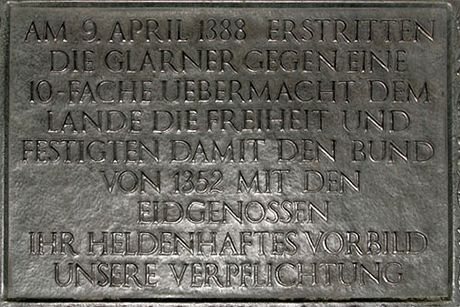
Despite being outnumbered 16 to one, forces of the Old Swiss Confederacy proved victorious over the Archduchy of Austria in the Battle of Näfels, April 9, 1388.

On this date in 1991, Georgia declared its independence from the Soviet Union.

Categories
Today

17th Amendment

On April 8, 1913, the 17th amendment to the Constitution, providing for the popular election of U.S. senators, was ratified.

Categories
Today

Prohibition Begins to End

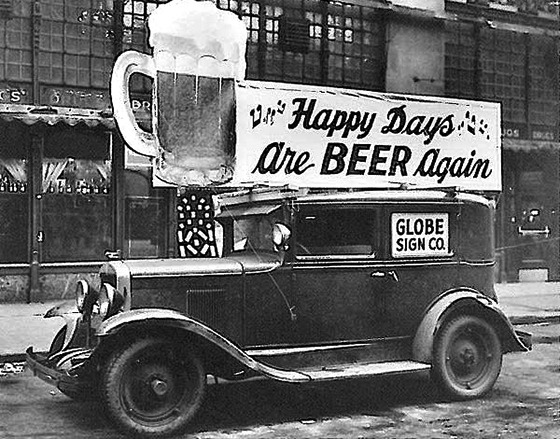
On April 7, 1933, Prohibition in the United States was repealed for beer of no more than 3.2 percent alcohol by weight — eight months before the ratification of the XXI amendment, which repealed the 18th (or Prohibition) Amendment.

The enabling legislation was the Cullen-Harrison Act, which figured the low alcohol content as the excuse to get around the 18th Amendment’s prohibition of intoxicating beverages. The act passed Congress on March 21, 1933, and was signed into law by Franklin Delano Roosevelt the next day.

Categories
Today

Salt Rebel

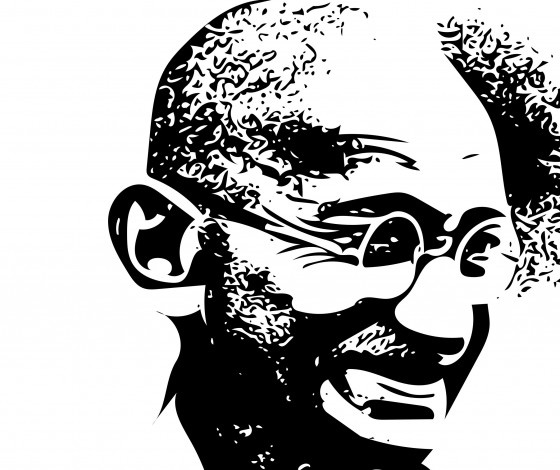
On April 6, 1930, Mohandas K. Gandhi raised a lump of mud and salt, declaring, “With this, I am shaking the foundations of the British Empire.”

Thus began the Salt Satyagraha.

Categories
Today

Two Washingtons

On April 5, 1792, George Washington exercised the first presidential veto of a congressional bill, a new plan for dividing seats in the House of Representatives, which would have increased the number of seats for northern states. Washington vetoed only one other bill during his two terms in office, an act that would have reduced the number of cavalry units in the army.

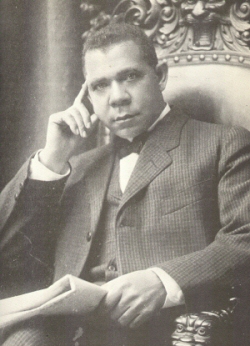
On April 5, 1856, Booker T. Washington (pictured above), American educator, first leader of the Tuskegee Institute in Alabama, author of 14 books, including his autobiography, Up From Slavery, was born a slave in southwestern Virginia. Though Washington faced criticism from leaders of the new NAACP, especially W.E.B. Du Bois, for not protesting the lack of civil rights more strongly, he secretly funded litigation for civil rights cases, such as challenges to southern constitutions and laws that disfranchised blacks.

Categories
Today

Tippecanoe (and, sadly, MLK, too)

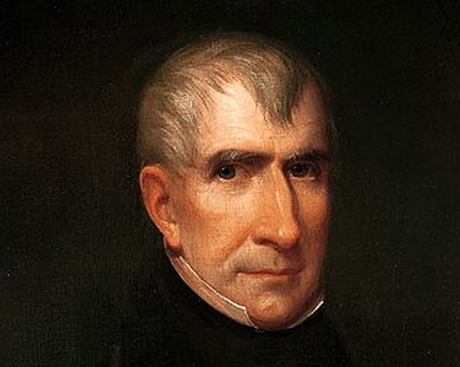
On April 4, 1841, William Henry Harrison died of pneumonia, becoming the first President of the United States to die in office and the one with the shortest term served (he died on his 32nd day as president). A renowned Indian killer (having risen to fame for his part in 1811’s Battle of Tippecanoe), a proponent of the expansion of slavery into Northwest Territories, and a Whig, Harrison won the presidency in part by turning the Democrats’ “log cabin and hard cider” aspersions on his character as the basic symbols of the campaign.

Though hardly a “limited government man,” some limited government history buffs proclaim him the Greatest President, on the ostensibly droll and possibly cynical grounds that he spent so little time in office.


On a much sadder note, Martin Luther King, Jr., was assassinated on this day in 1968.

Categories
Today

Mountaintop

On April 3, 1968, Martin Luther King, Jr., delivered his “I’ve Been to the Mountaintop” speech.