On October 21, 1921, President Warren G. Harding delivered the first speech by a sitting U.S. President against lynching in the deep South.
Categories
Harding Spoke Out
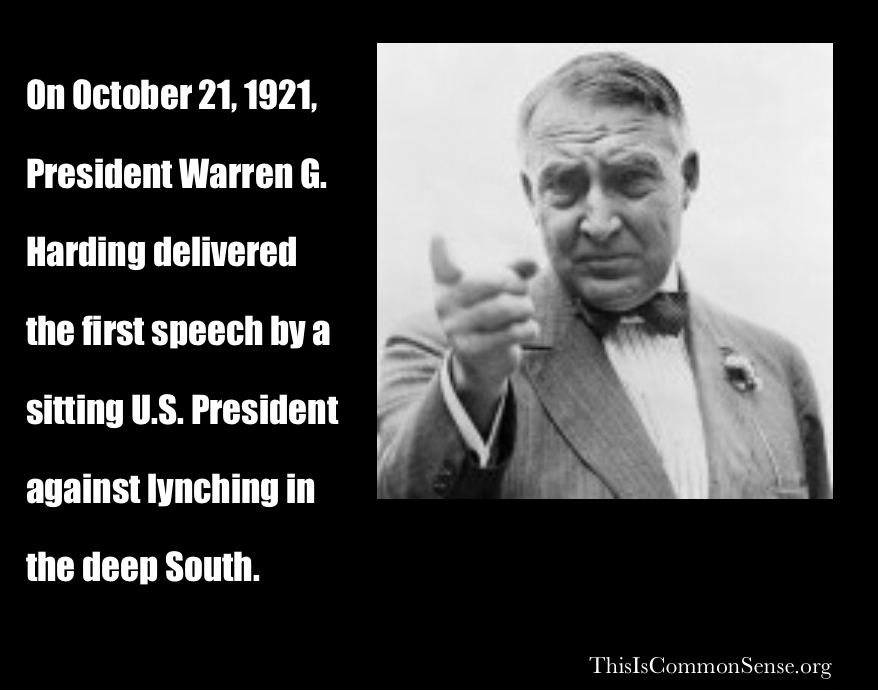
On October 21, 1921, President Warren G. Harding delivered the first speech by a sitting U.S. President against lynching in the deep South.
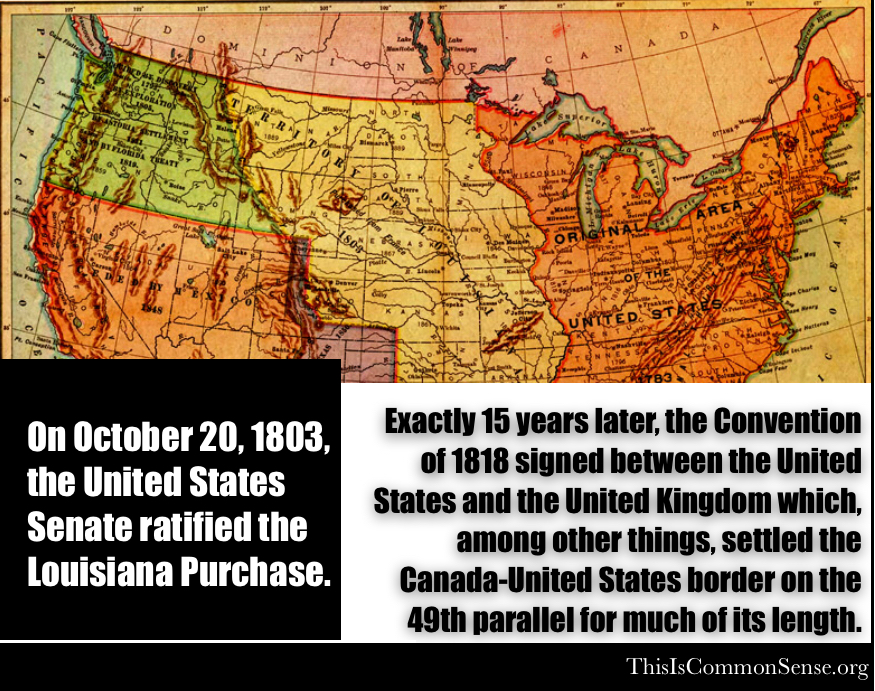
On October 20, 1803, the United States Senate ratified the Louisiana Purchase.
Exactly 15 years later, the Convention of 1818 signed between the United States and the United Kingdom which, among other things, settled the Canada-United States border on the 49th parallel for much of its length.
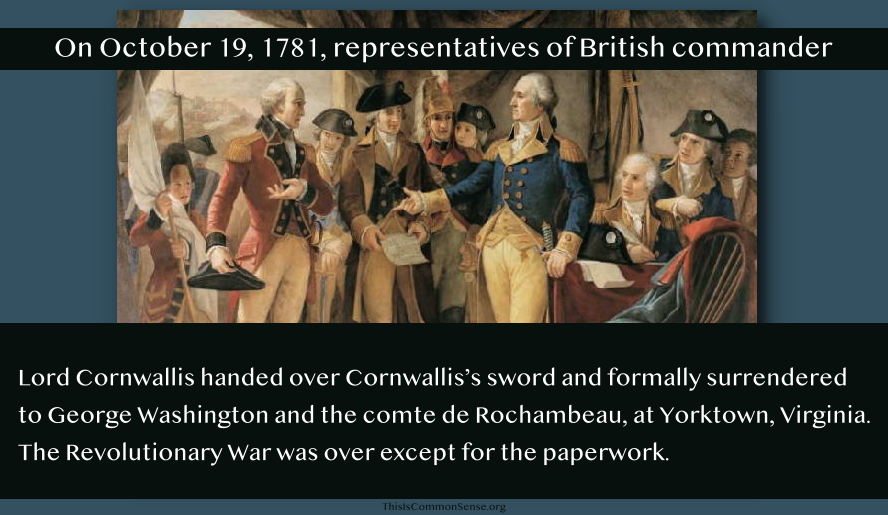
On October 19, 1781, representatives of British commander Lord Cornwallis handed over Cornwallis’s sword and formally surrendered to George Washington and the comte de Rochambeau, at Yorktown, Virginia. The Revolutionary War (or War for Independence, or Colonial Rebellion, or whatever you wish to call it) was over except for the paperwork.
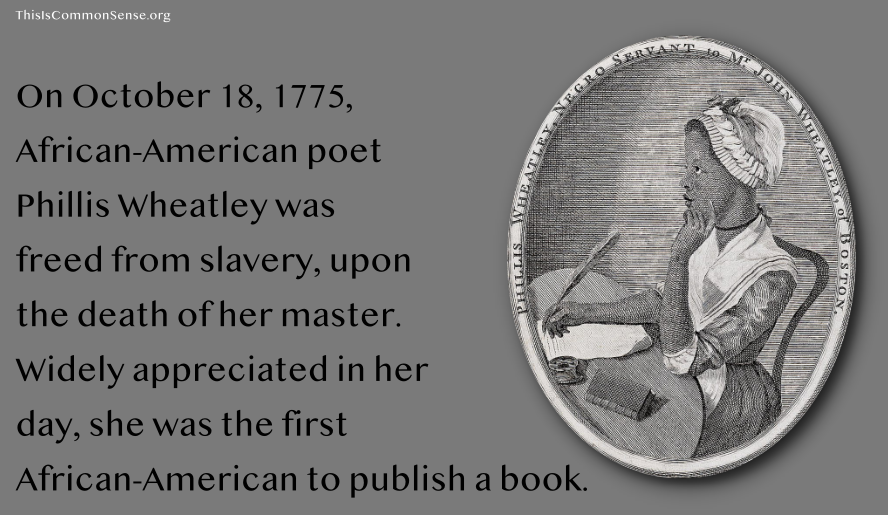
On October 18, 1775, African-American poet Phillis Wheatley was freed from slavery, upon the death of her master. Widely appreciated in her day, she was the first African-American to publish a book.
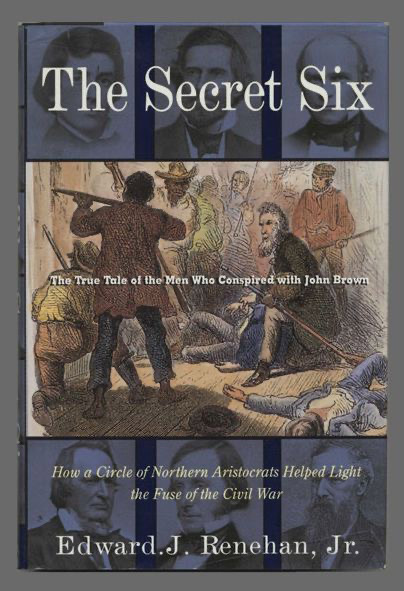
“The date was October 17, 1909 — the fiftieth anniversary of John Brown’ famous (some say infamous) raid of the federal armory and arsenal at Harpers Ferry, Virginia, which ended with the deaths of most of Brown’s small band of men and led to the execution of Brown, making him the most celebrated martyr to the cause of abolition.” So begins The Secret Six: The True Tale of the Men Who Conspired with John Brown (1995), by Edward J. Renehan, Jr.
As the author goes on to explain, it was a big occasion, with many ceremonies, including an inconspicuous one “not far from the site of the engine house where John Brown’s enterprise ended in defeat, a small group of aging abolitionists held a quiet prayer meeting — anxious not to be taken much notice of.” But in Concord, Massachusetts, the “most poignant exercise in memory” took place: “the surviving remnants of the Secret Six, that small, enigmatic cabal of northern aristocrats who financed John Brown’s strange adventure.”
Those attending this meeting were two conspirators, Thomas Wentworth Higginson (December 22, 1823 – May 9, 1911) and Franklin Sanborn (December 15, 1831 – February 24, 1917), as well as Julia Ward Howe (May 27, 1819 – October 17, 1910), widow of a third conspirator, Dr. Samuel Gridley Howe (November 10, 1801 – January 9, 1876). Not present, because long dead, were Reverend Theodore Parker (August 24, 1810 – May 10, 1860), Gerrit Smith (March 6, 1797 – December 28, 1874), and George Luther Stearns (January 8, 1809 – April 9, 1867).
Print out a commemorative poster:
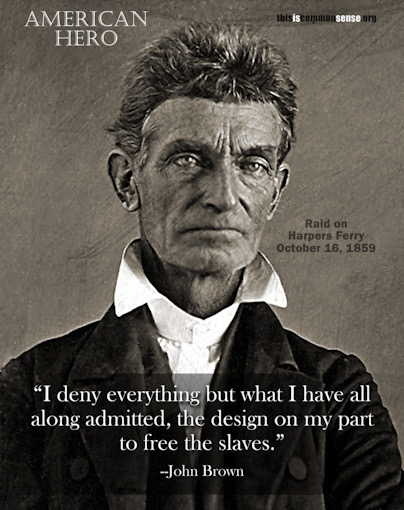
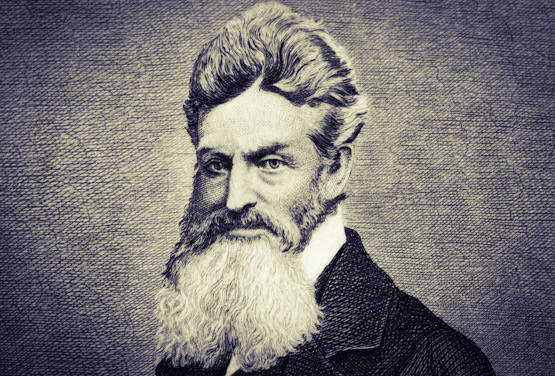
On this day in 1859, abolitionist John Brown led a group of 21 men — 14 white, seven black — on a raid of the federal armory at Harpers Ferry, Virginia (then; since 1863, West Virginia), to capture weapons and initiate a slave revolt in southern states.
Brown’s forces initially captured the armory, which had only one guard on duty that night, but the expected uprising did not occur. Soon the raiders were blocked from any escape by townspeople and local militiamen and then overwhelmed by federal troops sent into the town (commanded by Colonel Robert E. Lee, who would later lead the Confederate armies). The siege ended on the 18th of October.
Ten of Brown’s men were killed during the incident; seven were captured, tried, convicted and executed, including John Brown; and five escaped. Two enslaved African-Americans joined Brown’s cause and also died in the fighting. Battling against Brown’s raiders, a Marine and four townspeople lost their lives, including the town’s mayor and a free African-American.
Though the raid on Harpers Ferry was a failure, it set the states on the road to disunion, war, and the eventual end of slavery.
“John Brown began the war that ended American slavery and made this a free Republic,” Frederick Douglass would write in remembrance of this event. “Until this blow was struck, the prospect for freedom was dim, shadowy and uncertain. The irrepressible conflict was one of words, votes and compromises. When John Brown stretched forth his arm the sky was cleared. The time for compromises was gone — the armed hosts of freedom stood face to face over the chasm of a broken Union — and the clash of arms was at hand.”
Print out a commemorative poster:
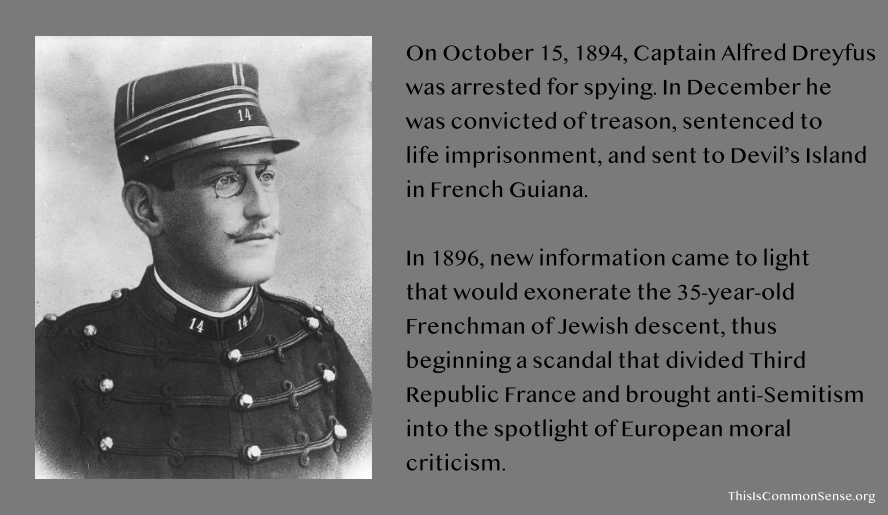
On October 15, 1894, Captain Alfred Dreyfus was arrested for spying. In December he was convicted of treason, sentenced to life imprisonment, and sent to Devil’s Island in French Guiana.
In 1896, new information came to light that would exonerate the 35-year-old Frenchman of Jewish descent, thus beginning a scandal that divided Third Republic France and brought anti-Semitism into the spotlight of European moral criticism.
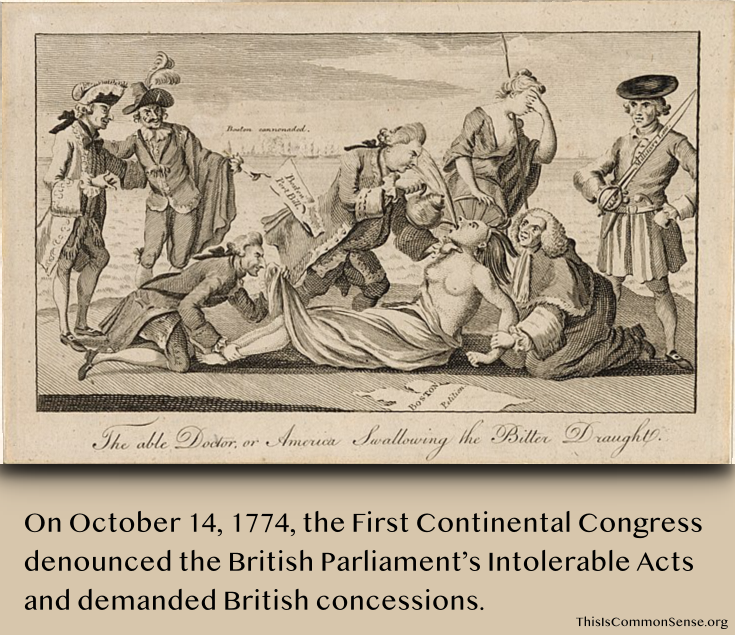
On October 14, 1774, the First Continental Congress denounced the British Parliament’s Intolerable Acts and demanded British concessions.
Called the “Coercive Acts” in Great Britain, the Intolerable Acts were a series of five punitive programs directed against the American colonies after the Boston Tea Party. Opposition to them led to armed conflict in April 1775 and to a Declaration of Independence in July 1776.
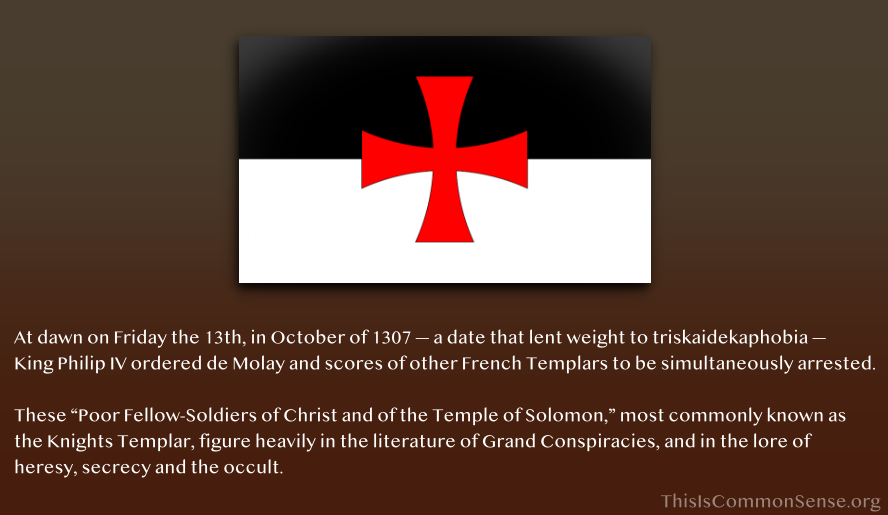
At dawn on Friday the 13th, in October of 1307 — a date that lent weight to triskaidekaphobia, the fear of the number 13 — King Philip IV ordered de Molay and scores of other French Templars to be simultaneously arrested. The arrest warrant started with the words: “Dieu n’est pas content, nous avons des ennemis de la foi dans le Royaume” — “God is not pleased. We have enemies of the faith in the kingdom.”
These “Poor Fellow-Soldiers of Christ and of the Temple of Solomon,” most commonly known as the Knights Templar, figure heavily in the literature of Grand Conspiracies, and in the lore of heresy and the occult.
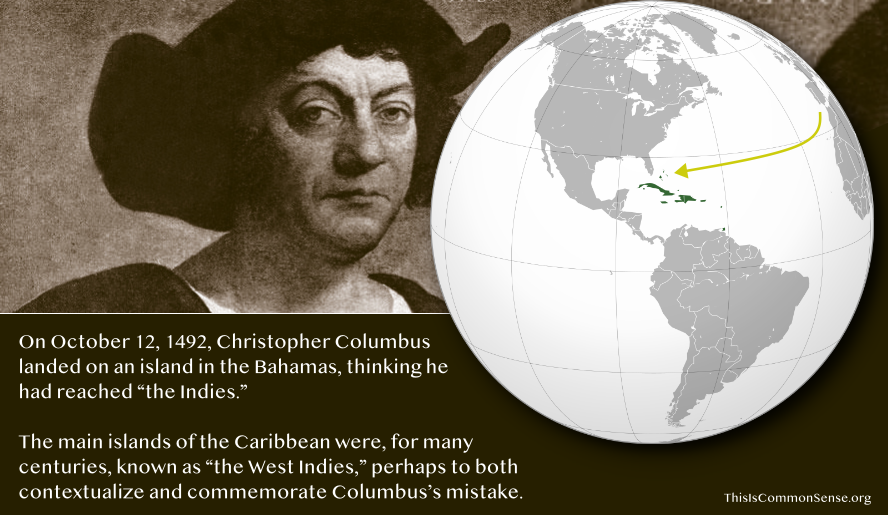
On October 12, 1492, Christopher Columbus landed on an island in the Bahamas, thinking he had reached “the Indies.”
The main islands of the Caribbean (south of the Bahamas) were, for many centuries, known as “the West Indies,” perhaps to both contextualize and commemorate Columbus’s mistake.