The fact disclosed by a survey of the past that majorities have usually been wrong, must not blind us to the complementary fact that majorities have usually not been entirely wrong.
Categories
Herbert Spencer

The fact disclosed by a survey of the past that majorities have usually been wrong, must not blind us to the complementary fact that majorities have usually not been entirely wrong.

The problem of establishing a perfect civic constitution is dependent upon the problem of a lawful external relation among states and cannot be solved without a solution of the latter problem.
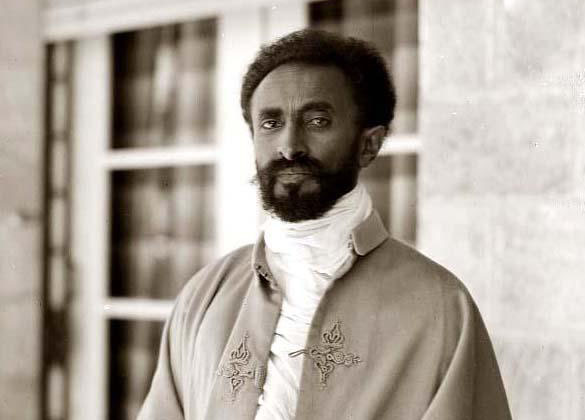
In the history of the human race, those periods which later appeared as great have been the periods when the men and the women belonging to them had transcended the differences that divided them and had recognized in their membership in the human race a common bond.

Mr. Chairman — A worthy member has asked, who are the militia, if they be not the people, of this country, and if we are not to be protected from the fate of the Germans, Prussians, &c. by our representation? I ask who are the militia? They consist now of the whole people, except a few public officers.

Eric Hoffer, Before the Sabbath, Harper & Row 1979, p. 4.
The Nixon tragedy: A man of unsurpassed courage and outstanding intelligence but without vision. An opportunist who missed his greatest opportunity.
That the people have a Right to mass and to bear arms; that a well regulated militia composed of the Body of the people, trained to arms, is the proper natural and safe defense of a free state, that standing armies, in time of peace, are dangerous to liberty, and therefore ought to be avoided.
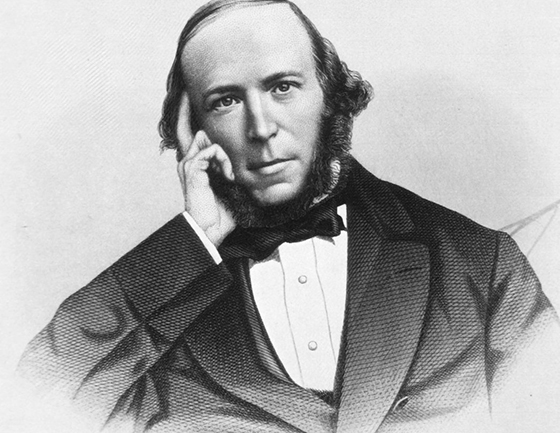
The ultimate result of shielding men from the effects of folly, is to fill the world with fools.
Herbert Spencer, “State-Tamperings With Money and Banks,” Westminster Review (January 1858), which is a review of J. S. Mill’s Principles of Political Economy (1857), Henry Dunning Macleod’s The Elements of Political Economy (1857), Thomas Tooke’s On the Bank Charter Act of 1844 (1856), and James Wilson’s Capital, Currency and Banking (1847). This aphorism was “memed” on this site at https://thisiscommonsense.org////2015/02/09/something-about-folly/.
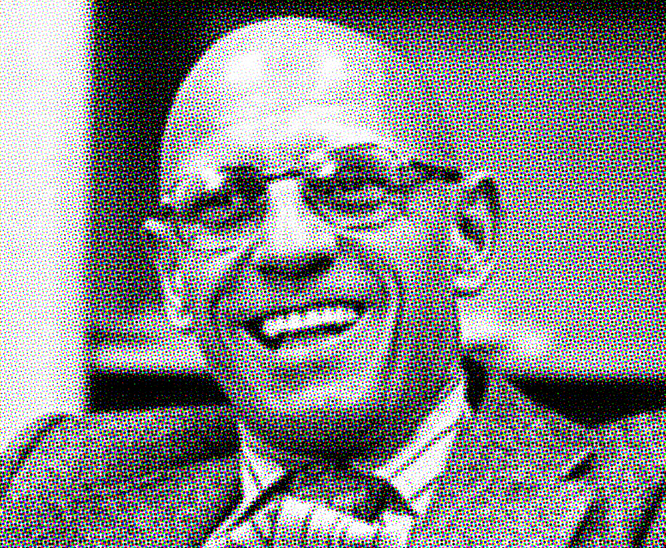
Do not ask who I am and do not ask me to remain the same: leave it to our bureaucrats and our police to see that our papers are in order. At least spare us their morality when we write.
There is a Passion natural to the Mind of man, especially a free Man, which renders him impatient of Restraint.
Sometimes, because my position has not been made clear enough, people think I’m a sort of radical anarchist who has an absolute hatred of power. No! What I am trying to do is to approach this extremely important and tangled phenomenon in our society, the exercise of power, with the most reflective, and I would say prudent attitude. Prudent in my analysis, in the moral and theoretical postulates I use: I try to figure out what’s at stake. But to question the relations of power in the most scrupulous and attentive manner possible, looking into all the domains of its exercise, that’s not the same thing as constructing a mythology of power as the beast of the apocalypse.