Nobody would work for starvation wages if he were not in a situation in which he preferred such wages to not working at all.
Categories
Georg Simmel
Nobody would work for starvation wages if he were not in a situation in which he preferred such wages to not working at all.

In all our associations; in all our agreements let us never lose sight of this fundamental maxim — that all power was originally lodged in, and consequently is derived from, the people.
When in the course of human events it becomes necessary for a people to advance from that subordination in which they have hitherto remained, & to assume among the powers of the earth the equal & independant station to which the laws of nature & of nature’s god entitle them, a decent respect to the opinions of mankind requires that they should declare the causes which impel them to the change.
We hold these truths to be sacred & undeniable; that all men are created equal & independant, that from that equal creation they derive rights inherent & inalienable, among which are the preservation of life, & liberty, & the pursuit of happiness; that to secure these ends, governments are instituted among men, deriving their just powers from the consent of the governed; that whenever any form of government shall become destructive of these ends, it is the right of the people to alter or to abolish it, & to institute new government, laying it’s foundation on such principles & organising it’s powers in such form, as to them shall seem most likely to effect their safety & happiness. prudence indeed will dictate that governments long established should not be changed for light & transient causes: and accordingly all experience hath shewn that mankind are more disposed to suffer while evils are sufferable, than to right themselves by abolishing the forms to which they are accustomed. but when a long train of abuses & usurpations, begun at a distinguished period, & pursuing invariably the same object, evinces a design to subject them to arbitrary power, it is their right, it is their duty, to throw off such government & to provide new guards for their future security. such has been the patient sufferance of these colonies; & such is now the necessity which constrains them to expunge their former systems of government. the history of his present majesty, is a history of unremitting injuries and usurpations, among which no one fact stands single or solitary to contradict the uniform tenor of the rest, all of which have in direct object the establishment of an absolute tyranny over these states. to prove this, let facts be submitted to a candid world, for the truth of which we pledge a faith yet unsullied by falsehood.
A DECLARATION OF RIGHTS made by the representatives of the good people of Virginia, assembled in full and free Convention, which rights do pertain to them, and their posterity, as the basis and foundation of government.
All the social virtues are only the habitude of actions useful to society and to the individual who practices them; That they refer to the physical object of man’s preservation; That nature having implanted in us the want of that preservation, has made a law to us of all its consequences, and a crime of everything that deviates from it; That we carry in us the seed of every virtue, and of every perfection; That it only requires to be developed; That we are only happy inasmuch as we observe the rules established by nature for the end of our preservation; And that all wisdom, all perfection, all law, all virtue, all philosophy, consist in the practice of these axioms founded on our own organization:
Preserve thyself; Instruct thyself; Moderate thyself; Live for thy fellow citizens, that they may live for thee.
Constantin-François de Chassebœuf, Comte de Volney, The Law of Nature, conclusion.
A living dog is better than a dead lion.
Faith is a permanent and vital endowment of the human mind — a part of reason itself. The insane alone are without it.

Voyager upon life’s sea:—
To yourself be true,
And whate’er your lot may be,
Paddle your own canoe.
Edward P. Philpots, Paddle your own Canoe; Written for Harry Clifton. Appeared in Harper’s Monthly, May 1854.
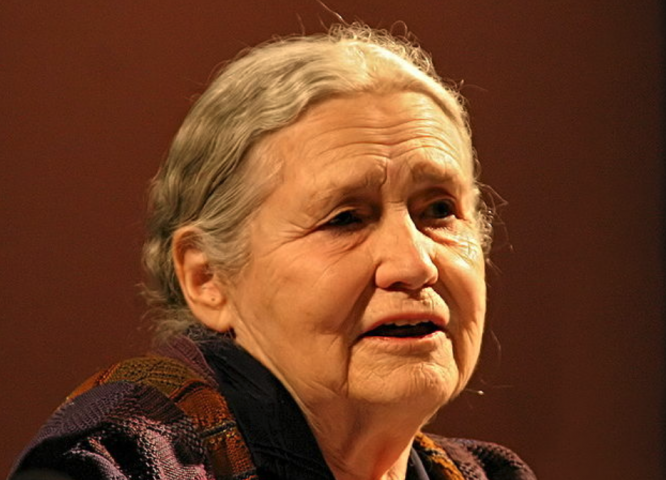
That is what learning is. You suddenly understand something you’ve understood all your life, but in a new way.
Doris Lessing, The Four-Gated City (1969)
We know that the real lesson to be taught is that the human person is precious and unique; but we seem unable to set it forth except in terms of ideology and abstraction
Iris Murdoch, Sartre: Romantic Rationalist (1953), Ch. 10, p. 148 (concluding sentence)