Categories
Thought

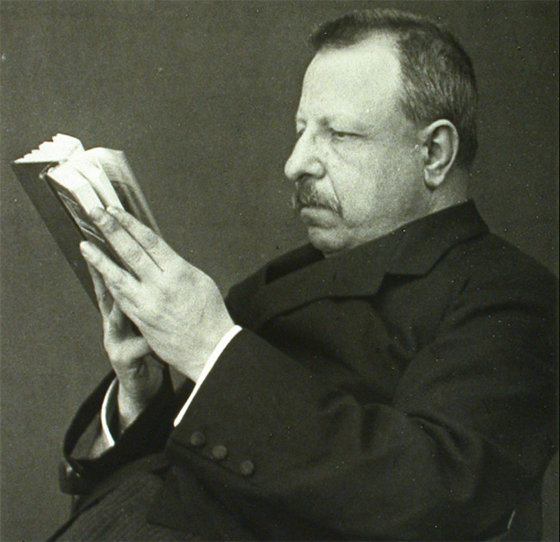
Arthur Latham Perry

By far the most important of all the conditions, under which the production of material commodities goes broadly forward, is liberty of action on the part of the individual; because, wherever such liberty is conceded, association and invention and all other needful conditions follow right along by laws of natural sequence.

Arthur Latham Perry, Principles of Political Economy, 1891.
Categories
Thought

Sarah M. Grimké

The system of slavery is necessarily cruel. The lust of dominion inevitably produces hardness of heart, because the state of mind which craves unlimited power, such as slavery confers, involves a desire to use that power, and although I know there are exceptions to the exercise of barbarity on the bodies of slaves, I maintain that there can be no exceptions to the exercise of the most soul-withering cruelty on the minds of the enslaved. All around is the mighty ruin of intellect, the appalling spectacle of the down-trodden image of God.

Sarah M. Grimké, from An Epistle to the Clergy of the Southern States, New-York, 12th Mo. 1836.
Categories
Thought

C. S. Lewis

Of all tyrannies, a tyranny sincerely exercised for the good of its victims may be the most oppressive. It would be better to live under robber barons than under omnipotent moral busybodies. The robber baron’s cruelty may sometimes sleep, his cupidity may at some point be satiated; but those who torment us for our own good will torment us without end for they do so with the approval of their own conscience. They may be more likely to go to Heaven yet at the same time likelier to make a Hell of earth. This very kindness stings with intolerable insult. To be ‘cured’ against one’s will and cured of states which we may not regard as disease is to be put on a level of those who have not yet reached the age of reason or those who never will; to be classed with infants, imbeciles, and domestic animals.

C. S. Lewis, “The Humanitarian Theory of Punishment,” reprinted in God in the Dock (1970).


Categories
Thought

Henry David Thoreau

I wish my countrymen to consider, that whatever the human law may be, neither an individual nor a nation can ever commit the least act of injustice against the obscurest individual without having to pay the penalty for it. A government which deliberately enacts injustice, and persists in it, will at length even become the laughing-stock of the world.

Henry David Thoreau, “Slavery in Massachusetts,” July 4, 1854.
Categories
Thought

Irving Kristol

The inner spiritual chaos of the times, so powerfully created by the dynamics of capitalism itself, is such as to make nihilism an easy temptation. A ‘free society’ in Hayek’s sense gives birth in massive numbers to ‘free spirits’ — emptied of moral substance but still driven by primordial moral aspirations. Such people are capable of the most irrational actions. Indeed, it is my impression that, under the strain of modern life, whole classes of our population — and the educated classes most of all — are entering what can only be called, in the strictly clinical sense, a phase of infantile regression. With every passing year, public discourse becomes sillier and more petulant, emotions become, apparently, more ungovernable. Some of our most intelligent university professors are now loudly saying things that, had they been uttered by one of their students twenty years ago, would have called forth gentle and urbane reproof.

Irving Kristol, “‘When virtue loses all her loveliness’ — some reflections on Capitalism and ‘the free society,’National Affairs, No. 21, Fall 1970.
Categories
Thought

Henry David Thoreau

They who have been bred in the school of politics fail now and always to face the facts. Their measures are half measures and makeshifts merely. They put off the day of settlement indefinitely, and meanwhile the debt accumulates.

Henry David Thoreau, “Slavery in Massachusetts,” July 4, 1854.
Categories
Thought

Albert Camus

“The defects of the West are innumerable, its crimes and errors very real. But in the end, let’s not forget that we are the only ones to have the possibility of improvement and emancipation that lies in free genius.”

Albert Camus, as quoted in Beyond Nihilism: Albert Camus’s Contribution to Political Thought, Fred H. Willhoite, Jr. (Baton Rouge: Louisiana State University Press, 1968).
Categories
Thought

Robert Nozick

Is not the minimal state, the framework for utopia, an inspiring vision?

The minimal state treats us as inviolate individuals, who may not be used in certain ways by others as means or tools or instruments or resources; it treats us as persons having individual rights with the dignity this constitutes. Treating us with respect by respecting our rights, it allows us, individually or with whom we choose, to choose our life and to realize our ends and our conception of ourselves, insofar as we can, aided by the voluntary cooperation of other individuals possessing the same dignity. How dare any state or group of individuals do more. Or less.

Robert Nozick, Anarchy, State And Utopia (1974), pp. 333-334 (conclusion).
Categories
Thought

Yves Guyot

It is not the astronomer’s business to consider whether it would be better if the sun were nearer or farther from the earth, or if he turned round her, instead of turning round him. Nor is it the chemist’s business to consider whether carbonic acid and carbonic oxide are noxious gases that ought not to exist. It has never been thought desirable to make Newton responsible for tiles falling on the people’s heads.

Economists, however, are held answerable for the laws which they discover.

Yves Guyot, The Principles of Social Economy (1892).

Categories
Thought

F. A. Hayek

The curious task of economics is to demonstrate to men how little they really know about what they imagine they can design. To the naive mind that can conceive of order only as the product of deliberate arrangement, it may seem absurd that in complex conditions order, and adaptation to the unknown, can be achieved more effectively by decentralizing decisions and that a division of authority will actually extend the possibility of overall order. Yet that decentralization actually leads to more information being taken into account.