On doit des égards aux vivants; on ne doit aux morts que la vérité.
We should be considerate to the living; to the dead we owe only the truth.
Voltaire (François-Marie Arouet, 1694 – 1778), Letter to M. de Grenonville (1719).
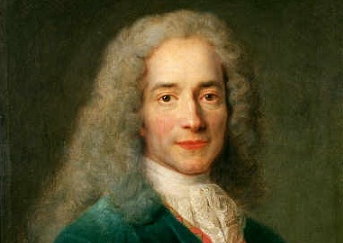
On doit des égards aux vivants; on ne doit aux morts que la vérité.
We should be considerate to the living; to the dead we owe only the truth.
Voltaire (François-Marie Arouet, 1694 – 1778), Letter to M. de Grenonville (1719).

Advanced cultures are usually sophisticated enough, or have been sophisticated enough at some point in their pasts, to realize that foxes shouldn’t be relied on to guard henhouses.

A politician’s words reveal less about what he thinks about his subject than what he thinks about his audience.
George F. Will (born May 4, 1941), quoted in A Ford Not A Lincoln (1975), Richard Reeves, Harcourt Brace Jovanovich, ch, 1 ; as cited by The Columbia Dictionary of Quotations (1993), ed. Robert Andrews, Columbia University Press, p. 707.
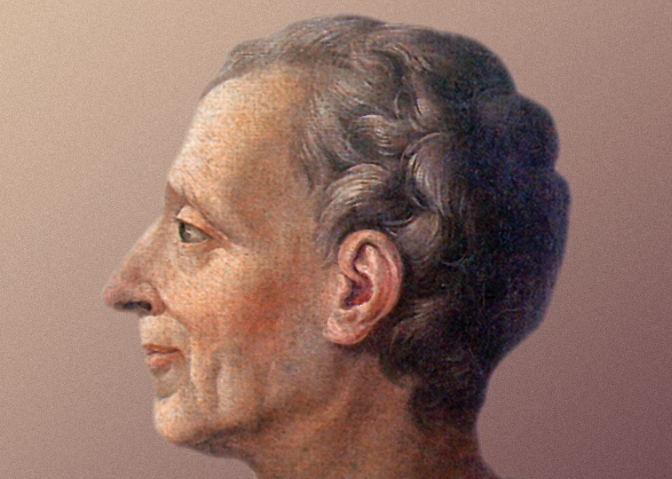
If one only wished to be happy, this could be easily accomplished; but we wish to be happier than other people, and this is always difficult, for we believe others to be happier than they are.
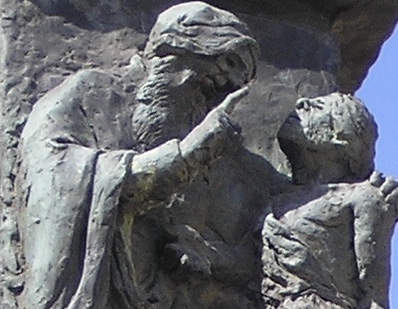
That which is hateful to you, do not do to your neighbor. That is the whole Torah; the rest is the explanation. Go and study it.
Hillel the Elder (c. 110 BC–10 AD), Babylonian Talmud, tractate Shabbat 31a

Philosophy is a battle against the bewitchment of our intelligence by means of our language.

What is essential to the idea of a slave? We primarily think of him as one who is owned by another. To be more than nominal, however, the ownership must be shown by control of the slave’s actions — a control which is habitually for the benefit of the controller. That which fundamentally distinguishes the slave is that he labours under coercion to satisfy another’s desires. The relation admits of sundry gradations. Remembering that originally the slave is a prisoner whose life is at the mercy of his captor, it suffices here to note that there is a harsh form of slavery in which, treated as an animal, he has to expend his entire effort for his owner’s advantage. Under a system less harsh, though occupied chiefly in working for his owner, he is allowed a short time in which to work for himself, and some ground on which to grow extra food. A further amelioration gives him power to sell the produce of his plot and keep the proceeds. Then we come to the still more moderated form which commonly arises where, having been a free man working on his own land, conquest turns him into what we distinguish as a serf; and he has to give to his owner each year a fixed amount of labour or produce, or both: retaining the rest himself. Finally, in some cases, as in Russia before serfdom was abolished, he is allowed to leave his owner’s estate and work or trade for himself elsewhere, under the condition that he shall pay an annual sum. What is it which, in these cases, leads us to qualify our conception of the slavery as more or less severe? Evidently the greater or smaller extent to which effort is compulsorily expended for the benefit of another instead of for self-benefit. If all the slave’s labour is for his owner the slavery is heavy, and if but little it is light. Take now a further step. Suppose an owner dies, and his estate with its slaves comes into the hands of trustees; or suppose the estate and everything on it to be bought by a company; is the condition of the slave any the better if the amount of his compulsory labour remains the same? Suppose that for a company we substitute the community; does it make any difference to the slave if the time he has to work for others is as great, and the time left for himself is as small, as before? The essential question is — How much is he compelled to labour for other benefit than his own, and how much can he labour for his own benefit? The degree of his slavery varies according to the ratio between that which he is forced to yield up and that which he is allowed to retain; and it matters not whether his master is a single person or a society. If, without option, he has to labour for the society, and receives from the general stock such portion as the society awards him, he becomes a slave to the society.
Herbert Spencer, “The Coming Slavery,” The Contemporary Review (April 1884), p. 474. See also The Man versus the State (1884).
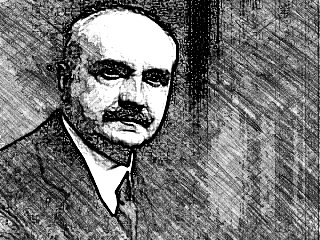
The truth is cruel, but it can be loved, and it makes free those who have loved it.
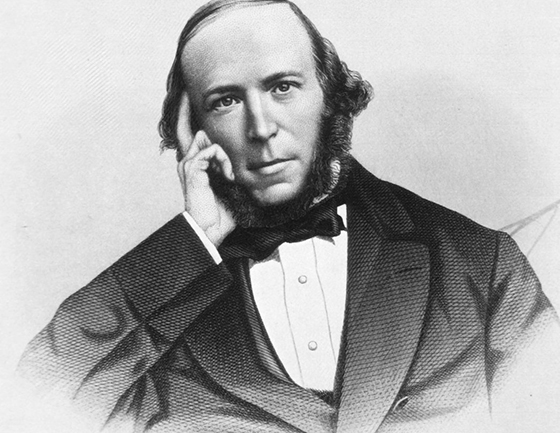
Herbert Spencer, “State-Tamperings With Money and Banks,” Westminster Review (January 1858), which is a review of J. S. Mill’s Principles of Political Economy (1857), Henry Dunning Macleod’s The Elements of Political Economy (1857), Thomas Tooke’s On the Bank Charter Act of 1844 (1856), and James Wilson’s Capital, Currency and Banking (1847). This aphorism was “memed” on this site at https://thisiscommonsense.org////2015/02/09/something-about-folly/.
The ultimate result of shielding men from the effects of folly, is to fill the world with fools.

Can liberty be born from the bosom of despots? and shall justice be rendered by the hands of piracy and avarice?
Constantin-François de Chassebœuf (1757–1820), Comte de Volney, The Ruins; Or, Meditation on the Revolutions of Empires: And The Law of Nature, Chapter II (Thomas Jefferson, translator).