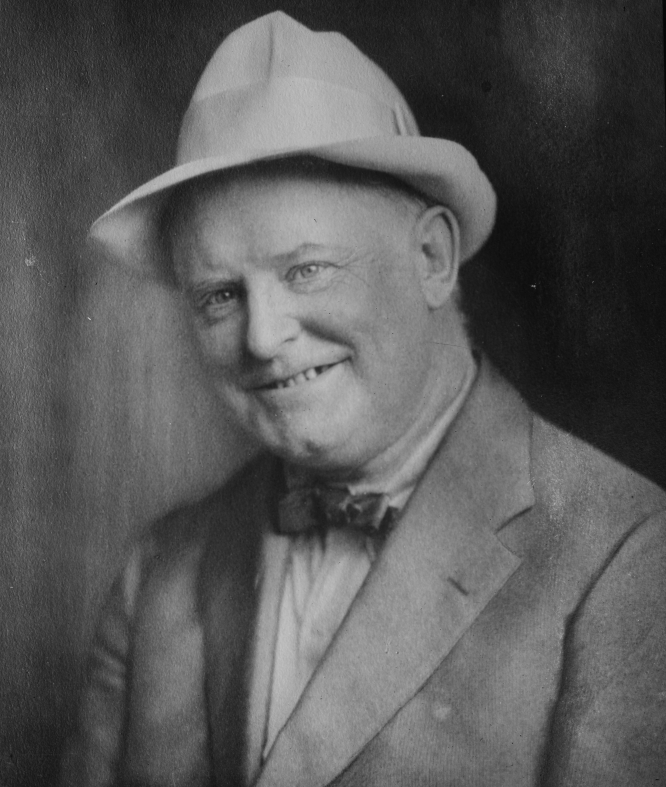
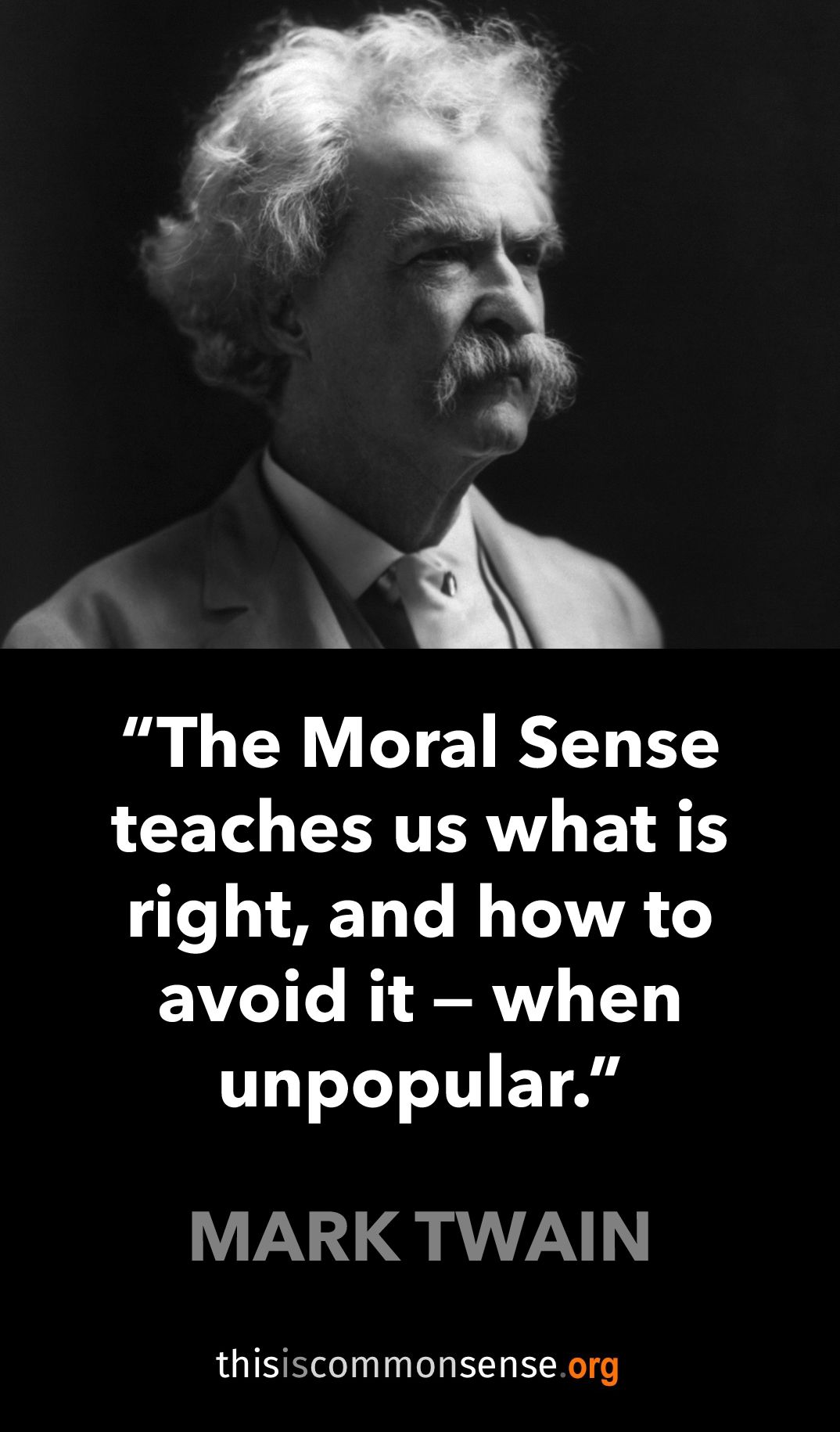
The Moral Sense teaches us what is right, and how to avoid it — when unpopular.
Mark Twain, “The United States of Lyncherdom” (1901), first printed in Albert Bigelow Paine, ed., Europe and Elsewhere (1914).
Mark Twain
The Moral Sense teaches us what is right, and how to avoid it — when unpopular.
Mark Twain, “The United States of Lyncherdom” (1901), first printed in Albert Bigelow Paine, ed., Europe and Elsewhere (1914).
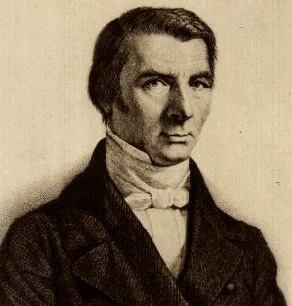
Nature has provided, by means as simple as they are infallible, that there should be dispersion, diffusion, coordination, simultaneous progress, all constituting a state of things that your restrictive laws paralyze as much as they can; for the tendency of such laws is, by isolating communities, to render the diversity of condition much more marked, to prevent equalization, hinder integration, neutralize countervailing circumstances, and segregate nations, whether in their superiority or in their inferiority of condition.
Frédéric Bastiat, from Economic Sophisms, “To Equalize the Conditions of Production” — the “such laws” mentioned are protectionist measures, and protectionism was the chief target of Bastiat’s famous book.
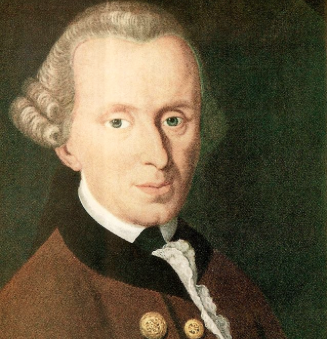
Human freedom is realised in the adoption of humanity as an end in itself, for the one thing that no-one can be compelled to do by another is to adopt a particular end.
Immanuel Kant, Metaphysics of Morals (1797), Part Two: “Metaphysics of Virtue.”
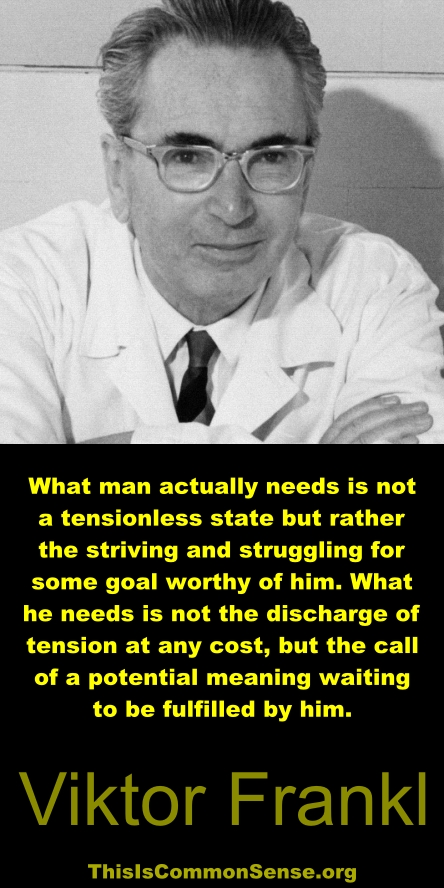
What man actually needs is not a tensionless state but rather the striving and struggling for some goal worthy of him. What he needs is not the discharge of tension at any cost, but the call of a potential meaning waiting to be fulfilled by him.
Viktor Frankl, Man’s Search for Meaning (1946; 1959; 1984).
Liberty is the only thing you cannot have unless you are willing to give it to others.

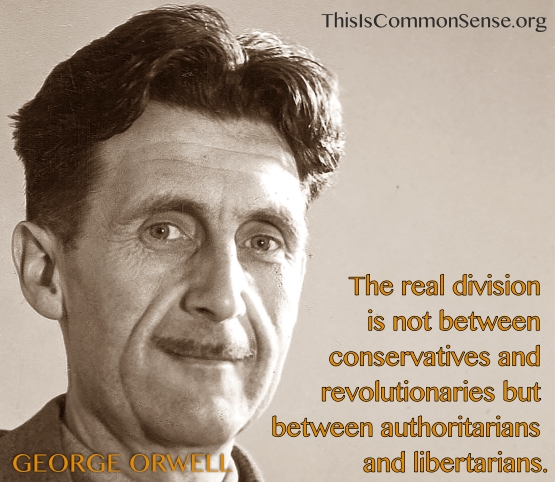
The real division is not between conservatives and revolutionaries but between authoritarians and libertarians.
George Orwell, letter to Malcolm Muggeridge, December 4, 1948.
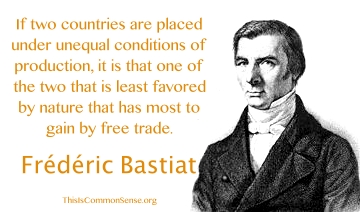
[I]f two countries are placed under unequal conditions of production, it is that one of the two that is least favored by nature that has most to gain by free trade.
Frédéric Bastiat, from Economic Sophisms, “To Equalize the Conditions of Production.”
Duplicate men are not to be found. There is in each a different balance of desires. Therefore the conditions adapted for the highest enjoyment of one, would not perfectly compass the same end for any other. And consequently the notion of happiness must vary with the disposition and character; that is, must vary indefinitely.
Herbert Spencer, Social Statics: or, The Conditions essential to Happiness specified, and the First of them Developed (London: John Chapman, 1851), Introduction, § 2.
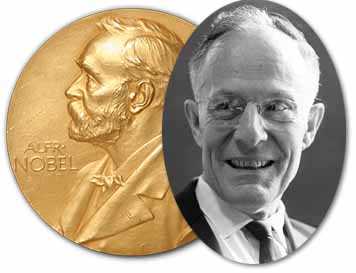
[T]here is an abundance of rhetoric consisting of dire predictions that the soils of the earth are being depleted, natural resources are being exhausted, the land that is suitable for crops cannot produce enough food for the still growing population, and that massive famines will soon occur. These predictions are not a true reckoning of the limits of the earth, because the future productivity of the economy is not foreordained by space, energy, and cropland. It will be determined by the abilities of human beings. It has been so in the past and there are no compelling reasons why it will not be so in the years to come.
Theodore W. Schultz, Investing in People: The Economics of Population Quality (1981), p. 140.
Instead of civilization being artificial, it is a part of nature; all of a piece with the development of the embryo or the unfolding of a flower. The modifications mankind have undergone, and are still undergoing, result from a law underlying the whole organic creation; and provided the human race continues, and the constitution of things remains the same, those modifications must end in completeness.
Herbert Spencer, Social Statics: or, The Conditions essential to Happiness specified, and the First of them Developed (London: John Chapman, 1851), Chapter 1, § 4.