Thoughts, like fleas, jump from man to man, but they don’t bite everybody.
Stanisław Jerzy Lec, Unkempt Thoughts (Myśli nieuczesane, 1957; Jacek Galazka, translator, 1962).
Categories
Stanisław Jerzy Lec
Thoughts, like fleas, jump from man to man, but they don’t bite everybody.
Stanisław Jerzy Lec, Unkempt Thoughts (Myśli nieuczesane, 1957; Jacek Galazka, translator, 1962).
I believe the Prince of Darkness could start a branch of hell in the District of Columbia (if he has not already done it), and carry it on unimpeached by the Congress of the United States, even though the Constitution were bristling with articles forbidding hells in this country.
Mark Twain, Territorial Enterprise, April 7, 1868.

The very cave you are afraid to enter turns out to be the source of what you are looking for.
Joseph Campbell, quoted in Matt Ridley and Alina Chan, Viral: The Search for the Origins of COVID-19 (2021) as the epigraph to the first chapter.
When everything has to be right, something isn’t.
Stanisław Jerzy Lec, Unkempt Thoughts (Myśli nieuczesane, 1957; Jacek Galazka, translator, 1962).

Secrecy is the linchpin of abuse of power, we discovered, its enabling force. Transparency is the only antidote.
Glenn Greenwald, No Place to Hide (2014).
It is because nations tend towards stupidity and baseness that mankind moves so slowly; it is because individuals have a capacity for better things that it moves at all.
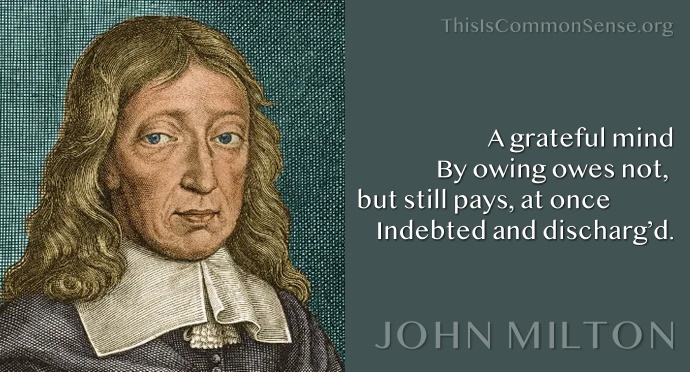
A grateful mind
John Milton, Paradise Lost (1667; 1674), Book IV, line 55.
By owing owes not, but still pays, at once
Indebted and discharg’d.
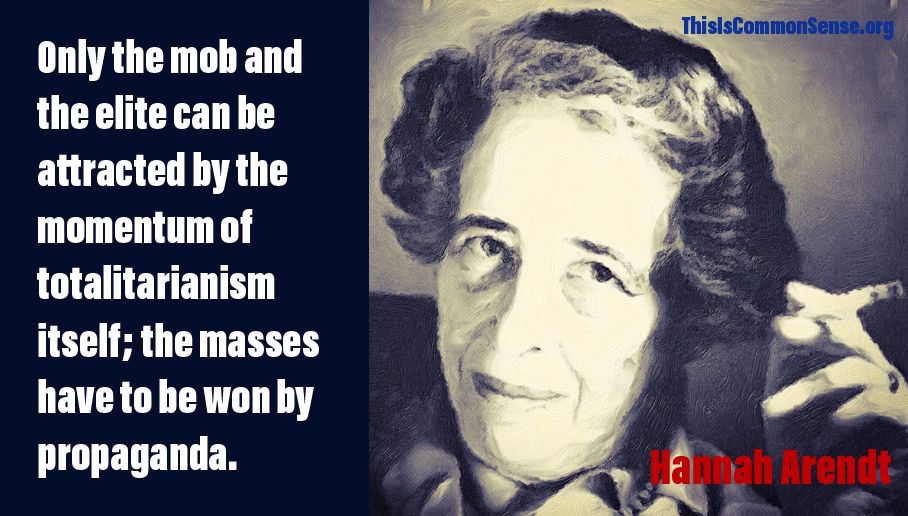
Only the mob and the elite can be attracted by the momentum of totalitarianism itself; the masses have to be won by propaganda.
Hannah Arendt, The Origins of Totalitarianism (1948), as quoted in “Totalitarianism and the Five Stages of Dehumanization,” by Christiaan W.J.M. Alting von Geusau, Brownstone Institute (November 17, 2021).
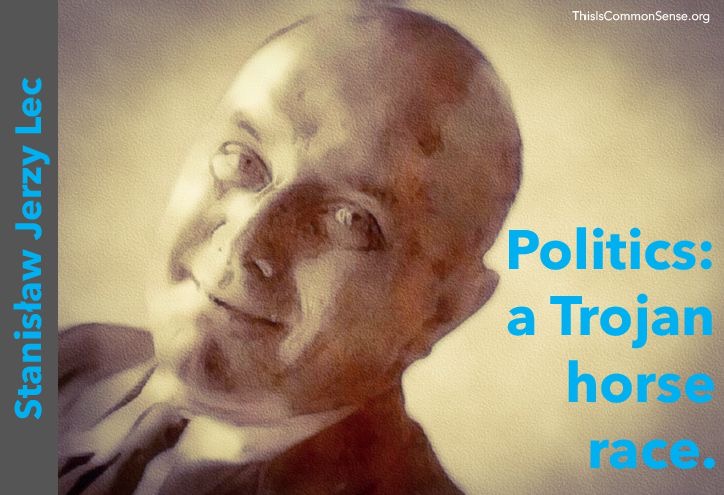
Politics: a Trojan horse race.
Stanisław Jerzy Lec, in Unkempt Thoughts [Myśli nieuczesane] (1957) as translated by Jacek Galazka (1962).
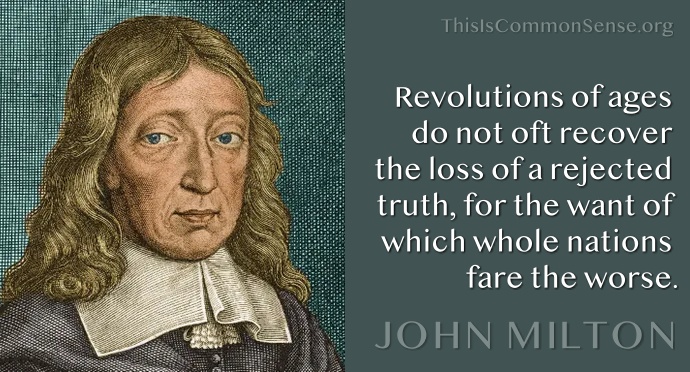
Revolutions of ages do not oft recover the loss of a rejected truth, for the want of which whole nations fare the worse.
John Milton, Areopagitica; A speech of Mr. John Milton for the Liberty of Unlicenc’d Printing, to the Parlament of England (1644).