Categories
folly free trade & free markets general freedom moral hazard national politics & policies tax policy too much government

Whose Side Are They On?

Excuse me if I drive over familiar roadways. But we are witnessing one of the great revolutions in human cooperation.

And our governments and politicians are working mightily to block traffic.

I refer, of course, to Uber and Lyft and the like.

The innovation that these companies bring to market? Enabling everyday drivers to leverage their personal investment in a capital good — a car or SUV — to make extra bucks (or even a living) while efficiently serving people who want rides.

Ride-hailing apps on smart-phones provide more security and consumer guidance than the old taxi services ever bothered to even try. The elaborate online rating system, where drivers rate riders and vice versa, provides a new market in information that outstrips government “regulation” as a consumer defense system.

And consumers get better rides, cheaper.

The Uberization of ride sharing competes directly with taxis, of course, and that’s a problem . . . for taxi companies. And the politicians who have regulated them for years. This regulation never was about consumer protection, but politicians just feathered their own nests with campaign contributions through crony capitalism, helping some taxi services at the expense of others.

And customers.

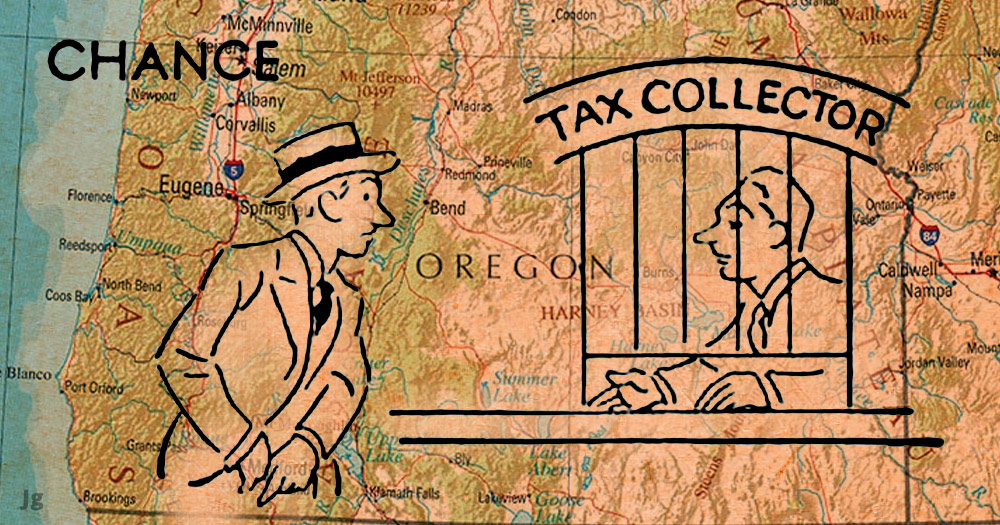
The latest idiocy hails from Massachusetts, which has enacted a 20¢ per trip tax on all ride-sharing apps, with 5¢ of each charge slated for subsidizing the old, established taxi services.

Taxachusetts’s Republican governor, Charlie Baker, has been sucked in to the government racket, choosing to support old cronies rather than customers.

Still, it could have been worse. The advocates of the tax had initially demanded Uber be banned.

This is Common Sense. I’m Paul Jacob.


Printable PDF

Uber, Lyft, Taxi, protection, tax, crony, cronyism, illustration


Illustration based on original cc photo by GörlitzPhotography on Flickr


Categories
Common Sense free trade & free markets general freedom ideological culture initiative, referendum, and recall responsibility tax policy term limits U.S. Constitution

Trying Our Souls

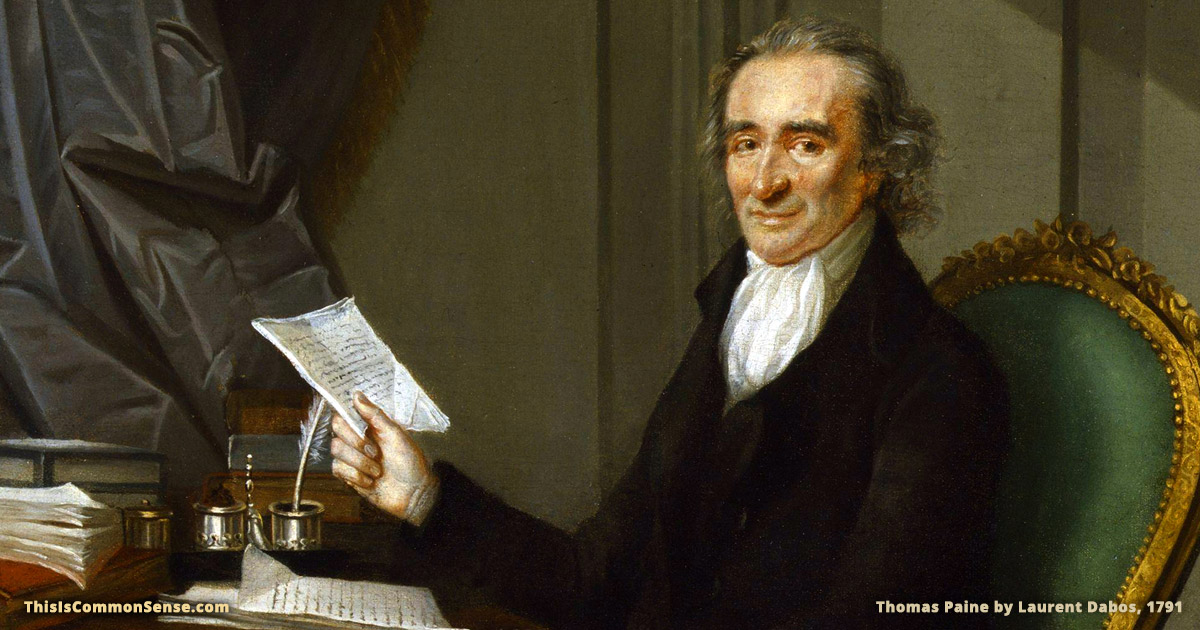
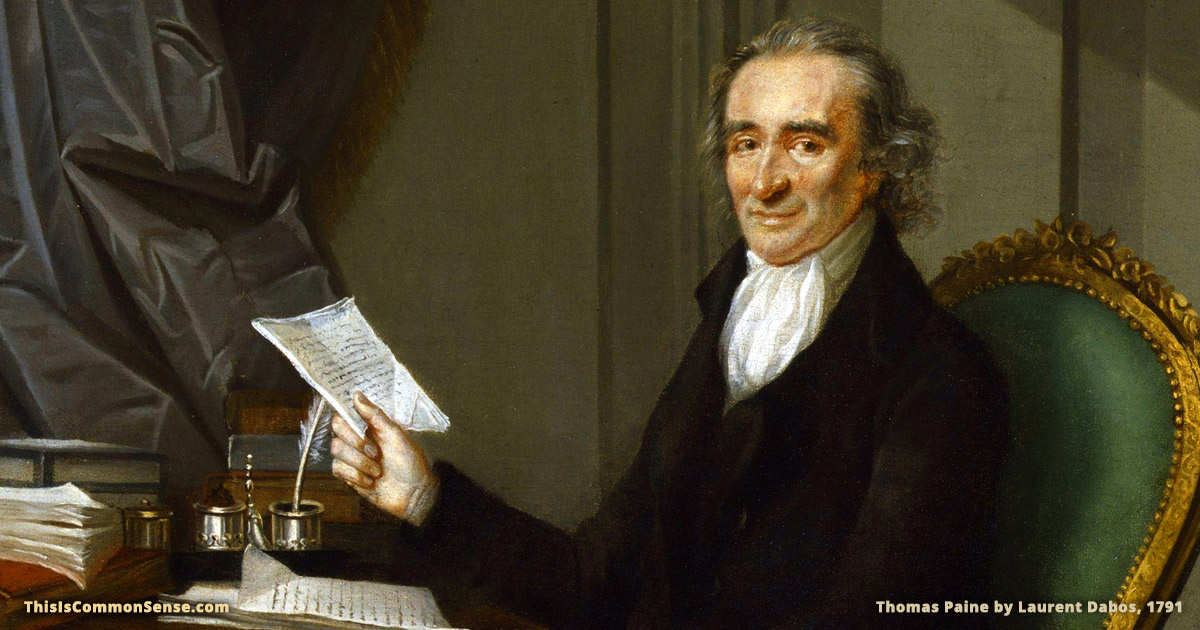
In Common Sense, his incredible hit pamphlet of 1776, Tom Paine appealed to “the inhabitants of America”:

O ye that love mankind! . . . Every spot of the old world is overrun with oppression. Freedom hath been hunted round the globe. Asia, and Africa, have long expelled her. Europe regards her like a stranger,and England hath given her warning to depart. O! receive the fugitive, and prepare in time an asylum for mankind.

Today . . . well, our country might be mistaken for an asylum. Just not the type envisioned by Mr. Paine

Worse still, freedom in America is under consistent attack.

Following the Orlando terrorist massacre (and don’t forget, “hate crime”), who could be surprised at yet another rush to infringe on Second Amendment rights by legislation? But I must admit I was still naïve enough to be shocked that not a thought was given to making our Fifth Amendment rights to due process so much collateral damage.

Secretly writing names on a classified list, whether you call it a “no-fly list” or the “terrorist watch list,” and using merely that to bureaucratically deny citizens fundamental rights (“top ten” rights, as in No. 2 and No. 5 in the Bill of) is no process of law at all.

Who could so cavalierly toss away the very bedrock of our freedom? It’s as if our so-called representatives don’t give a hoot about our rights.

Common Sense readers are well aware that two years ago every Democrat in the U.S. Senate voted to repeal the key freedom of speech provision of the First Amendment. The goal was to completely reverse the current wording of “Congress shall make no law” with new wording that incumbent legislators in “Congress and the States may regulate . . . the raising and spending of money by candidates and others to influence elections.”

The amendment didn’t pass. Thankfully. But, frighteningly, it continues to be promoted. Presidential candidate Hillary Clinton has endorsed it. Most folks are ignorant about the extremism of the approach, because the media reports mainly that the amendment reverses Citizens United, something the amendment actually doesn’t do.

The amendment simply awards Congress so much power that the highly-disapproved body could do almost anything.

Most people also don’t realize that the Citizens United case was about the Federal Election Commission (FEC) censoring advertising for a movie about Hillary Clinton, produced by a non-profit corporation.

Speaking of government censorship of the press, the FEC had been threatening Fox News with major fines for making corporate contributions to 17 GOP presidential candidates. What happened? The cable news channel decided to expand from a single debate featuring 10 candidates to two debates with the earlier “undercard” debate featuring an additional 7 candidates. A candidate not chosen to be one of the 17 candidates filed a complaint against Fox, alleging it amounted to an illegal contribution to all 17 candidates.

The FEC recently closed the case without beating up the disfavored news channel only because three Republican commissioners blocked three Democrats. The case should not only be closed, it should never have been brought in the first place. We don’t want our government dictating to the media about political debate coverage.

Or anything else.

And how can major federal agencies provide equal protection to all citizens, when they are staffed according to political party to provide protection for Republicans and Democrats? More of us are independents than either Rs or Ds.

The war against political participation isn’t confined to Washington. I know from my ordeal in Oklahoma nearly a decade ago, when for assisting initiative petition campaigns for a spending cap and eminent domain reform, I was charged with conspiracy to defraud the state and threatened with ten years in prison . . . until a year and a half later when, without ever completing even a preliminary court hearing, the charge was dismissed.

I’ve seen Eric O’Keefe and other brave citizens in Wisconsin endure dawn SWAT-style police raids for the awful crime of campaigning in favor of government policies they support.

And, of course, how can we forget that no one has been held in any way accountable for the years that the IRS blocked the formation of Tea Party and conservative and libertarian groups?

This country is in trouble.

In addition to the assaults on our rights, especially the right to participate politically, there is the dysfunction at all levels of government. Among the big national problems of massive debt and constant war, we find smaller local issues that signal a deeper, bigger problem.

Common Sense has long covered the school kid suspended for drawing a gun or eating one’s PB&J sandwich into a pistol or the school that photo-shopped out the musket from their Minuteman mascot. This last year we followed many of the twists and turns to the story of the Meitivs, the Maryland family that dared allow their two children, ten and six years of age, to walk home from a public park. The children were obviously well cared for, but nonetheless they were picked up and held by police several times and the parents were long threatened with losing their kids.

It took over a year for the authoritarians with Child Protective Services to agree that kids walking home from a park in broad daylight did not constitute prima facie evidence of child abuse or neglect. And to agree to leave the poor Meitiv family alone.

Common Sense has also highlighted the racketeering being done by police forces federal, state and local through what’s known as civil asset forfeiture — again, a complete denial of basic rights. Under current law — or more correctly, lawlessness — police can take people’s property and money when detaining them and then keep it, even if the person is never convicted of a crime, or even charged.

This suspension of the fundamental concept of “innocent until proven guilty” must not stand.

But who is going to stop it? Not just this one outrageous rip-off, but the whole societal slide to a system where individuals have no rights, especially if they lost the last election, and government makes more and more of our decisions for us.

Hillary Clinton?

Donald Trump?

Your state’s legislators? Your city council? Your congressman?

You and I must stop the erosion of our liberties. We have the tools — especially with state and local ballot initiatives available to most of us, allowing us to seize the agenda at the time and on the issue(s) of our choosing.

Liberty Initiative Fund works with Liberty Initiators across the country to hold government accountable, fight crony capitalism and protect our liberties through state and local ballot initiatives. Contributions are not tax deductible, but pack a powerful punch for liberty.

Citizens in Charge and Citizens in Charge Foundation protect the critical initiative and referendum process, so citizen activists can reform government and limit power. Donations to Citizens in Charge Foundation are fully tax-deductible.

The Foundation also supports Common Sense, which I offer the modern inhabitants of America to help keep us focused on the most important problems we face, with intermittent seriousness and humor, as well as uniting active allies from across the country, each pursuing their own issues in their own communities.

Today, I’ll enjoy being with the people I love and I’ll take some time to celebrate the birthright of freedom forged for you and me 240 years ago.

But I won’t pretend that freedom will be there for me or for mine unless together we forge our future freedom anew.

This is Common Sense. I’m Paul Jacob.


Printable PDF

Tom Paine, Thomas Paine, Laurent Dabos


Categories
folly general freedom national politics & policies tax policy too much government

Procrastinators’ Weekend

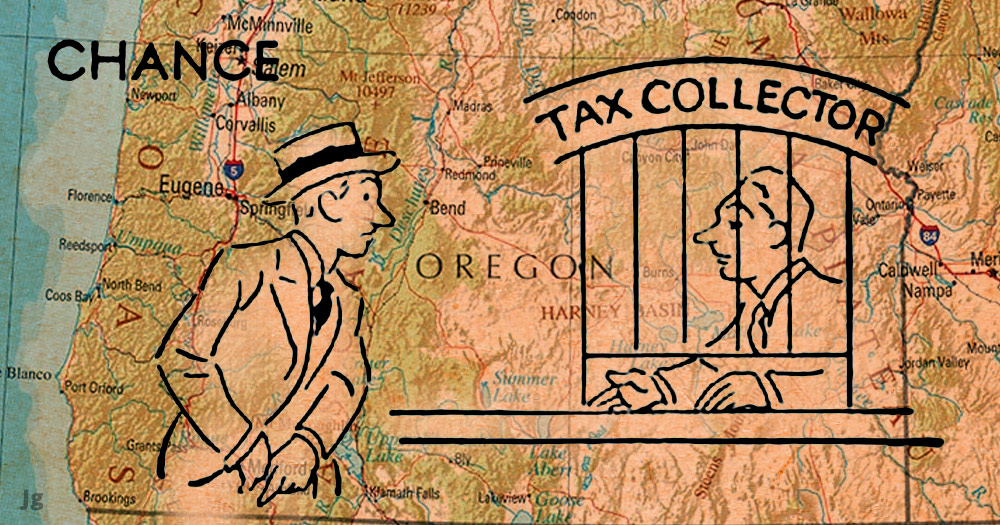
Usually, April 15 is the deadline date, in these United States, to file taxes or apply for an extension. This year it is April 18.

Why? Many of us think of the Fifteenth of April as Tax Day. It seems strange and arbitrary when it is jiggered with. And kind of annoying.

But a postponement of taxes could be a postponement we might all appreciate as a tiny (ever so slight) reprieve.

So, again, why this year’s three-day extra leeway?

First off, it is regularly postponed when the day falls on a Saturday or Sunday.

Could it be that the “Nothing Gets Done on Friday” Rule has been acknowledged by the fine folks at the Internal Revenue Service?

No.

People in Maine and Massachusetts celebrate Patriots Day on April 18, so their tax day is set another day later, April 19.

Which begs the question. Why the 18th in the first place?

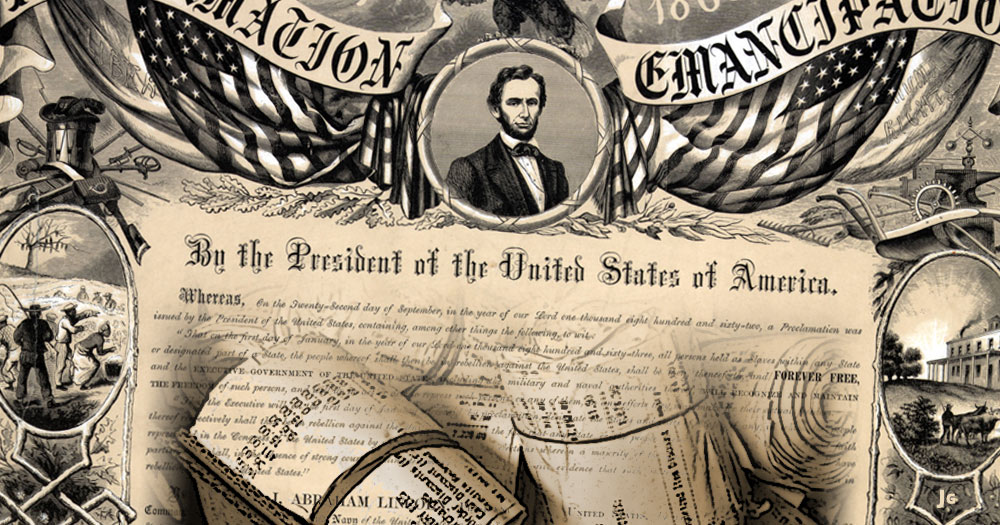
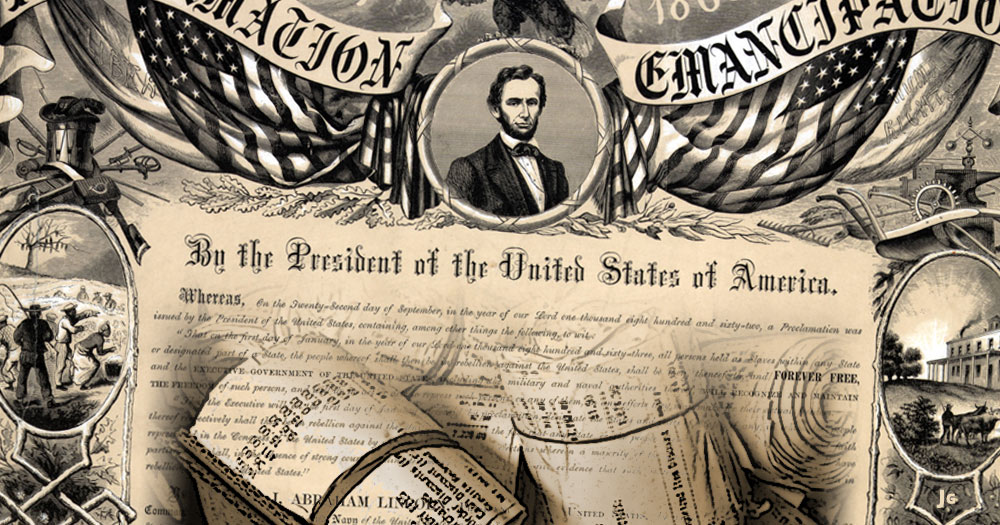
Well, because of Emancipation Day, usually celebrated in Washington, DC, on April 16.

Because the 16th settles on a Saturday this year, and because the day is a traditional day off for federal workers, the holiday shifts a day in advance, to this Friday, the 15th. So, Emancipation Day — commemorating the signing of the Emancipation Act by President Abraham Lincoln — trumps Tax Filing Day.

Apt, since it might seem cruel to Americans to have Tax Day, marking the subservience of a whole population to its government, fall on something called Emancipation Day.

After all, consider: holding them on the same day? Hmmm. Might get people thinking.

Bigwigs in DC don’t want that.

This is Common Sense. I’m Paul Jacob.


Printable PDF
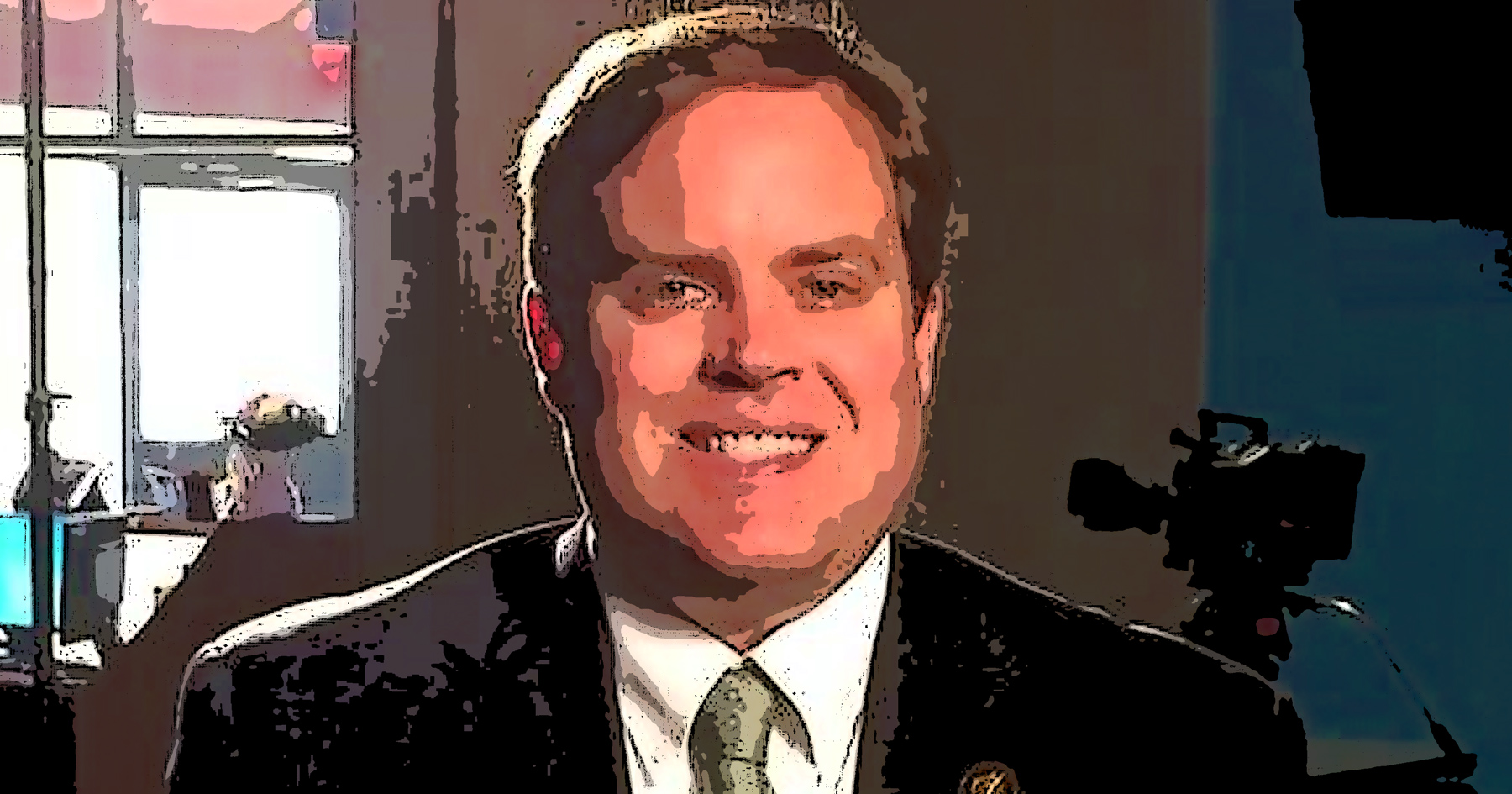
Emancipation Day, tax, taxes


Common Sense Needs Your Help!

Also, please consider showing your appreciation by dropping something in our tip jar  (this link will take you to the Citizens in Charge donation page… and your contribution will go to the support of the Common Sense website). Maintaining this site takes time and money.

Your help in spreading the message of common sense and liberty is very much appreciated!


Categories
folly ideological culture moral hazard national politics & policies tax policy

Rebranding the Odious?

Being a clever person is hard work. Many of the truly clever things about everyday life have already been said. New and innovative cleverness? A rare thing indeed.

But if you are in the business of being clever, that puts you in a pickle, if “being relevant” and “worth our attention” is part of your cachet.

Take Alain de Botton, a very clever man who has written at least one brilliant book . . . and several not-so-brilliant ones. He has tackled Proust, Epicureanism, and is now deeply into religion.

Well, maybe not so deeply.

He wants politicians to follow the lead of religious leaders, who, he asserts, are masters of rebranding. (I had thought that was for marketing specialists.)

Recognizing that the word “tax” is an odious one — few people really like paying their taxes — de Botton says that politicians should follow what “religions do” and “rebrand ‘tax’ as ‘charity.’”

Charity, he notes, is a “much more appealing word.”

Well, yeah. That’s because charity is a word for love. It is all about deep concern, sympathy, etc., and “acts of charity” are expressions of love and concern.

And the only way that acts of charity can be determined to be expressions of concern is that they are voluntary. Taxes, on the other hand, are not voluntary. They are taken by force (try not paying them — force will find you).

Forcing people to “be charitable” will automatically scuttle that very purpose.

Trying to rescue politics from the stench of compulsion should not be done with rebranding, but by limiting government.

The less government, the less force.

And more scope for charity.

This is Common Sense. I’m Paul Jacob.


Printable PDF
tax, taxes, charity, IRS, I.R.S., Alain de Botton, branding, rebranding, illustration, folly, Common Sense


Common Sense Needs Your Help!

Also, please consider showing your appreciation by dropping something in our tip jar  (this link will take you to the Citizens in Charge donation page… and your contribution will go to the support of the Common Sense website). Maintaining this site takes time and money. Your help in spreading the message of common sense and liberty is very much appreciated!


Categories
folly ideological culture moral hazard national politics & policies tax policy too much government

The B. S. Theory

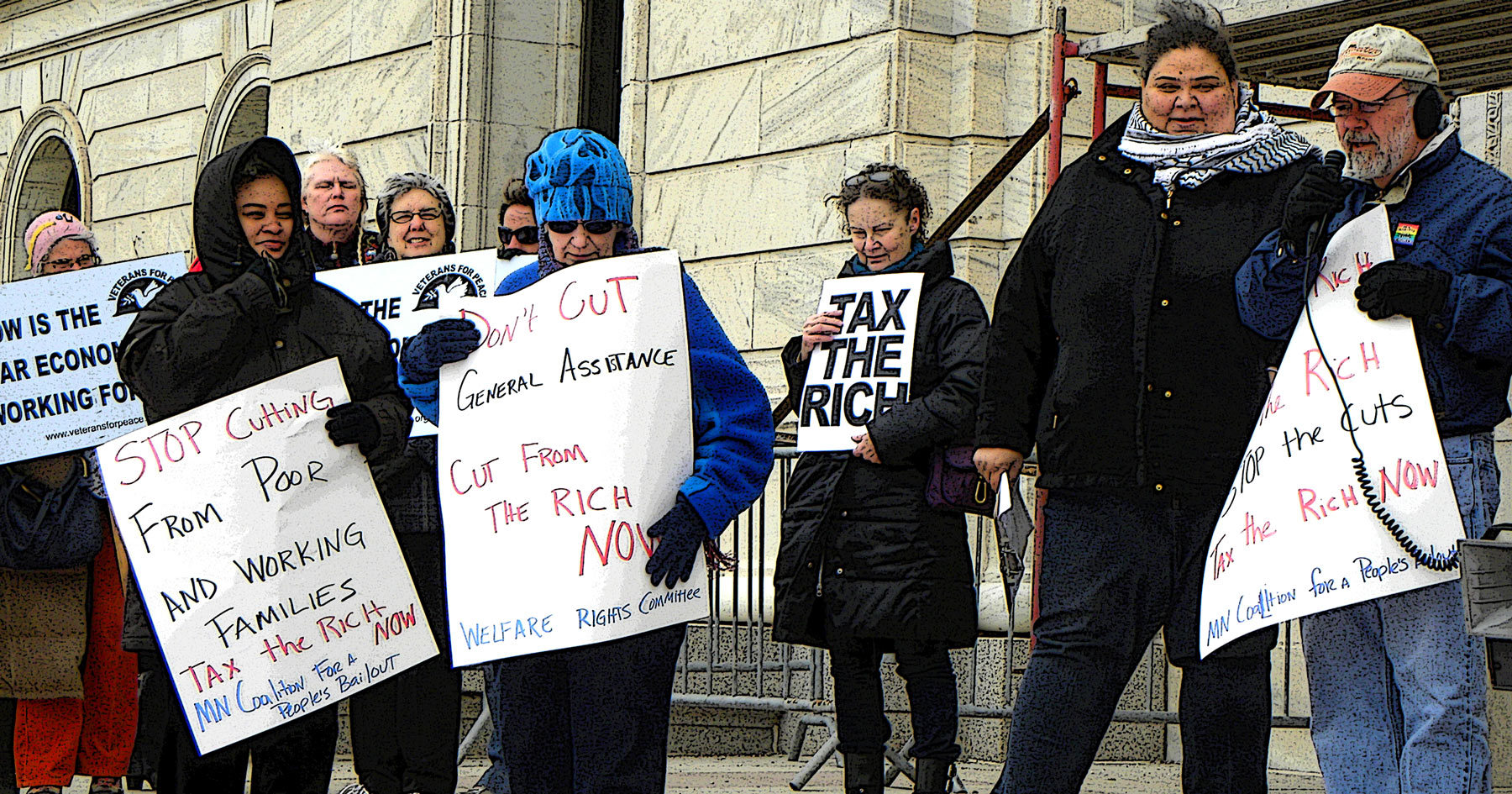
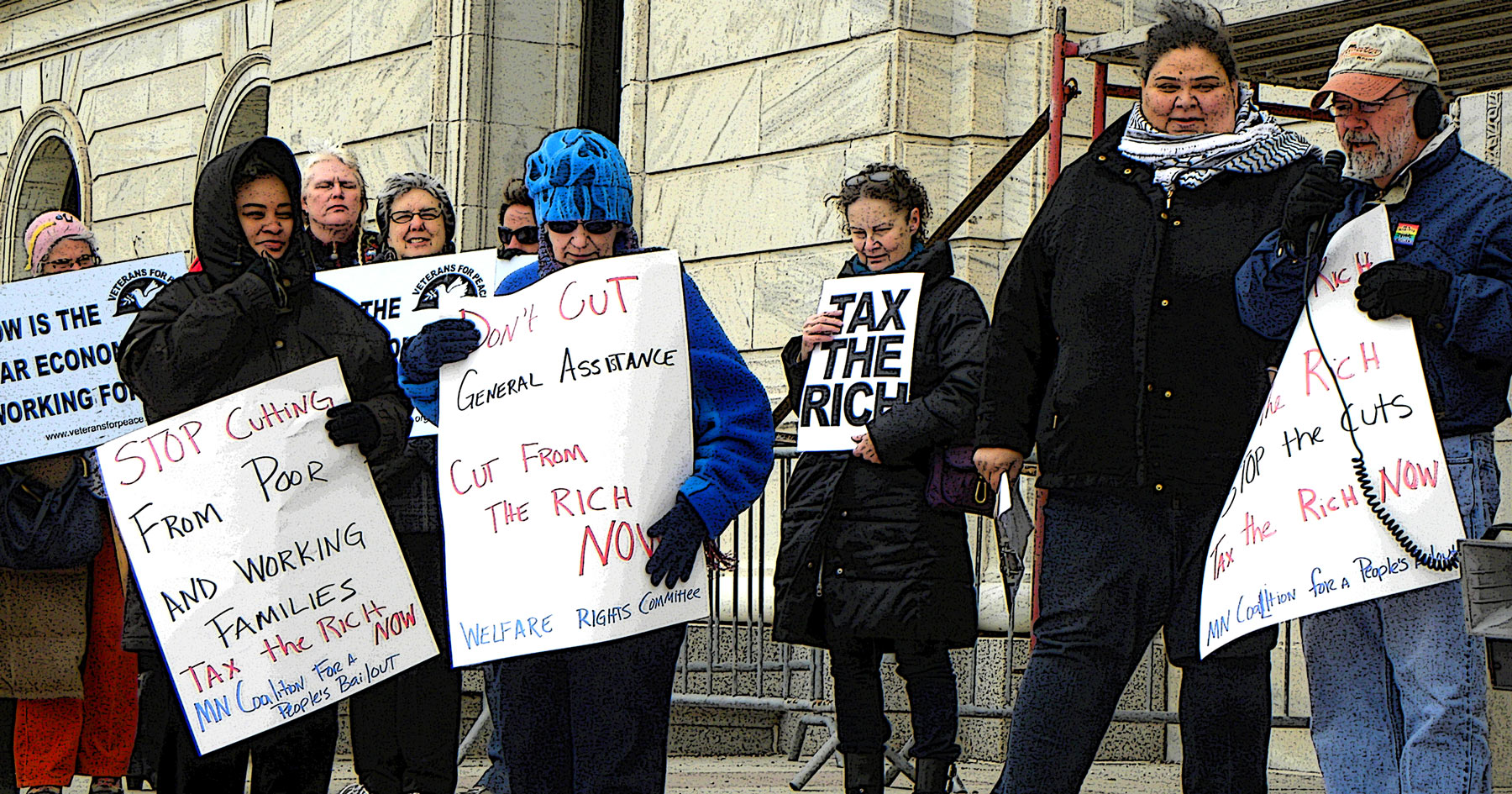
Bernie Sanders is worse than merely wrong about the rich not paying their fair share of taxes.

It’s we, the much-lauded “Ninety-nine Percenters,” who don’t pay enough!

At least, when we figure taxes paid against direct subsidies/services rendered: taxes minus transfers. And, according to the Congressional Budget Office, only the top quintile of income earners — including the much-abhorred One Percenters — pay appreciably more in taxes than they receive in “benefits.”

In a republic, you would expect the masses to pay taxes, receiving only indirect benefits, like a broadly defined “security” and “the rule of law.”

The calculation of who is and is not a net tax-payer or net tax-consumer has to be difficult. I certainly haven’t vetted the studies carefully. But previous accountings also show that the super-rich pay the bulk of income taxes in America.

How to put the system aright?

Don’t tax us more!

Bernie’s preference, to tax a whole lot more as well as to provide more subsidies and “benefits,” will only make a bigger mess.

Unfortunately, doing the right thing (cutting back on the giveaways at all levels) is politically . . . tricky.

But there’s something missing in all this: the indirect hazards of the “benefits” . . . the opportunity costs involved when we get hooked on hand-outs. The most trapped people in America are those who pay the least and take the most. The dollar-value of their received transfer payments measure neither their dependency nor their consequent lack of upward mobility.

How could we figure real harms and helps embedded in the current system, when some “benefits” are, in fact, detriments?

This is Common Sense. I’m Paul Jacob.


Printable PDF
tax the rich, tax, pay, paid, paying, Common Sense


Categories
Accountability folly free trade & free markets general freedom ideological culture moral hazard national politics & policies political challengers responsibility tax policy too much government

Berating Bernie?

Bernie Sanders has risen in the polls. He may even beat Hillary Clinton in the first caucus and primary contests for the Democratic presidential nomination.

A cause for celebration! Witnessing a huge hunk of Americans accept Mrs. Clinton, the consummate and corrupt insider, is too disheartening.

Bernie Sanders, for all his faults, is at least not an insider like Hillary.

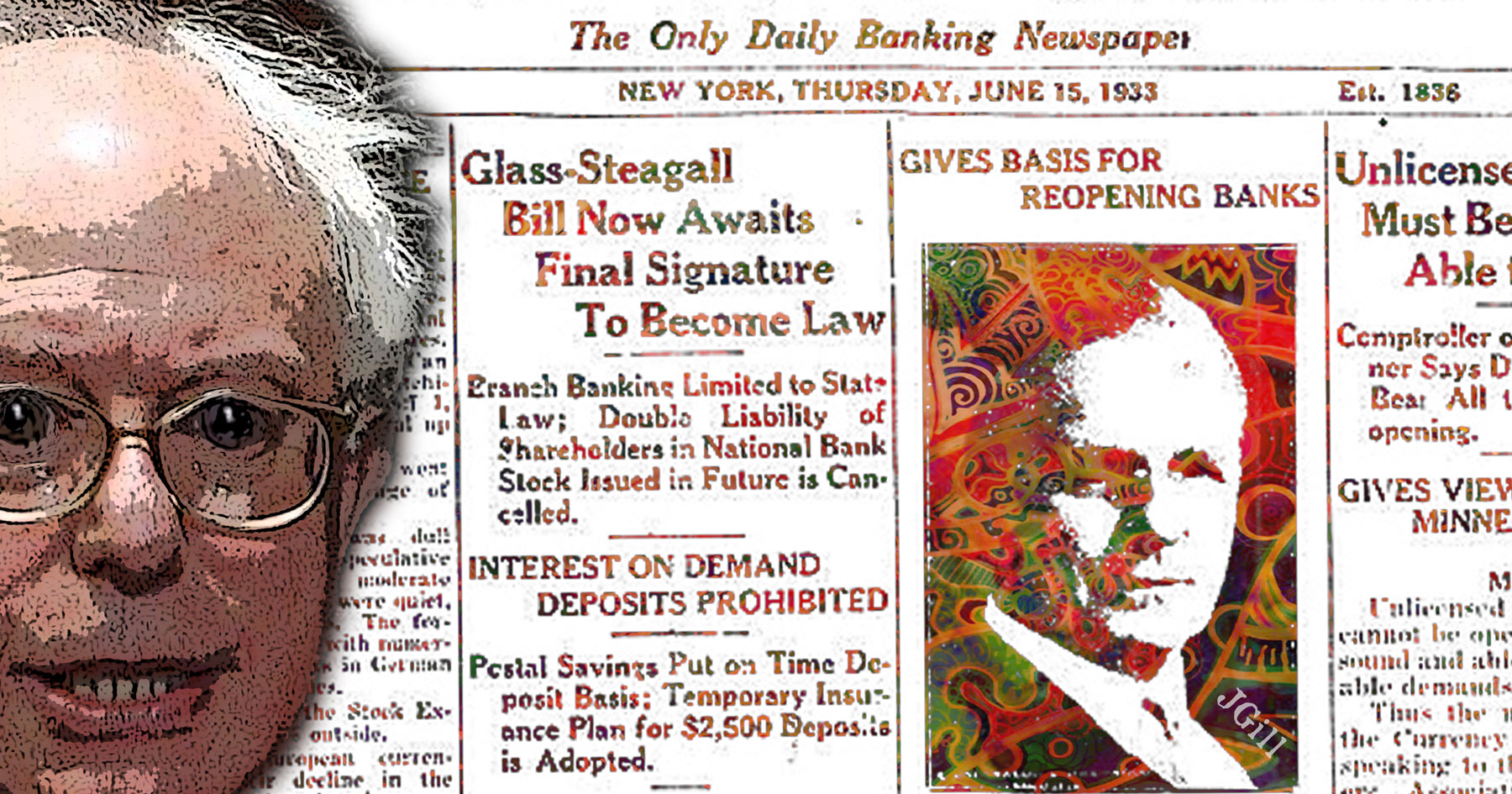
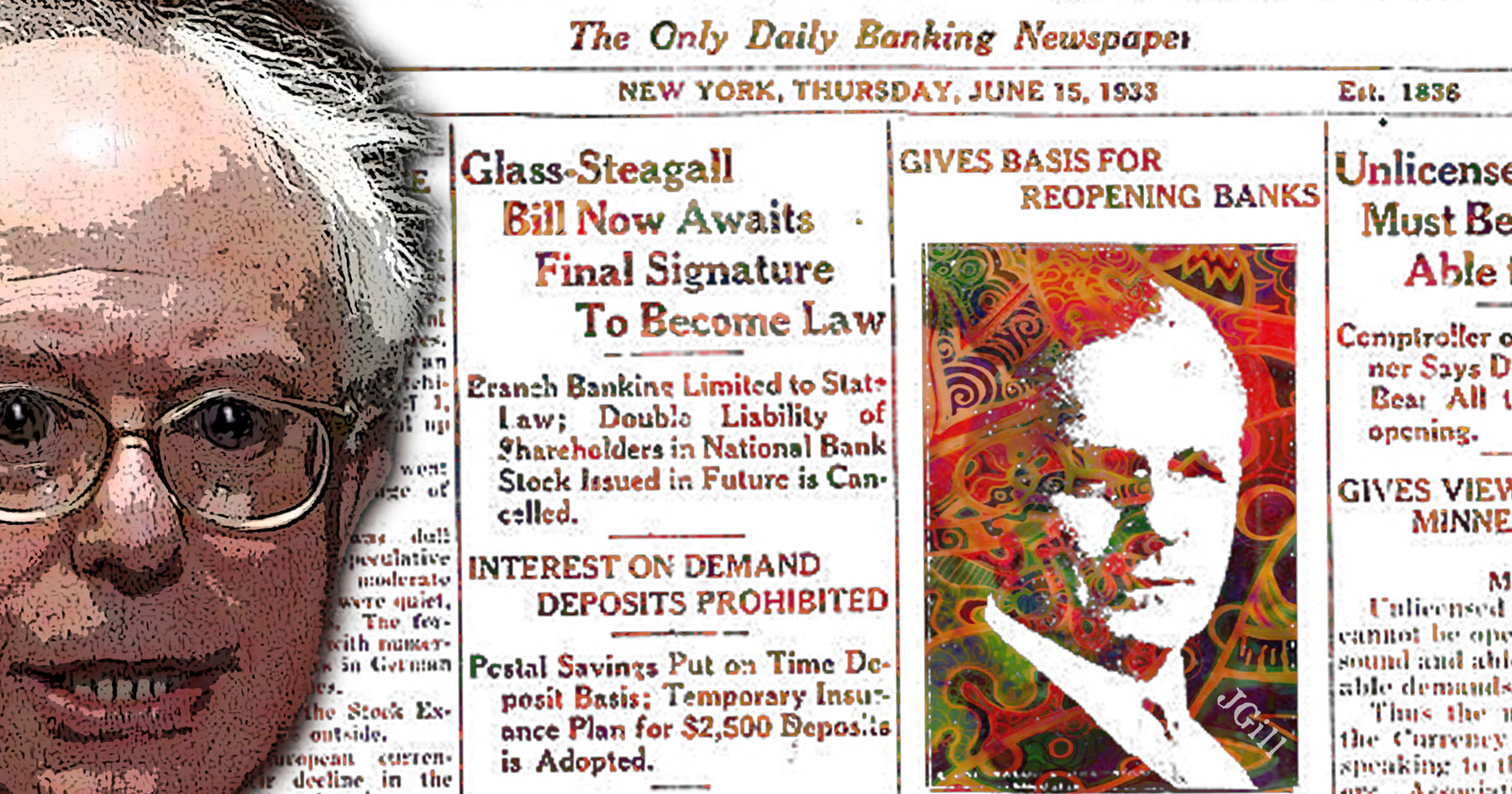
And even when he’s obviously wrong, he’s a breath of fresh atmosphere. Take his recent call for turning the credit ratings institutions into non-profits, or into government-run bureaus. It’s good to hear someone on the left blame something other than the partial repeal of Glass-Steagall as the cause of the Crash of 2008, and (thus?) of the current “Great Recession.” Glass-Steagall was utterly irrelevant to the institutions that were hit hardest in 2008’s collapse; it has, nevertheless, served as leftists’ idée fixe for years now. Embarrassing.

The ratings agencies, on the other hand, did play a part in the crash.

Still, remember: their prominence and importance (and very existence) in financial sectors rests entirely upon one provision of FDR’s New Deal.

More importantly, Bernie’s favored solution — government bureaus — is no solution at all. Europe’s ratings system failed in 2008, too, as Mark A. Calabria has noted, and “it was the international financial regulators, not the rating agencies, who decided that Greek debt was ‘risk-free.’”

Earth to Bernie: government regulatory failure is normal.

Calabria agrees that we need to have a political conversation about the ratings agencies, but insists it be “based on facts,” not ideology.

I’m all for the facts, but ideologies are inevitable. And ideologies promoting Big Government inevitably fail.

This is Common Sense. I’m Paul Jacob.


Printable PDF
Bernie Sanders, Glass Steagall, ratings, agency, Common Sense, illustration, Paul Jacob, James Gill


Categories
Accountability general freedom moral hazard national politics & policies political challengers responsibility tax policy

Bankrupt Leadership

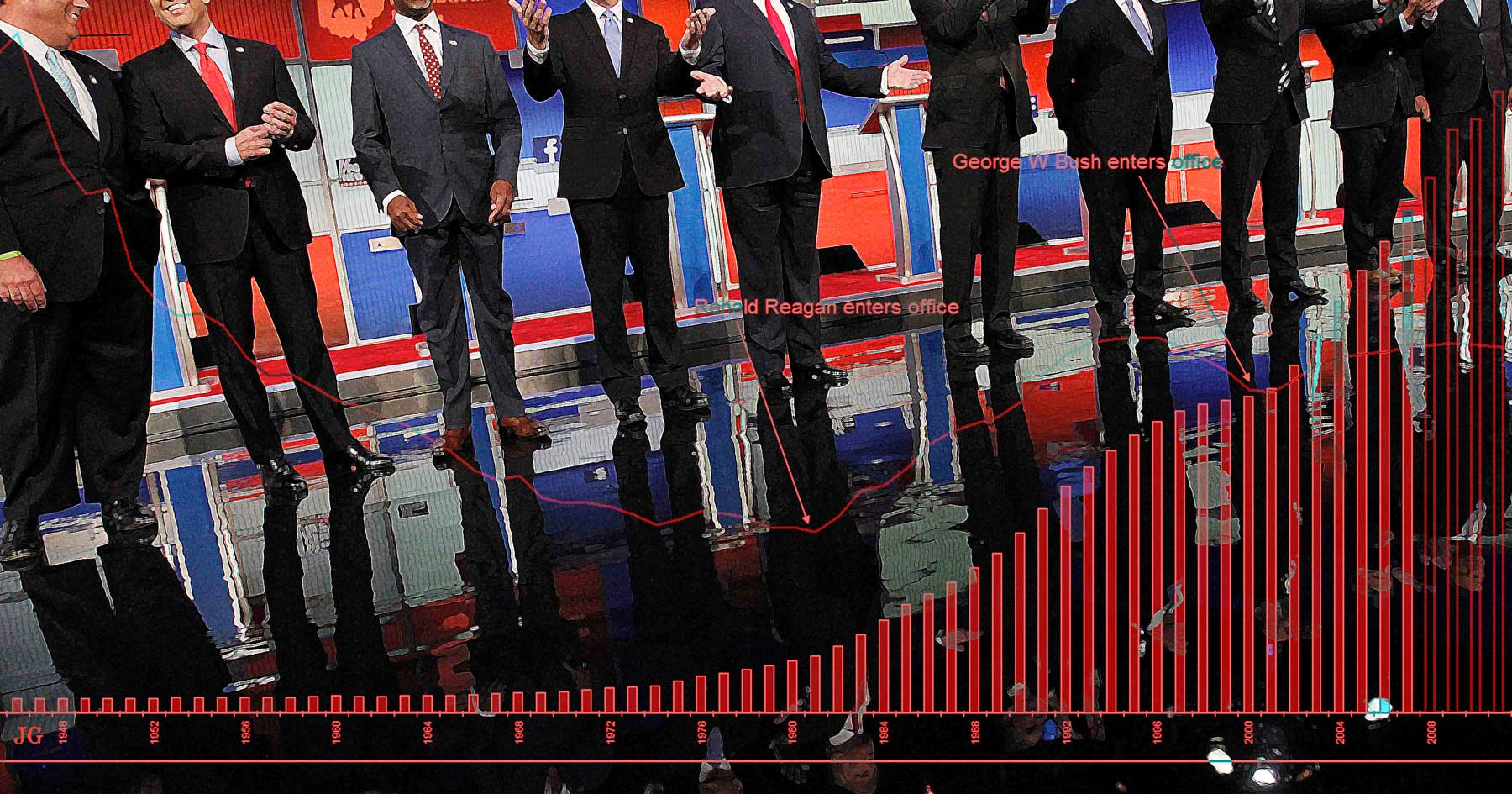
Sen. Rand Paul wasn’t the only thing absent from the GOP presidential stage last Thursday.

Also missing? Any meaningful talk about reducing federal spending and avoiding a sovereign debt crisis. The debt looms over all our heads. But you wouldn’t know it to listen to the GOP hopefuls. (And the same nearly goes without saying for the Democratic Party’s debt-denying presidential aspirants.)

Way back when the Bush Administration had lost America’s confidence, deficits and debts were a common concern. Much of the disgust that birthed the Tea Party movement was disgust at Republican over-spending, as well as at the bailouts that spurred the initial protests. And then came Obama, Obamacare, and a 70 percent increase in federal debt.

Why the silence now?

Nick Gillespie, of Reason, figures that Republicans don’t really care about deficits and debts.

Andrew Flowers, of FiveThirtyEightPolitics, wonders whether the GOP has abandoned the issue because Republicans don’t want to face the fact that Obama has, indeed, reduced deficits — though definitely not the debt, which has nearly doubled.

Alternative theory? Republicans have given up hope, because the last two Democratic presidents, Bill Clinton and Barack Obama, have successfully threatened government shutdown over even the itty bittiest spending cut, safe in the knowledge that the mainstream media’s full spin-cycle will be blaming conservatives.

This has made it easier for Big Government Republicans to embrace greater military funding and other spending programs, as Gillespie notes.

But real leadership recognizes the present danger of debt.

This is Common Sense. I’m Paul Jacob.


Printable PDF

national debt, debt, deficit, debate, Republican, Democrat, Tea Party, CommonSense


Categories
Accountability general freedom government transparency local leaders porkbarrel politics tax policy term limits

The Reign of Trickery

Arkansas State Sen. Jon Woods’s reign of trickery is ending. As reported Monday, he has chosen not to seek another term in the legislature.

It’s ironic. Woods defrauded Arkansas voters with a deceptively worded 2014 ballot measure. His successful scam weakening term limits allows him to stay in the Senate for 16 years, instead of just eight. But now, angry voters won’t allow Woods another term.

At least, that sure appears to be the case.

If voters in next year’s March primary could possibly be as uninformed about Woods’s record as they were about last November’s Issue 3, he would have gotten away with it. But Woods has made enemies: term limits supporters and Conduit for Action, a group sharply critical of him for gutting the Arkansas Ethics Commission, to identify two. He not unreasonably fears they would communicate with his constituents.

In effect, “tell on him.”

Fool the voters once, shame on Woods. Fool the voters twice . . . well . . . ’tain’t going to happen. That’s not to say the sly schemer didn’t have another unethical, underhanded, anti-democratic trick up his sleeve. Of course he did.

“I’ve had serious conversations with my family about leaving . . . since April,” Woods told reporters. Yet, the incumbent didn’t bother to announce publicly that he was vacating the seat until the November weekend before a Monday filing deadline.

Seeking to pick his replacement, Woods informed insiders of his intentions, while leaving the rest of his district in the dark until it was too late.

Luckily, Justice of the Peace Sharon Lloyd, had already stepped up to challenge Woods — and his insider political games.

This is Common Sense. I’m Paul Jacob.


P.S. Circumventing meaningful elections to provide a leg-up to a crony by waiting until the last moment to announce a retirement, as Sen. Woods did, happens far too often. It’s another good argument for term limits.


Printable PDF

Arkansas State Senator, Jon Woods, tricks, deceive, elections, Common Sense


Categories
free trade & free markets general freedom nannyism national politics & policies tax policy

Pass/Fail/Pass

While the Ohio measure to legalize marijuana did not pass, this week, the Washington State measure to wrest tax limitations out of a recalcitrant legislature did indeed succeed, with a 54 percent win.

Win some, lose some.

But in both these cases, there is some evidence for a general smartening up of the voting public.

With Ohio’s Measure 103, the support for cannabis legalization, a few weeks before Election Day, seemed strong. But the more voters looked at the measure, the more they caught a whiff of stink — and it wasn’t skunk weed. It was crony capitalism and insider favoritism. So, while a solid majority reasonably favors legalization — even in Ohio — it strikes most reasonable people that the measure’s secondary provision of setting up a monopolistic/oligopolistic production cartel is as anti-freedom as the legalizations is pro.

Smart folks saw through the proposal. Cannabis legalization is proceeding, state by state. Better results for legalization next time?

Perhaps, provided a better measure is offered.

Washington’s I-1366, on the other hand, had several levels to it, too, but they worked together. Voters seeking a constitutional tax limit, got it — or, if the legislature balks at delivering it as a future referendum (as the measure instructs) then the initiative’s main feature would kick in and the sales tax would be lowered. Low-tax voters get low taxes either way, legislature cooperating or resisting.

As I’ve explained some time back, repeated legislative betrayal had forced Evergreen State super-activist Tim Eyman to concoct this rather clever ploy.

In both Ohio and Washington, what voters voted against was against politics-as-usual — and that is good, no?

This is Common Sense. I’m Paul Jacob.


Printable PDF

November 2015 vote, Washington, Ohio, marijuana, legalization, illustration


Categories
crime and punishment general freedom nannyism national politics & policies tax policy too much government

Not Plutonium

If Ohioans pass Issue 3 today, the days of pot prohibition will disappear like the smoke from a wild night’s last bong hit.

That’s sorta what Nick Gillespie of Reason argued yesterday, anyway. “[I]f marijuana can be legalized in Ohio,” he wrote, “it can — and will be — legalized everywhere and the war on pot is effectively over.” Why?

Ohio is the ultimate embodiment of mythical “middle America” and a state that once plastered “the Heart of It All” on its license plates. It’s poised to become just the fifth state to legalize weed — before liberal blue states like California, Maryland, New York, Massachusetts, and perhaps most importantly, before its dark twin in college sports and economic dissipation, Michigan. Given its paradigmatic normalcy, Ohio can be the place where the drug war . . . finally goes to die.

But there is a disturbing aspect to Issue 3: “Crony Capitalism.”

The constitutional amendment would not simply legalize growth and sale, subject to regulation similar to alcohol or tobacco. Though it would legalize home growth, it stakes out a complicated limited licensing system for commercial sale, allowing for only a handful of growers in the state.

Gillespie quotes one pro-legalization activist who objects to the very idea that “any group or corporation has the exclusive right to grow marijuana and sell it. It’s not plutonium. It’s an agricultural commodity that should be regulated like one.”

A recent poll shows voters evenly split on Issue 3, but increasingly troubled that the measure creates an un-free market, a lucrative marijuana monopoly for those funding the initiative.

Today’s balloting may determine only whether voters like marijuana more than they dislike monopolies.

This is Common Sense. I’m Paul Jacob.


Printable PDF
marijuana, legalization, Ohio, law, crime, illustration, Common Sense