Categories
Accountability ballot access general freedom government transparency ideological culture initiative, referendum, and recall insider corruption local leaders national politics & policies property rights Regulating Protest responsibility too much government U.S. Constitution

The Great Faction

Politics isn’t a pretty business.

Frédéric Bastiat called the beast it serves “that great fiction” not because it doesn’t exist — intrusive state power sure persists — but rather because what it promises cannot really happen: “everyone living at the expense of everyone else.”

What can we do? How do we counteract a game that is rigged to increase the insanity, not reduce it?

Last week I indicated one thing a minor party with that goal in mind could do: use its power of spoiling elections to change major party behavior, and thus give citizens a fighting chance to restrain governmental metastasis.

Cancer.

I also suggested “blackmailing” the major parties into setting up a system of voting that . . . ends the power to blackmail! I believe that system — ranked choice voting — holds many positives, not the least of which is ending strategic voting, wherein voters are tempted to “falsify” their own preferences and support candidates they might dislike. This is as corrupting to the citizenry as the Great Fiction itself.

Let’s hope a savvy minor party leverages the major parties, gaining reforms to improve the system. Regardless, we can all — independently — push two other limits on political power:

  1. term limits at all levels, and
  2. initiative and referendum rights in all the states, not just the 26 that have it now.

Initiative and referendum rights would give ordinary citizens the leverage to possibly restrain the mad rush to live at each others’ expense. With the initiative, citizens can gain term limits, which produce more competitive legislative elections and lead to fewer legislators captured by the interests loitering in the capitol.

This is Common Sense. I’m Paul Jacob.

PDF for printing


Categories
Accountability free trade & free markets general freedom national politics & policies property rights Regulating Protest

Union Dues, Don’ts

You may soon be able to shred your union card — if you are careful.

By “you” I mean You, the reluctant union member.

If you’re not one, though, perhaps you know somebody who is, someone who’d be happy to learn that the Supreme Court is on the verge of dealing a huge setback to coercive unionism.

John Hinderaker explains at Power Line. The Supreme Court is expected to soon decide a major case in a way that “bar[s] public employees from being forced into unions, or from being required to support unions via the fiction of ‘fair share contributions.’ ” (Much of that money goes straight to Democratic Party coffers.) With Neil Gorsuch now on the bench, a 4-4 holding pattern is expected to become a 5-4 decision in favor of plaintiffs suing for freedom from mandatory union membership.

Sounds good.

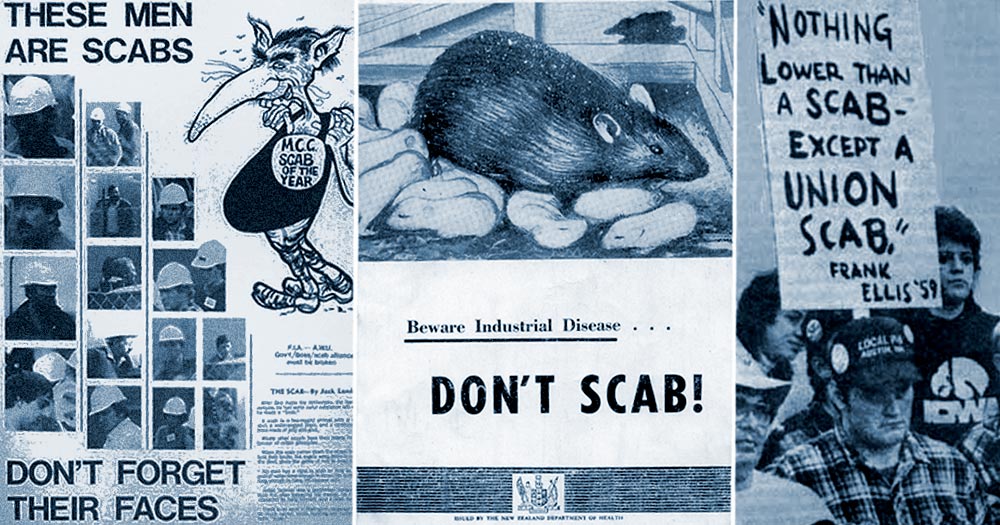
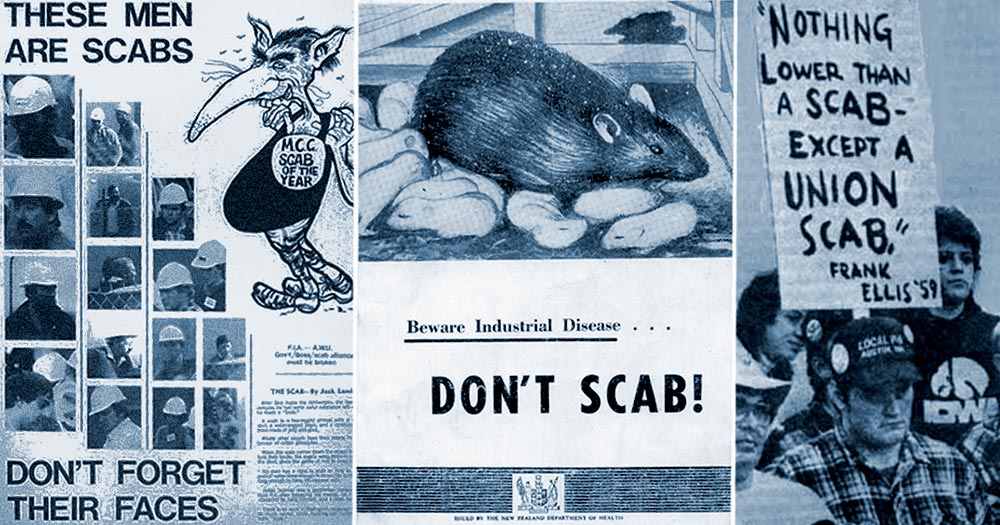
Problem is, though, that union officials are working to trick members into paying dues in perpetuity. For example, Education Minnesota is trying to con its 86,000 teachers into signing “Membership Renewal” forms assenting to automatic renewal of fees – unless the signatory makes a special effort to opt out.

The union hopes members will sign the cards and forget about them, continuing to fund the unions, and Democratic politics, indefinitely — even if the high court rescues everyone from mandatory membership.

So, if you happen to be trapped in a union at the moment — watch what you sign. And watch the news.

This is Common Sense. I’m Paul Jacob.

PDF for printing


Categories
Accountability crime and punishment folly general freedom ideological culture local leaders media and media people moral hazard national politics & policies political challengers property rights Regulating Protest responsibility

Alt-Comparisons

“There is no comparison,” concluded Washington Post columnist Margaret Sullivan, after spending her entire column doing just that, i.e. comparing Antifa, the so-called “alt-left,” with Nazis and white supremacists, the so-called “alt-right.” 

When Trump spoke about Charlottesville violence on both sides, Sullivan argued, “He was comparing things that aren’t the least bit equal, neither in scale nor in intent.”

Sullivan trumpeted statistics compiled by the Anti-Defamation League. The U.S. had 372 politically motivated murders between 2007 and 2016, with 74 percent committed by right-wing extremists and only 2 percent by left-wing extremists.*

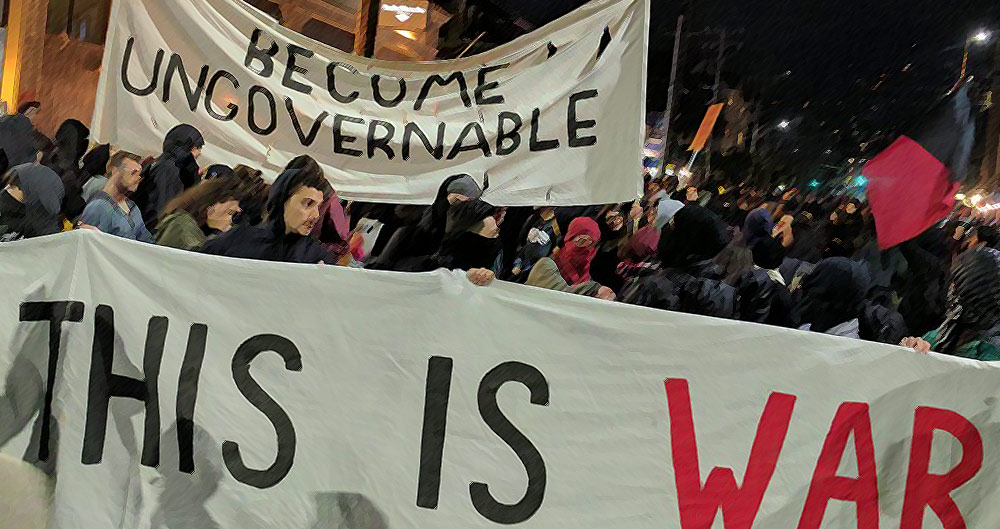
Yet, those perpetrating 2 percent of such slayings can legitimately be compared to those perpetrating 74 percent — and also likened to thugs who beat down opponents in the street (thankfully without murdering them).  

All of the above use violence to achieve political goals.** Some are more deadly than others, but the violent actions of all should be condemned. 

Sullivan acknowledged that “it’s safe to say that most news consumers, if they know anything about antifa, know what the president has told them, and what they’ve gleaned from the club-wielding protesters shown endlessly on TV . . .”

Are citizens not supposed to take note of the violence in living color right before their eyes?

And why are folks uninformed? Could the mainstream media’s failure adequately to cover, say, previous Antifa rioting at Berkeley and elsewhere have something to do with it?

Lastly, Sullivan called on the media “to resist conflating [Antifa] with liberal groups.” Agreed. And let’s have the same fairness in not conflating Nazis and the KKK with conservatives.   

This is Common Sense. I’m Paul Jacob. 
 

*  By the process of elimination, “moderate extremists” are apparently committing close to a quarter of all political killings.

** I’ve not drilled down into these stats, or figured out what, precisely, qualifies as “political.”


PDF for printing


Categories
Accountability crime and punishment First Amendment rights general freedom media and media people moral hazard nannyism national politics & policies property rights responsibility too much government

Google: Disagreement

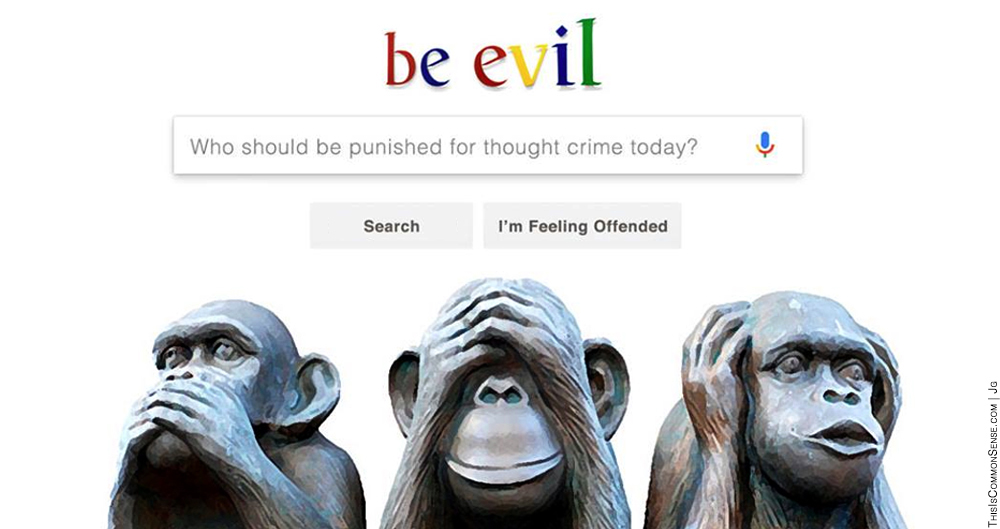
Once upon a time, Google penned a stern note to self: “Don’t be evil.”

What you regard as avoiding evil, though, depends on what you regard as doing good.

Does Google think it’s “good” to fire someone for offering reasoned objections to vapid pieties about why there are more men than women working as programmers, and about how to fix the problem? Assuming it is a problem.

If the answer is yes, then it’s up to more reasonable people to say, “No, Google, stomping on candid internal discussion of your (bad) politics and policies is not ‘doing good.’”

Alas, some Google critics push for a “remedy” worse than the problem: government force. They want government to impose new prohibitions and mandates on large private firms that help people to spread their opinions.

I don’t necessarily agree when a firm — Google, Twitter, PayPal or anybody else — stops providing services to persons expressing views that managers and HR departments disdain. Yet I may agree. No one is morally obligated — and no one should be legally compelled — to help spread the views of others.

I certainly refuse to distribute any installment of “Common Sense” guest-authored by The Anti-Paul-Jacob Club.

When market actors make bad decisions without violating anyone’s rights, others have many powerful and peaceful means of opposing those decisions. Criticism. Boycott. Competition.

But we shouldn’t seek to outlaw the decision-making.

The right to freedom includes no guarantee that one will always do the right thing as others see it.

This is Common Sense. I’m Paul Jacob.

PDF for printing


Categories
Accountability folly free trade & free markets local leaders nannyism property rights responsibility too much government

How to Ruin a Thoroughfare

Cities require some planning. But the further beyond a certain minimum, the greater the ease with which a central planning authority can be captured — by zealots with more stars in their eyes than brains in their heads.

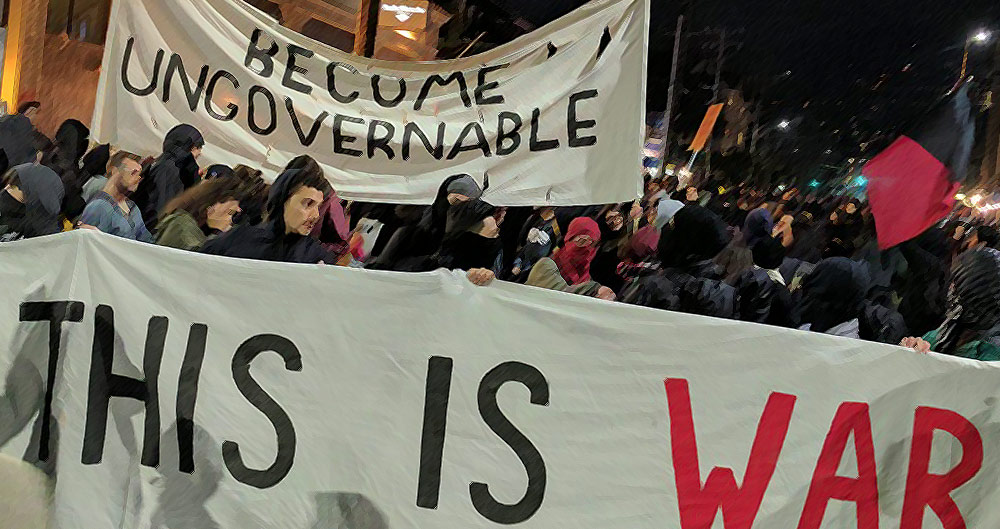
Portland, Oregon, is a case in point. Students from Portland State University had this brainchild: “Better Naito,” a project to transform SW Naito Parkway to “enhance the lives of pedestrians and bikers along the Waterfront,” as Jessica Miller of Cascade Policy Institute explains. Their notion was to reduce “car capacity from two lanes to one” during the peak season (actually more than half the year), opening up the cordoned-off lane to folks walking and riding bicycles.

I’m not kidding.

Though proponents of the program enthuse about the “positive feedback” from the public, they tend not to deal with complaints from adjacent business owners, who now “see fewer shoppers” and must accommodate “employees who experience longer commutes.”

Opponents are organizing. The Portland Business Alliance promotes its petition with a simple question: “How Exactly Is ‘Better Naito’ Better?

Portland is a prime example of the New Urbanism in action, which seems set on creating cramped places for people to live and discouraging folks from using their own cars. I’ve talked about this before, focusing on planning critic and Cato Senior Fellow Randal O’Toole. He has long been fighting the city planning cranks who appear dubious about their very job: providing roads and sewers and waterways that serve the all a city’s citizens, native, newcomer, and traveler alike.

My advice? Sign that petition, if you vote in Portland.

The rest of us better plan to take a hard look at our city planners.

This is Common Sense. I’m Paul Jacob.

PDF for printing


Categories
Accountability crime and punishment general freedom local leaders moral hazard nannyism national politics & policies privacy property rights responsibility too much government U.S. Constitution

The Minimal Use of a Finger

Drivers in Washington State have a new law to . . . swerve from?

“New distracted driving law starts Sunday, July 23,” the Washington State Department of Transportation (WSDOT) tweeted last week. “The law forbids,” Washingtonians were told,  “virtually all use of handheld gadgets such as phones, tablets, laptop computers and gaming devices while driving.”

The idea is to prevent accidents. Though distracted driving’s danger has been contested, texting while driving certainly seems a kind of crazy.  

Thankfully, it’s possible to talk “hands free.”

Which, it turns out, the new law does allow. Drivers may activate and de-activate hands-free devices (and apps) with the “minimal use of a finger.”

Eating and drinking while driving are also disallowed, but those are “secondary offenses,” which police are not allowed to pull you over for.

At this point, another meaning of “minimal use of a finger” may occur to some readers. What starts out as secondary offenses have been known to be upgraded, legally and practically, to primary offense status.

Does a shiver runs down your back?

Yet another rule! More fines!

More interactions with police.

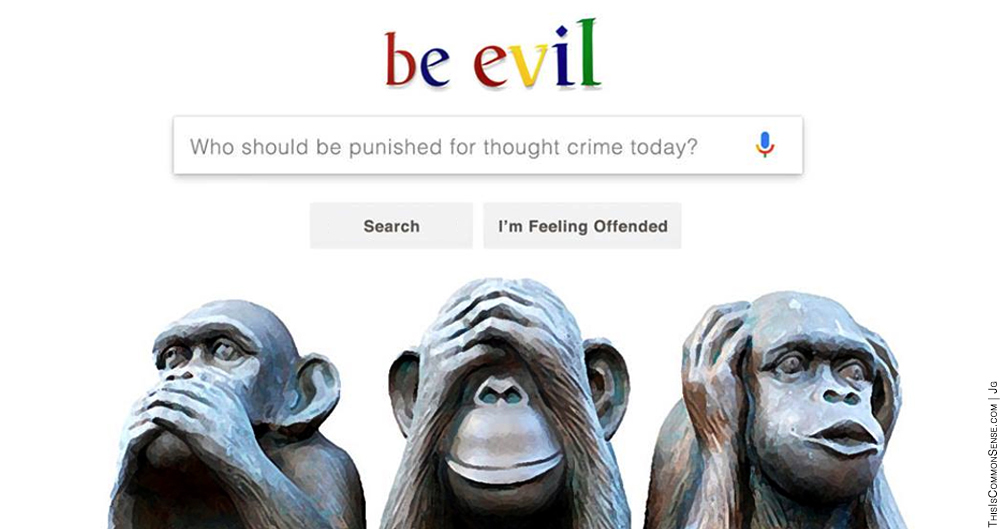
And if all this doesn’t feel “police state-y” enough for you, there is argument in Seattle about whether pedestrians should be prohibited from “distracted walking.”

Yes, some are actually considering that.

I’m reminded of an argument against socialism: government-run enterprises tend to be run “ruthlessly and with special attention to prosecution (and overburdening) of the poor.” Why would anyone want such techniques writ society-wide, in every sector?

Meanwhile, we apparently must live and drive with more rules and more fines and more harassment.

This is Common Sense. I’m Paul Jacob.

Printable PDF


Categories
education and schooling free trade & free markets general freedom ideological culture media and media people national politics & policies privacy property rights responsibility too much government U.S. Constitution

According to Economics

“Everywhere you look, economics is despised,” writes Tom Woods in his Tuesday email letter.

You know what isn’t despised? A daily email letter.*

But I digress; back to economics.

“The gimme-free-stuff people hate it because they don’t like being told that there might be undesirable side effects from seizing other people’s things.”

Well, true enough. But turn it around: many people demand free stuff at least in part because they do not understand the bigger picture . . . which Mr. Woods ably provides in his daily podcast and on his weekly Contra Krugman podcast with economist Bob Murphy.

“Politicians hate it, because it imposes logical constraints on what political activity can accomplish.”

True, but, like many in the general public (from whence they come), politicians’ prior lack of economic knowledge also leads, in part, to their hubris.

“Even some folks in the business world hate it, because (1) they’d rather agitate for special privileges than hear the case for free markets, and (2) they’d rather have low interest rates than be warned about the causes of the business cycle.”

Yes, too true. But, again, business people are generally just people, most of whom haven’t even been exposed to something beyond boring and misleading textbook econ, if that. Mr. Woods knows that, since that’s what his mission is, exposing more folks to ideas beyond what he calls “the index card of allowable opinion.”

Well, I’m all about allowing the unallowable — if it’s right!

This is Common Sense. I’m Paul Jacob.
 

* Historian Woods is now doing what I’ve been doing since 1999, providing a daily common-sense thought that is short and easy-to-read and dropped into your email box every weekday. Mine goes up online at ThisIsCommonSense.com; I don’t see his on his website . . . but I do see a lot of books and podcasts!


Printable PDF


Categories
Accountability crime and punishment government transparency moral hazard national politics & policies property rights responsibility too much government U.S. Constitution

The Police State Is in Sessions

U.S. Attorney General Jeff Sessions threatens to make himself one of the biggest threats to your liberty.*

President Donald Trump’s pick for Attorney General just promised to encourage police departments to seize the personal property (cars, houses, cash) of criminal suspects.

The practice is called asset forfeiture. It comes in two forms, criminal and civil. Compelling objections have been raised against civil forfeiture, which accounts for nearly 90 percent of all forfeitures. Abuse is rampant in cities, counties and states around the country, routinely used against people who have not even been charged, much less prosecuted and convicted. (Often not really even suspected of criminality.)

“No criminal should be allowed to keep the proceeds of their crime,” he told conference attendees in Minneapolis, Minnesota, on Monday.** But how can our top federal law enforcement officer ignore the profound difference between a suspect and a criminal?

No one is a criminal, before the law, until proved in court. Taking away property to make it harder for suspects to defend themselves — which is what RICO laws and other Drug War reforms intended to do — is obviously contrary to the letter of the Fourth and Fifth Amendments as well as the spirit of the U.S. Constitution.

Sessions announced he’ll soon offer a “new directive on asset forfeiture — especially for drug traffickers.” Unless he clearly indicates that it will only be used against the property of persons legally convicted of crimes, Sessions will be merely making charges of an “American Police State” stick.

America’s top lawman argues completely contrary to American principles of justice.

This is Common Sense. I’m Paul Jacob.

 

* Bigger than Eric Holder was. Bigger than Loretta Lynch.

** Sessions also went on to say that “sharing with our partners” — local police departments around the nation — is a good thing. This is, systemically, the most dangerous aspect of it all, for it encourages police departments to take things for their own benefit.


Printable PDF


Categories
Accountability folly general freedom ideological culture moral hazard nannyism national politics & policies property rights responsibility too much government

The Worst Is the Enemy of the Cure

You’ve heard the adage: “the perfect is the enemy of the good.” This can be true in politics, where opposing an ameliorating reform because it is not ideal means, sometimes, getting stuck with unmitigated policy disasters.

But there’s a corollary: in politics the worst is likely to emerge . . . when practiced compromisers succumb to fearing the best, because unpalatable, or perhaps not in line with political interests.* Trying to avoid the “best is the enemy of the good,” we’re left with the outrageously awful.

Cures worse than the disease are not uncommon. The Democrats’ “Affordable Care Act” (ObamaCare) was a clumsy, badly drafted hodgepodge designed to fix problems by doing the opposite of what made sense.

And it immediately started having ill effects, pushing up costs for many, many health-care and medical insurance consumers.

No wonder Republicans ran year after year promising repeal.

But now that Republicans have the chance for a real cure, they’re chickening out. The Senate just debuted their ObamaCare replacement. And Senator Rand Paul (R-Ky) calls it “worse than ObamaCare.”

Why worse?

Because Republican politicians are better at promising than delivering. Fearing how those who directly benefited from ObamaCare might squawk, and how badly the GOP would be treated in the media because of this, moderates went with what they know: snake oil.

Fortunately, Rand Paul’s opposition may kill the bill. If one other senator joins Dr. Paul — and Sen. Susan Collins (R-Maine) who announced her opposition for other reasons — in not voting for the monster, it will not pass.

Which is great, because going for a cure worse than the previous cure leaves us all with the worst possible outcome.

This is Common Sense. I’m Paul Jacob.

 

* Like many cures. Politicians these days no longer have the knack for the necessary “spoonful of sugar” to help medicine go down. They prefer distributing just sugar pills.


Printable PDF


Categories
free trade & free markets general freedom nannyism national politics & policies property rights responsibility

Mr. Jetson, Call Your Office

Increasingly, people are worrying about robots.

They’re taking our jobs, we’re told. Soon, all we’ll have left are robots. Massive unemployment!

While some find this scenario utopia and bliss,* it sounds dreadful to me.

Silver-plated lining is, I doubt it. This kind of worry about technology making laborers obsolete has been around at least since Ned Ludd, who broke factory machinery to save jobs back in 1779.

How is this next wave of technology any different? If technology destroyed jobs on net, we’d all be unemployed now.

Economist Deirdre McCloskey takes this historical view. Writing in Reason, she says today’s high-tech “innovations have actually raised real wages, correctly measured, because a human supplied with a better tool can produce more outputs. And the point of an economy is production for consumption, not protection of existing jobs.”

We’ve always been losing jobs. And new ones are created. Our worry shouldn’t be the jobs lost to new tech, but the lack of new ones coming into existence because of the oldest tech of all: government.

But you know what industry is least resistant to jobs vanishing to robots? Government itself. Sure, some reductions in public sector jobs have occurred, mainly as a result of decreased revenues in the recent “recession.” The job losses there have not been filled by robots, though. Permanent employee positions have been destroyed . . . too frequently replaced by outsourced consultants.

Could robots replace large swaths of public employees? Maybe that wouldn’t be good, actually. The worst-case scenario might be this: government becoming efficient.

We don’t want bad and efficient government.

Kludge may be better.

This is Common Sense. I’m Paul Jacob.

 

* Some even see in this development a sort-of science-fiction rationale for making socialism at long last plausible — robots as the new slave class; all the humans in the leisure class! Yeah, right.


Printable PDF