
Categories
folly general freedom media and media people national politics & policies

The Natural Immunity We Need

“This is two years too late,” said Dr. Jay Bhattacharya, “but it’s a good step.”

Interviewed by The Epoch Times, Dr. Bhattacharya, professor of medicine at Stanford University School of Medicine, is talking about new official COVID-19 guidelines by the Centers for Disease Control.

The CDC no longer recommends

  • the six-foot “social distancing” rule, which led to maximum comfort for paranoiacs, introverts, and Scandinavians in supermarkets and other public spaces;
  • that the unvaccinated quarantine after exposure;
  • testing for the asymptomatic; and
  • contact tracing outside of hospitals and places like nursing homes.

Bhattacharya’s interpretation of all this is that the “CDC is admitting it was wrong here, although they won’t put it in those words.”

Much of the new regimen is the result of understanding that natural immunity is a huge factor in the epidemiology of the disease. Bhattacharya’s complaint is that this has always been the case, and that the CDC and government lockdowners should have recognized this early on.

While the expert class has inflicted much damage, the CDC continues to whistle past the graveyard. “We’re in a stronger place today as a nation,” the author of the new guidelines insists, “with more tools — like vaccination, boosters, and treatments — to protect ourselves, and our communities, from severe illness from COVID-19.” 

But to get those mediocre-at-best vaccines past regulatory hurdles, government-directed medicine suppressed information about (and public discussion of) the most basic tools we have to treat new diseases. Governments at many levels, along with social media companies and CNN and many doctoring outfits, actively suppressed a number of treatments that could have saved lives, with HCQ and Ivermectin being only the most infamous.

The natural immunity we need to encourage most is skepticism toward government bureaucrats and Big Pharma flacks.

This is Common Sense. I’m Paul Jacob.


PDF for printing

See all recent commentary
(simplified and organized)
See recent popular posts
Categories
crime and punishment national politics & policies U.S. Constitution

The Act That Can’t Cut It

During Donald John Trump’s time at 1600 Pennsylvania Avenue, he expressed his displeasure with some documents by tearing them up.

Which is illegal, as CNN takes pains to make clear. His underlings would then scoop up the shreds of paper and tape them together. 

Keyword: farcical.

This comedy might be funny to watch in a sequel to, say, In the Loop, the 2009 political satire. But it’s not so funny in the current iteration, with the FBI’s raid on Trump’s Mar-a-Lago mansion.

The search for documents “illegally removed from the White House” has seems an obviously political ploy. Since Trump was legally allowed to de-classify documents, his taking of allegedly still-classified docs seem, well, a rather trivial matter.

Keyword: petty.

Right-leaning media and the left-ensconced media talk about all this very differently, of course, and I confess to finding the former a little more convincing than the latter. Focusing on documentation seems like an excuse to find some petty thing to disqualify Trump from running again in 2024.

While Trump not running again might be the best thing for the GOP, and America, that’s not really relevant: Republicans are stuck with the one champion, with few decent alternatives, and Democrats are in worse shape. Which is why they fret about Trump.

Using the Presidential Records Act of 1978 as a disqualifier for a Grover Clevelandesque re-run of a defeated president is on everybody’s lips. But there’s a problem: how could it possibly pass constitutional muster? The Constitution specifies the qualifications for the job. Congress cannot add or subtract to those qualifications by law.

That was the argument used to disqualify term limits in U.S. Term Limits v. Thornton: qualifications for candidates were specified in the Constitution. Neither states nor Congress could change it.

If Democrats seek to breach this principle . . . then let’s look at term limits again.

Keywords: do it.

This is Common Sense. I’m Paul Jacob.


PDF for printing

See all recent commentary
(simplified and organized)
See recent popular posts
Categories
ideological culture national politics & policies social media

Receding From the Facts

Thesis: we’re entering recession, but the Biden administration disagrees.

For political reasons.

May we discuss?

Sure, here in Common Sense. (We’ve yet to censor or flag ourselves.) Big Tech social media is a different story.

Loath to preside over an officially designated recession, the Biden administration suggests that when you look at all the data in just the right light, it’s “unlikely that the decline in GDP in the first quarter of this year — even if followed by another GDP decline in the second quarter — indicates a recession.”

Others disagree, saying the familiar definition cannot be so summarily dispatched. On Instagram, poster Graham Allen cheekily asked Siri how we know it’s a recession. Her reply: “two consecutive quarters of negative growth.”

Not a sacrosanct indicator, but standard.

Enter the Guardians of Discourse. 

Meta (which owns Facebook and Instagram) has flagged Allen’s post as “false information” and in some cases prevented viewers from seeing it.

The “independent” fact checker on duty was Politifact, which warned Web surfers it just ain’t so that “the White House is now trying to protect Joe Biden by changing the definition of the word recession.”

This is where we’re at. Discussion of political motives at the White House has become so hazardous that the People of the Fact Check must rush to repudiate any intimation that any assiduous politics is going on. It’s all just assiduous data comparison.

Well, reality check: “fact checks” can be biased too.

This is Common Sense. I’m Paul Jacob.


PDF for printing

See all recent commentary
(simplified and organized)
See recent popular posts
Categories
crime and punishment national politics & policies Second Amendment rights

A Mad Cycle

The cycle runs like this:

  1. Some (usually young) man shoots a number of people in a gun-free zone;
  2. Media people whip their viewers into a frenzy about the need for “common sense gun control laws” or a complete gun ban;
  3. Politicians scurry to “do something.”

Despite the fact that the Uvalde and Indianapolis mall shootings suggest contrary policies, Congress has just produced a law that actually takes a step . . . in the wrong direction, adding more penalties, for example, on top of existing penalties for convicted felons caught in possession of firearms.*

“Contrary to what you may have read or heard, the story of how that happened is not an inspiring example of bipartisan cooperation to protect public safety,” writes Jacob Sullum in Reason. “It is a dispiriting illustration of how the worst instincts of both major parties combine to produce policies that are neither just nor sensible.”

The deal gave R’s tougher sentences and D’s more gun control, and “both got to pretend they were doing something to prevent mass shootings.”

Not addressed? The insane policy, originally pushed by one Senator Joe Biden, of “gun-free zones.” As anyone with common sense knows, bad guys who want to make a statement by killing lots of people, prefer gun-free zones to other areas.

A more subtle aspect of the cycle is how the topic of gun legislation, as handled by politicians and major media propagandists, itself elicits broken men to break the law and kill, kill, kill.

What if the best way to break the cycle would be to accept the Second Amendment as a given and spurn every demagogue in Congress and the media who persists on defying the Constitution?

This is Common Sense. I’m Paul Jacob.


* Neither the Uvalde nor the Indianapolis shooter were convicted felons.

PDF for printing

See all recent commentary
(simplified and organized)
See recent popular posts
Categories
national politics & policies too much government

Biden’s Peculiar Odor

William F. Buckley used to say that there is always a presumptive case for order.

Philosopher Joel Feinberg argued that there’s always a presumptive case for freedom.*

This notion of a strong case for or against something prior to specific data can keep philosophers and economists and folks like you and me awake at night.

Here, I’m just going to bring it down to the politics.

Of inflation.

Why are prices — especially fuel prices — rising so?

The Biden Administration has been trying to argue that it’s caused by the war in Ukraine, and Americans’ need to sacrifice to defend that beleaguered country. 

But, as with his talk of “food shortages,” the war is almost certainly an exacerbating, not the prime, factor. Both fuel price spikes and bare shelves demonstrated an alarming trend before Putin invaded Ukraine. 

The cause seems obvious. Do we really need careful studies to show that both were caused by (a) COVID lockdowns and (b) a blizzard of lockdown bailout checks during Trump’s term in office and eagerly pushed also by the current president?

And Biden’s current kick, of demanding that gas stations (!) freeze or reduce prices to “match the cost of production,” has all the odor of cranky, old-fashioned soapbox socialism.

There is a presumptive case that inflation is caused by monetary policy, just as shortages are usually caused by regulations. Trump and Biden and Congress all contributed to over-spending, financialization, and regulatory hits.** But the stink of the growing mess must also affix especially to Biden. After all, one of his campaign promises was to cut production of oil on all government lands and offshore.

This is Common Sense. I’m Paul Jacob.


 * Joel Feinberg, Social Philosophy (1972), pp. 20-22. Where Buckley discussed his presumptive case is your guess or mine. Probably a column back in the 1970s or ’80s.

 ** A few weeks ago an interesting exchange occurred in this website’s comments section, between two friends of this program.

PDF for printing

h/t crAIyon

See all recent commentary
(simplified and organized)
See recent popular posts
Categories
free trade & free markets national politics & policies political economy

Big Oil, Big Profits — Big Deal?

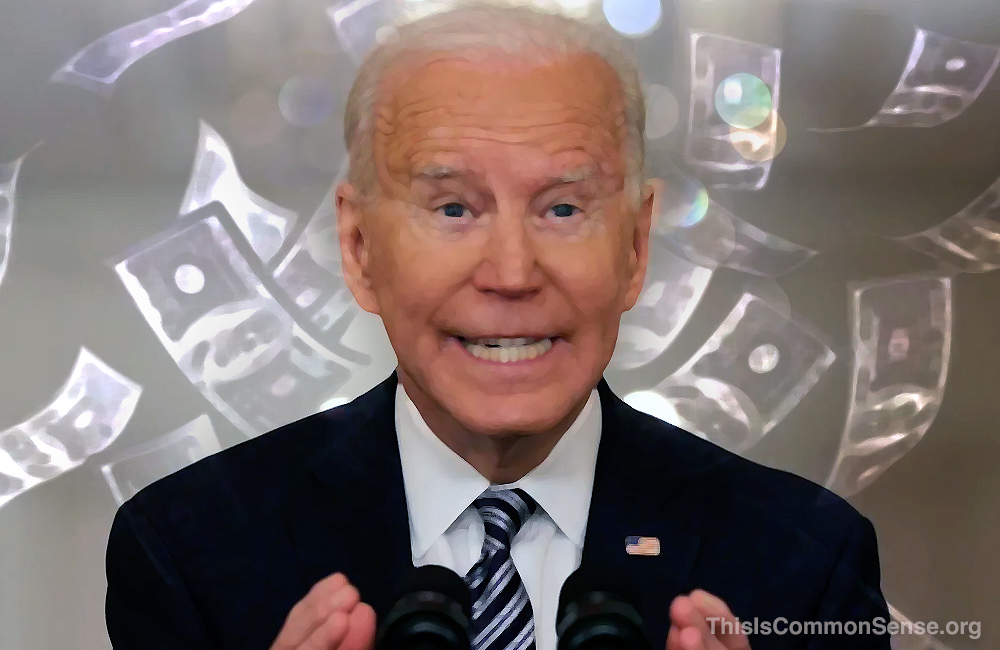
When President Joe Biden accused oil companies of excessive profiteering, and those profits as a cause of inflation, reactions were . . . mixed.

Democrats love that kind of talk. Ronald Reagan, back in his Democrat days, pitched precisely that sort of rhetoric when he campaigned for Truman’s re-election.

Republicans, along with most other Americans, are skeptical. Or just plain incredulous.

Meanwhile, what did Big Oil say?

Chevron’s CEO, Mike Wirth, took special care to complain of the president’s rhetoric, characterizing the administration as having “largely sought to criticize, and at times vilify, our industry.”

Perhaps Biden’s worst vilification was that Exxon had “made more money than God” — as if spending more money than God were his job and that he resented any money he couldn’t spend. 

EXXON responded by noting that the multinational had continued investing in infrastructure even during the pandemic lockdowns when the company “lost more than $20 billion and had to borrow more than $30 billion to maintain investment to increase capacity to be ready for post-pandemic demand.”

In a helpful mode, the company offered that “government can promote investment through clear and consistent policy that supports U.S. resource development, such as regular and predictable lease sales, as well as streamlined regulatory approval and support for infrastructure such as pipelines.”

Biden, who ran on decreasing oil production by regulatory crackdown, received a square hit.

Nonetheless, the Democrats double-down on their worn-out “windfall profits” alarmism. 

After a huge hit to consumption during the lockdowns, the profits are there not as recompense for Big Oil’s regrettable big losses, but as incentives to get out of the Great Suppression. 

We should want profits to entice more investment.

Could it be that Biden wants neither?

This is Common Sense. I’m Paul Jacob.


PDF for printing

See all recent commentary
(simplified and organized)
See recent popular posts
Categories
folly national politics & policies

It’s a Gas, Gas, Gas

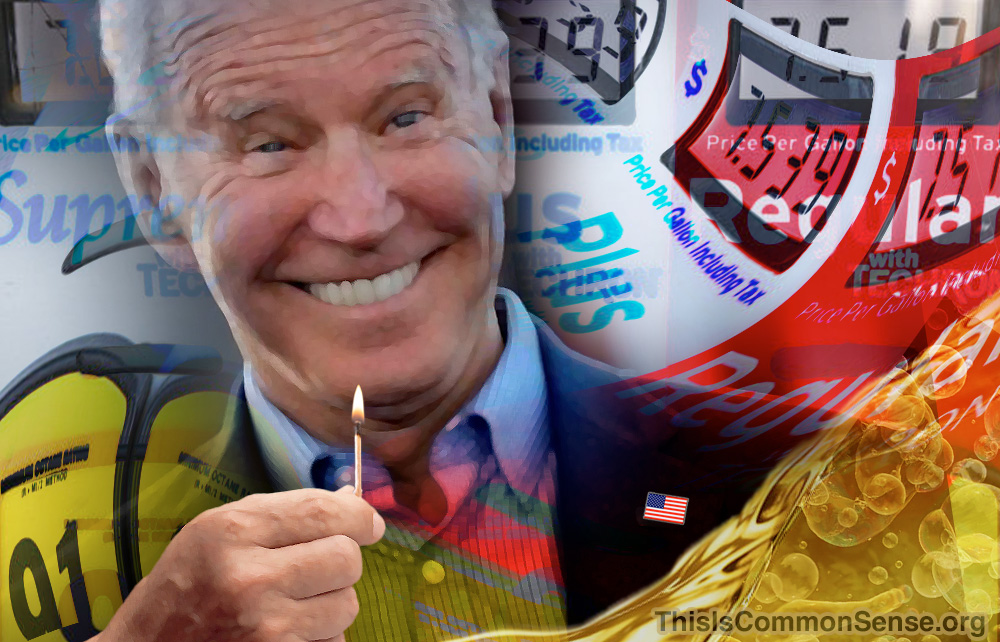
“Senior White House aides are exploring new ideas to respond to high gas prices,” informs The Washington Post, “desperate to show that the administration is trying to address voter frustration about rising costs at the pump.”

Not “desperate” to lower gas prices, mind you — which have hit $5 a gallon, a double-digit increase from last month — but to “address” the resulting “voter frustration” from high prices. 

After all, there’s an election in November. Suddenly, this crisis could affect important people in Washington!

“Biden officials are taking a second look at whether the federal government could send rebate cards out to millions of American drivers to help them pay at gas stations,” The Post reports. This generous brainstorm was previously rejected because “shortages in the U.S. chip industry would make it hard to produce enough rebate cards.” 

America 2022 isn’t even technologically capable of giving money away. 

Administration experts also worried “the idea could backfire by further pushing up prices by adding to consumer demand.” Oh, didn’t Congress repeal the laws of supply and demand?

Someone “familiar with internal administration discussions” offered that the administration was looking at “telling governors to lower or waive their gas taxes.”

Grover Norquist smiles.

“Other proposals floated by policy experts include suspending the Jones Act,” notes The Post story, “which would reduce shipping costs and make it cheaper to get gasoline from the Gulf Coast to the Eastern Seaboard.”

That act should have been repealed years ago. 

“They’re fighting about narrative rather than fighting about substance,” offered an unnamed outside economic adviser, “because realistically, what are they going to do?”

They could open up energy markets, of course — approve gas pipelines rather than blocking them, perhaps. 

Could? Should? Yes. Will? 

Not Biden!

This is Common Sense. I’m Paul Jacob.


PDF for printing

See all recent commentary
(simplified and organized)
See recent popular posts

Categories
crime and punishment national politics & policies Second Amendment rights

Not Saving Lives

Virtue signaling won’t stop a mass shooter. 

Nor will scoring political points. 

If we earnestly want to focus on preventing these horrific attacks, let’s stop wasting everybody’s time advocating new laws that we already know, had they been in effect, would not have stopped the Uvalde, Texas, school shooting

Or the recent massacre in Buffalo. 

Or virtually any other murder spree. 

“On the specifics,” Face the Nation host Margaret Brennan asked Sen. Chris Murphy (D-Conn.), “how would your federal background check have stopped either of these two shooters in Buffalo and in Texas? Neither of them had criminal records.” 

“I just don’t get into the trap of having to write a law for the last mass shooting that captured the nation’s attention,” the senator responded, arguing that “on the same day of the shooting in Uvalde, there were 100 plus other people in this country who died.”

Sen. Murphy was anything but frank, certainly, but it was an admission that his proposal is clearly not geared toward stopping massacres by gunmen.

Americans should ignore the political circus, realizing that the politicians are working on other agendas while these killers have serious and often completely untreated mental health issues. Let’s concentrate public policy — and everyday neighborliness — there.

Lastly, while some dismiss the value of “thoughts and prayers,” I do not. There is a social, emotional, spiritual element that I think we totally discard when all we can talk about is what a bunch of corrupt folks in Washington “must do” to solve our problems.

On the other hand, a return to a culture of mourning, thoughts and prayers might at least sober up those drunk on power.  

This is Common Sense. I’m Paul Jacob.


PDF for printing

See all recent commentary
(simplified and organized)
See recent popular posts
Categories
Fourth Amendment rights national politics & policies

The J. Edgars’ Threat Tags

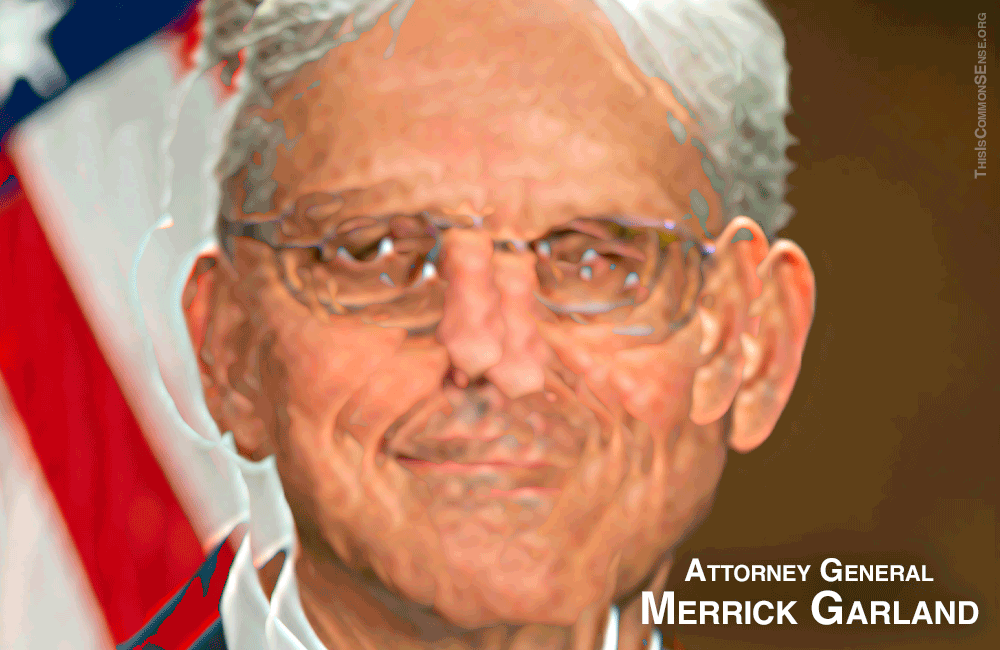
Last year, Attorney General Merrick Garland found himself under fire for putting parents under fire. That is, the Federal Bureau of Investigation was shown to be targeting for investigation parents upset at school boards for promoting Critical Race Theory.

Garland tried to weasel out of the situation, but since then a lot of details accumulated, like the FBI’s National Threat Operations Center special “snitch line” allowing Democrats to report on parents who buck school board opinions on race.

And now it’s been shown to be worse: it is not just about CRT. Parents who complained about mask mandates also got flagged for being “threats.”

From its inception, the FBI has engaged in shady political activities. The Hoover years — in which J. Edgar erected quite a fiefdom for himself, giving rise to the moniker “J. Edgars” for FBI agents — has served as a casebook on how a government operation is not supposed to work.

During the Trump years, agents were caught lying on FISA surveillance warrant applications to engage in a long-running coup attempt. More recently, it was shown in court that the FBI had encouraged the Governor Whitmer kidnapping plot.

On May 11, Representatives Jim Jordan and Mike Johnson co-signed a letter to Merrick Garland on the matter. Whistleblowers, they informed him, had confirmed the FBI was actually investigating concerned parents as “domestic terrorists” using the FBI’s Counterterrorism Division’s “threat tag” system.

Most investigations fizzled, since there was no real threat to be found on most tips, but the partisan slant of the tagging/targeting procedures suggests that the FBI has become, again, a deviously rogue agency pursuing partisan political goals.

This is Common Sense. I’m Paul Jacob.


PDF for printing

See all recent commentary
(simplified and organized)
See recent popular posts
Categories
free trade & free markets general freedom national politics & policies

Quota Requirement Overturned

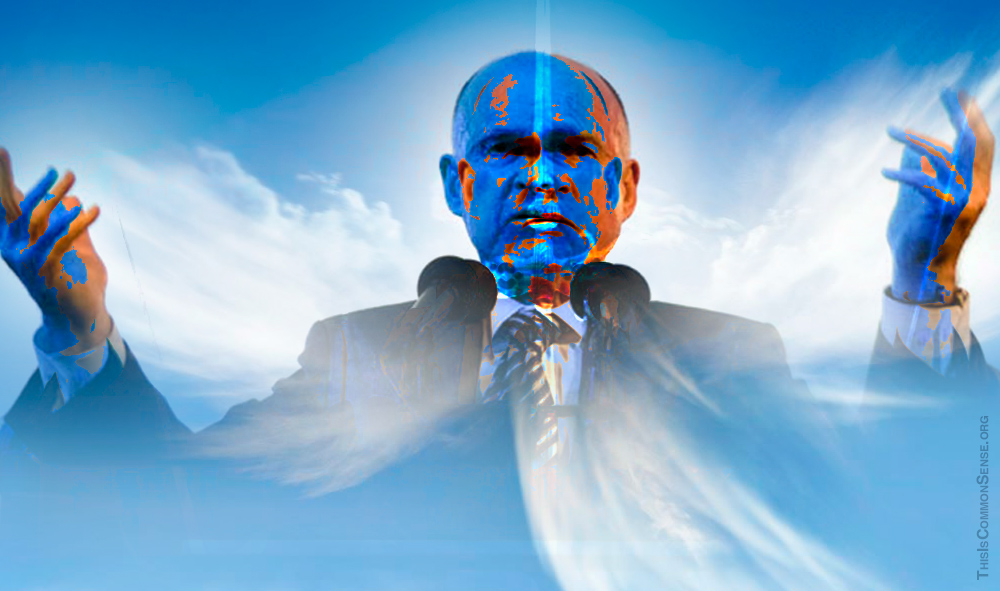
In 2018, Jerry Brown, then California governor, signed a bill requiring corporate boards to include a high percentage of women. 

Now a Los Angeles County Superior Court judge has determined that the state failed to show that “gender-based classification was necessary to boost California’s economy, improve opportunities for women in the workplace, and protect California taxpayers, public employees, pensions and retirees.”

No news yet on whether the state will appeal.

In 2018, Brown had conceded that the law was probably doomed to be judged unconstitutional. But he apparently regarded questions of legality or constitutionality as irrelevant.

“It’s high time corporate boards include the people who constitute more than half the ‘persons’ in America,” he burbled in his signing message.

Fines for disobedience were to be steep: $100,000 for initial violations, $300,000 for subsequent violations.

Of course, it is neither immoral nor a crime to choose a man instead of a woman for a post. Making specific hires criminal depending upon the complexion of a business’s other hires amounts to the politicization of everything, swapping the goals of business for the goals of ideologues. It is destructive of individual rights and the requirements of conducting business profitably to compel employers choosing personnel to be guided by any considerations other than relevant qualifications. Or by any assessment but their own.

Managers of all non-government organizations should be free to use their own best judgment in hiring and contracting, whether the work involved is that of clerk, CEO, or board member. 

This is Common Sense. I’m Paul Jacob.


PDF for printing

See all recent commentary
(simplified and organized)
See recent popular posts