Categories
crime and punishment national politics & policies responsibility Second Amendment rights

Herd Immunity to Violence

I praised Juan Williams the other day. Let me balance that out.

On Tuesday’s The Five, a Fox news opinion chat show, in the wake of the Mall of America terrorist threat, Greg Gutfeld decried “gun-free zones” advancing the “more guns, less crime” argument that economist John Lott has more famously made.

Mr. Williams expressed incredulity. “I don’t think that makes sense, that everybody in the mall has a gun. Let the police protect us.”

Gutfeld laughed. There was banter. Some accusatory explanation. Oh, you lefties! But then Gutfeld regrouped.

This is not an either/or — like everybody’s armed [or] everybody’s not. The concealed [carry] permit creates a level of uncertainty on the people that are choosing an attack.”

Other things being equal, the secretly (or discreetly) gun totin’ are safer than the rest of society. The more folks who secretly carry means that those prone to violence face higher risks.

There may be more than one reason why gun violence has plummeted over the past two decades. But one must be this: as Americans have accumulated more guns per capita than ever before, as more households possess guns than ever, the “celerity of punishment” (that old Benthamite term for swiftness of bad repercussions) has increased, nudging the marginally criminal to choose to commit fewer violent crimes.

Making society safer.

Since Williams seemed to have some difficulty with this, let’s translate it for him: compare gun violence and peaceful gun ownership to viral infection and vaccination.

It’s herd immunity, only to violence. Just as the more vaccinated make us all safer, the more peaceful people discreetly carrying guns make us all safer.

This is Common Sense. I’m Paul Jacob.
Categories
national politics & policies too much government

No Back Doors

President Obama wants a conversation about encryption. “I lean probably further in the direction of strong encryption” than do some in law enforcement, he says; but he knows the “pressure they’re under to keep us safe.”

We had a “conversation” about our right to robustly encrypt our stuff in the 1990s, after Philip Zimmermann (pictured) created Pretty Good Privacy software to easily render data invulnerable to intruders, including officials eager to bypass any encryption at will. The government threatened to prosecute Zimmerman on bogus charges, but eventually dropped the matter. PGP proceeded apace.

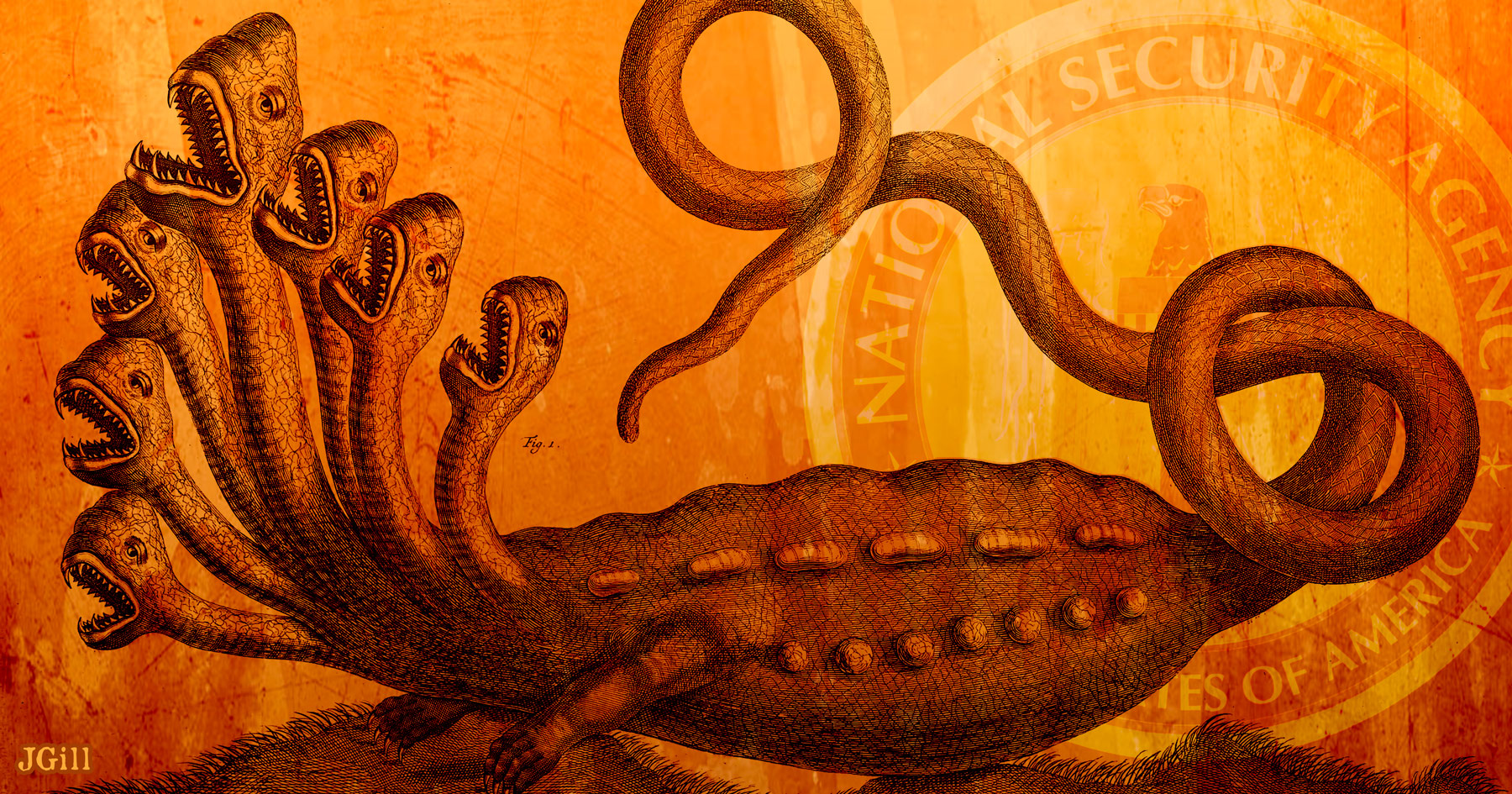
CNET writer Declan McCullagh said it all in a recent tweet: “Obama wants ‘public conversation’ about encryption? Sure: It’s here, we’re not inserting backdoors, get used to it.”

Twitter-user “vruz” adds: “Remember when we had to have a responsible dialogue on the NSA’s mass criminality? When Obama says ‘conversation,’ he means dilution of discourse to co-opt it and make it meaningless.” #ouch.

Contrary to the president’s implication, privacy and safety reinforce each other. Ability to protect our privacy makes us safer from those who would use our passwords, Social Security numbers, and home addresses against us.

Yes, terrorists can use encryption to hide nefarious plans — just as they can use curtains that way. And basements. And cones of silence. Many things deployable for benign purposes can also abet vicious ones. But does this mean that everything innocent people have and do should be easily accessible to government officials — or savvy cyber-criminals?

Or terrorists?

No.

This is Common Sense. I’m Paul Jacob.
Categories
free trade & free markets national politics & policies

Job Growth in 2014

President Barack Obama takes full credit for the job growth in 2014. Democrats on the Internet relentlessly push these growth rates with typically goofy superlatives like “highest ever” or “highest growth rate in decades.”

So, what did Obama and the Democrats do in 2013 and 2014 that led to the growth we saw last year?

Well, Obama refused to renegotiate with Republicans on any unemployment or budget reforms.

As 2013 ended, we heard Democrats complaining that stingy Republicans were letting federal government extensions of unemployment compensation (which had been re-extended many times) lapse altogether. Obama predicted disaster. The Keynesian economists who circle the Democratic Party like moths to a candle held to a simple prophecy:  because of a hit to “aggregate demand,” unemployment would increase.

Instead, in 2014 employment bounced back.

In a droll quasi-opinion piece, “President Costanza’s Jobs Boom,” the Wall Street Journal reports that “job growth in 2014 was roughly 25 percent higher than any post-2009 year. Joblessness plunged to 5.6 percent from 6.7 percent. Net job creation averaged 246,000 a month.”

Citing a National Bureau of Economic Research study by economists Marcus Hagedorn, Iourii Manovskii and Kurt Mitman, which treated the abrupt policy change as a “natural experiment,” the Journal reveled in the knowledge that the increase in incentives from lapsed benefits led unemployed workers to (gasp!) seek jobs.

And they found them. Granted, many of the new jobs are not as good as their pre-bust jobs. But they are jobs, which is better than nothing.

So when your big-government promoting friends attribute 2014’s job growth to Democratic policies, ask which policies, precisely. And ask why Obama’s predictions of 2013 for disaster in 2014 didn’t pan out.

This is Common Sense. I’m Paul Jacob.
Categories
education and schooling national politics & policies

The Education Nightmare

Ever have a nightmare . . . about school?

I can’t remember enduring a “dog ate my homework” or “naked in front of the class” dream recently — it’s been a long time since graduation — but economist Bryan Caplan discusses a different variety on EconLog: those nightmares in which one “realizes” that one lacks a credit to have graduated, and so must go back to college, late in life, etc., etc.

Caplan says many people have such unsettling dreams.

More interestingly, he muses that “I’ve never ever heard of someone dreaming about suddenly forgetting whatever job skills they learned in school.”

That is, people worry about trivial infractions of arcane qualifiers for a credential, but people don’t worry about the alleged purpose for going to school and getting credentials: learning something.

This Kafkaesque comedy rests on our “deeply rooted beliefs” that

crossing educational finish lines has a big effect on employability but little effect on job skills. The nightmare isn’t that you suddenly can’t do your job. The nightmare is that you’re the same person you were yesterday, but society throws you into limbo because your papers aren’t in order.

Caplan is writing a book titled The Case Against Education. He argues that we’ve come to rely too much on credentials, that pushing schooling and accreditation has not produced a net benefit to society.

He, a college professor, happily admits that, for bright people who test well, schooling can provide enormous private benefits. But that’s no ground for public subsidy.

Policy should surely encourage increasing skills, not making it easier for some folks to get jobs regardless of skills.

This is Common Sense. I’m Paul Jacob.
Categories
free trade & free markets national politics & policies subsidy too much government

Subsidy for Everybody!

According to Vice President Joe Biden, the debate is over. Health care, by which he means medical assistance, is a basic right — to be obtained through government, and made effective by the Affordable Care Act — not a “privilege.”

By “right” he means  “something others are forced to provide,” in this case by taxes, regulations, and the full panoply of U.S. law. Today’s “liberals” like to use the word “privilege” to mean anything obtained without direct government assistance. And therein lies a huge problem.

In his first weekly address of the year, Biden touted how great the ACA, “Obamacare,” is. How affordable it is for families, for everyone! It’s a panacea, though Biden didn’t use the word.

Actually, he didn’t say that we have a right medical care. He said we have a right to health “insurance,” which we’re forced to purchase — and for which many are subsidized, too.

How far does he go with this?

“An awful lot of people who didn’t think they could or would find quality, affordable health insurance are actually able to get assistance from the government to help them pay for their health care plans at a cheaper rate,” he earnestly intoned. “A family of four with an income of around $95,000, they can still get a subsidy to lower their health care premiums.”

You can see where the problem is. If a household making $95,000 per annum can receive subsidies, who’s paying for all this?

Perhaps you.

Can you see why Obamacare’s a prescription for financial disaster?

This is Common Sense. I’m Paul Jacob.
Categories
national politics & policies

Endless Fog of Endless War

Yesterday, NBC’s Chuck Todd opened a “Meet the Press” segment by calling U.S. involvement in Afghanistan and Iraq “wars now without an end.”

“The U.S. now seems to be in a semi-permanent state of war,” added Chief Foreign Correspondent Richard Engel.

“Right now, we’re just in damage control,” explained Lt. General Dan Bolger, Retired, the author of Why We Lost: A General’s Inside Account of the Iraq and Afghanistan Wars. “Our enemies, the Taliban and ISIS, are talking about winning.”

Mr. Todd asked, “Why do we have this incredible military that can’t win these wars?”

“The military can give you a quick victory over a conventional army. It cannot deliver a rebuilt country in the place you go,” replied the general. “That takes an effort of the entire U.S. population and government. And moreover, it takes the commitment of the American people for the long term.”

And then Baghdad and Kabul will look a lot like Chicago or Boston?

“At what point do we walk away?” Todd wanted to know. Never?

“It becomes difficult to walk away, because these situations are spinning quite badly out of control,” offered Sarah Chayes, now with the Carnegie Endowment for International Peace and formerly an assistant to the chairman of the Joint Chiefs of Staff. “And it’s spreading.”

Our decade-plus in Iraq and Afghanistan has cost us greatly and accomplished little good, if any.

Even a century of Americans fighting and occupying and pacifying these countries will not succeed. The cost, not just in billions of tax dollars, but also in thousands of our countrymen dead and maimed, is unacceptable.

It’s time to really end the “endless” wars.

This is Common Sense. I’m Paul Jacob.
Categories
crime and punishment general freedom national politics & policies

Rand Paul Raises Banner

Last weekend, 60 Minutes offered up a fascinating profile of outgoing Senator Tom Coburn (R-Oklahoma). Coburn has prostate cancer, and is leaving Washington for his home state before his term is up.

My trouble with the segment? It didn’t mention Coburn’s views on term limits, or make any point about him leaving early, other than, well, cancer. But it is worth mentioning that many, many politicians die in office. Coburn retains enough of his views to exit the political stage at an appropriate time.

He’s not clinging on to power as if he were Gollum at the Crack of Doom.

Thankfully, not all of Coburn’s projects will languish. Sen. Rand Paul (R-Kentucky) is planning to re-introduce a piece of legislation that Coburn had developed, a plan to halt the federal practice of sending “military-grade equipment to local police departments.”

It’s a typically Coburn-esque notion.

Though Occupier folks may have some trouble understanding where Coburn is coming from, or in what direction he wishes the country to go, Coburn’s Tea Party constituencies get the idea. And, if they had misunderstandings, Rand Paul made the limited-government perspective clear in August with his Time op-ed arguing against the militarization of America’s police forces.

The revived bill will still allow (too much) federal taxpayer money go to local departments. But it will (fortunately) stop the distribution of “vehicles and weapons used by the U.S. armed forces” to police.

No better tribute to Tom Coburn could be found than Rand Paul’s taking up his banner on this important issue.

This is Common Sense. I’m Paul Jacob.
Categories
general freedom insider corruption national politics & policies

The Madness Method?

To those nattering nabobs of negativity who don’t trust government to do the right thing, or even to stop doing the wrong thing once discovered, I just want to say: “You’re right.”

Again.

Last April, a Washington Post exposé about a bizarrely tyrannical debt collection program caused the Social Security Administration (SAA) to publicly promise it would cease and desist from said program. The Social Security bureaucracy had been snatching the tax refunds of grown children — $75 million from roughly 400,000 victims — whose parents, many decades ago, had allegedly been sent excess money by this same incompetent outfit.

Due process? The SSA didn’t go before a judge to prove these people owed a valid debt, nor even bother to inform folks that their income tax refunds were being seized. Instead, the Social Security gang just flat-out took the money . . . surreptitiously, like a thief.

In some cases, the SSA wasn’t certain who exactly owed the money. In one case, the agency went after a child even when they could find the mother who supposedly owed the money. Why? The mother had already beaten them in court.

The SSA flouted more than common sense and decency. Children should not be held legally responsible for the debts of their parents.

Hasn’t this been settled law for at least the last couple of centuries?

After publicity back in April, the agency’s commissioner announced it would stop. Yet, now the Social Security Administration is right back at it, claiming Congress has given it the legal power to collect debts “as it sees fit.”

You see why governments need limits. Because they take liberties.

This is Common Sense. I’m Paul Jacob.
Categories
national politics & policies political challengers

Another Insider?

Earlier this week, Jeb Bush, former governor of the State of Florida, announced on Facebook that he is “exploring” a 2016 run for the Republican nomination for the presidency. I have mixed feelings, to say the least.

There’s the whole dynastic problem. Another Bush? Or, is Jeb the cost of finding a candidate to beat Hillary . . . who has her own dynastic baggage?

But the big story, here, is to watch the insiders scramble to keep out the outsiders.

The trouble with both Hillary and Jeb is that they are insiders. They represent where the leadership of both parties wants its representatives and front-men (and -women) to go: to the putative “center.”

By which they really mean: don’t disturb the bailout system in American finance or the Pentagon procurement system for the military-industrial complex.

While it might be fun to contemplate Bill Clinton as the First Gentleman, or pick at the two issues over which Gov. Bush seems not very conservative at all, the truth is that both have access to a lot of entrenched power and loose money. Both Jeb Bush and Hillary Clinton enjoy incumbent-like advantages.

If the near future does sport a Clinton-Bush battle for the presidency, we can be sure of only one thing: status quo vs. status quo.

Leaving the real work of reform to those of us at the grassroots, with state and local issues our preoccupation. As long as insiders occupy the White House, our choices will be limited.

This is Common Sense. I’m Paul Jacob.
Categories
Accountability national politics & policies

Aeschylation

“In war,” the Greek dramatist Aeschylus told us, “truth is the first casualty.”

This came to mind when Secretary of State John Kerry testified in the Senate last week.

The new Iraq War has been pitched exhaustively to the American people as “only air strikes” and “absolutely no boots on the ground” — even as the Obama Administration continues to send additional U.S. military advisors to place their boots on Iraqi sand (and, at least once thus far, to engage ISIS directly via Apache attack helicopters hovering above Iraqi ground.)

Kerry again assured senators that the president “has been crystal clear that his policy is that U.S. military forces will not be deployed to conduct ground combat operations against ISIL.”

Strangely, however, the Secretary most adamantly urged Senators not to pass an Authorization for Use of Military Force (AUMF) that would restrict President O from doing precisely what he has so often and emphatically pledged not to do: put combat boots on the ground in Iraq.

The fact that the Obama Administration has foreclosed any possibility of putting US troops on the ground to fight, according to Sec. Kerry, “doesn’t mean that we should preemptively bind the hands of the commander in chief or our commanders in the field in responding to scenarios and contingencies that are impossible to foresee.”

Impossible to foresee? Yeah, right. The “no boots” promise provides all the stability of leaves in the wind.

Having any trust in this administration is impossible to foresee.

This is Common Sense. I’m Paul Jacob.