Categories
Accountability crime and punishment folly general freedom moral hazard national politics & policies U.S. Constitution

Forfeiting Forfeiture

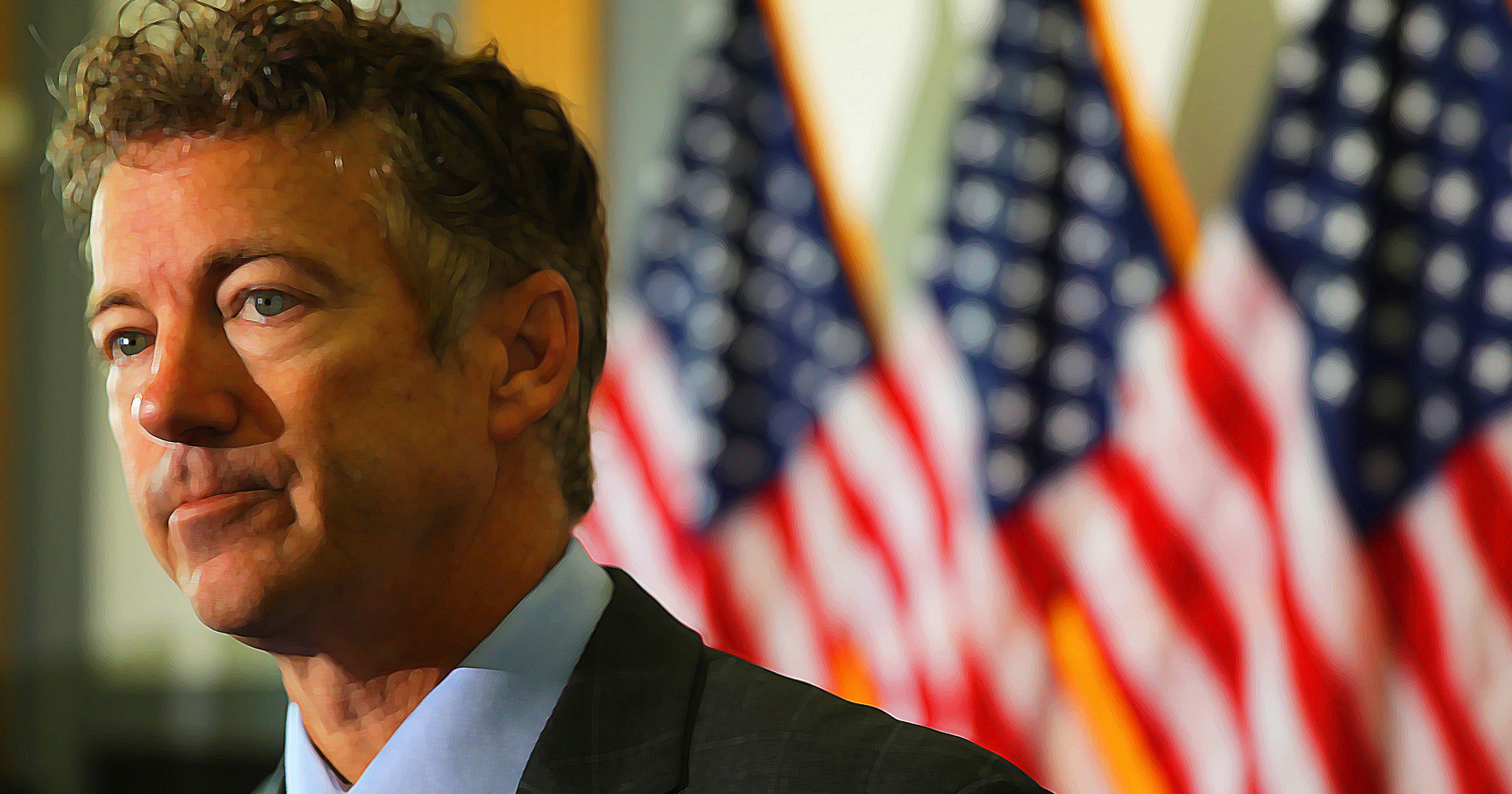
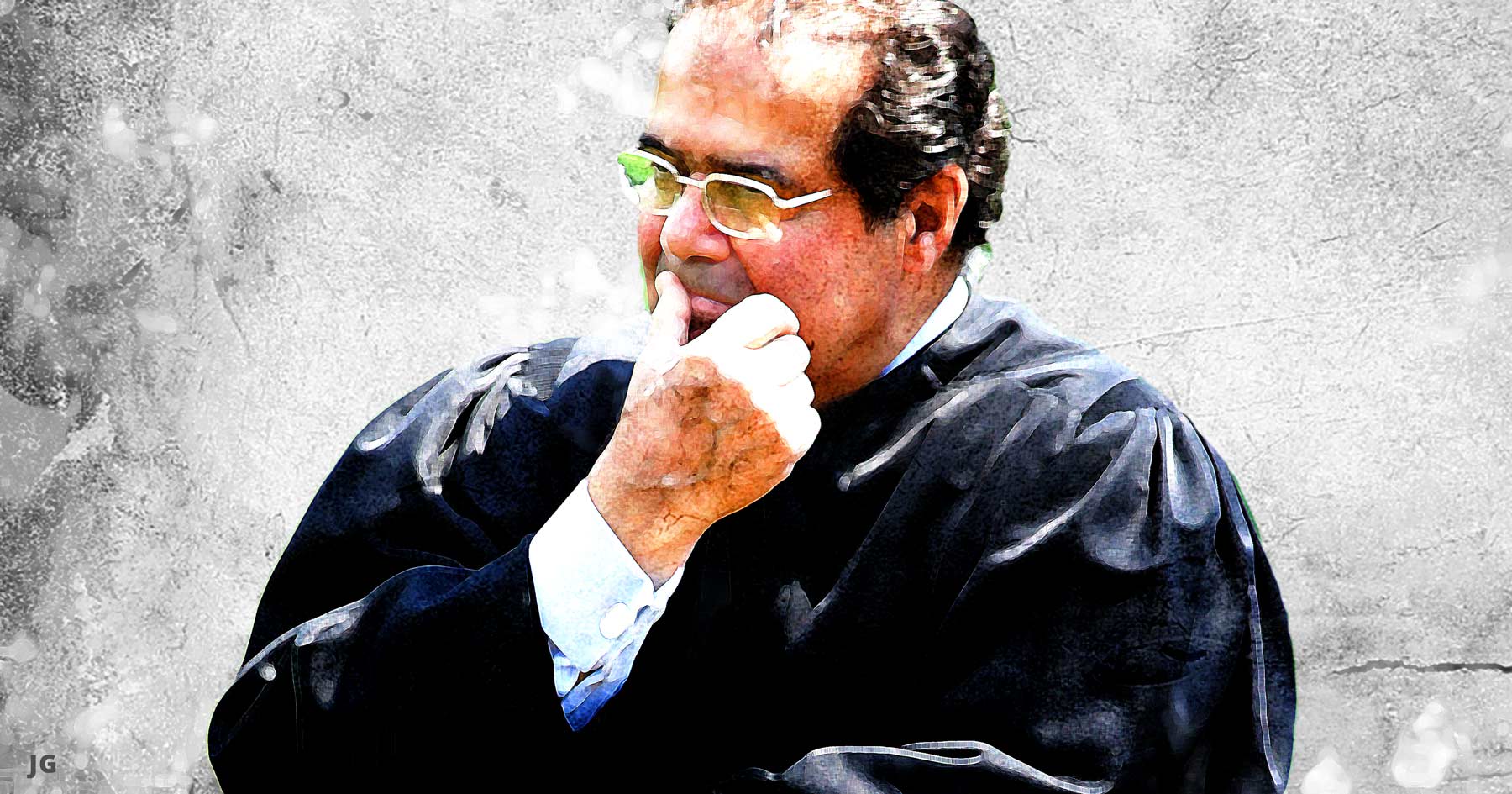
“The Department of Justice announced [last] week that it’s suspending a controversial program that allows local police departments to keep a large portion of assets seized from citizens under federal law and funnel it into their own coffers,” reports the Washington Post.

The Feds call the paused program “equitable sharing”; as I explained last month, I call it “equitable stealing.”

Even when state and local laws prohibit it, local police have been using this federal program to continue taking people’s money and property without ever convicting them of a crime.

The loophole? They split the loot with the Feds.

Now that has ended. According to the Post, this is the result of “budget cuts” in the recently passed omnibus spending bill; the Wall Street Journal calls it a “reallocation of funds.”

Either way, Happy Holidays!

Yet, sadly, the return to freedom, justice and the American Way may be short-lived.

“The Department does not take this step lightly,” wrote M. Kendall Day, the chief of DOJ’s Asset Forfeiture and Money Laundering Section. “We explored every conceivable option that would have enabled us to preserve some form of meaningful equitable sharing. . . .”

In his letter, he proclaiming a commitment to the principle of guilty-until-proven-innocent and to grabbing people’s stuff, telling state and local and tribal police departments, “We will take all appropriate and necessary measures to minimize the impact of the rescission and reinstate sharing distributions as soon as practical and financially feasible.”

As the Wall Street Journal editorialized, “Congress should make sure that never happens.”

Of course, Congress will likely need a mighty nudge from us.

This is Common Sense. I’m Paul Jacob.

Printable PDF

Asset, Forfeiture, police, crime, Department of Justice, DOJ, illustration, Common Sense


Categories
Accountability folly free trade & free markets general freedom ideological culture moral hazard national politics & policies too much government

Collateral Damage Defines Socialist B.S.

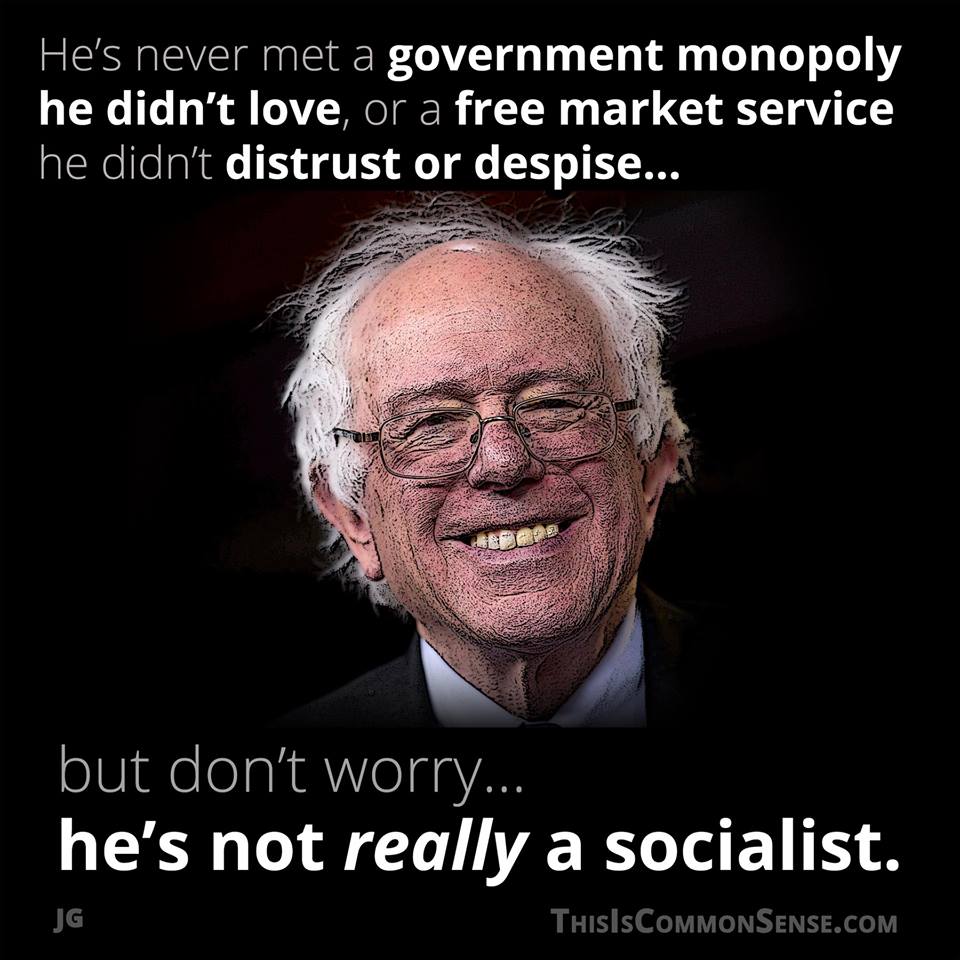
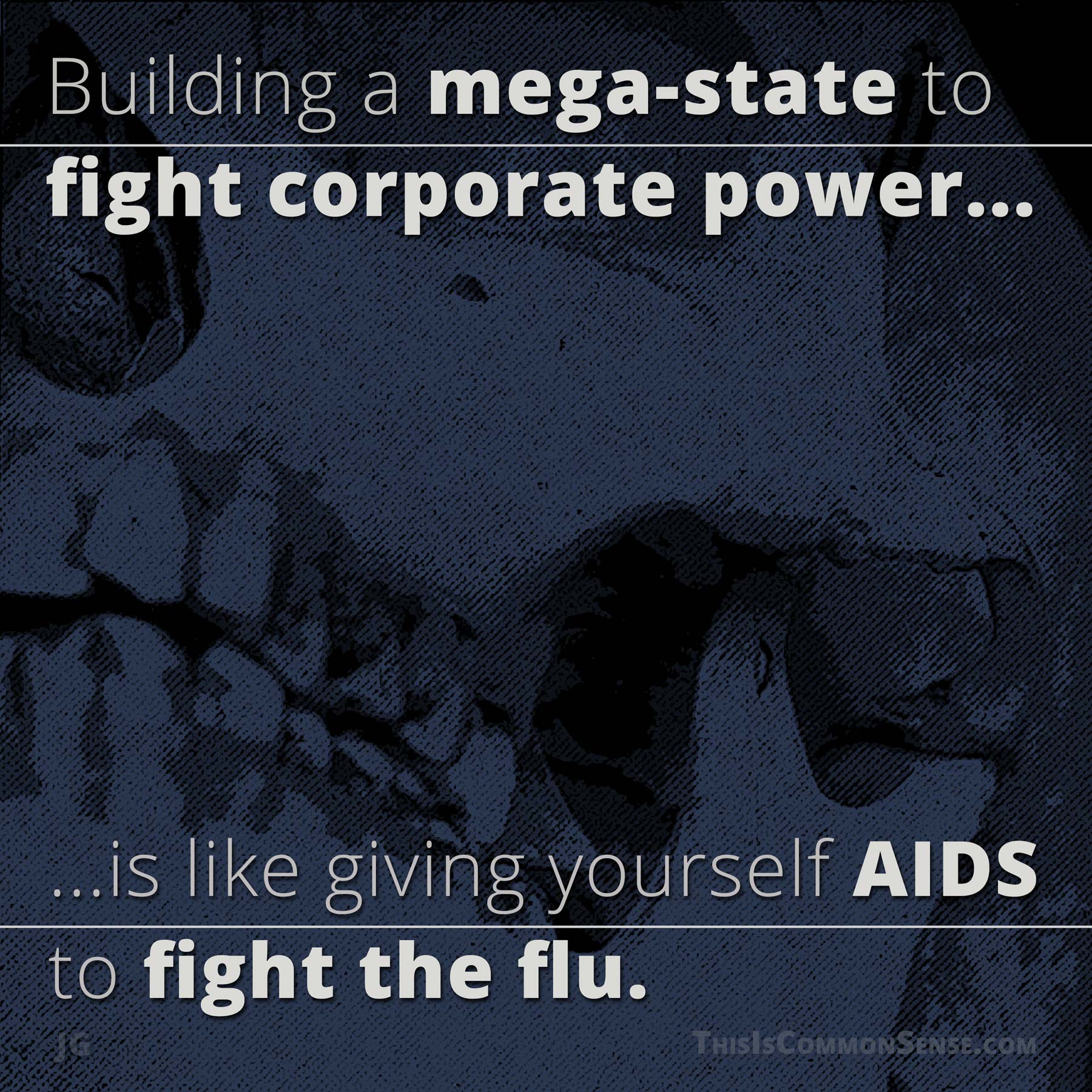
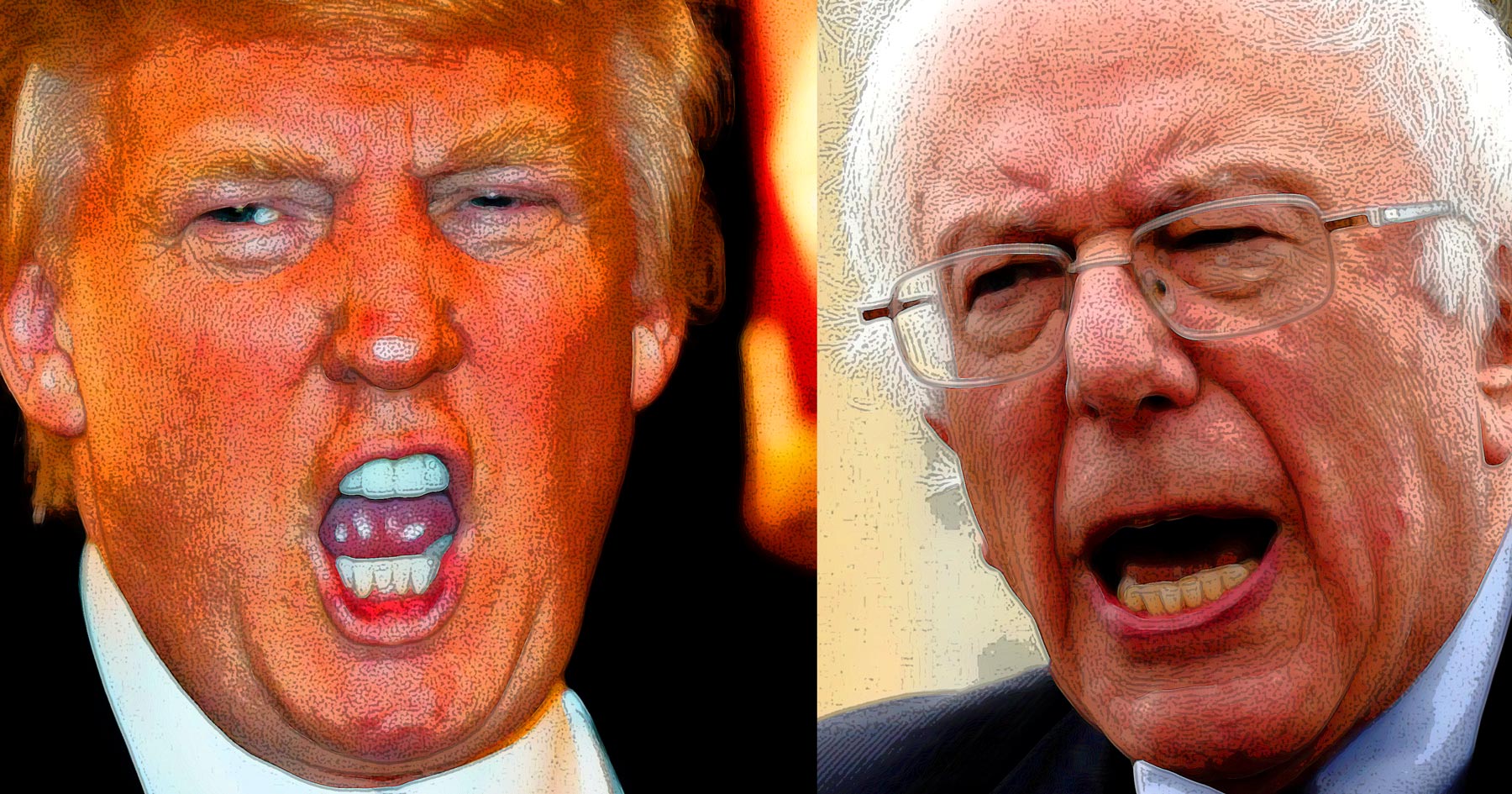
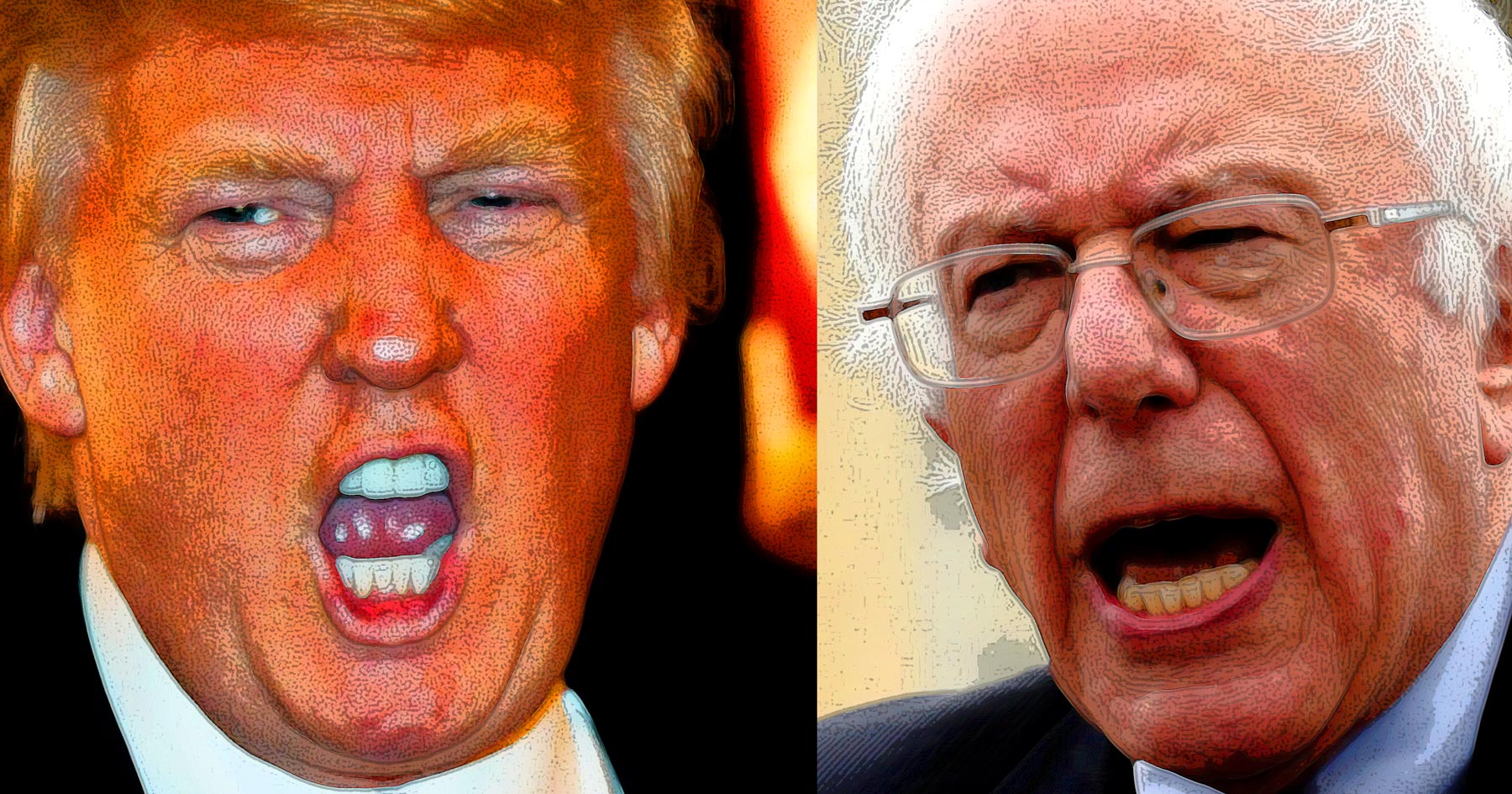
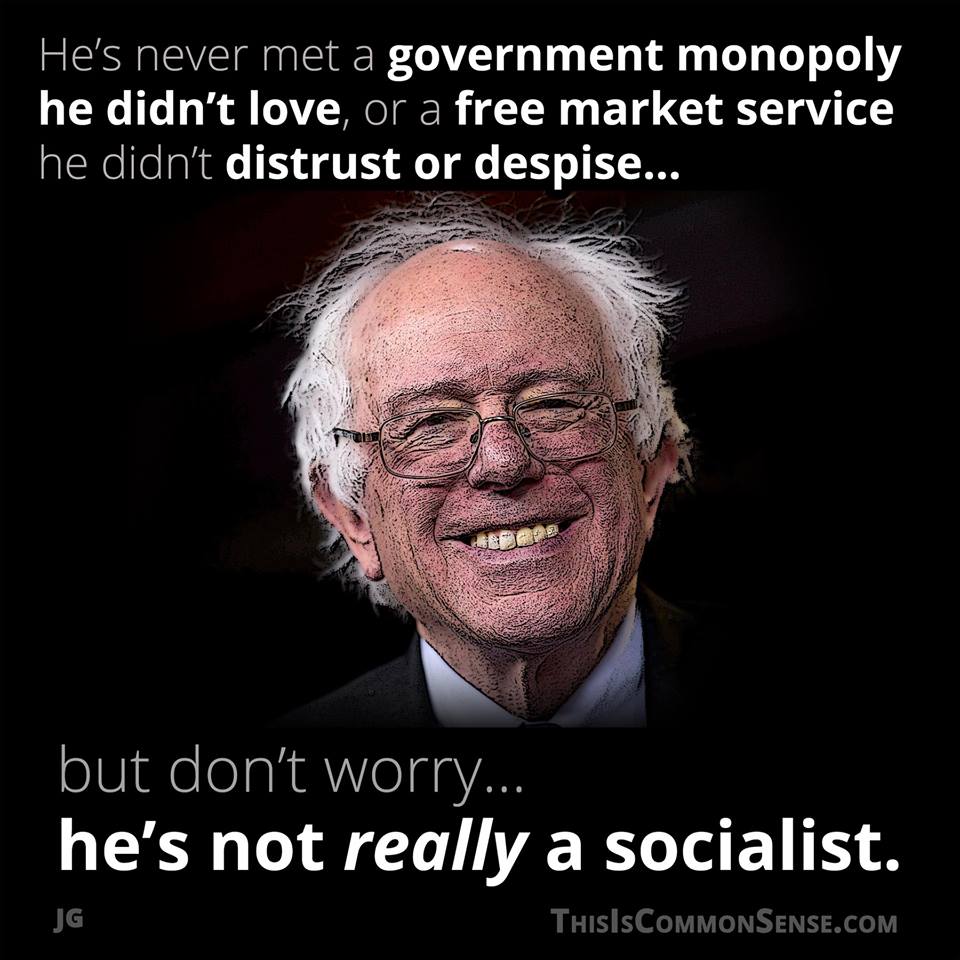
Senator Bernie Sanders gave us a big present last week. In one simple “tweet” he warbled out the essence of his socialism: “You have families out there paying 6, 8, 10 percent on student debt but you can refinance your homes at 3 percent. What sense is that?”

That’s what he broadcast. That’s what this self-proclaimed socialist wrote — or allowed his staff to write — on his official Twitter account, @SenSanders.

And it is not as if he had the excuse of haste. He was repeating a thought from his presidential campaign account in September: “It makes no sense that students and their parents pay higher interest rates for college than they pay for car loans or housing mortgages.”

To the earlier post, Twitter erupted in criticism. The gist? Have you never heard of collateral, sir?

Lenders can charge less on secured loans because, in case of default, the recourse is to take the collateral, the car or house, thereby recouping the loss.

But an unsecured loan? Well, by law one cannot easily slough off student loans — but one can simply not pay, or pay late. Hence the higher rates.

From its beginnings, socialism — and progressivism and Fabianism and fascism and social democracy, following — has been fueled by complaints about markets.

Without showing any understanding of the logic of markets.

Which is why, when put into practice, socialistic and interventionist programs produce such great amounts of negative collateral effects. Socialism is the philosophy of good intentions that yields collateral damage worse than the problems meant to be solved.

Oh, Bernie Sanders! Your initials say so much.

This is Common Sense. I’m Paul Jacob.

Printable PDF

Bernie Sanders, consequences, socialism, economics, illustration, Common Sense


Categories
folly ideological culture national politics & policies

This Is Not Politics

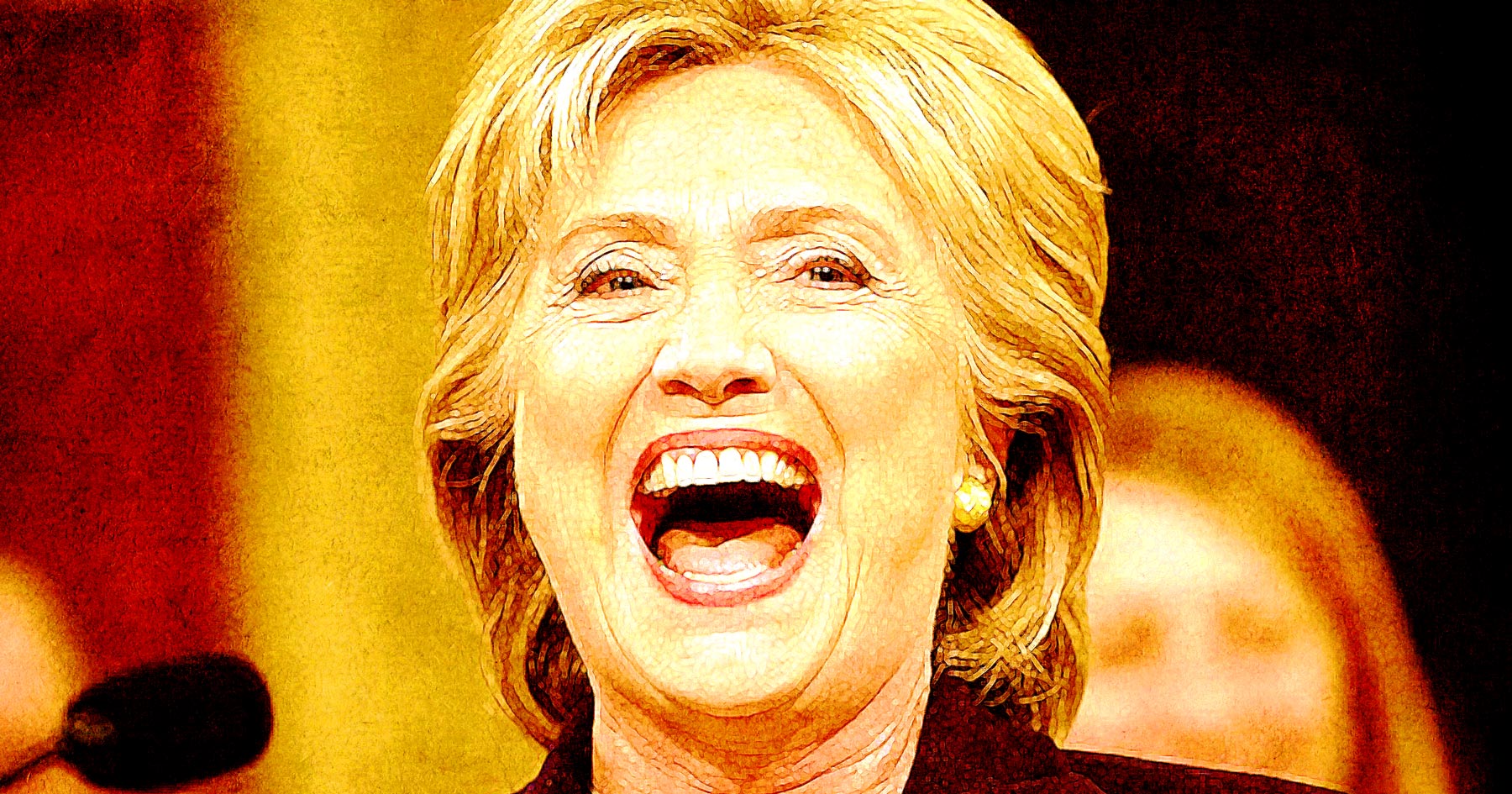
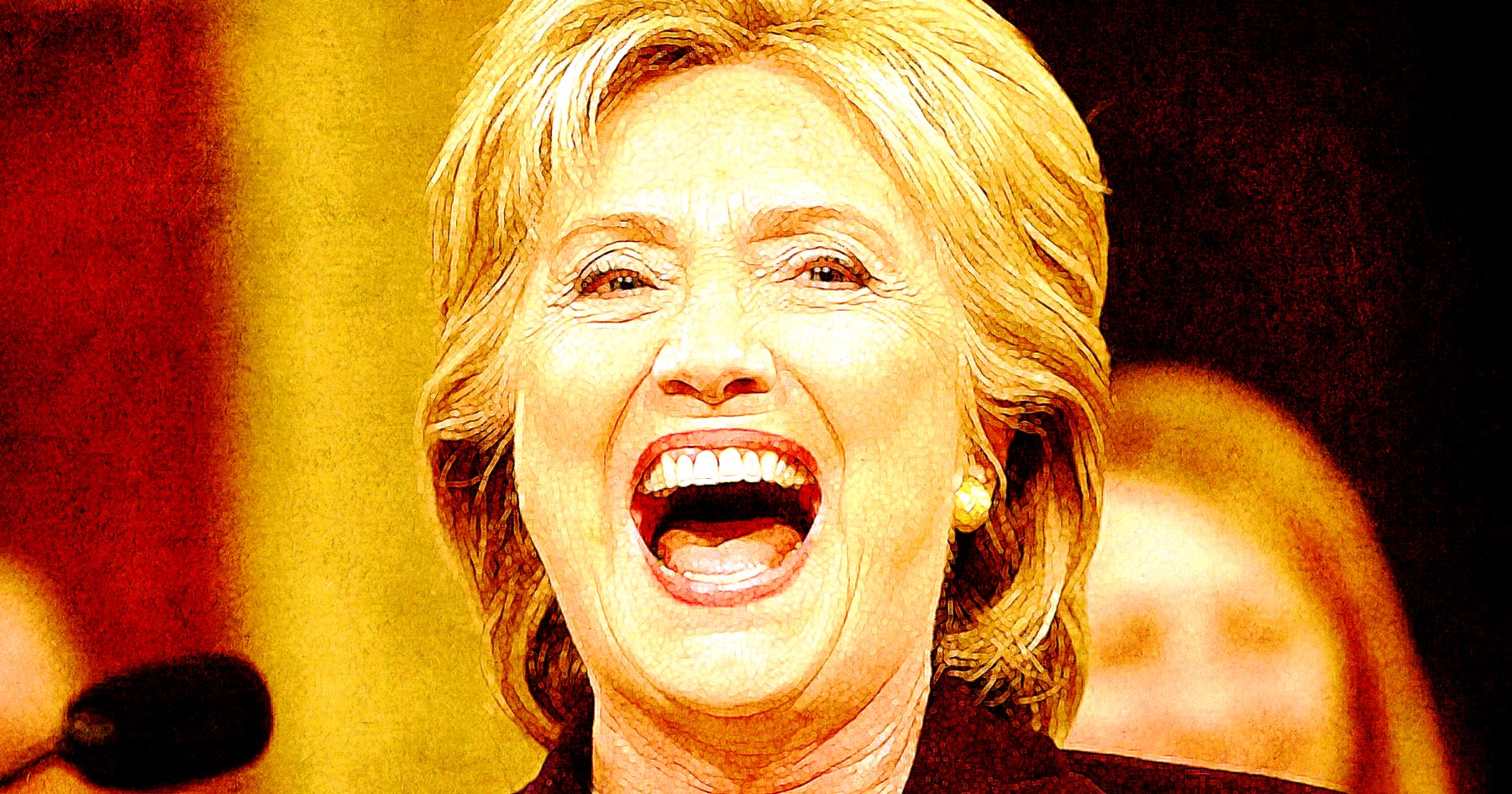
First, Hillary lied. She said that ISIS was using Trump in terrorism recruitment videos. The Donald responded with contemptuous ridicule, using a vulgar word for her 2008 defeat by Barack Obama.

Then, the Democratic Party presidential contender got all teary-eyed and said we had to treat each other with more respect, be nicer.

This is presidential politics?

Mrs. Hillary Clinton and Mr. Donald Trump are both addicted to telling whoppers. Their “stretchers” are now the everyday stuff of our nightly news.

Mrs. Clinton’s fact-less charge that Trump was being used in recruitment videos is all the more ridiculous considering that Mr. Clinton does star in such a video. Maybe she meant merely that Mr. Trump’s call for barring Muslim immigration will help ISIS paint America as anti-Muslim, telling the tall tale because, well, it “ seems true.” Even if it isn’t.

In this, she differs not a whit from Mr. Trump, who not too long ago “remembered” “seeing” “thousands” of “Muslims” in “New Jersey” celebrating the fall of the World Trade Center on 9/11/2001 — a video he cannot produce, either.

Politicians hyperbolize from bigotry to factoid all the time. What’s new is Trump’s foul calumny, in response, and Clinton’s painting of Trump as a bully for belittling her. That’s not how I remember politics. It seems new to adult debate.

But it isn’t new to our experience. It’s children bickering on the playground, then whining and lying all the way to Teacher. Or even Home.

Responsible adults don’t believe every charge lodged by little boys and little girls.

Like Donny and Hillary.

This is Common Sense. I’m Paul Jacob.

Printable PDF

Hillary Clinton, Donald Trump, politics, children, illustration, Common Sense


Categories
education and schooling folly free trade & free markets national politics & policies too much government

The Truth About Tuition

Subsidize something, and you tend to get more of it.

But wait, what if you subsidize demand for something, but don’t really allow (or continue to disallow) increased supply?

Then prices for that something go way up.

This is elementary economics — nothing controversial about it.

Except that politicians and bureaucrats who make public policy tend not to acknowledge this aspect of reality when they propose subsidies. Instead, they expect praise for their “heroic” and “caring” program of destruction.

They need to be educated. But, alas, all this applies best to college education. How does one educate the educators?

A new study, which reliable economists tell me is “sophisticated,” finds that the bulk of recent college tuition price inflation can, indeed, be directly linked to the federal government’s loan subsidies.

This study makes for some opaque reading, alas: “Essentially, demand shocks lead to higher college costs and more debt, and in the absence of higher labor market returns, more loan default inevitably occurs.” Yikes.

The college education bubble has been much talked-about for years, at least amongst skeptics of government policy. But in hushed tones — the big fear, here, is that a bursting of the bubble will lead to — who knows what? I mean, who-knows-what policy reaction.

Probably just more government subsidy and control. And even higher tuition still. Double yikes.

Thankfully, while the brick-and-mortar higher education institutions suck up more and more government-backed money, the Internet is enabling some great alternatives. The future, I think, does not belong to the university system as we have known it.

This is Common Sense. I’m Paul Jacob.

Printable PDF

tuition, supply and demand, subsidy, government


Categories
Accountability general freedom ideological culture national politics & policies responsibility

Finland on 800-Euros-a-Month

Some folks think the world owes them a living.

Must we appease them?

Should government hand every man, woman and child a check each month to make sure we’re all taken care of?

Finland is embracing this basic idea with a pilot program, providing everyone an “unconditional basic income” (UBI). Treating citizens equally is enshrined in Finland’s constitution, so every Finn will receive the same 800-euros a month without regard to income or lack thereof.

It sounds like Democrat George McGovern’s “guaranteed annual income,” which was mocked and ridiculed during the 1972 presidential campaign.

But you might be surprised who has supported the UBI: free-market economist Milton Friedman advanced the similar “negative income tax” back in 1962; Martin Luther King liked it; Austrian economist F. A. Hayek endorsed the concept; Charles Murray, author of Losing Ground, has developed a version of the proposal.

The rationale? Save money by consolidating duplicative welfare programs. After all, the U.S. government runs 79 means-tested benefit programs, each with its costly, redundant bureaucracy.

Counter-intuitively, perhaps, Finland’s social engineers think the move will increase employment. Why? Because welfare benefits currently can be withdrawn when Finns gain employment and the attendant income, which discourages folks from risking their secure base benefits.

That’s the case here, too.

The government passing out money — our money — stinks. Folks should take care of themselves, or depend on charity — not confiscatory taxation. Yet, if this version of a safety net does indeed encourage industry, employment, and good old-fashioned money-making amongst the poor . . . it may very well be a step in the right direction.

This is Common Sense. I’m Paul Jacob.

Printable PDF

Finland, Guaranteed Income, UBI, welfare, income, Common Sense, illustration


Categories
free trade & free markets general freedom ideological culture media and media people national politics & policies

Historic Paris Pact?

The climate change pact just completed at the United Nations conference in Paris is, the Washington Post informs us, “historic.”

The New York Times, LA Times, Chicago Tribune, and just about every other paper uses that very word in their headlines, too.

“The 12th of December, 2015, will remain a great date for the planet,” declared French President Francois Hollande, dubbing it “the most beautiful and the most peaceful revolution that has just been accomplished.”

“History will remember this day,” U.N. Secretary-General Ban Ki-moon predicted. President Obama called it a “turning point for the world.”

Chris Mooney, in a deeper analysis for the Washington Post, agreed that all the hoopla was “more than warranted.”

But Mooney also acknowledged that, “this document, by its very nature, depends on . . . Countries, companies and individuals all across the planet [doing] the right things — and very hard things, at that.”

How hard?

Essentially ending any emission of greenhouse gases in the next half-century.

“Achieving such a reduction in emissions would involve a complete transformation of how people get energy,” the New York Times reported, “and many activists worry that despite the pledges, countries are not ready to make such profound, costly changes.”

As the negotiator for the Federated States of Micronesia put it: “We’ve agreed to what we ought to be doing, but no one yet has agreed to go do it. It’s a whole lot of pomp, given the circumstances.”

“What’s more,” adds Mooney, “even if everyone plays by the rules, the standards and goals set out by the Paris agreement may not be enough to prevent the catastrophic effects of climate change.”

Historic? History will determine that.

This is Common Sense. I’m Paul Jacob.


Printable PDF

climate change, global warming, Paris, accord, Common Sense


Categories
Accountability ideological culture national politics & policies responsibility

Pollsters Are Political Players, Too

Is Trump electable? Can Carson nab the GOP presidential nomination? Does Rand Paul have a chance? Is Chris Christie finished — before a voter has voted?

It’s still pre-primary season, and it is worth remembering that — even as we judge candidates on  various capacities, including their ability to “handle the media” — one arm of the media possesses potentially the most influence along with too little scrutiny: the pollsters.

They are allegedly the most scientific and objective folks in the industry, with closest ties to actual intellectual disciplines, statistics and political science.

But they are also, willy nilly, political players, not just observers.

Though tasked to provide data on public opinion about matters of importance, they also influence public opinion in several crucial ways:

  1. By how they phrase poll questions. This is an art, and can be extremely propagandistic. Pollsters can often “get” the information they want — if they want something in particular, perhaps for partisan reasons — by wording those questions carefully.
  2. By ordering questions in particular ways. The first question sets up a context. The second is then interpreted by those polled in that context. Pollsters can nudge people to reverse their usual opinions by providing an alien context.
  3. By presenting the results, skewed or not. People are influenced by others. Voting for candidates, especially, partly depends on second-guessing other voters. Few people wish to vote for someone who “cannot win.” Therefore, a published poll result that shows popularity can increase popularity, in a sort of multiplier effect.

Polls and poll results can provide useful information. Hey, I’ve used professional pollsters. But we all have to be cautious . . . remembering that voting one’s conscience is a high-percentage play.

This is Common Sense. I’m Paul Jacob.


Printable PDF

polling, polls, pollster, democracy, influence, elections, Common Sense, Bias, illustration


Categories
crime and punishment general freedom ideological culture media and media people nannyism national politics & policies Second Amendment rights too much government U.S. Constitution

Anti-Gun Barrage

America’s would-be gun-grabbers, chiefly in the media and “on the left,” don’t know much about guns.

But they know what they hate.

After the horrific terrorist shooting spree in San Bernardino, MSNBC and CNN went on a shooting-their-mouths-off spree, relentlessly pushing the need for stricter gun control. President Barack Obama and his fellow Democrats echoed the theme.

Cenk Uygur of The Young Turks went full accelerando, unleashing a foul rant about how “we” are the terrorists and “we” are letting “us” get away with mass murder “every week,” ignoring the statistics that murder rates have gone down, are still going down, and that the rest of the world is being hit with mass shootings too, mainly from Muslim radicals.

When the news came out that the perps were, indeed, Muslim, the barrage of anti-gun talk didn’t stop, though their intellectual ammunition had fizzled.

The president went further off his rocker, calling the guns he wanted to ban “powerful” — though they are of lower caliber than many handguns — while Hillary Clinton talked about the need to ban “assault rifles.”

As has been noted by others, “assault rifle” only means what anti-gun folks say it means, and what they designate as assault weapons are not (contrary to their constant implications) the equivalent of machine guns (which have been illegal for citizen ownership for a long, long time).

Being scared of scary-looking guns is no excuse not to be able to define them. While it would be good to reduce incentives for folks to “go postal” or to commit terroristic acts, we aren’t going to prevent mass shootings by a simple prohibitionary or mere regulatory regime.

That’s for scare-mongers to push. And us to resist.

This is Common Sense. I’m Paul Jacob.

Printable PDF

guns, anti-gun, second amendment, Common Sense, illustration
Categories
First Amendment rights folly general freedom ideological culture national politics & policies privacy U.S. Constitution

Our Masters’ Malign Agenda

Reacting to terrorism, President Obama’s first thought? Scratch out the Second Amendment and the Fifth Amendment’s guarantee of “due process” from the Bill of Rights. Why? To advance his mania for gun control.

Now comes Republican front-runner Donald Trump, one-upping the president. He wants to block any Muslim from entering the U.S. — whether immigrant, refugee or even tourist.

That’s after advocating a government database for tracking American citizens who are Muslim.

Terrorism is winning.

Ignore the Constitution? Disregard individual rights? Demonize an entire religion? Thus our leaders play into ISIS’s hands, encouraging Muslims worldwide to see the U. S. as their enemy.

Cooler heads must prevail. Or else. A Republican friend posted on Facebook that he “would gleefully vote for Hillary Clinton over Trump.” I just cannot muster any glee.

In fact, I’m beginning (again) to wonder if John Fund wasn’t on to something last June, when he wrote in National Review that “just maybe Trump is a double agent for the Left.”

Think “Manchurian Candidate.”

“It’s all very un-American,” my friend Suhail Khan, an American Muslim and conservative activist, told the Washington Post. “Our country was based on religious freedom.”

No more?

Surely, our experiment in limited government has not ended.

But we need to get serious.

We must demand a real commitment from any candidate seeking the country’s highest office. To be entrusted to execute our union’s laws, he or she must actually demonstrate allegiance to the rule of law.

That is, a willingness to fit one’s ego within the confines of the Constitution.

This is Common Sense. I’m Paul Jacob.

Printable PDF

Constitution, Bill of Rights, Politics, Terrorism, populism, Common Sense


Categories
folly free trade & free markets general freedom ideological culture moral hazard nannyism national politics & policies property rights responsibility

Climate Changelings

Worried that the world is going to sacrifice progress for the mess of pottage that is “global climate change”?

Don’t. Years ago, economists specializing in game theory recognized that the governments of the world would be extremely unlikely to agree to reduce carbon dioxide emissions. The incentives are all wrong for that.

Last month, the great debunker of junk climate science, Patrick Michaels, reporting on the recent Paris talks, concurred. The international agreement going forward is so worded as to be “free to be meaningless.” Countries can claim to be “doing something,” but effectively accomplish nothing. Which allows “the world’s largest emitter (China) and the third-largest one (India)” to balk.

But the ole USA? It is doing something . . .

and it’s going to cost. Here’s one reason: Under Obama’s Clean Power Plan, substitution of natural gas for coal in electrical generation isn’t going to increase, even though it produces only half the carbon dioxide per kilowatt of electricity as coal. Instead, his EPA says power companies have to substitute unreliable, expensive “renewables,” mainly solar energy and wind. These are mighty expensive compared with new natural-gas power. And even the Clean Power Plan won’t meet our Paris target.

Obviously, what we have to worry about are our martyrdom-prone environmental zealots and their power-hungry (political power-hungry) friends ensconced in government.

They just can’t leave well enough alone, for, as Michaels notes, even CO2 emissions improve with industrial progress — when markets are free and property rights established.

But anti-capitalists in and out of government don’t want improvements to come naturally. Apparently, they would rather make things worse even by their own standards than let markets work.

This is Common Sense. I’m Paul Jacob.

Printable PDF

Paris, climate change, global warming, natural gas, fracking, Common Sense, illustration