Categories
Accountability crime and punishment free trade & free markets general freedom initiative, referendum, and recall moral hazard nannyism national politics & policies property rights

Good and Bad News

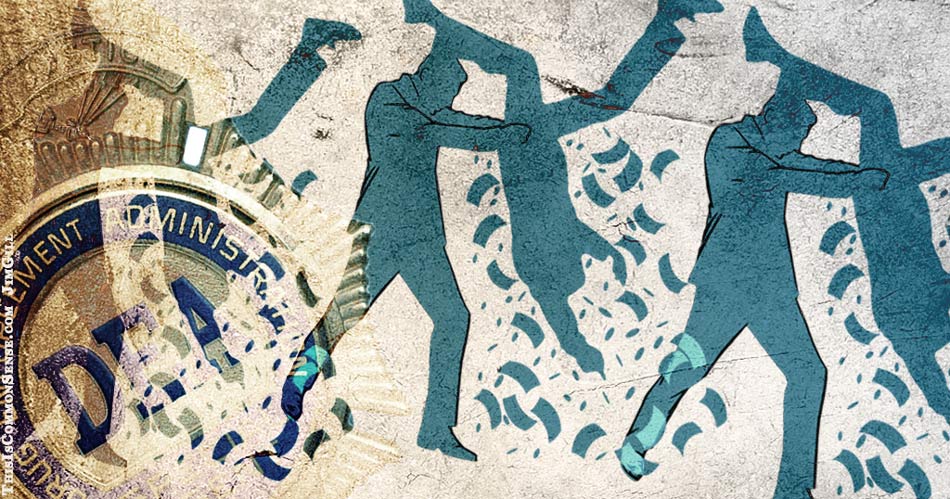
On the issue of “civil asset forfeiture” — police seizing property from folks merely on suspicion, without a criminal conviction — there is good news.

In Idaho, House Bill 202a just passed both legislative chambers overwhelmingly. “Among other changes, HB 202a would no longer allow civil forfeiture of the vehicle of a person who merely possessed a controlled substance,” explained a Spokesman Review report, “without using the vehicle in connection with trafficking offenses or obtaining it with drug-trafficking proceeds. . . .” It also puts off the table “property that’s merely in proximity to illegal drugs” and the mere possession of cash.*

Legislation is moving forward in Arizona, too. House Bill 2477 passed to the Senate Judiciary Committee last week — which unanimously cleared it despite what the Arizona Republic calledstrong opposition from . . . primarily people representing law-enforcement and prosecutors’ groups that benefit from the funds.”

The bill heightens the standard of proof required for making seizures stick from “preponderance of the evidence” to “clear and convincing evidence.” HB 2477 also increases reporting requirements, and creates a process police must follow to spend seized funds.

Unfortunately, there is also bad news.

Even with the new Idaho law and the enaction of the Arizona legislation, police in both states will continue to take people’s stuff without a criminal conviction. The level of abuse would be diminished, but not ended.

Citizens in both states can and should use the ballot initiative process to end this injustice. In total.

We must restore the bedrock principle of innocent-until-proven-guilty.

This is Common Sense. I’m Paul Jacob.


* Other provisions include a court determination on “whether a property seizure is proportionate to the crime alleged,” absolving “innocent owners from having to pay the state’s costs associated with an attempted seizure,” and some required record-keeping.


Printable PDF


Categories
Accountability government transparency ideological culture moral hazard nannyism national politics & policies political challengers porkbarrel politics responsibility too much government

Legislating in the Real World

Rolling back Big Government is not easy, especially when you are not that into it.

Robert Draper, profiling Steve Bannon in the New York Times, gives us a view into the mind of Trump’s right-hand man, who appears to think GOP insiders are obsessed with principles. “[I]t’s all this theoretical Cato Institute, Austrian economics, limited government — which just doesn’t have any depth to it. They’re not living in the real world.”

At best, this only fits the Freedom Caucus members, who killed RyanCare. But who is avoiding reality, here?

“Bannon clearly is not as familiar with the mindset of congressional Republicans as he imagines,” counters Jeff Deist, head of the “Austrian” Mises Institute. “They are primarily concerned with how the whole ‘repeal and replace’ debacle plays back home.”

Like Deist, I see the spectacular fizzle of RyanCare as evidence of the increasing irrelevance of Republican compromising. “The GOP is the party of trillion dollar military budgets,” Deist insists, noting that it “won’t even kill an openly cronyist program like the Export-Import Bank.”

If keeping Big Government secure is all Republicans can do, what use are they?

“All around us are the almost unimaginable benefits of markets, cooperation, and technology,” Deist explains, “yet somehow we’re naïve if we don’t want to funnel human activity through government cattle chutes.”

Bannon will not secure solid GOP support if he keeps pushing the usual establishment compromises while pretending they are either realistic or revolutionary. Freedom Caucus Republicans seem bent on doing something Republicans usually avoid: change “the real world” for the better by practically limiting government.

Not just in theory.

Bannon seems to have other goals.

This is Common Sense. I’m Paul Jacob.


Printable PDF


Categories
free trade & free markets moral hazard nannyism national politics & policies property rights responsibility subsidy too much government

TrumpCare Trumped

It took awhile for the Obama Administration to accept the term “ObamaCare.” Nancy Pelosi was the initial driver of the massive scheme to permanently alter American medicine and insurance, and “PelosiCare” would have been a fit moniker for the wildly mis-named “Affordable Care Act.” But the administration put the whole of the new president’s political capital behind it, and the ACA went into law popularly known as “ObamaCare.”

The Republicans pledged to repeal it, from Day One. And repeatedly passed repeal bills, certain to be vetoed by the president named Obama. They needed a Republican in the White House.

Donald Trump ran, in part, on the promise of getting rid of ObamaCare. But upon taking the reins, two things became obvious: Republicans in Congress lacked the guts to repeal the ACA, and even lacked a coherent scheme to alter it.

The new president could hardly be expected to possess the plan they lacked, though on the campaign trail he suggested* the best approach: repeal, then open up insurance markets across state lines. The GOP Congress, on the other hand, was all promise and no clue.

So Speaker of the House Paul Ryan hastily cooked up what was to be the new TrumpCare — a ridiculous reform package with nothing much to say for it.

He failed to gain support from Democrats (of course) and Freedom Caucus representatives.

TrumpCare, trumped, became RyanCare. A failure.

The Freedom Caucus representatives? They breathe freely.

Sure, they “betrayed” the new president, “robbing” him of glory. But they also saved the country from a “reform” in many ways worse than ObamaCare.

This is Common Sense. I’m Paul Jacob.


* It’s worth keeping in mind that Trump had been for socialized medicine before running for office. This is why there was no reason to expect policy leadership on his part.


Printable PDF


Categories
free trade & free markets general freedom media and media people moral hazard nannyism property rights too much government

Of Salt and Socialism

Nearly 75 percent of Venezuelans have lost 19 pounds or more in 2016. “People have become so desperate,” the Miami Herald reported recently, “that they are butchering and eating flamingos.”

While acknowledging the problem, TeleSUR, a television network based in Venezuela and funded by governments including Cuba, Ecuador, Nicaragua, and Venezuela, called the Herald’s story “kooky” and suggested taking reports “like alleged flamingo eating with a grain of salt.”

If, in socialist Venezuela, one could find a grain of salt.

In America, salt is necessary, too, when listening to our socialist Hollywood celebs blather about their kooky diets, for which some are blaming President Trump.*

Socialism kills. The deprivations in Venezuela are no joke, for along with economic chaos, Venezuelans are experiencing political repression on a grand scale. A new report from Luis Almagro, secretary general of the Organization of American States (OAS), documents the thousands arrested for protesting or “having posted something against the national government or a public official on Twitter.” The report details the “curtailment of civil, political and electoral freedoms” and “torture” and “censorship.”

Almagro calls for the suspension of Venezuela’s membership in the OAS, which is long overdue. The Human Rights Foundation demanded that nine years ago.

The Obama administration opposed such a move, as the Washington Post editorialized, in order to pursue “a legacy-making détente” with “the Castro regime in Cuba.”

At Townhall,** I urged Trump to support the effort to boot Venezuela out of the OAS, which might provide some assistance toward political change there . . . and Venezuelans eating more.

And perhaps to socialists in Hollywood and elsewhere eating crow . . . but not flamingo.

This is Common Sense. I’m Paul Jacob.


* I covered this last week, when I compared their Trump Diet nonsense to the “Maduro Diet,” named for Venezuelan President Nicolás Maduro, the socialist dictator presiding over the complete economic collapse of what, prior to socialism, had been South America’s richest country.

** From which this Common Sense is adapted.


Printable PDF


Categories
folly general freedom ideological culture media and media people moral hazard nannyism political challengers responsibility too much government

Dutch Election Oddities

There were many strange forces at play in the Netherlands’ elections on Wednesday. In my report, I concentrated on the biggest story, the possibility that Geert Wilders’s Freedom Party might take a huge number of parliamentary seats — though I quoted The Atlantic’s coverage predicting a narrow loss to Mark Rutte’s Liberal Party.

What I did not mention were some of the . . . oddities.

Did you know that Geert Wilders is the only official member of the Freedom Party?

Did you know that there is a 50+ Party in Holland — to represent folks . . . in my age bracket?

Irksome. A party organized just for an age group bugs me almost as much as the most extreme elements of Wilders’s anti-Islamism. But then, all parties bug me a bit, for the same reason the founding fathers desperately feared “factions” . . . that is, political parties. Factionalism turns government into tribal warfare, with legislation counting as . . . counting coup.

But no one in the Netherlands is asking how “bugged” I may or may not be.

The outcome of the March 15 elections? Labour lost the most, and the Freedom Party did not do as well as predicted . . . or feared. Instead of over 20 seats, it won 16, according to Bloomberg (quoting i & o research).

Here’s a not-so-odd oddity: I had to wade through quite a few reports on the election before I found any actual numerical results. The papers all seemed too busy gloating that the Freedom Party failed. I guess that counts as enough reporting. For them.

More evidence that we live in a post-fact society?

This is Common Sense. I’m Paul Jacob.


Printable PDF


Pictured: Ledger drawing of a mounted Cheyenne warrior counting coup with lance on a dismounted Crow warrior, 1880s.


Categories
Accountability folly free trade & free markets general freedom moral hazard nannyism national politics & policies responsibility too much government

DumpCare

Speaker of the House Paul Ryan insists that his “TrumpCare” plan to replace ObamaCare will decrease medical insurance rates. Others argue that his American Health Care Act will increase those rates. Likewise, he expects it to reduce strain on federal budgets; others deny this outright. The “coverage” issue is just as contentious.

TrumpCare is a mess because it is isn’t “DumpCare.” What’s needed is not yet another regulation-plus-subsidy system. We need repeal and then . . . more repeals.

Unfortunately, President Donald Trump has never really been on board with this. He has promised that no one would lose “coverage,” assuming that “coverage” is “health care.”

It is not. State charity programs like Medicaid (upon which ObamaCare relied way too much) are merely ways to pay for services. Dumping a gimcrack payment system is not the same as decreasing medical services. “DumpCare” wouldn’t dump care, only insane government.

For example, we know that health care outcomes for poor folks without Medicaid turn out to be better than poor folks with Medicaid.* Increasing the number of people on formalized subsidy programs is no panacea.

Besides, ObamaCare severely under-delivered on “coverage.”

New programs, nevertheless, are traps, regardless of demerit: once you provide a benefit, folks come to rely on it and demand more — objecting when it’s taken away. Which is why few programs are ever repealed, despite failing to meet original expectations.

So far, the “small government party” hasn’t found the courage to actually limit government. Do Republicans really believe what they say, that fewer regulations and subsidies will lead to lower costs and better service?

It seems Republicans won’t take their own prescription.

This is Common Sense. I’m Paul Jacob.


* Oregon’s 2008 Medicaid “natural experiment” provides reasons to question the merits of the program. As the initial, randomized, controlled study found, “Medicaid coverage generated no significant improvements in measured physical health outcomes in the first 2 years, but it did increase use of health care services. . . .”


Printable PDF


Categories
Accountability crime and punishment folly ideological culture moral hazard nannyism responsibility

Walk on the Wilders Side?

The Dutch were among the first to witness Islamic extremist violence against free speech. The November 2004 murder of Theo van Gogh by a Dutch citizen of Moroccan descent — a man whose first name, Mohammed, almost no one thinks is merely coincidental — stirred the nation.

And the world.

Van Gogh made a short film, with Somalian émigré Ayaan Hirsi Ali, about the unjust treatment of women in Islamic countries. The film criticizes Islam as well as the Muslim majority countries, and was considered an affront by many Muslims.

After van Gogh’s death, Ms. Ali fled to the United States.

This event is only the most famous of many similar conflicts between free-speech Dutch values and regulated-speech Islamist ones. The fact that the country has anti-blasphemy and anti-insult laws on the books, and these have been directed against a popular politician, has exacerbated the growing antagonism.

That very politician is today’s big news. According to The Atlantic, the “center-right People’s Party (VVD) for Freedom and Democracy is projected to win 24 seats in [today’s] election, slightly ahead of Geert Wilders’s far-right Dutch Freedom Party (PVV), which is expected to gain 22.”**

The Dutch center-left, like similar ruling groups in Britain, Germany, France and Sweden, often seems weak and timid before the rising illiberalism of Islamist terrorism and Sharia law.* Many suspect that the recent decision to block Turkish ministers from speaking at rallies in Holland, before Turkey’s referendum next month, is designed to counter this narrative.

Meanwhile, though Wilders is generally liberal (not “far right”) on most cultural issues, his “de-Islamization” program seeks to close mosques and outlaw the Quran***.

One extreme to another.

This is Common Sense. I’m Paul Jacob.


* This is not just a bugaboo. In 2006 the Minister of Justice floated the possibility of incorporating Sharia law into the constitution.

** The projection is within the margin of error, and with mass immigrant Turkish protests taking place over the weekend, the chance of a Trump-like upset is more than possible.

*** Geert Wilders compares the Quran to Adolf Hitler’s Mein Kampf.


Printable PDF


Categories
Accountability folly ideological culture media and media people moral hazard nannyism national politics & policies too much government

Almost Right

The popular fact-checking sites, such as Snopes and Politifact, cannot stick to the facts.

When Sen. Rand Paul (R-Ky) predicted that a recent repeal of “three regulations” would save “hundreds of millions of dollars and tens of thousands of jobs,” Politifact rated the statement “Half True,” on the grounds that, well, not all experts agreed.

In 2015, objecting to a reported low figure for the Clinton Foundation’s grants to other groups that actually did things, PunditFact gave a “Mostly false” judgment despite admitting that the statement was “technically true.”

NBC engaged in a similar move, admitting to the technical truth of a claim about unemployment, but said it was “extremely misleading.”

Snopes found reasons to tag a “Mixture” rating onto the simple fact that Omar Mateen, the Pulse nightclub mass murderer, was a registered Democrat. He was*.

The funny thing is, these sites are “Almost Right”: fact checking isn’t enough.

Facts can be true, but deceptively used.

Unfortunately, these “fact-checkers” repeatedly fail to clearly distinguish matters of fact from matters of context. They could offer a double analysis and double rating: True/False for the factual; Clear/Caution, to cover interpretations and implications.

Why don’t they?

Perhaps for the same reason the CIA is planning a Meme Warfare Center — to provide a “full spectrum meme generation, analysis, quality control/assurance and organic transmission apparatus”** — instead of a Center for the Analysis of Popular Argument: the idea is not to increase knowledge.

It is to maximize influence.

Which leaves us on meme patrol, ever vigilant.

This is Common Sense. I’m Paul Jacob.


* What Snopes did was speculate that the terrorist perhaps changed his mind after initially registering a decade before the shooting.

** I wrote more about this in Sunday’s Townhall column (from which this Common Sense foray is adapted; see relevant links here), and first broached the goofy/ominous CIA proposal with Saturday’s featured video.


Printable PDF


Categories
folly general freedom ideological culture media and media people nannyism national politics & policies too much government

The Weight of Politics

Folks sure go crazy over diets. And that’s without the insanity of politics à la mode.

Consider the new Trump Diet — actually, several of them.

Actress Lena Dunham pledged to move to Canada if Donald Trump won last November. Instead, she stayed to offer a new weight loss scheme. “Everyone’s been asking like, ‘What have you been doing?’” she told Howard Stern. “And I’m like, ‘Try soul-crushing pain and devastation and hopelessness and you, too, will lose weight.’”

So, there is hope!

Conversely, comedian Judd Apatow complains, “It’s very hard to lose weight in the Trump era.” The acclaimed Hollywood producer, director and writer adds, “Most of us are just scared and eating ice cream.”

Not Barbra Streisand. Oh, yes, she tweeted: “Donald Trump is making me gain weight.” But she made it clear that “after the morning news, I eat pancakes smothered in maple syrup!” At least, her new song, “People, People Who Need Pancakes,” is moving up the scales — er, charts.

With mixed results for shedding pounds in the U.S., let’s graze elsewhere.

Certainly, no diet regime has been as successful, nor as rigorously tested, as the Maduro Diet — made famous in Venezuela by President Nicolás Maduro. The entire socialist nation is on it, and a new survey discovered that three of four Venezuelans lost “at least 19 pounds” during 2016.

Think socialism doesn’t produce results? Fat chance.

Still, such a steady diet of politics is hard to stomach. Instead, maybe we better concentrate on exercising . . .

. . . our freedom.

This is Common Sense. I’m Paul Jacob.


PDF for printing


Categories
Accountability initiative, referendum, and recall moral hazard nannyism responsibility

Whose Constitution Is It, Anyway?

Last November’s biggest mistake? Colorado voters passing Amendment 71. It makes the Rocky Mountain State’s constitution exceedingly more difficult for voters to amend through the initiative petition process.

And more like it may be in the offing. Legislation is moving in Florida to require a 66.7 percent vote to amend the state constitution. Already, a 60 percent vote is required, but legislators remain fearful voters can muster that.

The Ohio Modernization Commission, a legislatively created mix of legislators and insiders, is recommending a new constitutional amendment to — you guessed it — make it tougher for voters to pass amendments. Future voter-initiated amendments must pass twice, by a 55 percent supermajority.

There are also efforts to weaken citizen initiatives in Arizona and Maine.*

The big money behind Colorado’s Amendment 71 told whopper after whopper to win. They pretended to love and revere the constitution. Finally, they put former Denver Broncos Super Bowl champion quarterback John Elway on television — spot after spot — telling voters the amendment “protects our constitution.”

But . . . from whom?

You see, politicians and special interests don’t have to amend the state constitution to spend money on themselves or their cronies. From their perch in the state capitol, they can do that with a simple statute.

But you and I need the ability to pass constitutional amendments. Why? Only through the constitution can we limit the power of those same politicians — the power of government. Legislators can overrule a mere statutory ballot initiative (and often do).

That’s what this battle is all about. Politicians mean to limit our power to limit theirs.

This is Common Sense. I’m Paul Jacob.


* Thankfully, South Dakota legislators defeated several bills aimed at making it tougher to place initiatives on the ballot.


Printable PDF