Categories
First Amendment rights general freedom ideological culture media and media people

The Opposite of Infowars

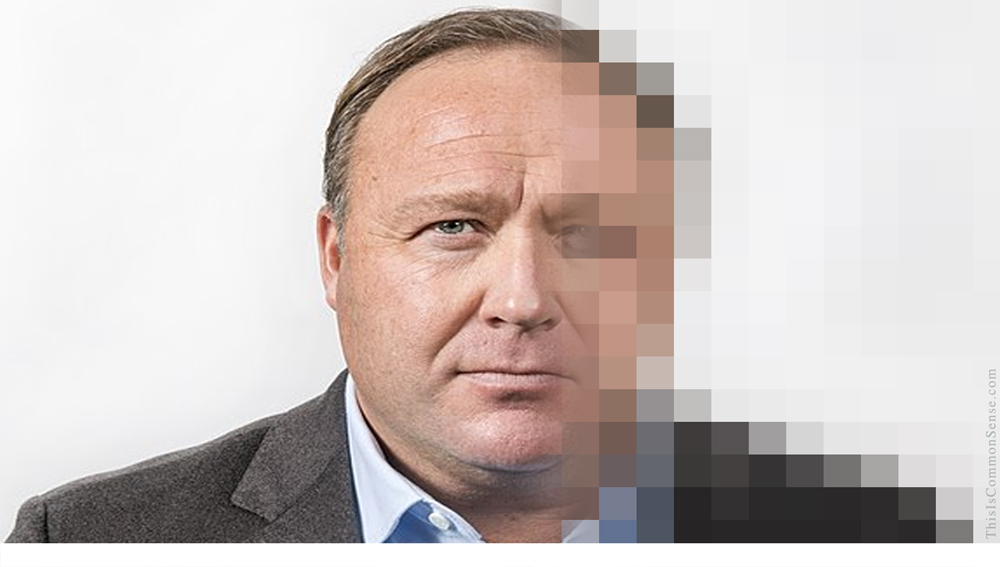
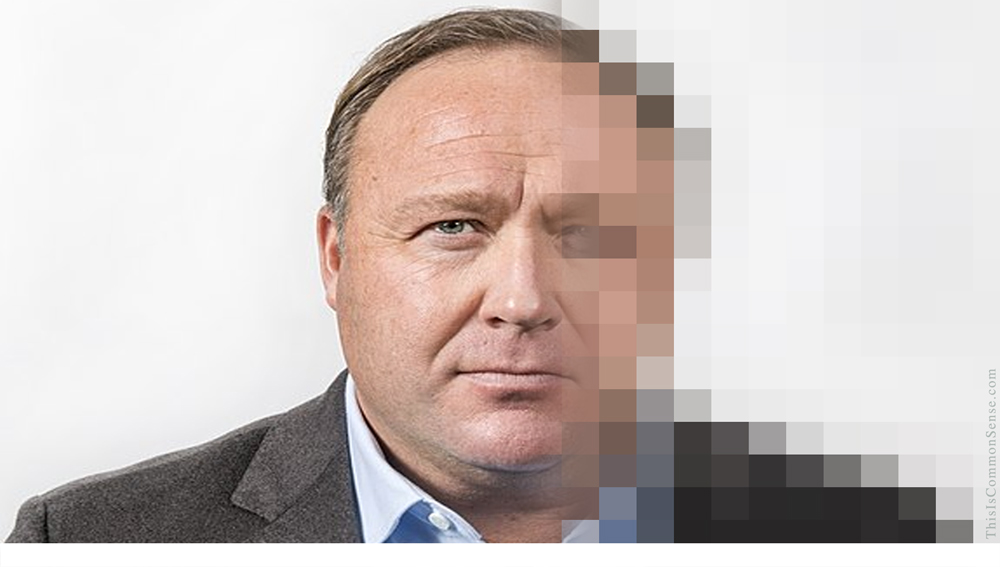
Yesterday’s big story? Several major social media platforms have de-platformed Alex Jones and his Infowars opinion (“information”?) show. 

Most commenters about this happening hasten to signal to their audiences that they do not approve of Alex Jones. Is this really necessary? When we consider a mass de-platforming event, do we need to belabor the obvious? 

I hazard that even most of Jones’s viewers and listeners agree with a small amount of what he says. Jones is more like Jon Stewart and Cenk Uygur, a performer whose rants entertain most of all. In his case, because he says things no one else will, Infowars makes for a bracing . . . alternative.

It should also go without saying that private platforms like Facebook, YouTube and Apple, who are the main players to kick Jones to the curb of the Information Super-Highway, have the right to include or exclude anyone they want. As Robby Soave at Reason put it, these “companies are under no obligation to provide a platform to Sandy Hook conspiracy theorizing, 9/11 trutherism, or any of the other insane ideas Jones has propagated.”

But Soave does worry about the goofy rationales provided for the exclusion.

As do I. And it is not just that the proffered reason, “hate speech,” is, as Soave explains, vague, unanchored to any offered specific offenses.

But it’s worse. This whole exclusionary move is not about hate speech. Everyone knows this.

It’s about suppressing ideas that are (a) popular and (b) despised by the dominant culture.

And these insiders seem at a loss to confront Jones’s farragoes with better ideas, failing to provide “counter info” in their war on Infowars. 

They strike below the belt.

This is Common Sense. I’m Paul Jacob.


PDF for printing


Categories
First Amendment rights general freedom ideological culture media and media people moral hazard

May Trigger Eye Rolling

The fashionable campus notion of “microaggressions” blurs the distinction between peaceful speech (offensive or not) and bashing somebody over the head with a club. 

If courts, police and/or university officials can rationalize regarding the perpetrator of a so-called “microaggression” as initiating force against an offended listener, they can also rationalize using actual physical force in retaliation. Which, to the extent implemented, would mean the end of freedom of speech. 

After all, nobody needs a First Amendment in order to utter banal pronouncements about the weather.

The allied campaign urging or requiring professors to issue “trigger warnings” before discussing anything that might provoke discomfort also dampens discourse. 

Who can object to letting viewers of TV news know that they are about to see a corpse? Or sending little kids out of the room when certain subjects are discussed? But is such common sense the point of “trigger warnings”?

At best, “trigger warnings” are a silly name for referring to what nobody seeks to keep secret. At worst, they help trigger distress themselves — or impede frank discussion of controversial subjects. The latter treats adults as if they were not adults; the former makes adults less adult. 

If and when “trigger warnings” are imposed by force, with penalties for omitting them, they also endanger freedom of speech.

Advocates of open discourse seem to be in an endless war with champions of a repressive political correctitude. The jabberwocky used to justify that repression keep evolving. The response must be constant: intellectual clarity and eternal vigilance.

This is Common Sense. I’m Paul Jacob.


PDF for printing


Categories
Accountability general freedom ideological culture media and media people

Transcendent Gray Lady

How far are we away from a completely vindictive, murderous madness like The Terror of revolutionary France?

I know, almost no one is talking of guillotines. 

But a lot of people seem determined to destroy others’ lives publicly. We are all too familiar with Twitterstorms where worked-up outrage forces someone out of a job or a deal  — usually for making jokes.

But it’s not just jokes. Not long ago an actor got in trouble for Tweeting that commentator and Daily Wire host Ben Shapiro seems a nice, honest person on the right that a leftist might listen to. The actor was forced to recant, and then Shapiro himself publicly recanted from some past putatively “dumb” things he “did” or “said.” Or something.

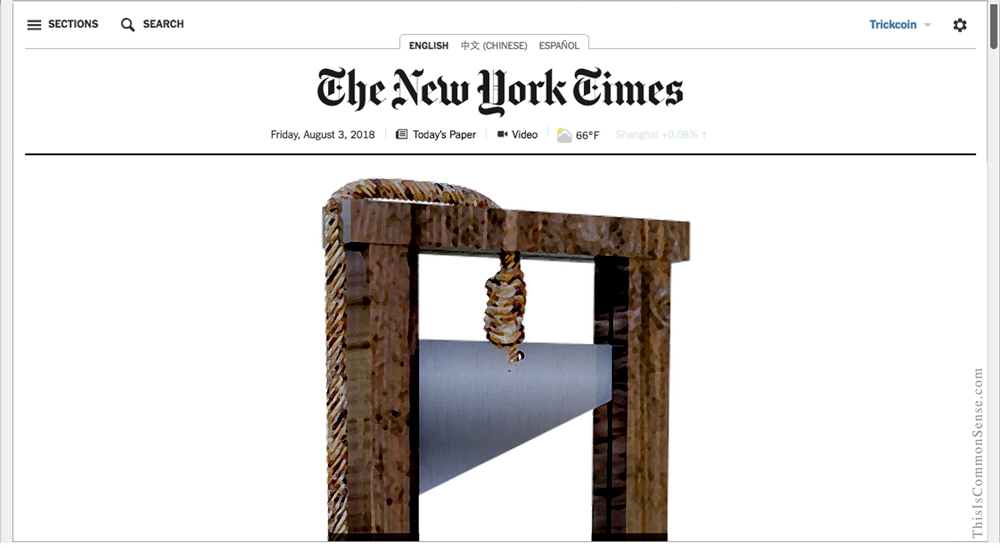
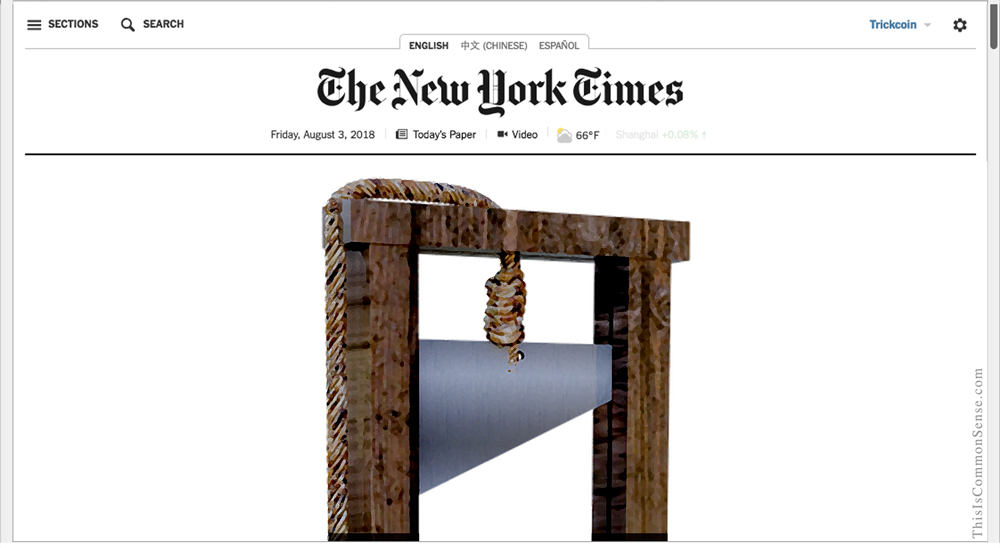
Since we’re talking about Mr. Shapiro, his commentary on the Sarah Jeong case is not irrelevant. The New York Times hired Ms. Jeong despite her past racist tweets. 

Well, racist-against-whites. 

“By the rules of the left,” says Shapiro, “this person should now be excised from polite society.”

But the Times is keeping her.

Shapiro finds this “indicative” of more than just the Times. The left at large seems OK with anti-white racism but not anti-any-other-race.

It’s indicative of a lot more, though, not just racism and anti-racism and anti-anti-racism. 

Outrage and the Twittermob may be fun. But it’s time to stop.

Is the Times leading the way?

Only when the decrepit old rag defends someone not on its own ideological side. Transcending partisan mob mania means first transcending partisanship. 

This is Common Sense. I’m Paul Jacob.


PDF for printing


Categories
Accountability First Amendment rights general freedom ideological culture media and media people moral hazard nannyism national politics & policies Regulating Protest too much government

Dbl Standard Destruction Co.

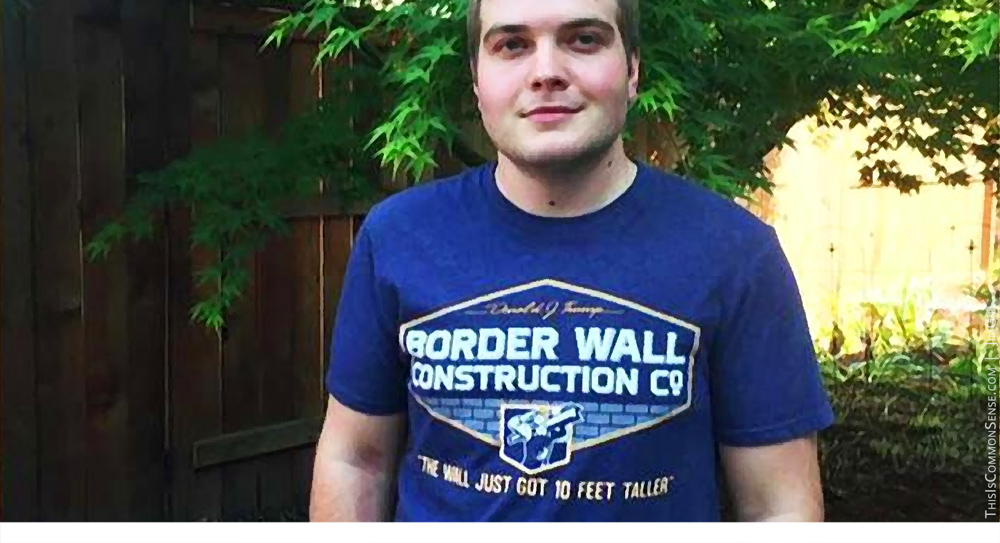
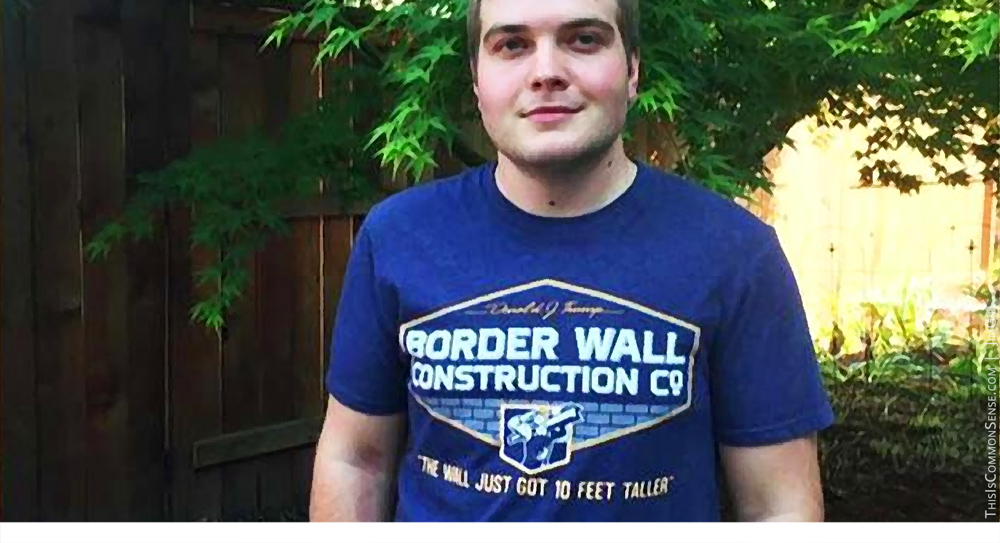
Addison Barnes has just won a court case against Liberty High School of Hillsboro, Oregon. The court ruled that the school acted wrongfully when, early this year, it suspended him for wearing a “disruptive” T-shirt heralding a “Donald J. Trump Border Wall Construction Co.” 

Addison was awarded $25,000 for legal expenses, and the school has apologized to him, sort of, for the suspension.

“I brought this case to stand up for myself and other students who might be afraid to express their right-of-center views,” Addison says. “Everyone knows that if a student wears an anti-Trump shirt to school, the teachers won’t think twice about it. But when I wore a pro-Trump shirt, I got suspended. That’s not right.”

No, it’s not.

The outcome is imperfect. The apology offered by Liberty High does not acknowledge the glaring injustice of the suspension. It simply asserts that the school got the “balancing act” wrong between making students feel welcome and making them feel safe. (Because it is “unsafe” per se for kids to peacefully express political disagreements?) Nor was the teacher who imposed the suspension obliged to apologize personally.

Ideally, all schools would be privately owned, privately run. Then they could openly promulgate whatever silly policies they wished about what students may display on T-shirts, if anything. Market pressures would tend to discourage indefensible rules. 

But today’s schooling system is not ideal.

Have you noticed?

Meantime, let’s hope that the court’s decision will discourage other schools from imposing similar double standards.

This is Common Sense. I’m Paul Jacob.


PDF for printing


Categories
Accountability crime and punishment free trade & free markets general freedom media and media people moral hazard responsibility

Blame the App?

Who spreads “fake news”?

Gossips, politicians, publicity agents, Twitter eggs, partisan bloggers, lying news journalists?

Or . . . the medium of communication they use?

Do envelopes, stationery, telephones, email, and messaging apps have moral agency?

And who commits the crimes that news (true or false) is used to rationalize?

A New York Times story discusses “How WhatsApp Leads Mobs to Murder in India,” which is like saying that civilization, flying lessons and boarding passes “led” terrorists to 9/11.

The Times reports that fake news about children being kidnapped — dramatized by doctored video clips and forwarded via WhatsApp, a messaging app — provoked anger and fear in many Indians. Some were then willing to attack anyone who “seemed” about to kidnap children.

In recent months, dozens of people have been murdered for being in the wrong place at the wrong time.

Without social media and the mega-popular WhatsApp, the murders probably would not have happened, at least not the way they happened. That seems certain. But this doesn’t mean that without WhatsApp, nobody in India would spread false stories or assault innocent people.

Mob violence in the country antedates the Internet.

Perhaps a thousand material circumstances directly or indirectly enable any particular act of wrongdoing. But no such prerequisites “lead to” anything without individual choices.

If someone pretends it’s okay to kill innocent persons — or persons whose guilt or innocence he doesn’t care to know — he, the killer, is the guilty party. The telecommunications network or messenger app used to provide grist for excuse-making is innocent.

Apps don’t murder people. People murder people.

This is Common Sense. I’m Paul Jacob.


PDF for printing


Categories
Accountability government transparency insider corruption local leaders media and media people nannyism national politics & policies political challengers Regulating Protest responsibility

Not Fine with Feinstein?

Could it be that Sen. Dianne Feinstein, Democrat of California, may not be liberal enough?

The San Francisco Democrat has ostensibly represented the Golden State in the United States Senate for the last 26 years. Before that, Feinstein spent eight years on San Francisco’s Board of Supervisors and then a decade as mayor.

Now, after 44 consecutive years as a public official, what does the 85-year-old Feinstein seek? More. That is, another six-year lease on her powerful perch in the U.S. Senate.

But the Executive Board of the California Democratic Party — Feinstein’s Party — just said, “No way!”

A whopping 65 percent of the 333-member board opted for State Sen. Kevin de León, a fellow Democrat seen as more “progressive.” Only seven percent supported endorsing Feinstein.

Keep in mind that Feinstein is already on the November ballot. She was the leading vote-getter in California’s primary last month. Yet, she received only 44 percent of the vote: a majority does favor someone else.

In February, 2,700 activists at the State Democratic Party Convention in San Diego voted 54 to 37 percent for State Sen. De León over U.S. Sen. Feinstein.

“Feinstein, who spends much of her time in Washington, has had a distant relationship with party activists for years,” noted the Los Angeles Times report.

Still, what Democratic Party activists want may not matter so much. Mrs. Feinstein enjoys tremendous name recognition and, according to the Times, has “$7 million in campaign cash socked away as of May, ten times what De León had.”

That money seems to be Sen. Feinstein’s real base of support.

This is Common Sense. I’m Paul Jacob.


PDF for printing


Categories
Accountability crime and punishment government transparency media and media people moral hazard national politics & policies Regulating Protest responsibility

The Deeply State

FBI agent Peter Strzok is offended.

Deeply.

He takes pains to clarify: he sent emails during the last presidential campaign expressing a willingness and readiness and commitment to preventing a Trump Presidency because he, Agent Strzok, is patriotic.

Deeply.

During yesterday’s contentious congressional interrogation, fielding questions regarding just how anti-Trump he was during the last presidential campaign, Peter Strzok denied that his obvious and admitted political bias affected his professional conduct.

“Like many people, I had and expressed personal political opinions during an extraordinary presidential election,” said Agent Strzok. “My opinions were expressed out of deep patriotism.”

But it wasn’t just a matter of expression, was it? One text message was an assurance that he would “stop” Trump’s election. When challenged on this, Strzok admitted that his memory was faulty.

Deeply?

“At no time, in any text,” Strzok said, decisively, “did those personal beliefs enter into the realm of any action I took.”

When a citizen expresses a credible threat to a president, federal agents investigate. His exchange with his “girlfriend,” Lisa Page, was not what we now call an “existential threat,” of course. Ms. Page had texted her worry about a Trump win: the man was “not ever going to become president, right? Right?!” Strzok’s reply was not vague: “No. No he won’t. We’ll stop it.” The threat is, at most, covert-political, back-room. FBI-ish. The couple were, after all, a part of an investigation into Donald Trump’s alleged Russian connection.

Though one could easily understand a married man assuring his inamorata simply to puff himself up in her eyes, this assurance sure looks different to our eyes — it cannot help but make us suspicious.

Deeply.  

This is Common Sense. I’m Paul Jacob.


PDF for printing


Categories
general freedom ideological culture insider corruption media and media people national politics & policies political challengers

Plantation Revolt

The #Walkaway movement started with Brendan Straka, who proclaimed that his tribe — the liberal Left — had become “intolerant, inflexible, illogical, hateful, misguided, ill-informed, un-American, hypocritical, menacing, callous, ignorant, narrow-minded, and, at times, blatantly fascistic.”

Mr. Straka’s beef — and the general tenor of the pile-on Twitterstorm — was not about Democratic Party policy, as Scott Adams noted. It was about the left-of-center movement’s rhetorical/propagandistic rut. Since the election of Donald Trump, Democrats had come to rely almost exclusively on the feeding of frenzy by psychological manipulation, by ginning up fear.

Straka’s appeal to “walk away” became a hit, especially amongst those “racial, sexual, and religious minorities in America” that he says the Democrats have treated as if they owned.

Yet the Washington Post pooh-poohs the trend as just a social media blip — over-hyped by the very nature of the medium itself.

Plausible?

David Catron says no. Before the #WalkAway movement, he writes in The American Spectator, African-American voters had already walked away from Hillary Clinton’s candidacy in enough numbers to allow Trump his victory. And this bodes badly for the Democratic Party, for, as Catron quotes YouTube sensation Candace Owens, “I’ve seen black liberals go conservative, but never seen a black conservative go liberal.”

It doesn’t take many defections, says Carton: “All that is needed is about 5 percent more African-Americans to vote Republican and another 5 to 10 percent to simply stay home.”

But be warned: wishful thinking and Straka’s litany of political vices — “groupthink, hypocrisy, division, stereotyping, resentment” — can overtake any movement pretty quickly.

Anti-leftists in general and Republicans in particular are not immune to mass mania and suicide-by-panic.

This is Common Sense. I’m Paul Jacob.



PDF for printing


Categories
Accountability ballot access folly general freedom ideological culture initiative, referendum, and recall media and media people national politics & policies political challengers responsibility U.S. Constitution

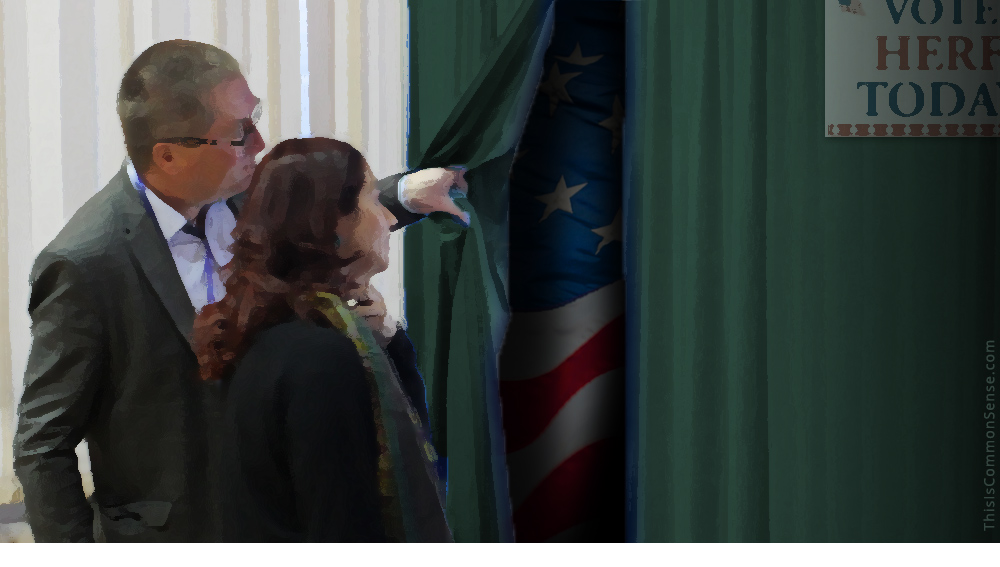
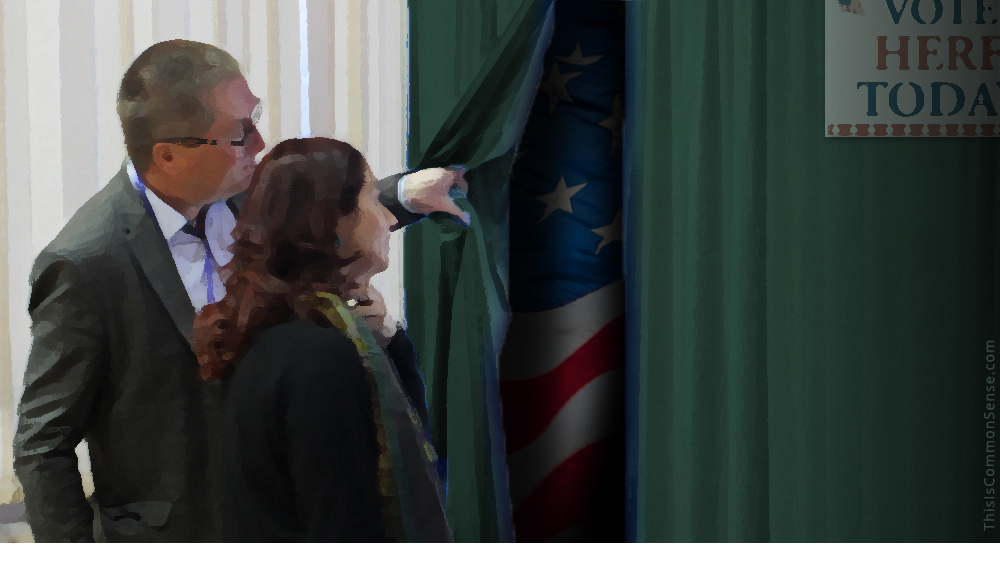
Should Non-Citizens Vote?

“A lot of people would like to say this is an immigration issue. It’s really not,” offered Gary Emineth, the head of North Dakotans for Citizen Voting and a candidate for state senator.  

“It’s really about preserving the right for U.S. citizens, and in our case, North Dakota residents, to only be the voters in all elections across the state of North Dakota,” added Emineth. “And that’s why we want it in the constitution.”

Turning in more than 35,000 voter signatures on petitions last Friday, Emineth and others placed a constitutional amendment on this November’s ballot that, if passed, would make voting the exclusive right of U.S. citizens in North Dakota.

Elsewhere in the country, Emineth points out, non-citizens are already voting — in Chicago and San Francisco, and in 11 cities across Maryland. Moreover, campaigns are underway across the country to give non-citizens the vote — in California, Connecticut, New York City, Boston and Montpelier, Vermont.

Opponents claim the North Dakota measure is completely unnecessary, as the state doesn’t currently allow non-citizens to cast a ballot, nor has any city yet attempted to allow non-citizens to vote. But Emineth’s goal is to keep it that way.

Moreover, University of North Dakota Law Professor Steven Morrison acknowledged to The Forum in Fargo that “the proposed amendment does clean up what could be a grammatical loophole since the word ‘every’ doesn’t conclusively exclude non-citizens from voting. . . .”

It is a very simple proposition: Do you want voting to be the exclusive right of U.S. citizens? Or should non-citizens be allowed to vote?

Coming to a ballot near and Fargo.*

This is Common Sense. I’m Paul Jacob.



* With some help from Liberty Initiative Fund.


PDF for printing


Categories
Accountability folly general freedom ideological culture media and media people moral hazard responsibility

Too Big for Breaches

“Any reporter who has covered Europe in the last decade has written a dozen articles or more,” The New York Times informs us, “about how one crisis or another has exposed the fundamental unsustainability of the European Union.”

I hadn’t noticed. Until recently, haven’t reporters and commentators been downplaying Europe’s looming crisis? But they cannot pretend “far right” separatist, decentralist and nationalist movements are marginal any longer, not after strong showings for Geert Wilders in The Netherlands and Marine Le Pen in France, and the Brexit vote.

Now everybody seems to be panicking.

Even the Times is half-predicting an end to what it calls the “European Experiment.”

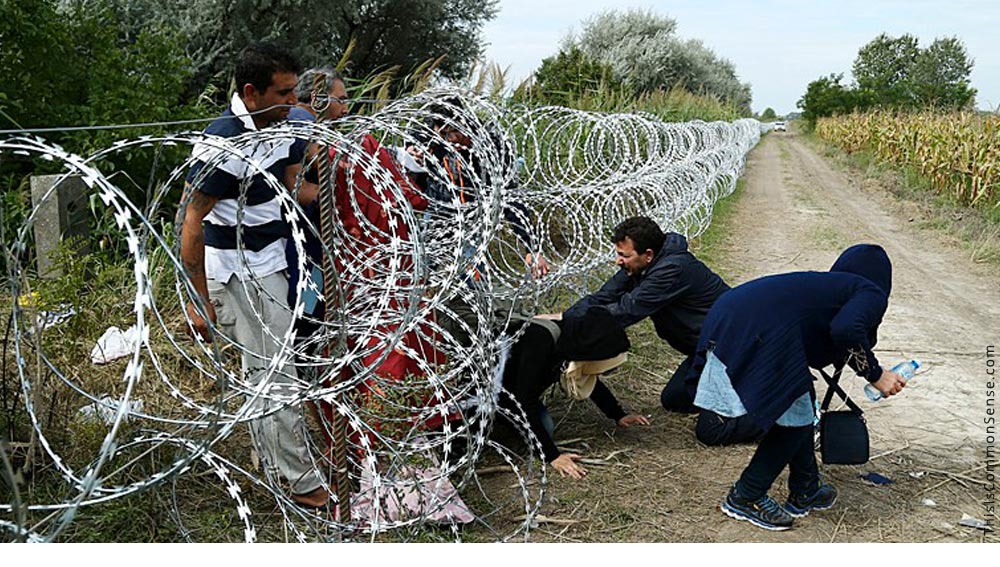
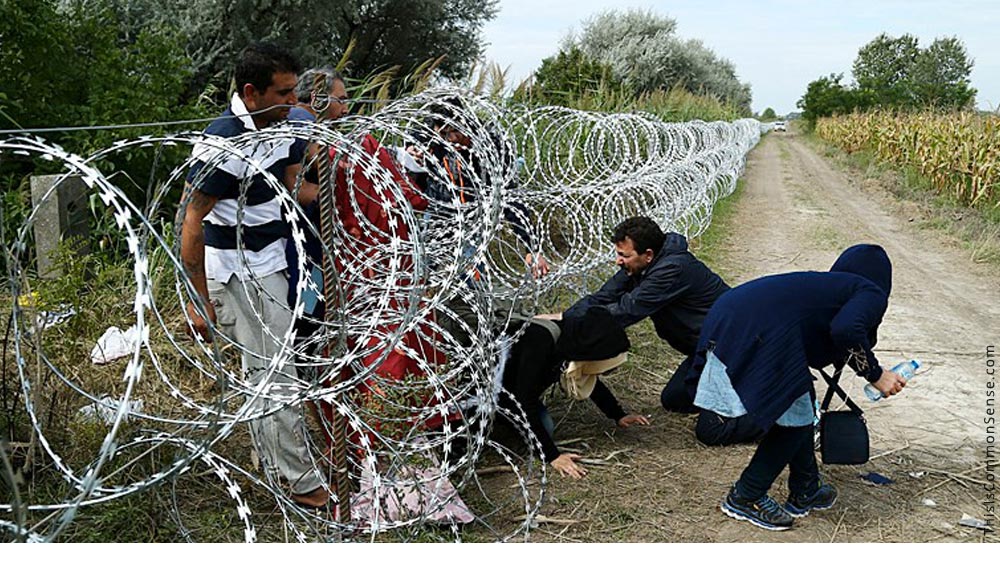
The Times identifies the tension as arising from “calls for keeping out secondary migrants and demands to keep internal European borders open. It’s a version of the contradiction within the European Union itself: between an open union and a collection of sovereign states.”

Beneath all the brouhaha about freedom of movement across breached borders lies the real contradiction: between massive welfare states on the one hand and, on the other, freedom of movement, speech and all the rest.*

When governments offer freebies, they entice people into un-productive or at least sub-productive lifestyles. Which is not sustainable, especially when extensive. How many productive people must support how many unproductive people?

Then throw those domestic programs open to millions of migrants who lack even rudimentary language and First World skills? That’s how states subsidize their societies’ destruction.

Europe’s governments are way too big for their border breaches.

If you want traditional freedoms, you have to pare down government.

This is Common Sense. I’m Paul Jacob.



*Between social democracy (socialism lite) and the old liberal order.


PDF for printing