Categories
First Amendment rights international affairs privacy

Private Chat, Back Now in Europe?

We seem to have Germany — not a typo: Germany — to thank for the fact that one of the most intrusive EU gambits attacking freedom of speech is about to fail.

The proposal would let governments monitor all private chat messages, via mandatory back doors, without bothering with such trivialities as warrants, probable cause, evidence.

The European Union centralizes many assaults on liberty that member countries are supposed to supinely accept once enacted. But it can’t ignore individual members as proposals are still en route to becoming law. And the German government, often not exactly a beacon when it comes to free speech, has now made its opposition to this particular mode of surveillance and censorship loud and clear.

As Germany blocked the plan, first announced in 2022, German Justice Minister Stefanie Hubig said that “unprovoked chat control must be taboo in a constitutional state. . . . Germany will not agree to such proposals at EU level.”

Parliamentary leader Jens Spahn of the Christian Democratic Union also uttered some common sense, explaining that warrantless monitoring of chats “would be like opening all letters as a precautionary measure to see if there is anything illegal in them. That is not acceptable, and we will not allow it.”

Although the proposal is not yet quite dead, the German opposition makes it extremely unlikely that EU bosses can go further with it.

Great spirit, German officials. Cheers to now applying this principle consistently — as is required of principles.

This is Common Sense. I’m Paul Jacob.


PDF for printing

Illustration created with Krea and Firefly

See all recent commentary
(simplified and organized)
See recent popular posts

Categories
First Amendment rights international affairs social media

Germany Versus X

The question is freedom of speech. Many German officials are opposed. Twitter-X, or X, is in favor.

As Reclaim the Net summarizes the case, “German prosecutors are testing whether the reach of their censorship laws can outstrip the guardrails of international treaties.”

These prosecutors have been going after three X managers for alleged “obstruction of justice.” This obstruction consisted of refusing to immediately give prosecutors data on users who utter government-disapproved speech.

The X managers have been adhering to the provisions of a bilateral treaty, the Mutual Legal Assistance Treaty, under which the German requests are to be reviewed in U.S. legal channels before X can be forced to comply. Which increases the chances that X will not be forced to comply.

The prosecutors regard the managers’ refusals as a form of criminal interference. The legal and constitutional issues are now being battled over in German courts.

This is the German government which has been in the news for raiding the homes of people who post sentiments online of which the government disapproves.

That X is not meekly obeying orders to violate the trust of account holders and turn over their private information has upset German advocates of censorship. One MP, Anna Lührmann of the Green Party, says that X’s resistance to censorship is a “scandal” that “goes against fair competition and puts our democracy at risk.”

I don’t think, though, that democracies fail to be robust as they become more like dictatorships. Germany has it all inverted.

This is Common Sense. I’m Paul Jacob.


PDF for printing

Illustration created with Krea and Firefly

See all recent commentary
(simplified and organized)
See recent popular posts
Categories
international affairs

With an Exclamation Mark!

Last week, rumors echoed that President Donald Trump had died. Some famous people, such as Minnesota Governor (and future presidential hopeful?) Tim Walz, got “in trouble” for saying things that sounded a little too much like wishing Donald Trump dead.

Trump, of course, was alive and making news on Monday.

But for real death rattles in politics we have to go to Germany.

An election is looming and it appears from news reports that more than a handful of politicians standing for election died suddenly. But it’s not a general curse upon politicians. The deaths have happened in one party, the controversial “far right” party Alternative for Germany (AfD).

“Six candidates from Germany’s right-wing AfD Party have died within a 13-day span,” The Daily Wire reports. “As local elections approach, officials say that at least two deaths have been confirmed to be the result of natural causes and that no foul play is currently suspected.”

The two designated natural deaths occurred within the same state, North Rhine-Westphalia.

Two candidate deaths in the same party in the same political region leading up to the same election day has to raise eyebrows. A fluke?

It turns out that the other four suspiciously dead candidates hailed from the same region, and the authorities still suspect nothing. 

“Despite the police ruling out suspicious circumstances, retired economist Stefan Homburg claimed in a post on X that the number of candidates’ deaths was ‘statistically almost impossible,’” the U.S. edition of The Independent informs us. “His post was later retweeted by the AfD’s co-leader Alice Weidel, while AfD supporter and billionaire Elon Musk responded to the tweet with an exclamation mark.”

Rumors about this won’t die as quickly as the Trump rumors last weekend.

This is Common Sense. I’m Paul Jacob.


PDF for printing

Illustration created with Krea and Firefly

See all recent commentary
(simplified and organized)
See recent popular posts

Categories
ideological culture international affairs

Iranian Revolutionary Climate

I was once bitterly opposed to the climate change. One minute raining, then snowing, then desert sun. Enough already.

But now I see that we need the climate change to fight tyranny.

Not everyone agrees. Nina Bookout simply refuses to accept the latest super-sophisticated scientific reasoning about how widespread protests happening in Iran — ostensibly because of a theocracy that is stomping everybody — are secretly being motivated by the climate change!!!!!

You know it’s scientific if it’s in “Scientific” American, a lot smarter now that it has dumbed down its content in recent decades. 

But Bookout just won’t follow the “science.”

Scientific American says climate change is “among the environmental challenges facing Iran that helped spark protests in dozens of cities. . . . A severe drought, mismanaged water resources and dust storms diminished Iran’s economy in recent years.” 

Protests are happening most in places with “climate refugees.”

Bookout differs: “The Iranian people KNOW that billions of dollars was freighted to Iran on Obama’s say-so. Thus, for several years, the Iranian government has had financial resources available to help those impacted by the drought and the earthquakes. . . . Instead the Iranian government [have been using] their cash . . . to prop up Hamas, Hezbollah, terrorism in Syria, and build up their military. . . . The security forces aren’t attacking protestors because of climate change.”

I’m with Scientific American. Let us have climate change wherever autocrats oppress the people, so that people will resist this oppression.

Thank you for your help, climate change.

This is Common Sense. I’m Paul Jacob.


PDF for printing

Illustration created with Krea and Firefly

See all recent commentary
(simplified and organized)
See recent popular posts
Categories
First Amendment rights international affairs Internet controversy privacy

Apple to Keep Encryption

Thanks, United Kingdom.

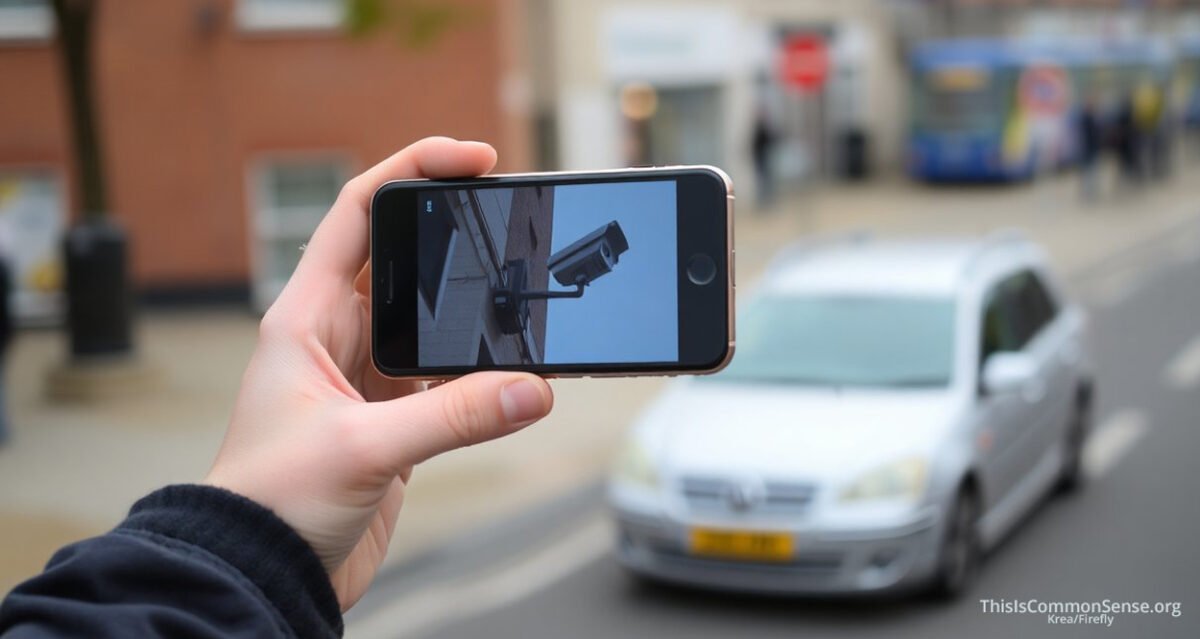
Following pressure on UK officials by the Trump administration and some congressmen, British censors have caved — the U.S. Director of National Intelligence confirmed that the UK was abandoning its demand that Apple burn a hole in its iPhone encryption.

So Apple may continue providing its flagship smartphone with robust encryption. Cyberhackers and autocratic regimes (including snoopy British officials) — who’d love a crashable gate into everyone’s private iPhone information — must now endure their extreme disappointment.

Director Tulsi Gabbard reported on X that the UK will “drop its mandate for Apple to provide a ‘back door’ that would have enabled access to the protected encrypted data of American citizens and encroached on our civil liberties.”

Such a back door would have rendered the encryption close to pointless, presenting a vulnerable target to all bad guys in addition to all “good” guys in the UK holding backdoor keys.

Under an agreement in effect since 2019, U.S. companies are obliged to comply with requests from UK officials for data relevant to criminal investigations.

The agreement prohibits surveillance of Americans. But this year British officials secretly demanded that Apple install a back door to enable the UK government to extract data from any iPhone. Yes, that’s any iPhone anywhere in the world. 

The British Government also planned to initiate these back-door intrusions without even needing to show relevance to a UK criminal investigation, let alone provide a warrant.

How long will the reprieve last? Maybe only until we get another U.S. administration as eager to censor everything as the last one was.

This is Common Sense. I’m Paul Jacob.


PDF for printing

Illustration created with Krea and Firefly

See all recent commentary
(simplified and organized)
See recent popular posts

Categories
First Amendment rights ideological culture international affairs

Art Caves to Power

The Chinese Embassy in Thailand has pressured the Bangkok Art and Culture Centre to censor an exhibit: to remove works dealing with China’s persecution of groups such as the Uyghurs and Tibetans. 

The exhibit’s curator notes an “irony”: the exhibit being censored is on the theme of censorship. Actually, it’s about more than that. Titled Constellation of Complicity: Visualising the Global Machinery of Authoritarian Solidarity, it’s an ambitious project, attempting “to reveal power in its entanglements, and to insist that art remains one of the last ungovernable territories of resistance.”

But the exhibit is held in the Kingdom of Thailand, not exactly known as a bastion of freedom and democracy. So it shocked no one when the gallery’s operators felt that they had no choice but to submit to China’s demand — in no small part because a financial sponsor and the Thailand’s Ministry of Foreign Affairs had both accepted the diktat.

What happened is no isolated example of bad behavior — by China or by unresisting victims. Increasingly, we live in a world where the Chinese Communist Party tells us what can be said, what can be shown, what can be done.

Several years ago, a Marriott worker in Nebraska was fired after he or a colleague “liked” a pro-Tibet tweet using the Mariott social media account. The CCP exploded. Marriott has hotels in China. Marriott groveled.

Marco Rubio, then a U.S. Senator, said at the time that every week it seemed that another major company was shamelessly apologizing to the PRC for “some sort of ‘misstep’ related to Tibet . . . and other sensitive issues.”

It’s not just “art” that must learn to resist the governance of China  . . . before it’s too late.

This is Common Sense. I’m Paul Jacob.


PDF for printing

Illustration created with Krea and Firefly

See all recent commentary
(simplified and organized)
See recent popular posts

Categories
First Amendment rights international affairs Internet controversy

UK Targets Wikipedia

It would be nice if Wikipedia were suing to challenge the United Kingdom’s entire Online Safety Act, not just the provision that most directly targets Wikipedia. 

Better something than nothing, however.

As Wikipedia describes it, the Act “creates a new duty of care for online platforms, requiring them to take action against illegal content, or legal content that could be ‘harmful’ to children where children are likely to access it. Platforms failing this duty would be liable to fines of up to £18 million or 10% of their annual turnover, whichever is higher.”

The Wikipedia Foundation objects to being classified as a category 1 service under the Act, a designation that imposes digital ID requirements on its contributors.

“Privacy is central to how we keep users safe and empowered,” says Phil Bradley-Schmieg, lead counsel for the Wikipedia Foundation. “Designed for social media, this is just one of several category 1 duties that could seriously harm Wikipedia.”

“Designed for social media” — in other words, do it to the other guys, not us.

“Volunteer communities working in more than 300 languages could be exposed to data breaches, stalking, vexatious lawsuits, or even imprisonment by authoritarian regimes,” Bradley-Schmieg adds.

True. But won’t those risks also be faced by those who surf in to say something on a social media platform and suddenly find themselves confronted with age-verification — ID — demands?

We need a tsunami of lawsuits against the UK’s global assault on privacy and freedom of speech.

This is Common Sense. I’m Paul Jacob.


PDF for printing

Illustration created with Krea and Firefly

See all recent commentary
(simplified and organized)
See recent popular posts

Categories
First Amendment rights general freedom international affairs

UK as China’s Thumb Puppet

British police do some good things. In 2023, officers were credited with reducing the number of phone snatchings by punks on mopeds. Great.

Let’s have more of that, less of telling victims of totalitarian dictatorship to shut up for their own good.

The UK police wanted expatriate Hongkonger Carmen Lau, a pro-democracy activist and former Hong Kong politician who has been living in Britain since 2021, to stay out of trouble with China. So in March, London bobbies asked her to sign a “memorandum of understanding” obliging her to avoid public gatherings and “cease any activity likely to put you at risk.”

What activity? 

Not hang gliding.

The sickening effort to muzzle Lau came after neighbors got letters “offering a £100,000 bounty (US$131,947) for information on her movements” leading to her arrest by Hong Kong’s Chinese Communist Party authorities.

Hong Kong denies sending the letters. But in 2024, it placed bounties on the heads of six pro-democracy activists, including Lau, who had fled overseas in the wake of China’s repressive national security law of 2020, which targeted Hong Kong liberties.

Lau felt constrained to submit to the police request when they came to her door but has continued to speak out. “A truly democratic response should center on protecting the rights of those targeted, not advising them to retreat from public life,” she says.

Responding to the revelations, Thames Valley police say that they’d never “confirm or deny safeguarding tactics that we may or may not use. . . .”

Is this the free world? Not if under China’s thumb. 

This is Common Sense. I’m Paul Jacob.


PDF for printing

Illustration created with Krea and Firefly

See all recent commentary
(simplified and organized)
See recent popular posts

Categories
First Amendment rights international affairs

Brazilian Censors Banned!

The American government — after years of nurturing a censorship agenda in the South American country — is now penalizing Brazil’s super-censor Supreme Court justice, Alexandre de Moraes, along with various colleagues, for imposing censorship demands on U.S. companies.

The U.S. State Department revoked their visa privileges, preventing them from entering the United States. The general policy had been introduced May 28, when Secretary of State Rubio announced that it would apply to “foreign officials and [other] persons . . . complicit in censoring Americans.”

By then a UK police commissioner, Mark Rowley, had threatened to “come after” Americans who violate UK “hate speech” laws.

The Trump administration “will hold accountable foreign nationals who are responsible for censorship of protected expression in the United States,” Rubio says.

“Brazilian Supreme Federal Court Justice Alexandre de Moraes’s political witch hunt against Jair Bolsonaro created a persecution and censorship complex so sweeping that it not only violates basic rights of Brazilians, but also extends beyond Brazil’s shores to target Americans.”

Bolsonaro, a former president of Brazil, is on trial for allegedly seeking to overturn the country’s 2022 presidential election. He has been prohibited from posting on social media or communicating with others under investigation. 

One on this no-contact order is his own son, Eduardo Bolsonaro, currently living in the U.S.

Having ordered social media platforms Rumble and X(-Twitter) to censor opposition figures, Justice Moraes acted to block both services from operating in Brazil when the platforms disobeyed him.

“Free speech,” said X’s Elon Musk, “is the bedrock of democracy and an unelected pseudo-judge in Brazil is destroying it for political purposes.” 

It’s a wonderful thing to have our government once again defending democratic free speech — from its enemies foreign and domestic.

This is Common Sense. I’m Paul Jacob.


PDF for printing

Illustration created with Krea and Firefly

See all recent commentary
(simplified and organized)
See recent popular posts
Categories
initiative, referendum, and recall international affairs

Democracy Defending Democracy

This year’s most important election takes place tomorrow. 

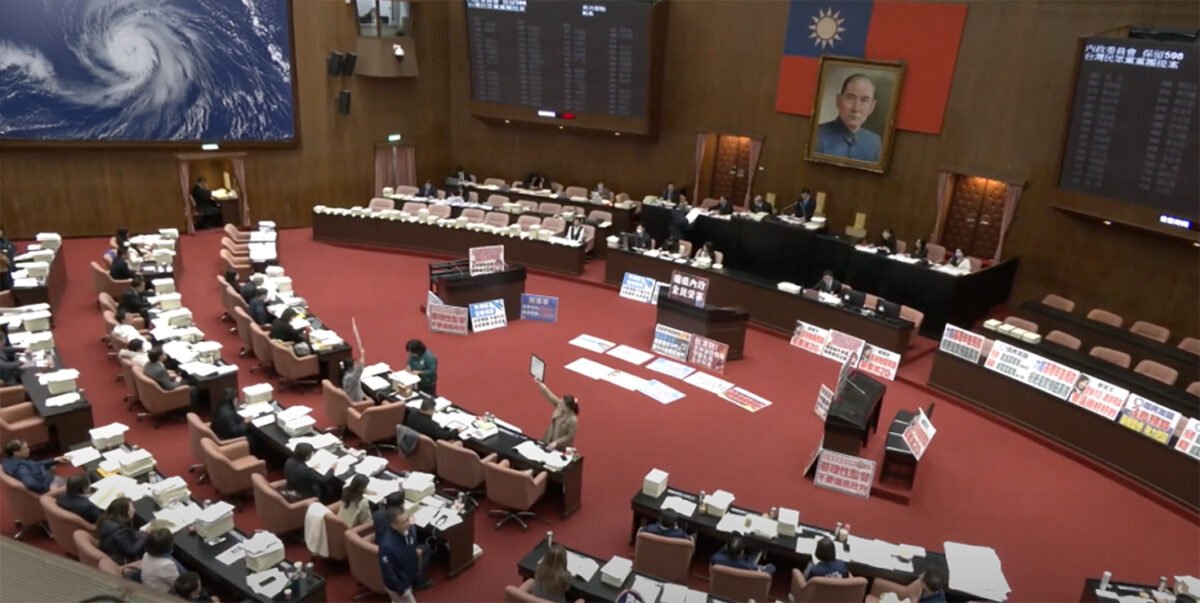
On Saturday, in Taiwan — Asia’s most democratic nation — more than 20 percent of the country’s unicameral legislators serving in the Legislative Yuan will face the voters in a massive, multi-step, typhoon-size recall campaign. 

Coinciding with a real typhoon striking this island nation. 

Which could impact turnout. 

Which matters. 

To successfully oust each officeholder, both a majority of the turnout must agree as well as for that majority to equal 25 percent of all the registered voters in the district. 

“Supporters of the recall movement have portrayed their campaign as ‘anti-communist,’” reports CNN, “seeking to get rid of ‘pro-China’ opposition KMT lawmakers they perceive as collaborators of Beijing’s ruling Communist Party, which vows to ‘reunify’ Taiwan, by force if necessary.” 

Taiwan has divided government. President Lai Ching-te heads the Democratic Progressive Party (DPP), which does not desire reunification with Chinese Communist Party-ruled China, either by force or surrender, and has been working to improve Taiwan’s military posture. The 113-seat Legislative Yuan, controlled by a coalition between the Kuomintang (KMT) and the smaller Taiwan’s People Party (TPP), has “undermined democratic institutions and national security by obstructing Lai’s administration,” including “freezing defense spending” when China’s military threats are escalating.

The KMT has 24 legislators up for recall tomorrow and another seven in a recall election next month. Meanwhile, KMT efforts to respond by launching recalls against DPP lawmakers completely fizzled. 

Taiwanese billionaire Robert Tsao, a major backer of the recall effort, labeled the 31 KMT lawmakers being recalled “China’s ‘Trojan Horse’ in Taiwan.” 

A KMT official recently called the recall “totally unconstitutional and undemocratic.”

Really? The main point of democracy is to allow the peaceful removal of government officials.

This is Common Sense. I’m Paul Jacob.


PDF for printing

Illustration created with Krea and Firefly

See all recent commentary
(simplified and organized)
See recent popular posts