Categories
ideological culture responsibility

Custom and Customers

Muncie’s Traci Markcum remembers when the news was free. The Indiana citizen wants a return to those carefree days.

“I think it is pretty bad The Star Press is trying to charge people to read the paper online,” she wrote in a letter to the editor. “Whatever happened to being able to see the news on the Web for free?”

Free? Well, you can find plenty of news on the internet for free, sorta, once you’ve bought a computer and Internet access — and paid the electric bill, of course. In the really olden days, before cable TV, network news was free once you had a TV set. (Why computer and television manufacturers, internet providers and electric companies dare to charge us money, when we’re simply being good citizens and keeping up on current affairs, I’ll never know.)

Ms. Markcum “used to buy the Sunday paper and would read the news at work or on the go on [her] phone, but not now.” Not now, because The Star Press has “stooped to a new low by having to charge Muncie citizens who live and work in the city a fee to read something. Your paper prices have increased and people cannot afford to get the paper.”

In fact, Markcum became so desperate, she asked, “Are we supposed to start stealing the news you are supposed to be providing?”

Paperboys beware!

“Go back to the way it used to be, or lose a lot more customers,” she concluded.

Customers? A customer “purchases a commodity or service.”

For its part, The Star Press tells online visitors to “Enjoy a limited number of articles over the next 30 days” offering a button to “Subscribe today for full access.”

Oh, the humanity!

This is Common Sense. I’m Paul Jacob.

Categories
ideological culture

Predictable Prescription

President Obama loves a laugh line he uttered during his convention speech and is now on tour with it, using it to stoke up his campaign whistle stops.

Obama told us that Republican policy amounts to this: “Have a surplus? Try a tax cut. Deficit too high? Try another. Feel a cold coming on? Take two tax cuts, roll back some regulations and call us in the morning.”

Obama is correct that tax cuts don’t magically cure behemoth deficits or leviathan debt. And, frankly, Republicans are often as loathe as Democrats to cut — really cut — government spending.

But it’s not as if Obama were the Lone Ranger when it comes to hacking away at the federal octopus, constantly proposing only balanced budgets and demanding shutdowns of federal agencies and programs. No. Obama, like so many in DC, demands ever higher spending, ever higher taxes, ever more regulations — as exemplified by Obamacare. The president demonizes as Darwinian dastards all who support even vanishingly small reductions in projected increases in spending.

If the GOP plays a one-note tune of tax cuts, ad infinitum, the Democrats’ have their own long-playing record spinning around and around: the idea of government as the solution to every problem. But whatever “fiscal irresponsibility equivalence” exists between Republicans, who want to cut taxes in the face of trillion-dollar a year deficits, and Democrats, who want to keep spending more, the underlying issue remains whether we need more government or less.

Take less government, less spending, lower taxes, and call me on election morning.

This is Common Sense. I’m Paul Jacob.

Categories
free trade & free markets ideological culture

Rescue Them

“Ideas are forces: the existence of one determines our reception of others.”

This is more than just a statement of associationist psychology.

Take the politics of “welfare.” The modern project has placed government at the heart of society, construing its basic mission as that of “rescuing” people who make mistakes or suffer ill fortune. Taking over where self-help, mutual aid, and charity left off — and at the risk of squelching self-help, mutual aid, and charity — government steps in and provides assistance. Often permanent assistance, and within the context of vast bureaucracies and inescapable institutions.

The socialists who most insist on this messianic government seem to be mostly driven by a concern for the poor . . . and a hatred for the rich. (Sometimes both, sometimes just one or the other.) But the Progressives and New Dealers who actually established the institutions of “welfare” didn’t stop with just the poor. Once the Rescue Mission mentality stuck, there was no class that “shouldn’t” receive benefits.

The result? We watch anti-corporate leftists squirm as they defend corporate bailouts.

But not all left-leaning folks buy the whole package. In America and Europe high-level panic led to vast fortunes squandered to bail out banks, etc. But in Iceland, the people let the creditors take their lumps and the banks fail while drastically cutting back on government deficits (though not targeting assistance for the poor).

That is, they behaved more like laissez faire economists than messianic technocrats.

And Iceland’s thriving, bounced back.

Of course, true believers in the awesome powers of government will resist any notion that bailouts aren’t necessary . . . ideas being forces and all.

This is Common Sense. I’m Paul Jacob.

Categories
government transparency ideological culture national politics & policies

Great & Powerful Teleprompter

There’s a man behind a curtain somewhere doing whatever one does to a teleprompter.

Load? Arm? Detonate?

Last week, in Tampa, a Republican teleprompter put words into the mouth of Speaker of the House John Boehner, then chairing the convention, specifically these words: “In the opinion of the chair, the ‘ayes’ have it and the resolution is adopted.”

The resolution concerned whether a number of Ron Paul delegates would be seated. The vote was awfully close. How the actual voice vote turned out was supposed to be for Boehner to judge, not an anonymous guy (or gal) behind the curtain, ghost-writing democracy.

Yesterday, while the Democrats gathered in Charlotte, North Carolina, were busy tucking God and Jerusalem back into their platform, Los Angeles Mayor Anthony Villaraigosa held the gavel. But not control of his own teleprompter.

The resolution restoring those elements to the party’s platform, coming after the platform committee had already completed its work, required a two-thirds vote. When the votes were heard . . .  well, Mayor Villaraigosa wasn’t sure. He had the convention vote again. And then again.

Finally, perhaps after seeing the teleprompter, which read, “In the opinion of the chair, two-thirds having voted in the affirmative . . .” he decided, to loud booing, that the resolution had received two-thirds.

As the country prepares (cringes) for the fall campaign, we’ll hear plenty from President Barack Obama and Governor Mitt Romney and about both men. But who cares? The real power in our system of governance, as these conventions make clear, are the guys running the teleprompters.

This is Common Sense. I’m Paul Jacob.
Categories
ideological culture national politics & policies political challengers

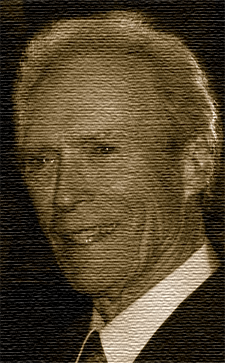
The Gray Fox

Clint Eastwood, crazy? Like a fox.

Last Thursday, at the Republican Party Convention in Tampa, he spoke to a primetime television audience of millions in the type of direct language politicians never utter. The movie star’s message was simple, but his presentation was more acting routine than speech, using an empty chair as a prop and pretending President Obama was sitting next to him. His delivery came in stops and starts, seemingly ad-libbed with the 82-year old no quicker or more nimble of thought and word than other octogenarians I know.

Much of the mainstream media pounced, diagnosed Eastwood as nearly insane, and noted that the actor’s 12-minute talk upstaged presidential nominee Mitt Romney. Funny, I think Eastwood’s words touched many regular folks — and perhaps a raw nerve for those favoring the president.

While celebrities have every right to speak, I’m tired of the usual sophomoric spewing of famously uninformed opinion — “hot-dogging it,” as Eastwood put it. But we didn’t watch movie star Clint Eastwood last week; we saw businessman Clint Eastwood.

In 1967, early in his Hollywood career, Eastwood created his own production company, Malpaso, which has handled virtually all of his American films. Eastwood knows firsthand the demands of running a business. In fact, he enjoys a reputation for finishing his films on time and on budget and making profits.

When someone doesn’t do the job, Eastwood signs the proverbial pink slip. He thinks voters should do likewise. After all, “we own this country,” Eastwood reminded us. “Politicians are employees of ours.

“When somebody does not do the job, we got to let them go.”

This is Common Sense. I’m Paul Jacob.

Categories
crime and punishment ideological culture

Ends, Means, Evils

Anders Behring Breivik, the Norwegian who used bombs and guns in a terrifying killing spree a little over a year ago, got what he wanted: He was judged as a political terrorist and not insane, sentenced to prison for ten to 21 years, Norway’s unbelievably minimum “maximum” — with the state’s option of keeping him confined indefinitely if judged too dangerous for release.

Which sounds rather “clinical” to me. Even without a ruling of insanity, Norway appears to treat its murderers as madmen.

But as one survivor of the Utoya massacre explained, “I believe [Breivik] is mad, but it is political madness and not psychiatric madness.” Exactly.

“Madness” is some sort of loss of self-control, a dangerous instability; “insanity” legally defines that subset of madmen who cannot distinguish between right and wrong. It is pretty obvious that though Breivik is deeply off his rocker, his condition is the result chiefly of bad ideas channeling base impulses.

And yet . . .

Breivik’s terrorism — like all others — justifies killing innocent people to serve a political goal. In doing so, the terrorist’s ideology becomes de facto insanity, rendering the terrorist incapable of recognizing his own evil.

In this case, his ideology also kept the terrorist from seeing the actual consequences of his horrifying violence. Breivik’s politics is of an extreme anti-Muslim nature. It has surely been fed by the rise of radical Islamic terrorism. But killing 77 people, including scores of non-Muslim teenagers, doesn’t exactly serve to rally European “militant nationalists” to an anti-Muslim pogrom. Mad. Wanton. Feckless.

But just “evil” will do.

This is Common Sense. I’m Paul Jacob.

Categories
ideological culture

The Left Discriminates

The political “left” dominates a number of institutions, including, most famously, Hollywood entertainment and up-market journalism. But perhaps even more striking is the heavily “liberal-progressive” bent observed in many academic fields, particularly in the humanities and social sciences, far in excess of the leftist percentage in America at large.

And this certainly deserves an explanation.

Could it be the result of bias and discrimination?

It’s long been fun to listen to academics defend their heavily leftist cut of the higher ed pie using arguments that have nothing to do with bias. Why “fun”? Because similar arguments trotted out in other fields receive nothing but scorn from academics.

Now there’s a study showing that social psychologists, at least, self-admit to an anti-conservative bias in grading papers, awarding grant proposals, inviting symposium speakers, and accepting job applicants. And here’s the kicker: “The more liberal the survey respondents identified as being, the more likely they were to say that they would discriminate.”

Those who are already sharpening their ad hominem retorts should note that the study was not conducted by folks on “the right.” Co-author Yoel Inbar described himself to Inside Higher Ed as “‘a pretty doctrinaire liberal,’ who volunteered for the Obama campaign in 2008 and who votes Democrat. His co-author, Joris Lammers of Tilburg, is to Inbar’s left, he said.”

The most interesting aspect of bias uncovered in the study, however, is that interviewed academics estimated that their colleagues were twice as likely as themselves to discriminate on ideological grounds.

The “other guy” is always worse than oneself.

Which is where bias and prejudice begin, perhaps.

This is Common Sense. I’m Paul Jacob.

Categories
ideological culture

Philosophic Anti-Fanaticism

Popular French philosopher Pascal Bruckner is in hot water with fellow left-leaning French intellectuals.

Bruckner doesn’t hate humanity and doesn’t want to unplug all the life-promoting conveniences of industrial civilization. He intimates as much in a controversial new book entitled The Fanaticism of the Apocalypse: Save the Earth, Punish Human Beings, available only in French for now, but soon in English translation as well.

The book assails ludicrous and nihilistic environmentalist pronouncements of the Left. As the title suggests, the author believes that these are based more in religious fervor than in carefully reasoned science. He stipulates that he does not object to ecology as such but rather to the “greenwashing” notions that the “planet is sick. Man is guilty of having destroyed it. He must pay.”

After all, what is the “carbon footprint that we all leave behind us [but] the gaseous equivalent of original sin, of the stain that we inflict on our Mother Gaia by the simple fact of being present and breathing?” A baleful implication of such views is that peoples in developing countries should forget about improving their economic and technological circumstances. The earth has suffered enough, n’est-ce pas?

Bruckner’s observations underscore how radical environmentalism is largely a convenient hook for anti-capitalism. Long before anybody fretted about our chronic exhaling of carbon dioxide, certain anti-capitalists urged the extinguishing of industrial civilization and a return to the blissful Tupperware-free, iPhone-free, hunting-and-gathering way of life.

This is Common Sense. I’m Paul Jacob.

Categories
ideological culture media and media people Second Amendment rights

Caught in the Crossfire

There are some things people with different values just won’t “get” about their opponents. Folks who support gun bans and greater gun control just don’t “get” arguments for the Second Amendment and for “more guns” in peaceful citizens’ hands. And so, when confronted with a scholar and analyst of gun control like economist John Lott, they shy away from actually arguing with his points.

Their approach? Scattershot. Sniping. Crossfire.

Thus it was, this week, on Piers Morgan’s CNN interview show. Morgan grilled Lott in the wake of the Aurora, Colorado, movie theater atrocity. Lott ably started making his case numerous times, but Morgan refused to engage Lott’s points, instead unleashing a barrage of “isn’t your positions just ridiculous?” non-questions.

The lack of engagement with ideas is astounding.

When Alan Dershowitz joined the “debate,” it only got worse. Dershowitz repeated an accusation of “junk science” without really demonstrating how the science marshaled by Lott was unsound, and engaged (falsely) in the favorite ad hominem gambit of the age: “research funded by the NRA.”

The sad thing about this is not the inability of Morgan and Dershowitz to understand Lott. The sad thing is their unwillingness to even give it a good ol’ college try. It was downright uncivilized. Dershowitz is a lawyer, so his resorting to base rhetoric in a no-holds-barred attack is understandable. But Morgan is allegedly a journalist, on the advance guard of history, a seeker of truth.

But Morgan is not seeking truth; his mind is already made up. Facts be damned. That doesn’t lead to good interviews.

This is Common Sense. I’m Paul Jacob.

Categories
free trade & free markets ideological culture too much government

Estonia’s Success

When I was coming of age, the economic ideology of Keynesianism was going bust. Keynesians couldn’t explain the stagflation of the 1970s. Monetarists triumphed and the Austrian School experienced a resurgence.

Now, monetarist disputes are hard to follow, and the Austrian Theory of the Business Cycle is not exactly a piece of cake. But Austrian economists’ preferred policies possess a kind of common sense: The thing to do is prevent false booms. Once you hit bust, it’s too late: we are going to experience the pain of readjustment, “recalculation,” as we find new prices and levels. I riffed on this theme last weekend, in my column “Dead Hobo in Trunk.”

Keynesians, now back in the limelight, have it easier, promising “less pain.” They offer drugs to make us feel better: Borrow, go further into debt, and spend, spend, spend!

So you can see why today’s Keynesians would hate Austrian wisdom. Not inflating the money supply, not engaging in deficit spending? Risible! And “austerity”? Keynesian shill Paul Krugman never tires of pillorying that program.

Which brings us to Estonia.

The little post-Soviet Baltic state was one of the few countries to actually restrain spending after the 2008 bust, freezing pensions and cutting public employee salaries by 10 percent. Krugman infamously blogged about it, noting that the country’s current recovery hasn’t yet reached the height of the pre-bust boom. He thinks this tells against “austerity.”

But to Estonian economists, the height of the boom was a false prosperity that couldn’t last. They’re glad their country’s rid of it, and note that their current recovery is above the pre-2005 levels.

In other words, Estonians not only understand their country and their situation better than does Paul Krugman, they understand economics better.

This is Common Sense. I’m Paul Jacob.