Categories
Common Sense folly general freedom ideological culture national politics & policies

Case Closed . . . But Ticking

Irving, Texas, authorities — I use that term loosely — announced yesterday that the case has been closed. Over. Finito. These aren’t the droids you’re looking for.

What case? That of the 14-year-old clock-maker assumed to be a potential bomb-making/let’s-err-on-the-side-of-panic terrorist.

Perhaps it didn’t help that the youngster had the wrong last name: Mohamed. Or that his family had immigrated from Sudan.

Ahmed loves to tinker. On Monday, he brought one project, a clock, to school hoping to impress his engineering teacher. His teacher mistook the clock for an improvised bomb, and told Ahmed not to show it to anyone. When the clock’s alarm went off later, his English teacher took the clock and told him to pick it up after school.

Later, the principal pulled Ahmed out of class. Five policemen then interrogated the lad, eventually handcuffing and marching him to juvenile detention.

A police spokesman admitted there was never any threat made. And, of course, no bomb. Ahmed’s engineering teacher clearly wasn’t scared. Yet, this 14-year-old was still treated like a . . . terrorist.

Before being released.

Some charge this is a case of obvious bias against this student’s race or religion. Maybe that’s why even Hillary Clinton tweeted her support for the student and why President Obama invited Ahmed to bring his clock to the White House.

Though prejudice may be part of this story, I doubt it’s the main issue. Many students not named Mohamed have been treated similarly — for bringing a butter knife to cut an apple at lunch, or gnawing a PBJ sandwich into the shape of a gun, or (horrors!) “shooting” pointed fingers at classmates.

Public school’s zero-judgment zero-tolerance is equal opportunity insanity.

Not Common Sense. I’m Paul Jacob.


Printable PDF

Ahmed, clock, terrorism, terrorist, alarm, hysteria, collage, photomontage, illustration, political, chicken little, fear


Categories
Accountability Common Sense government transparency ideological culture national politics & policies political challengers

Walker vs. Union Power

Governor Scott Walker, who is running for the U. S. Presidency, has cooked up a white paper on the subject for which he is nationally known: labor relations. It’s a doozy.

His main points are:

  • Reduce the power of union bosses by eliminating the National Labor Relations Board.
  • Eliminate big-government unions.
  • Take “right to work”
  • Protect state employees’ First Amendment rights.

And that’s not the whole of it. Some of his points are worth quoting at length, including this:

On Day One of my administration, I will put in place accountability and transparency rules. I will require online disclosure of union expenditures, including revealing the total compensation of union officers, itemizing union trust fund expenditures, increasing reporting requirements for local affiliates of government employee unions, and restoring conflict-of-interest reporting requirements.

Walker’s is not a detailed, in-depth policy paper. It’s a list of goals, really. It does not address how he would accomplish this, if elected. It’s obvious that many (perhaps most) of these reforms would require congressional compliance and even legislation.

Yet by focusing on the inordinate power of government workers’ unions, Gov. Walker advances what many of us were hoping for when we first heard that the surprisingly daring, surprisingly successful Wisconsin governor would make a bid for the top spot in the federal government. Something needs changing.

And that something is the general purpose for government: what and whom government serves, other than itself, and how.

Or, in Walker’s words, “commonsense reforms” to narrow “the federal government’s role. . . .”

He says let’s close “special-interest loopholes . . . once and for all.”

Is that possible? It’s worth a try.

This is Common Sense. I’m Paul Jacob.

Printable PDF

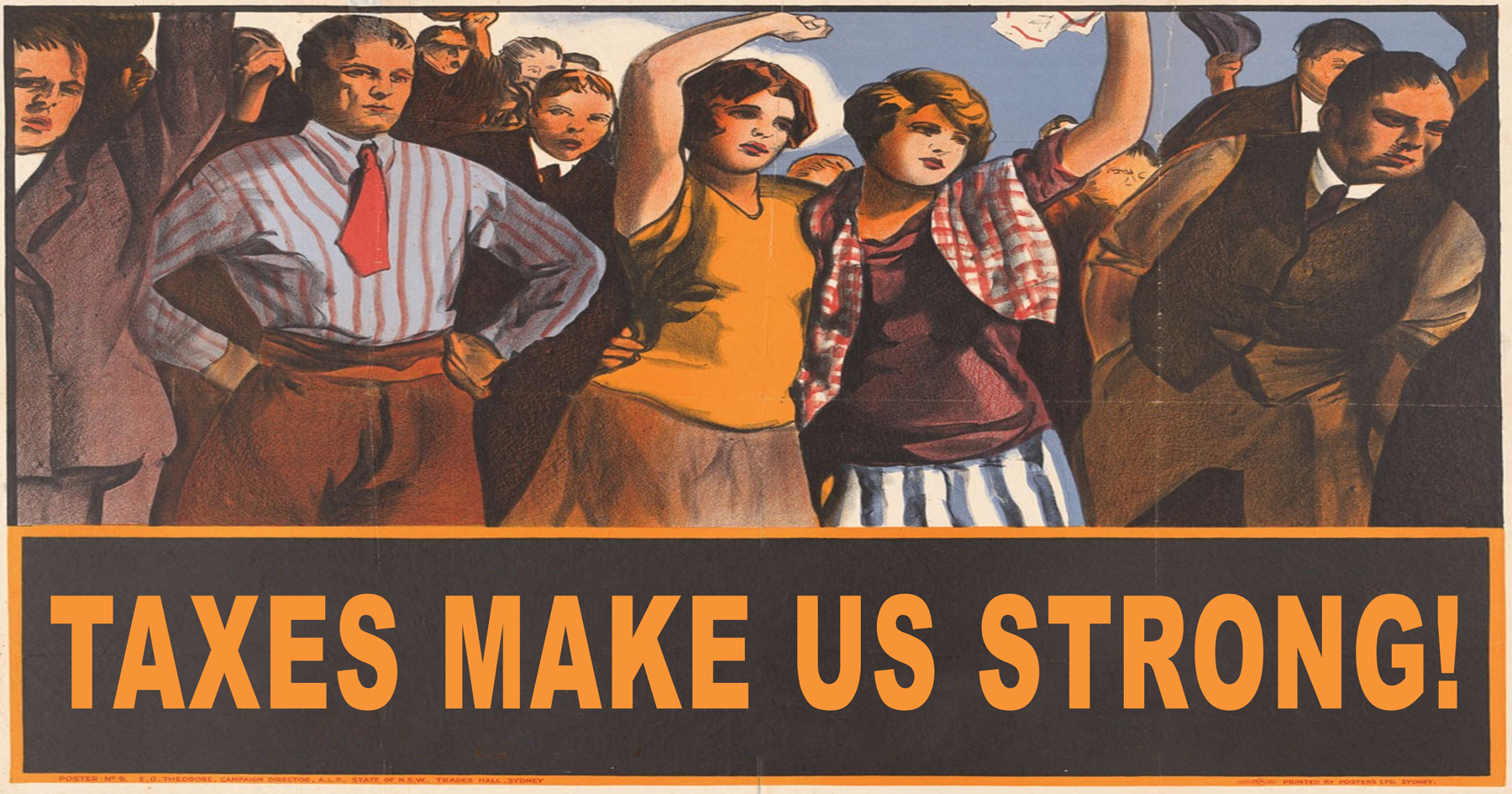
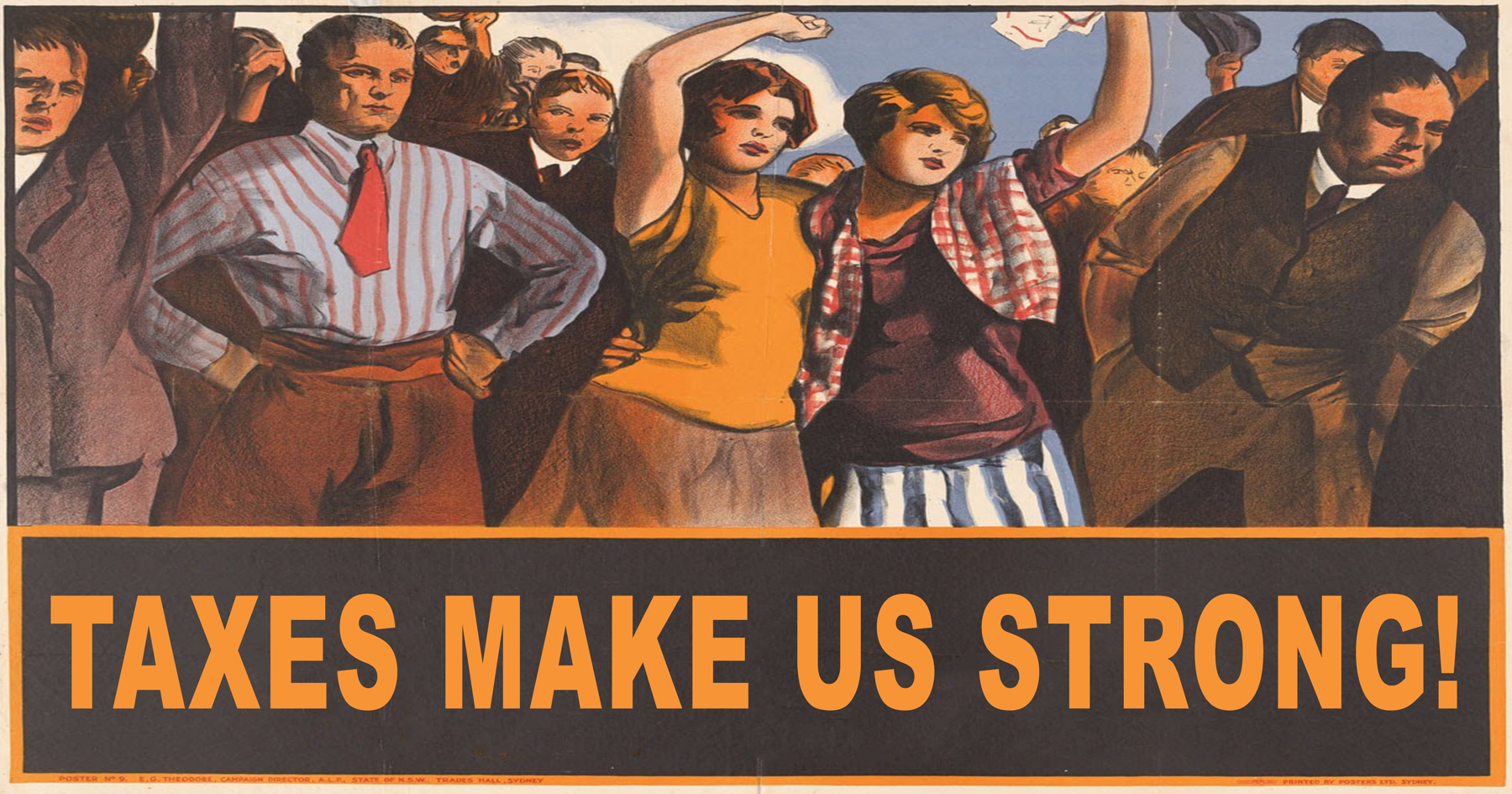
Taxes Make Us Strong


Categories
Common Sense general freedom ideological culture media and media people national politics & policies political challengers too much government

Trump Blot

I’m almost professionally required to say something nice about Donald Trump — because mainstream media feel professionally required to ridicule him. So here goes: he’s doing us a great service in his presidential run.

Trump’s sort of a bung puller; he’s unstopped the cork of polite political society, and shown the massive voter dissatisfaction by giving more realistic voice to just how stupid government is. “Really stupid!”

But, beyond that, where does he stand? On too many issues, that’s murky. For economist David Henderson, a friend of mine from way back, this shows promise.

Henderson is a free-market economist. He’s not into the whole warfare/big stick bullying that some conservatives channel from the first Progressive president, Teddy Roosevelt. Trump, writes Henderson, stands out, by not having “foreign policy advisers.” Which Henderson regards as “refreshing, given the hawkish views of the vast majority of his Republican competitors.”

Henderson also acknowledges Trump’s downsides, including “Trump’s claim, in 2011, that the U.S. government, having won the war in Iraq, should have taken their oil.” This nationalist plunder idea is evil on its face. And disturbingly retro, harkening back to the days of rapine and pillage.

Understandably, Americans fixate on the man’s “charisma.” Should that make us comfortable? Of Max Weber’s three types of authority (traditional, charismatic, and rational-legal), charismatic is the least predictable, least stable. People will follow too far those they love too much. Or find too entertaining?

Trump serves, for now, as a sort of Rorshach inkblot test. What you see depends on your hopes, fears, or the context of Trump’s candidacy, as you understand it.

For my part, I don’t see an accountable proponent of responsible, limited government.

This is Common Sense. I’m Paul Jacob.

Printable PDF

Trump Blot, Rorshach, inkblot, editorial, political cartoon


Categories
Common Sense general freedom ideological culture moral hazard national politics & policies tax policy too much government

Weekend with Bernie: Hard Looker?

What is a “democratic socialist”?

According to leading presidential candidate and Senator Bernie Sanders, such a socialist “takes a hard look at countries around the world who [sic] have successful records fighting and implementing programs for the middle class and working families.”

I don’t believe him. He shows his cavalier attitude in his next few words: “When you do that you automatically go to countries like Denmark, Finland, Norway, Sweden . . .”

Competent comparative economics doesn’t simply focus on a few policies one happens to admire and then trumpet them for America. Other countries following Bernie-branded socialist policies are in or headed into the proverbial toilet, i.e. PIGS (Portugal, Italy, Greece and Spain).

The common-on-the-left meme runs like this: “No Other Advanced Country,” which Kevin D. Williamson handily demolishes in a recent article:

If we are to go around the world cherry-picking policies from happy countries, we might pass over French paid-leave laws in favor of the Swiss capital-gains tax (generally 0.00 percent) or the Swiss national minimum wage (there isn’t one), or Finland’s very liberal (in the good sense of that word) education system, or Sweden’s free-trade regime and its financial-regulatory system. We’d have to make radical improvements on our federal balance sheet to get our public debt down to Norwegian levels.

American success has never really been about copycatting Europe. We need to look hard at those who pretend otherwise — like nova Bernie, the rising star of the left, who’s now besting Hillary in polls in New Hampshire and Iowa.

And about “democratic socialism” — extreme redistributionism in a putative republic — Bernie needs to look hard at the worldwide experience . . . not hardly look.

This is Common Sense. I’m Paul Jacob.


Printable PDF

Weekend with Bernie Sanders


Categories
Common Sense crime and punishment folly general freedom ideological culture judiciary national politics & policies too much government

Just Doing Our Jobs?

I didn’t really want to talk about Kim Davis, County Clerk of Rowan County, Kentucky, who refused to issue marriage licenses to same-sex couples. Last week, she got put in jail for not doing her job; this week, she got released.

Generally, I’m for people doing their jobs. Especially, those in government.

However, when they are instructed to do something destructive, I’d prefer they refrain. Unfortunately, government workers too often select the wrong things not to enforce. I could use a lot more “blue flu” over Drug War efforts, or stealing our property through civil forfeiture, or shooting pet dogs.

No such luck, usually.

Recently, a 17-year-old boy was charged, as an adult, for child pornography. But the “child porn” was a naked picture of his own body on his very own cell phone. A law designed to protect him from sexual exploitation was turned against him, making him a “sexual predator.”

The police and prosecutor in this North Carolina case didn’t really do their jobs.

In Washington County, Pennsylvania, a barbershop has been fined $750 for refusing to cut one woman’s hair. The owner claims he has nothing against doing women’s hair, but merely that this particular shop wasn’t set up to handle women’s typical hair concerns. Public servants fined him anyway.

Do we really need government to patrol beauty salons and barbershops for “discrimination” “crimes”?

After all, they cannot even patrol themselves coherently. Witness the messy case of Kim Davis, Democratic County clerk in rural Kentucky. About which I hope I need not say more.

This is Common Sense. I’m Paul Jacob.


Printable PDF

Just Doing My Job, Collage, editorial


Categories
Common Sense general freedom ideological culture media and media people national politics & policies too much government

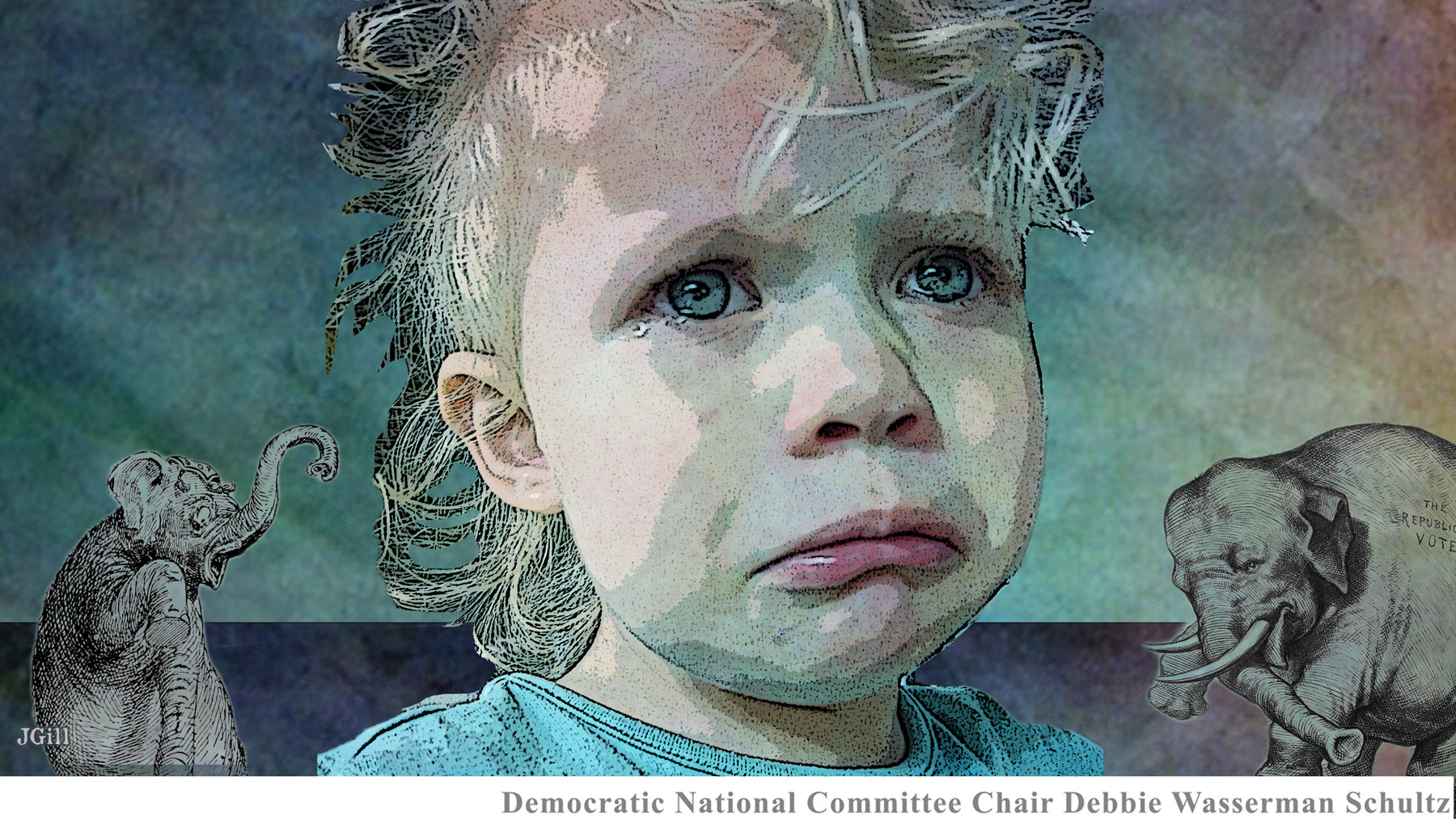
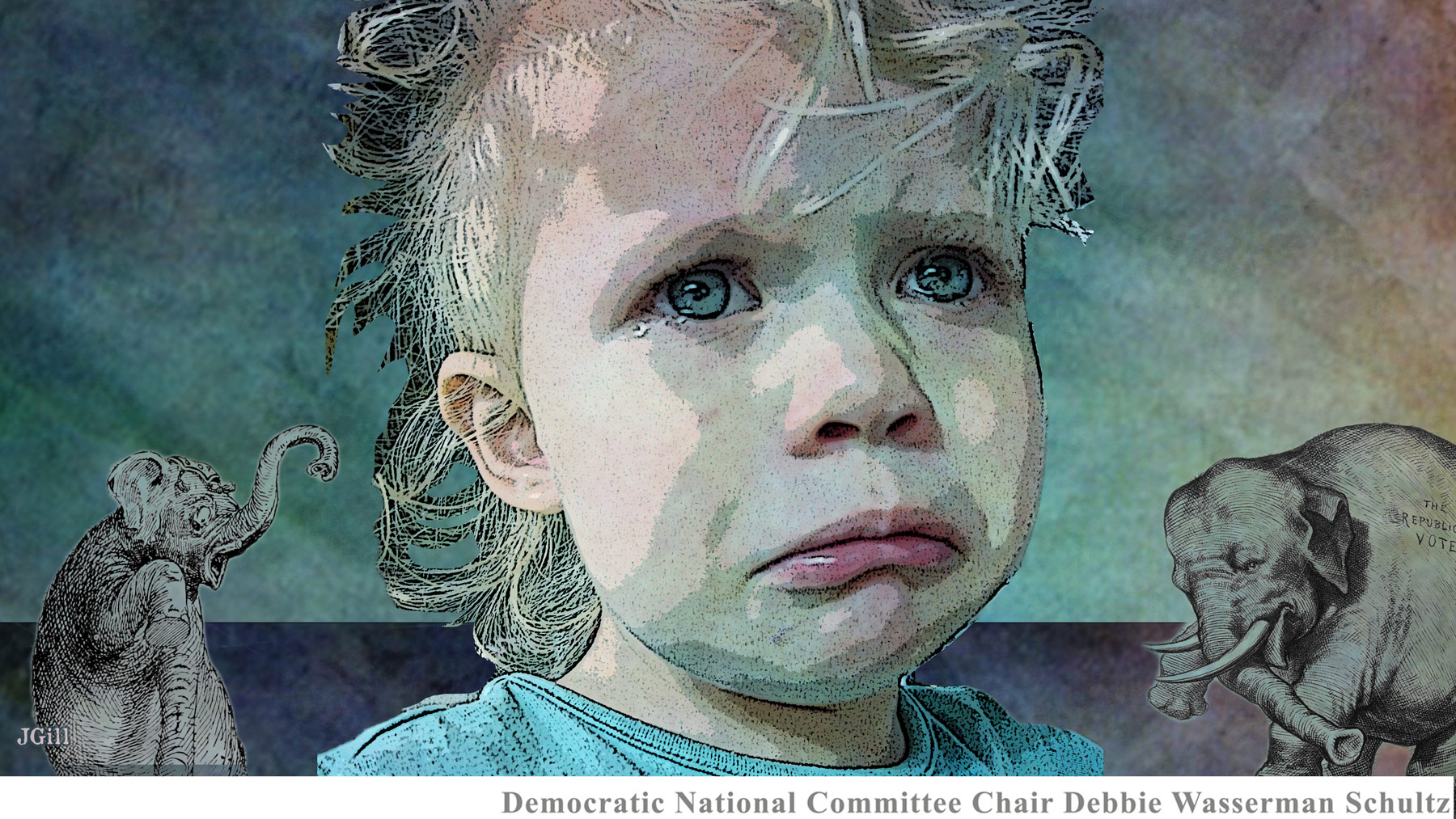
Debbie Does Democracy

“Republicans in Congress are dead-set on rolling back the progress that Democrats like you and I [sic] have worked so hard to achieve,” wrote Democratic Party Committee Chair Debbie Wasserman Schultz, in a bizarre pitch letter last week.

They’ve already said that they’re going to try to repeal Obamacare, after more than 50 unsuccessful attempts (and two Supreme Court rulings in the law’s favor). They want to completely defund Planned Parenthood, an organization that provides necessary health services to women across the country. And if they don’t get their way, they’re just fine with shutting down the government — again!

Well, GOP strategists shouldn’t be fine with the brinksmanship of a government shutdown. That ploy has backfired before. But why? Because everyone seems to think that the Democrats’ “blame Republicans” strategy makes sense.

But it doesn’t.

Say the Republicans in Congress want to defund Planned Parenthood. Democrats want to keep funding it, but . . . the whole federal government spends over revenue — by nearly half a trillion this past year.

So if Republicans fight the spending and Democrats defend it and the government shuts down because of lack of agreement, it’s obvious: both parties shut down the government. Both refuse to compromise.

But for some reason, it’s only those who want to cut spending who get tarred with responsibility for the lack of a budget.

Debbie titled her email letter “This pisses me off.” But those who deserve to be so irked are her opponents, the Republicans, discriminated against in the double standard she perpetuates.

This is Common Sense. I’m Paul Jacob.


Printable PDF

Debbie Wasserman Schultz, collage, photomontage, Paul Jacob, James Gill, illustration


Categories
Common Sense general freedom ideological culture national politics & policies

Weekend with Bernie: Leftist Demagogue

Bernie Sanders, Hillary Clinton’s main opponent on the Democratic side of Campaign 2016, is a demagogue.

My Democratic friends balk at this, contending the term better applies to Donald Trump. But, no matter how different these men may be, their differences don’t mean that only one of them can be a demagogue.

Perhaps demagogues of very different stripes.

First, definitions.

A demagogue (from French “demagogue,” derived from the Greek “demos,” for “people”) is, my dictionary says, a political leader in a democracy who appeals to the emotions, fears, prejudices, and ignorance of the lower socioeconomic classes in order to gain power.

The charge makes sense because Sen. Sanders has made wealth and income inequality his main issue, and because he relentlessly attacks higher-income Americans as a source of America’s current woes — whose wealth Sanders targets as the cure (provided it goes through his hands, first).

True, he appeals mostly to college-educated middle-class folks and bohos. But he uses the code-phrase “everyday working Americans” as a wedge, and the poor as an innocent shield, to advance what are, in fact, elitist solutions.

Like most self-professed socialists the Senator is only faux-prole, workingman manqué. Intellectuals, collegians and government workers have long dominated the socialist movement.

Socialist Demagogue defined: Emotion, Fear, Prejudice and Ignorance - Bernie Sanders

Though Sanders rightly attacks the plutocracy, he never attacks the government half of the plutocrats’ power structure. Never admits that unions are plutocratic in nature, too.

Instead, he appeals to the emotions, fears, prejudice and ignorance of those who, against all evidence, see more government only as a solution and never as a problem.

Par for the socialist course. That, remember, is a word Sanders chose.

For its historic demagogic appeal.

This is Common Sense. I’m Paul Jacob.

Printable PDF

Weekend with Bernie Sanders


Categories
Common Sense folly general freedom ideological culture nannyism too much government

I Prefer Plastic

When I go to the supermarket, and get asked “paper or plastic?” — about which bag the checker should wrap my purchases in — I almost always say “plastic.” They are lighter than paper bags, are easily re-usable for a wide variety of home purposes, and resist water — thus less apt to self-destruct on the trip from store to car, car to kitchen.

Of course, anything plastic and mega-popular makes a perfect target for environmentalist critics. Hundreds of cities, particularly on the West Coast — but throughout the world — now outlaw plastic bags or restrict their use.

We are encouraged to buy and re-use cloth shopping bags — which in my experience get stinky pretty quickly.

On many issues (say, pollution) my heart is with the environmentalists. But on the bag issue, I’m skeptical. Thankfully, Katherine Mangu-Ward has a great piece at Reason, showing that the scientific case against the plastic bag is weak — weaker than a paper bag holding wet veggies, an exploded Coke, and frozen meat.

Plastic bags are not the litter problem they’ve been cracked up to be, she says, citing one study figuring that “all plastic bags, of which plastic retail bags are only a subset, are just 0.6 percent of visible litter nationwide.”

And, as for harm to wildlife, she quotes a Greenpeace biologist to good effect: “It’s very unlikely that many animals are killed by plastic bags. The evidence shows just the opposite. We are not going to solve the problem of waste by focusing on plastic bags. . . . On a global basis plastic bags aren’t an issue.”

What is at issue is their utility, reusability, and . . . our freedom.

This is Common Sense. I’m Paul Jacob.

Printable PDF

Paper or Plastic, collage, photomontage, Paul Jacob, James Gill, illustration, politics


Categories
Common Sense folly ideological culture media and media people national politics & policies

Iconoclasm Spasms

As America stands upon a precipice of insolvency, as southern European nations undergo the spasms of sovereign debt catastrophe, as many of our citizens call the Chinese devaluations of their money “currency wars,” obsessing about political symbolism seems . . . a tad . . . trivial.

First it was the Confederate Flag. Now it’s Jefferson Davis.

He’s dead. And as a result of his 126 years in the “post-living” state, he quite literally doesn’t matter for the future of the United States.

And yet the Confederacy’s president (1861-1865) is in the news again. As Charles Paul Freund relates at Reason, the dead rebel prez has been having a figurative “bad summer.” How? The University of Texas has decided to move his statue into a museum, away from public eyes; some Georgians want to obliterate the Stone Mountain tableau that features Davis along with Stonewall Jackson and Robert E. Lee; there’s talk of renaming Virginia’s “Jefferson Davis Highway”; etc.

Davis died unrepentant, refusing to ask Congress for a pardon for his part in the Confederacy after the secessions of 1860 and ’61. And yet he was pardoned in 1978, posthumously, by the Democratic Congress and President Jimmy Carter, who yammered on in a Fordian “long national nightmare is over” fashion, saying the pardon would, at long last, “clear away the guilts and enmities and recriminations of the past.”

I’m not convinced it did a thing.

And about the current proposals? I don’t think any highway should be named after any politician. Of the other ideas, I don’t really care. Much.

Nevertheless, fights over political symbols have long been important. Why? My guess: to deflect our attention — away from the future, and to the past.

This is Common Sense. I’m Paul Jacob.


Printable PDF

Jefferson Davis


Categories
Common Sense general freedom ideological culture national politics & policies

Abort the Subsidy

Common Sense generally steers clear of the abortion issue. Arguably, for “common sense” reasons.

I’ve always been pro-life, but I’ve also been skeptical of government’s ability to improve the situation, to save unborn lives via the criminal justice system.

No law forces women to have abortions; it’s voluntary. I’ve long hoped that ultrasounds and other technological advances will change hearts and minds, nudging couples to choose to abort less often, making abortion even more rare than when it was illegal. I gladly note that the number of abortions has fallen 12 percent since 2010.

Certainly, I’ve prioritized my political action in a different direction: affecting greater representation, better government, via citizen-initiated checks on power.

Yet, the recent videos showing doctors and other Planned Parenthood personnel chatting about the sale of fetal body parts implicates a lot more than just abortion. For starters, the footage triggered my gag reflex, and then my sense of justice for the unborn, and sense of decency in the treatment of their remains.

And what about justice and compassion for people deeply offended (myself among them) at being forced to fork over $528.4 million tax dollars each year to an organization performing the most abortions?

Let’s be pro-choice and abort the taxpayer subsidy to Planned Parenthood.

Those who continue to approve of Planned Parenthood’s work would remain free to support it. Personally. Voluntarily. Likewise, if you revile the organization, you should also be free to not fund it.

Isn’t such respect for each others’ heartfelt beliefs also just common sense?

I think so. I’m Paul Jacob.


Printable PDF

12 Week old fetus