Categories
Accountability folly ideological culture media and media people national politics & policies

Hard Words, Soft Left

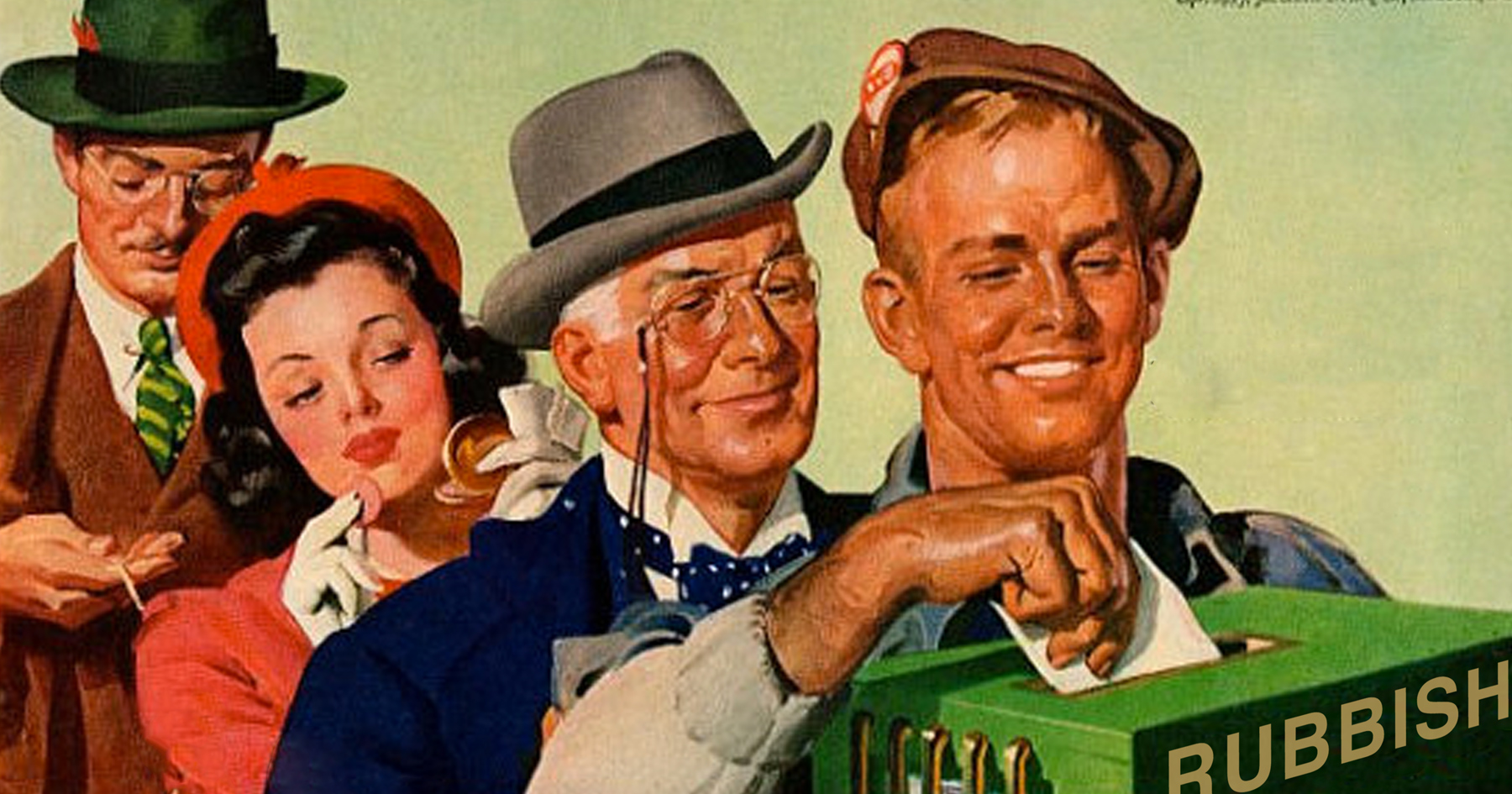
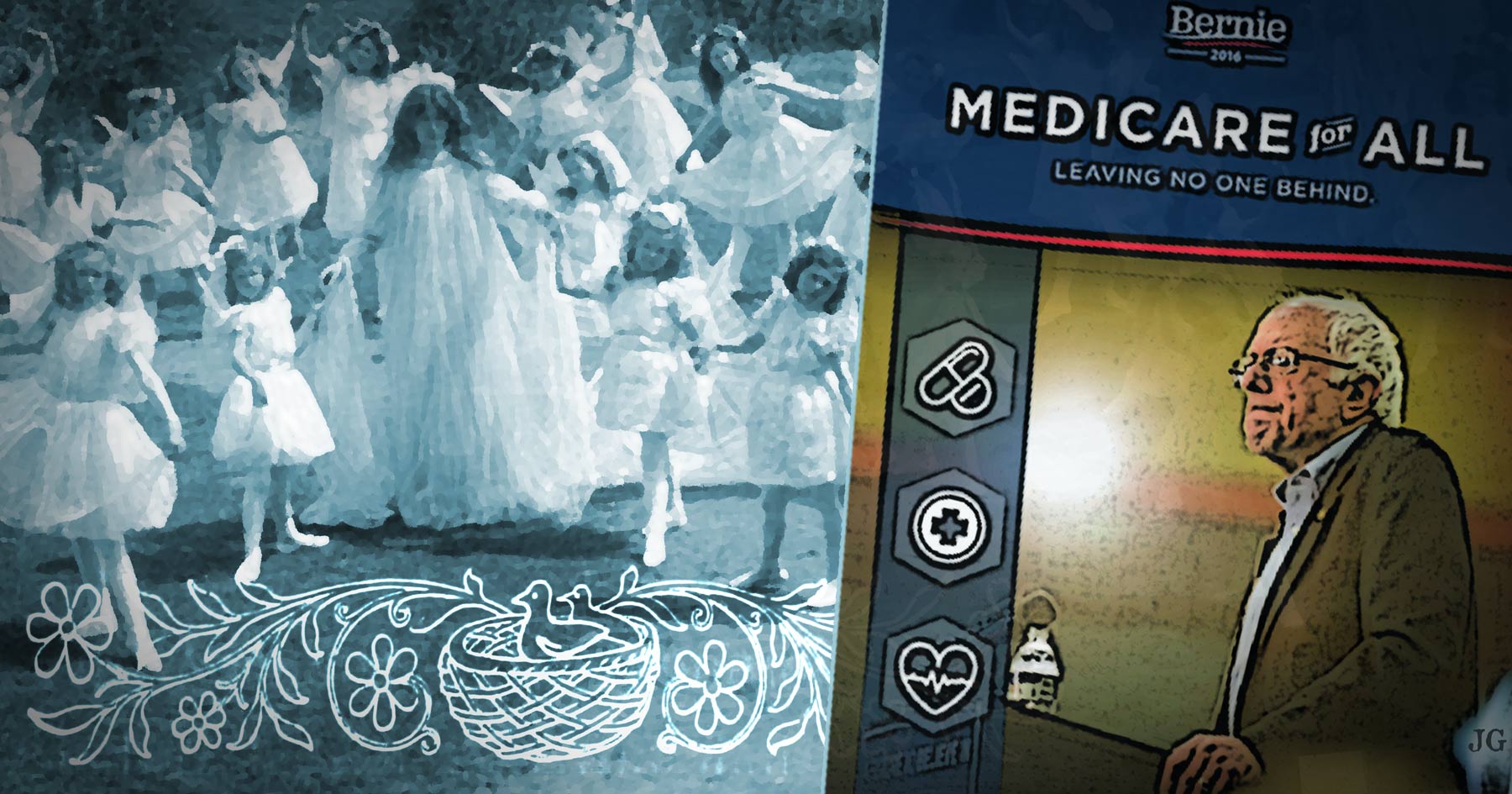
“The word ‘socialist’ is a really hard word,” warned former Michigan Gov. Jennifer Granholm.

“Now, I love Bernie Sanders, really,” Granholm added, acknowledging she’s okay with his socialist policies — just not the term.

Not in mixed company.

The former governor of the Wolverine State was responding to a question — “How about the charges ‘he’s a socialist’?” — from Martha Raddatz, who was hosting ABC’s This Week that week.

“The socialist label is something that he applies to himself, right,” Granholm noted. “So the question is how does that play across America?”

Armed with a Gallup poll, Granholm answered that socialism doesn’t play very well at all. Voters are “even” less apt to vote for a “socialist” than for an “atheist.” In case you wondered.

So, what is the difference between a socialist and a Democrat?

“You’re the chairman of the Democratic Party, tell me the difference between you and a socialist,” Chris Matthews had implored Rep. Debbie Wasserman Schultz on MSNBC months ago.

“The relevant debate we’ll be having over the course of this campaign,” dodged the DNC chair, “is what’s the difference between a Democrat and a Republican.”

Chuck Todd, noting that Bernie Sanders “is an unabashed socialist” who is always praising European social democracies, echoed the question on Meet the Press: “what is the difference?”

“It’s always fun to be interviewed by Chris Matthews and I know that he enjoys that banter,” bobbed an answer-less Wasserman Schultz. “The important distinction we’ll be discussing in this campaign [blah, blah, blah] . . .”

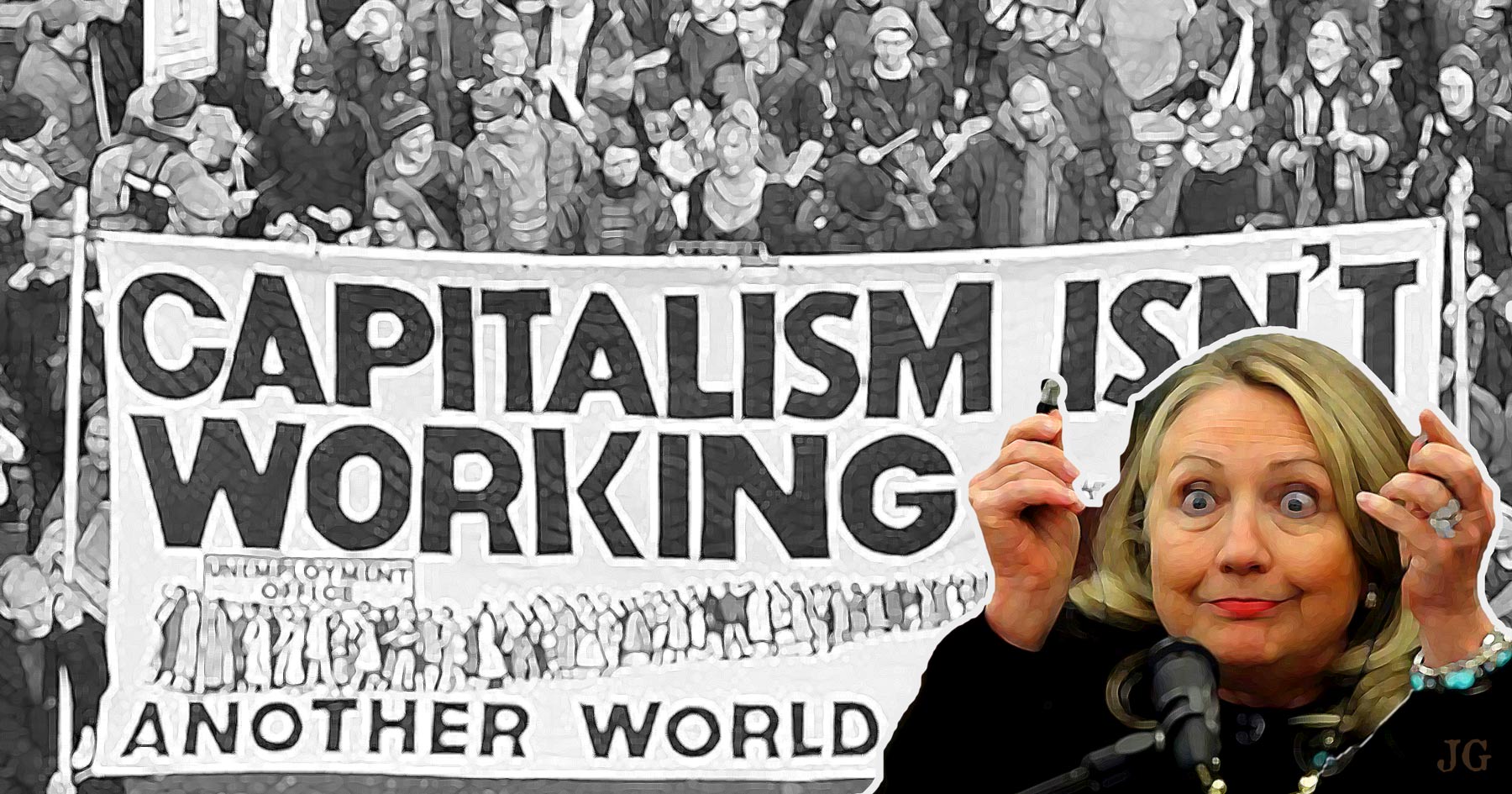
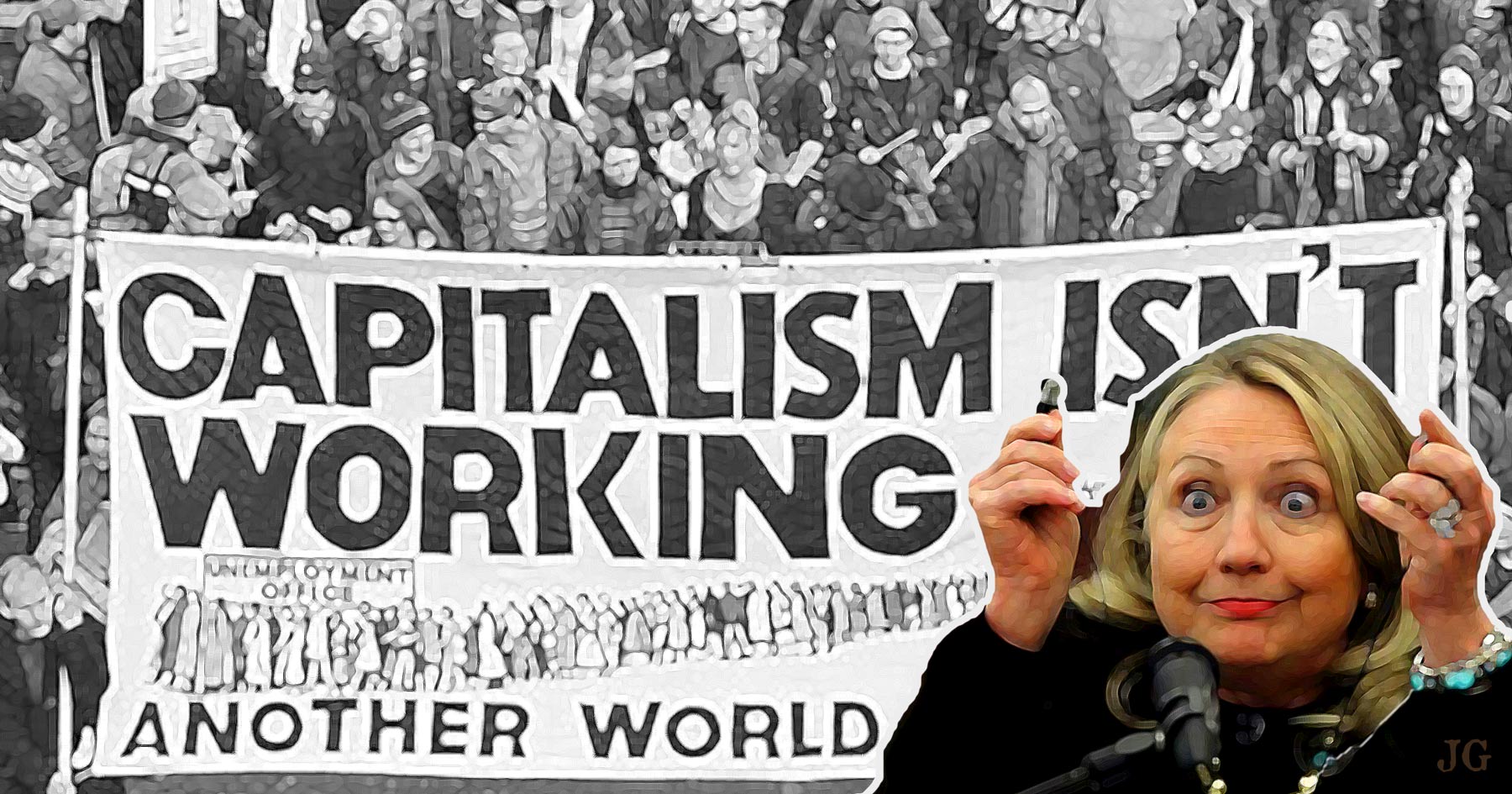
Earlier this month, Matthews likewise asked Hillary Clinton to state the difference. Mrs. Clinton said she wasn’t a socialist but, instead, “a progressive Democrat.”

“Debbie Wasserman Schultz wouldn’t answer the question either,” Matthews replied.

This is Common Sense. I’m Paul Jacob.

Printable PDF

socialism, democrats, Hillary Clinton, Common Sense


Categories
Accountability free trade & free markets government transparency ideological culture media and media people nannyism national politics & policies responsibility

A Diminishing Lagtime

The modern age sports an amazing feature that used to be hard to detect, because so drawn out: a shorter-than-ever-before lag between the proposal of some popular inanity and its complete debunking.

It used to take seemingly forever for a bad idea to be shown up, either in argument or evidence. Now it can be a matter of days or even hours. Call it the Buncombe/Debunking Lagtime.

Take the Flint, Michigan, water fiasco.

When the story hit the news cycle, almost immediately the progressive meme machinery began cranking out slogans imposed upon visuals — jpegs and gifs — to the effect that the poisoned water was the result of Republican “austerity” or (even) “libertarian” policy.

Somehow a Democratic mayor was less to blame than a more distant Republican governor, but in the minds of knee-jerk partisans, common sense is not as important as an in-your-face accusation.

But now, days and scant weeks into the story, it turns out that the story behind the story is not merely wrong, but entirely, upside-down wrong. The Flint water fiasco was caused by a stimulus project, and the switch from bad to worse water sources was made to promote “jobs”!

In the words of Reason’s Shikha Dalmia, “the Flint water crisis is the result of a Keynesian stimulus project gone wrong.”

Yes, another failed Big Government policy — just like progressives are always pushing.

And it didn’t take years for the truth to seep out.

Hooray for today’s accelerated history! Now, if we could only decrease the lagtime between lesson given and lesson learned.

This is Common Sense. I’m Paul Jacob.


Printable PDF

Flint, water, crisis, government, austerity


Categories
crime and punishment folly general freedom ideological culture meme property rights too much government

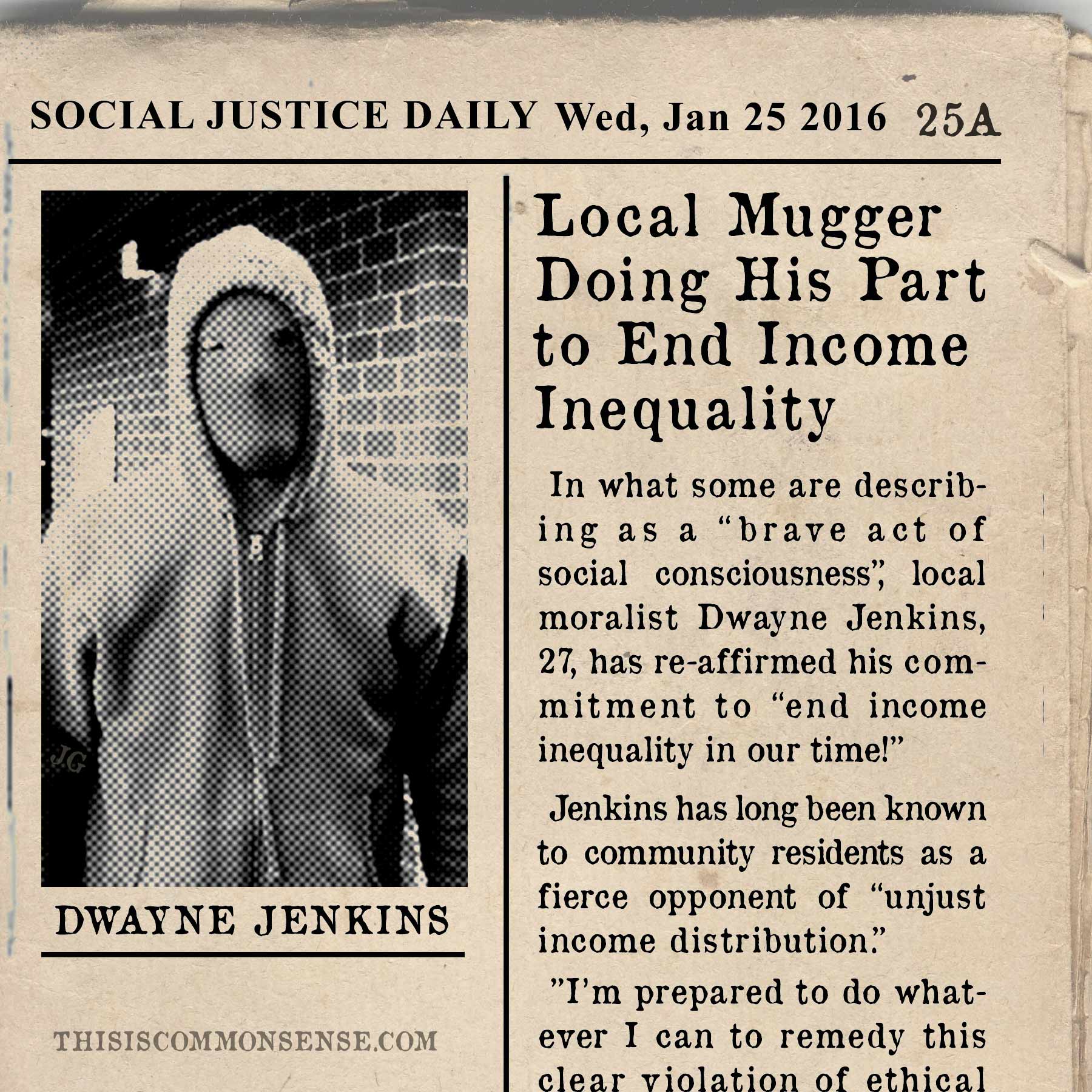
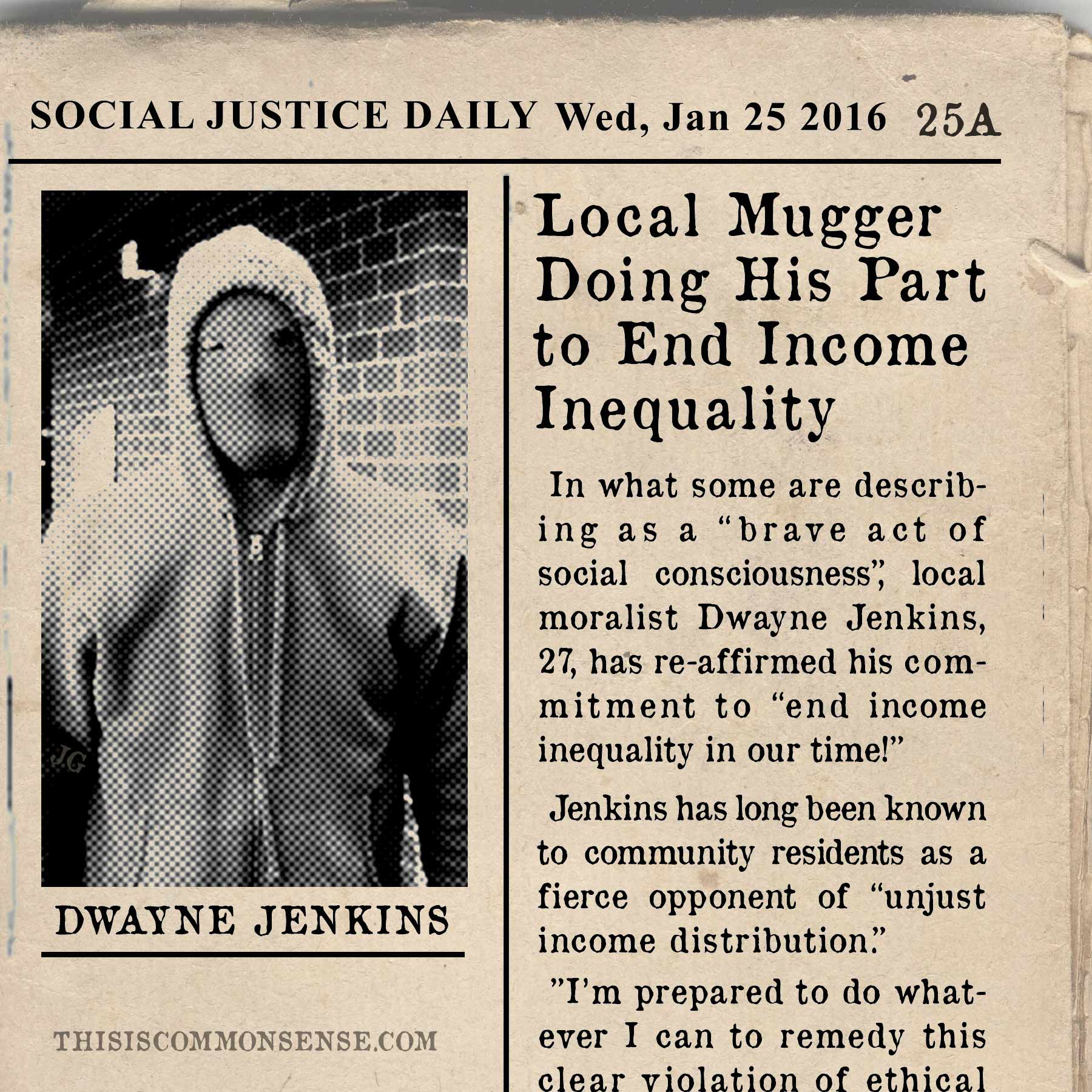
Human Interest Story

“Local Moralist Doing His Part to End Income Inequality”


Click below for high resolution version of this image:

Income inequality, newspaper clipping, humor, satire, social justice, socialism, Common Sense, meme, illustration, Jim Gill, Paul Jacob


Mugger photo by Flikr user cometstarmoon


Categories
folly general freedom ideological culture insider corruption national politics & policies political challengers

The Anti-Republican Party Establishment

Yesterday, we decried the rigged superdelegate voting process used by establishment Democrats to Hillary Clinton’s benefit — and party members’ detriment. Today, we switch parties to find the GOP establishment in full panic mode, so terrified at the prospect of a Ted Cruz victory that they’re now rallying around Donald Trump.

Republican Party stalwart Bob Dole, the 92-year-old former Senate Majority Leader and a 35-year Washington insider, called Sen. Cruz an “extremist.” A Cruz victory would lead to “cataclysmic” losses for the party, Dole contends, and by the way . . . “Nobody likes him.”

“Nobody in Washington,” Dole means.

As for Trump? Dole thinks Trump could “probably work with Congress, because he’s, you know, he’s got the right personality and he’s kind of a deal-maker.”

The right personality?

Iowa Sen. Chuck Grassley, a fixture in Congress for the last 41 years, introduced Trump recently by clumsily validating Trump’s campaign slogan: “we have an opportunity, once again, to make America great again.”

And again.

According to former House Speaker Newt Gingrich, “Trump does not have any particular enemies down here. I don’t think anyone gets up in the morning and is irritated with him. That’s not how it is with Cruz.”

Former GOP congressman turned lobbyist Vin Weber says that the establishment’s hated of Cruz “has forced some people to look past all of Trump’s issues and think about what he could offer.”

Offer?

The Republican establishment really, really, really despises Sen. Ted Cruz. But they can live with Donald Trump.

Hmmmm . . . advantage Cruz.

This is Common Sense. I’m Paul Jacob.


Printable PDF

Cruz, Trump, Republican, primary, nomination, president, campaign, Common Sense, Paul Jacob, James Gill, illustration


Categories
Accountability ballot access folly ideological culture nannyism national politics & policies

The Anti-Democratic Party Establishment

Democrats aren’t very good at democracy.

Consider the party’s presidential contest, as I did yesterday at Townhall.

As an appetizer, I noted the Democratic National Committee policy of hiding their debates from viewers by placing them on weekend evenings pitted against major sporting events.

For meat and potatoes, ponder my warning of the very ugly scenario of Sen. Bernie Sanders capturing as much as 58 percent of the primary and caucus vote and resulting delegates, but still losing to Hillary Clinton.

How could that possibly happen?

Because of folks designated as “superdelegates” — those awarded voting delegate status for holding a party office or being an elected or former elected official.

Democrats brag that they’ve reduced these insiders’ impact. Democratically-unaccountable superdelegates once accounted for 30 percent of Democratic Party convention delegates; now it’s only 15 percent of the total. Still, Clinton leads Sanders 380 to eleven among superdelegates.

At that rate, she could lose the actual state elections and still win the party’s presidential nomination.

The Democrats’ dereliction of democratic duty doesn’t end there, either.

The process by which various powerful party “interests” endorsed either Sanders or Clinton is quite telling. Journalist Zaid Jilani reports in The Intercept that, “Every major union or progressive organization that let its members have a vote endorsed Bernie Sanders.”

“Meanwhile,” Jilani found, “all of Hillary Clinton’s major group endorsements come from organizations where the leaders decide. And several of those endorsements were accompanied by criticisms from members about the lack of a democratic process.”

Seems the insiders have decided Mrs. Clinton will be on the Democratic Party presidential menu, whether Democrats like it or not.

This is Common Sense. I’m Paul Jacob.

Printable PDF

superdelegates, democracy, democrats, Sanders, Clinton, voting,


Categories
folly free trade & free markets ideological culture meme moral hazard nannyism responsibility too much government

Flint Water Crisis

Government failure checklist. . .

Reference:

The Government Poisoned Flint’s Water—
So Stop Blaming Everyone Else

Flint’s water crisis isn’t a failure of austerity. It’s a failure of government.


Click below for high resolution version of this image.

Flint, water, crisis, poison, government, free market, austerity, failure, Common Sense, Meme, James Gill, Paul Jacob


Categories
Accountability folly free trade & free markets general freedom ideological culture moral hazard national politics & policies political challengers responsibility tax policy too much government

Berating Bernie?

Bernie Sanders has risen in the polls. He may even beat Hillary Clinton in the first caucus and primary contests for the Democratic presidential nomination.

A cause for celebration! Witnessing a huge hunk of Americans accept Mrs. Clinton, the consummate and corrupt insider, is too disheartening.

Bernie Sanders, for all his faults, is at least not an insider like Hillary.

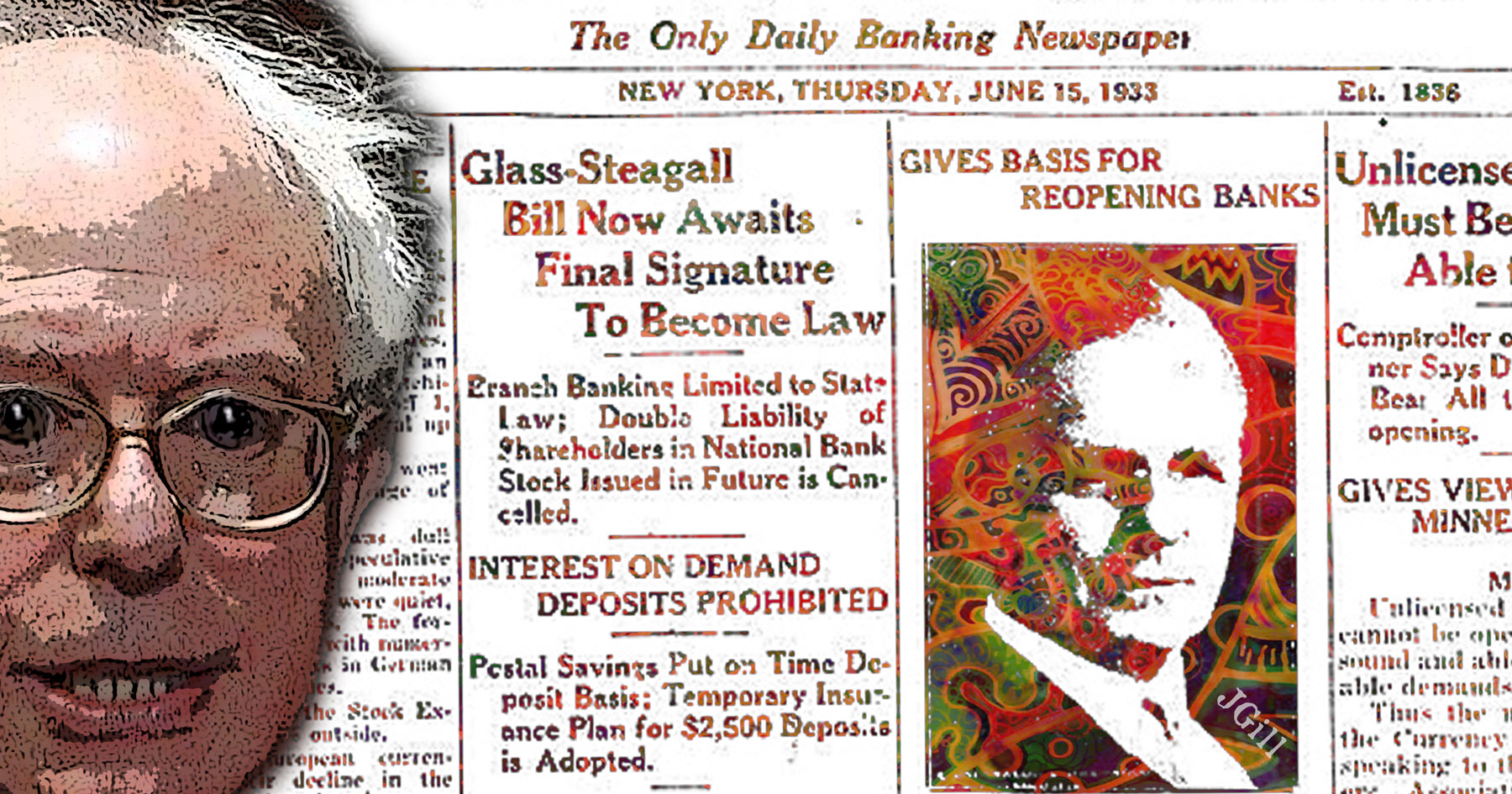
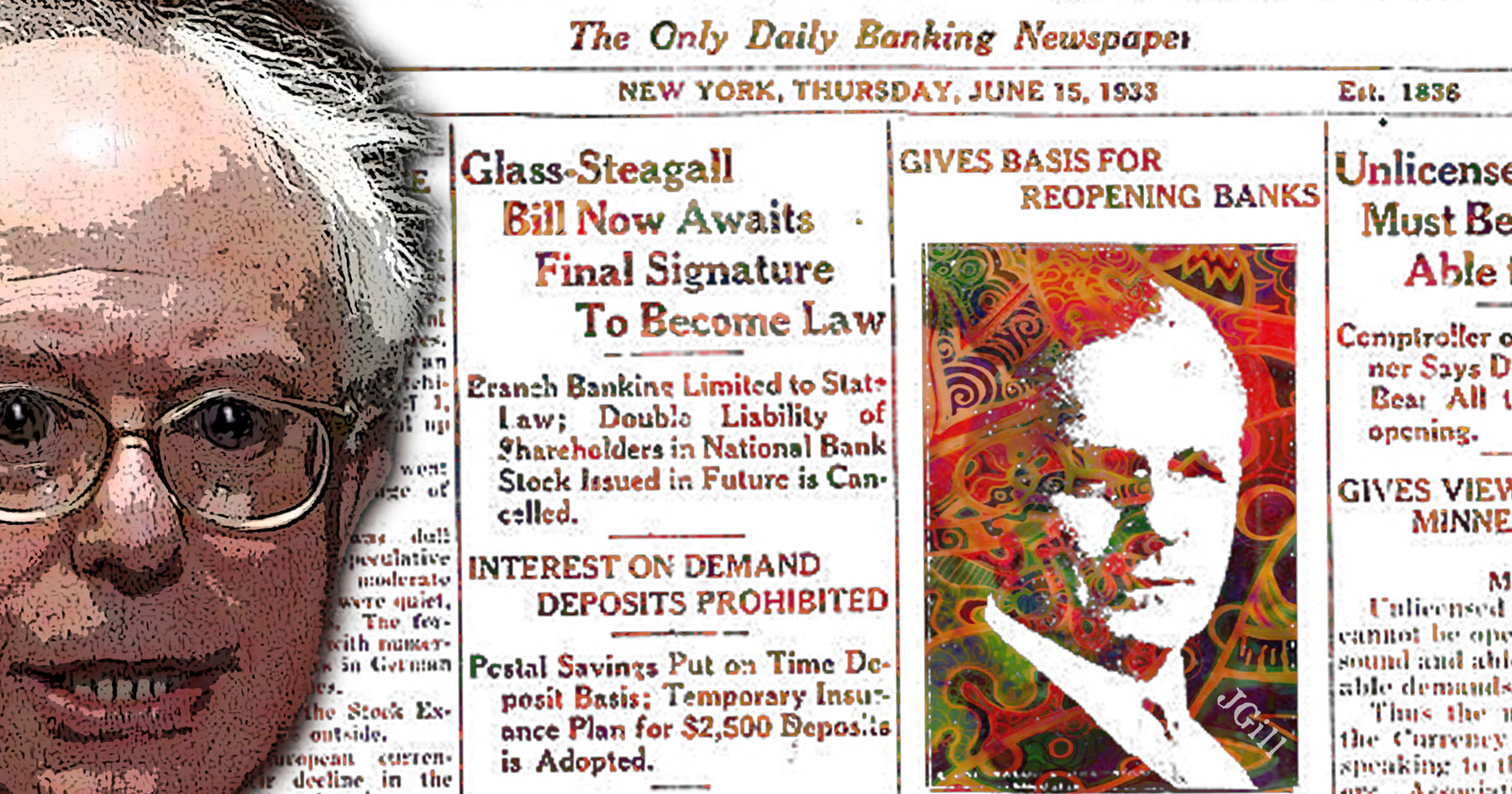
And even when he’s obviously wrong, he’s a breath of fresh atmosphere. Take his recent call for turning the credit ratings institutions into non-profits, or into government-run bureaus. It’s good to hear someone on the left blame something other than the partial repeal of Glass-Steagall as the cause of the Crash of 2008, and (thus?) of the current “Great Recession.” Glass-Steagall was utterly irrelevant to the institutions that were hit hardest in 2008’s collapse; it has, nevertheless, served as leftists’ idée fixe for years now. Embarrassing.

The ratings agencies, on the other hand, did play a part in the crash.

Still, remember: their prominence and importance (and very existence) in financial sectors rests entirely upon one provision of FDR’s New Deal.

More importantly, Bernie’s favored solution — government bureaus — is no solution at all. Europe’s ratings system failed in 2008, too, as Mark A. Calabria has noted, and “it was the international financial regulators, not the rating agencies, who decided that Greek debt was ‘risk-free.’”

Earth to Bernie: government regulatory failure is normal.

Calabria agrees that we need to have a political conversation about the ratings agencies, but insists it be “based on facts,” not ideology.

I’m all for the facts, but ideologies are inevitable. And ideologies promoting Big Government inevitably fail.

This is Common Sense. I’m Paul Jacob.

Printable PDF

Bernie Sanders, Glass Steagall, ratings, agency, Common Sense, illustration, Paul Jacob, James Gill


Categories
Accountability folly ideological culture moral hazard nannyism national politics & policies too much government

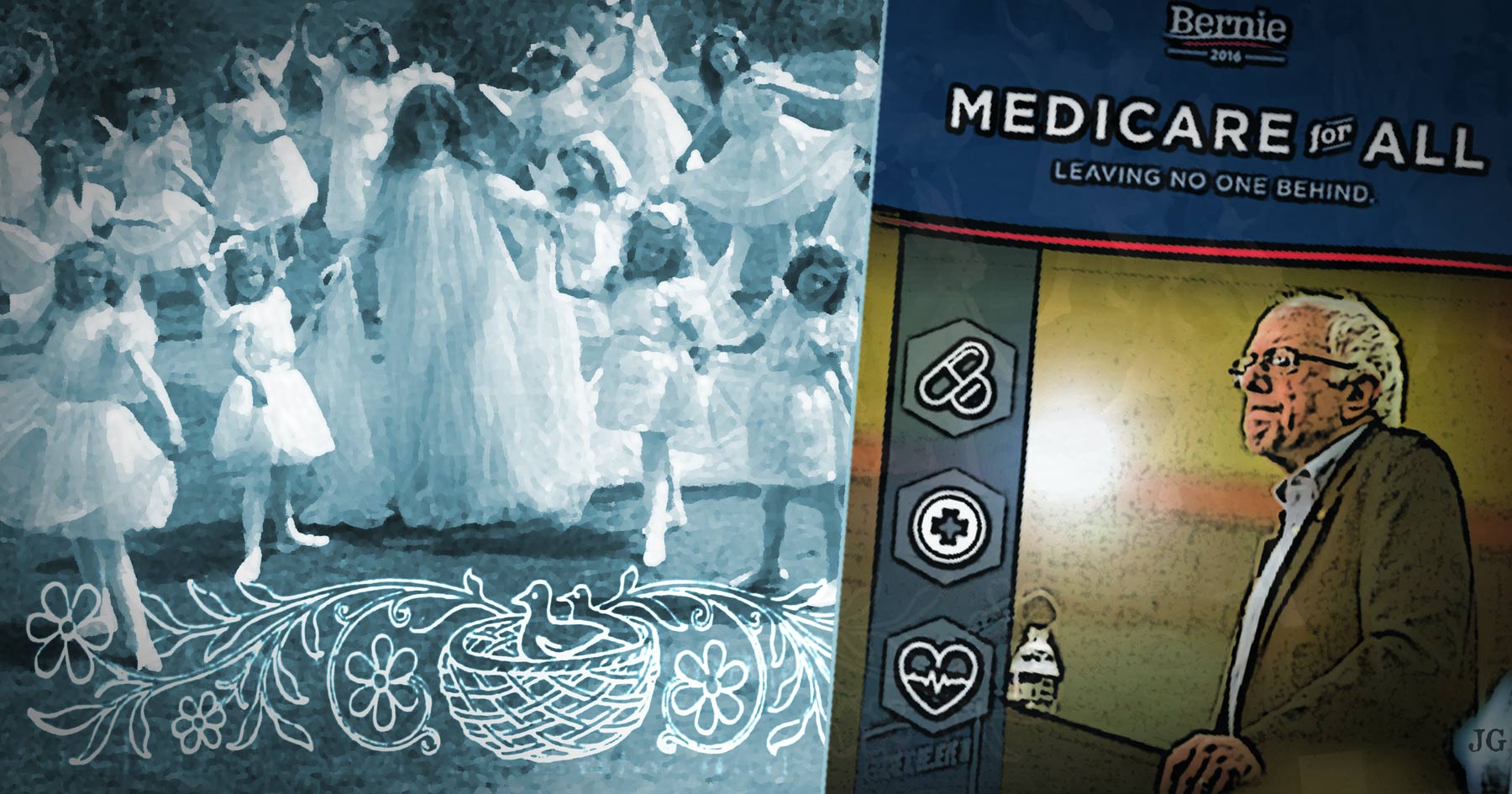
Bernie’s Bogus “Medicare for All”

Bernie Sanders promises universal health care, but, up until the other day, just waved his hands in the air, without specifics. Now he has a plan.

Sort of.

Ezra Klein, writing at Vox, says Sanders’s “Medicare for All” is not a plan at all. It’s a “gesture towards a future plan.”

But that doesn’t mean that the thing isn’t “well sold.”

After praising the Obamacare/Affordable Health Care Act for giving “health insurance” to more than 17 million people, the preamble of Sanders’s proposal made its most predictable statement: “Twenty-nine million Americans today still do not have health insurance and millions more are underinsured and cannot afford the high copayments and deductibles charged by private health insurance companies that put profits before people.”

Forget that deductibles are integral to the very idea of insurance. Forget that profits are absolutely necessary for the success of an industry. Forget that profits come from serving people.

Remember, instead, the leftist clichés.

Sanders’s plan, such as it is, is a lie — or, in Klein’s phrasing, “has nothing to do with Medicare.” Sanders aims to get rid of deductibles and copays, on which Medicare depends. It’s what makes Medicare distinct from, say, socialized medicine.

Insurance covers individually unforeseeable but actuarially manageable risks. Socialized medicine gets rid of the idea of “payment for service” on every level — and thus the very idea of insurance — and turns the whole thing over into a tax-and-spend program, i.e., what Sanders really wants.

That won’t be cheap, as Megan McArdle demonstrated some time back during the Vermont “single payer” kerfuffle.

The only option for increasing value while lowering prices? Go the opposite direction from socialism.

This is Common Sense. I’m Paul Jacob.


Printable PDF

Medicare for All, Bernie Sanders, healthcare, analysis, bogus, Common Sense, illustration


Categories
general freedom ideological culture national politics & policies too much government

The Great Ideological Divide?

When I was a kid, both Democrats and Republicans sported “conservative” and “liberal” wings as well as “moderate” leaders and representatives.

Now, conservatives have pretty much corralled themselves into the GOP, and liberals into the Democratic Party.

Why? Birds of a feather?

Ezra Klein offers some interesting observations in “This is what makes Republicans and Democrats so different”:

  • “Democrats are motivated by specific policy deliverables while Republicans are motivated by broader philosophical principles”;
  • “Democrats rely on more interest groups than Republicans” do;
  • “Democrats prefer politicians who compromise, and Republicans prefer politicians who stick to their principles”;
  • “Policymaking has a liberal bias — even when Republicans do it.”

Klein also draws on research by political scientists Matthew Grossmann and David Hopkins, who in their paper, “Policymaking in Red and Blue,” conclude that “the Republican Party is dominated by ideologues who are committed to small-government principles, while Democrats represent a coalition of social groups seeking public policies that favor their particular interests.”

Interest groups demanding that their “particular interests” be addressed with more “deliverables” from government would certainly explain a strong Democratic Party bias in favor of more government. Klein seems to be saying that Democrats are led, as if by an invisible hand, in the socialistic direction.

But why does a Republican Party supposedly “dominated” by those with “small-government principles” also advance policies that grow big government? “New policies usually expand the scope of government responsibility, funding, or regulation,” Grossmann and Hopkins point out.

Perhaps Republican politicians are more influenced by their own position in government than by the views of their base voters.

This is Common Sense. I’m Paul Jacob.


Printable PDF

Ideology, left, right, conservative, liberal, big government, Common Sense, illustration


Categories
Accountability folly ideological culture media and media people national politics & policies

Shameless: The Next Generation

On Tuesday, former (and perhaps soon to be again) First Daughter Chelsea Clinton attacked Vermont Sen. Bernie Sanders, her mother’s chief rival in the presidential primaries.

“Sen. Sanders wants to dismantle Obamacare, dismantle the [Children’s Health Insurance Program], dismantle Medicare, dismantle private insurance,” Chelsea charged, telling an Iowa audience that he “would strip millions and millions and millions of people off their health insurance.”

The Sanders campaign quickly fired back that the young Clinton was “wrong” and disingenuously ignoring the fact that Sanders would bestow government-paid healthcare coverage on every American. For free! (Unless you happen to pay taxes, that is. Then, it’d be very expensive.)

“It wasn’t an honest attack,” declared Democratic strategist David Axelrod on CNN.

But on ABC, Hillary defended her daughter, doubling-down by arguing, “that’s exactly what he’s proposed. To take everything we currently know as health care, Medicare, Medicaid, the CHIP Program, private insurance, now the Affordable Care Act, and roll it together.”

Strange, in 2008, when Hillary was promoting a single-payer system and Barack Obama took issue, Mrs. Clinton decried “tactics right out of Karl Rove’s playbook,” asking, “Since when do Democrats attack one another on universal healthcare?”

“This is wrong and every Democrat should be outraged,” the 2008 Hillary declared. “So shame on you, Barack Obama!”

Now it’s Hillary Clinton who knows no shame.

“More striking perhaps,” lamented Mark Halperin, a senior political analyst for MSNBC and Bloomberg News, “was a lack of interest that most of the news world had to [Chelsea’s] remarks.”

Maybe when Clintons “dismantle” the truth, it just isn’t news anymore.

This is Common Sense. I’m Paul Jacob.

Printable PDF

Chelsea Clinton, Hillary Clinton, President, Bernie Sanders, Health Care, mud, Common Sense, attack