Categories
crime and punishment free trade & free markets regulation

Natural vs. Regulated

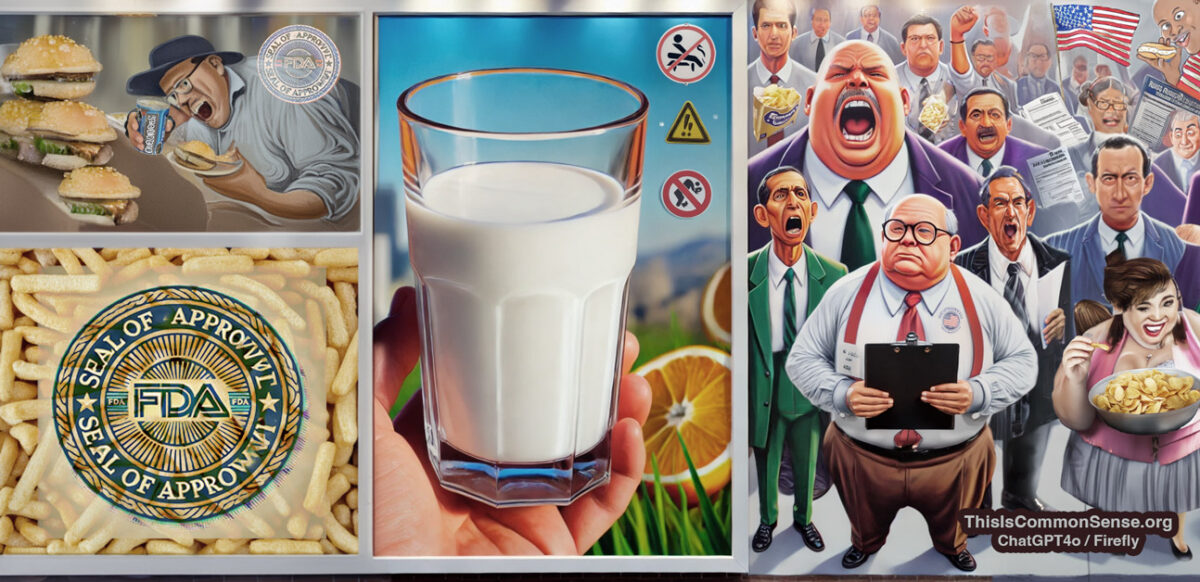
“I don’t need metabolically unhealthy politicians and obese bureaucrats watching out for my health,” The Telegraph quotes an anonymous source. 

The subject? “How milk became the new culture war dividing America,” published on June 22. It’s a “natural” vs. “technological” debate.

“For more than 130 years, Americans have been instructed that drinking milk that comes directly from a cow’s udder can be dangerous,” Tony Diver’s article begins, but how it ends is telling: “‘With respect to the question of food being natural — arsenic is natural,’ Prof Schaffner said.” And so, too, he says, is cyanide. 

“Sharks are natural. Those things can all kill you. So just because something is natural does not mean that it’s safe.’”

That sounds like something I’d say. 

But is it something to say about raw milk?

Consider the historical context. Raw milk and its products have been produced for human consumption for millennia. Of course there are dangers, and pasteurization has done wonders to curb bacteriological infections and death. Still, a lot of people wonder what we’ve lost in the pasteurization process. Nutrition and immune system health, for example. So for decades — perhaps as long as there have been regulations to make pasteurization mandatory — there’s been a “pro-natural” backlash.

On the Nature side, we note that our populations aren’t as healthy as you’d expect from the benevolent tyranny of politicians, regulators, and, uh, “obese bureaucrats.”

So, last week, “the latest bill to repeal an outright ban on raw milk hit the governor’s desk in Louisiana, after similar efforts in West Virginia, Iowa, Georgia and North Dakota.”

If signed into law, Louisianans will be able to purchase raw milk in stores — “albeit with a warning, in capital letters, that it is ‘not for human consumption.’

“Everyone, including the legislators, knows that instruction will be ignored.”

There’s something sickness-inducing about that.

This is Common Sense. I’m Paul Jacob.


PDF for printing

Illustration created with ChatGPT4o and Firefly

See all recent commentary
(simplified and organized)
See recent popular posts
Categories
free trade & free markets general freedom regulation

Leave Us Alone to Do Our Work

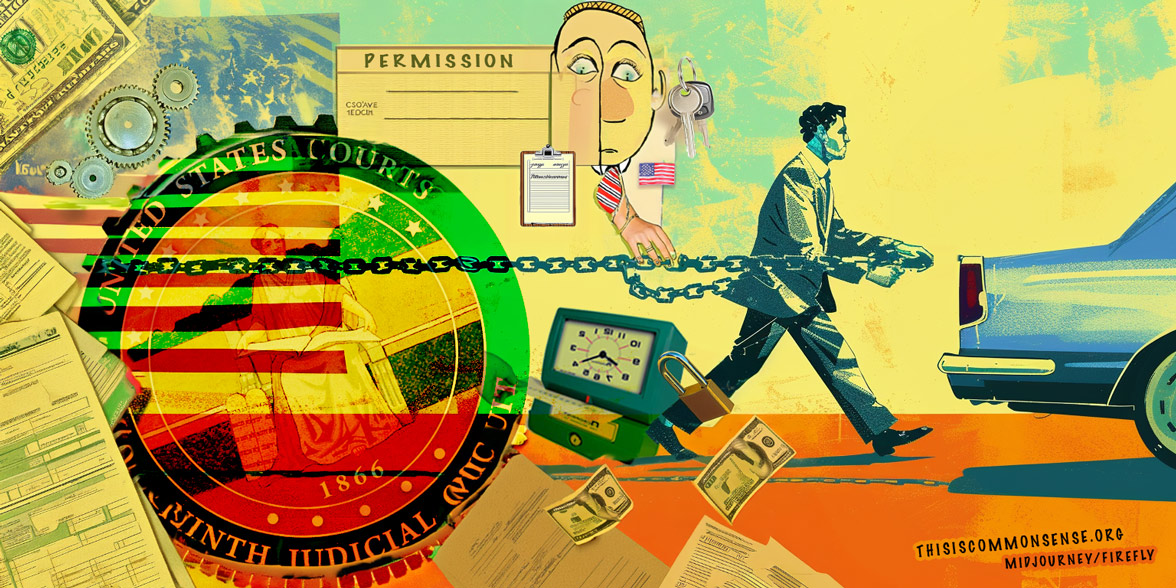
Drearily, an appeals court has dismissed Uber’s challenge to California’s anti-gig-work law.

According to the 9th Circuit, the ride-sharing company couldn’t show that the California anti-freelancer law AB5, which took effect in 2020, unfairly targeted Uber while allowing other types of contract work to continue unhindered.

In fact, the many exceptions to AB5 — determined by abundance or lack of political pull of various groups — mean that Uber is hardly alone in suffering from uneven application of the law.

But suppose AB5 had in fact been evenly imposed on everybody. Suppose every single gig worker in California, without exception, had been forced to become a regular employee of all of his clients — with all the additional costs for employers that this entails — or else lose all work altogether.

This would be worse, not better. 

Inconsistent tyranny is bad for the victims. Absolutely consistent and uniform tyranny is bad for the victims — which would be greater in number.

Maybe the 9th’s misjudgment won’t stand. If the case makes its way to the U.S. Supreme Court, maybe the high court will unambiguously affirm our right to contract with each other in order to make a living and get stuff done.

Meanwhile, the fate of Uber also hinges on another court case, one determining the fate of Proposition 22, a 2020 California initiative affirming Uber’s right to contract with drivers.* A labor union says Prop 22 is unconstitutional. The state supreme court is deciding whether this is so. 

It is not so.

This is Common Sense. I’m Paul Jacob.


* Citizens in Charge, a pro-initiative and referendum group, for whom I serve as president, filed an amicus or friend of the court brief with the California Supreme Court in this case.

PDF for printing

Illustration created with Midjourney and Firefly

See all recent commentary
(simplified and organized)
See recent popular posts

Categories
free trade & free markets general freedom too much government

Doctoring Malady

There is a doctor shortage. Economists who study such issues project that the shortfall will continue to grow.

That is, the pool of available professionals for advanced and general practice medicine is shrinking relative to demand.

A report last year at Definitive Healthcare provides a list of reasons:

  1. Shifts in physician and patient populations
  2. Most healthcare workers prefer not to work in rural hospitals 
  3. Medical school and residency programs are limited 
  4. Healthcare workers are burnt out 

What wasn’t mentioned? The COVID response debacle. When an elephant makes a deposit on the waiting room floor, don’t ignore it.

But, instead, the list of causes and cures was predictable: “too many administrative tasks” (need more assistants, or at least AI?); “poor work-life balance” (but that’s always been the case); “insufficient salary” (you could see that one coming a mile away, right?).

A study published in March, “The Complexities of Physician Supply and Demand: Projections From 2021 to 2036,” prepared for the Association of American Medical Colleges, dips its timid toes in that topic, but says little of significance. 

And as I scrolled through a report on the study, I thought: this is none of my business. Just as it’s none of my business to fret much about the supply and demand for toilet tissue or garbage trucks. This is all supposed to be taken care of by “the market.” 

Trouble is, we do not have a free market in medical care. We have an over-regulated, vastly subsidized healthcare system.

The key to the future supply of doctors is getting the government out of doctors’ business. Hesitating to turn that key, or saying that government “must do more,” merely makes the malady worse.

This is Common Sense. I’m Paul Jacob.


PDF for printing

Illustration created with PicFinder and Firefly

See all recent commentary
(simplified and organized)
See recent popular posts

Categories
free trade & free markets ideological culture political economy too much government

Sweden’s Electric Sense

Common sense in Sweden! Energy in Sweden!

Under the policy of Sweden’s current government, the Swedish people are to be allowed to illuminate and heat their homes and do all the other things they use electricity for. The Swedish parliament has formally relinquished the government’s former target of somehow reaching “net-zero” renewable energy by 2045.

Such unreliable means of generating power as erratic wind and erratic sunshine just don’t cut it, says Finance Minister Elisabeth Svantesson.

“We need more electricity production, we need clean electricity, and we need a stable energy system. In substantial industrialized economies . . . only a gas-to-nuclear pathway is viable to remain industrialized and competitive.”

The new energy policy is an about-face for Sweden, which decided in the ’80s to nuke nuclear power and pursue 100 percent “renewable” energy.

Sweden is now following the lead of Finland. After Finland’s latest nuclear power plant went on line in April, reports Peta Credlin, “wholesale power prices dropped 75%, almost overnight. The Olkiluoto 3 plant is . . . delivering 15 percent of the country’s power needs. Nuclear now provides around half of the country’s total electricity generation.”

Nuclear power has gotten a bad rap in many countries, including the United States. But if societies and governments are rightly or wrongly determined to retreat from reliance on fossil fuels while also not pulling the plug on industrial civilization, a steady supply of electricity has to be obtained somehow or other.

Nuclear power is one major way to do the job.

This is Common Sense. I’m Paul Jacob.


PDF for printing

Illustration created with ChatGPT 4o

See all recent commentary
(simplified and organized)
See recent popular posts
Categories
free trade & free markets general freedom too much government

Exemptions, Not Repeal

If you light the fuse of a bomb, after warnings that this will cause it to explode, you should not be surprised at the explosion.

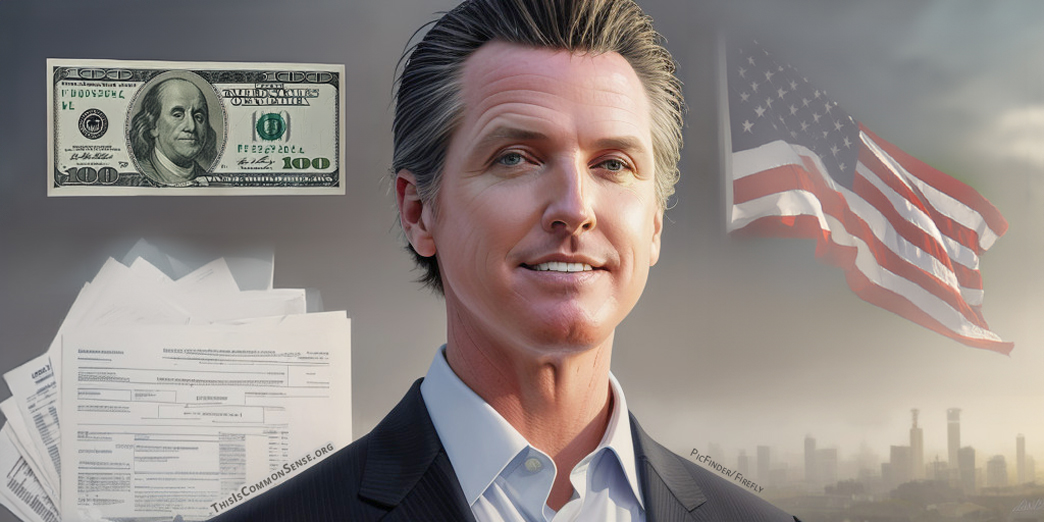
California’s lawmakers and governor recently imposed super-high minimum wages for workers in fast-food restaurants ($20 an hour) and workers in healthcare facilities ($25 an hour). When the legislation was in process, the impact on companies, customers, and job applicants was deemed irrelevant. What mattered was appeasing the labor lobby.

Governor Newsom is suddenly “realizing” (he’d been warned) that these new costs will also burden the state government, currently facing a $45 billion budget deficit.

But this isn’t causing him to seek repeal.

No. Instead, he has signed legislation granting an exception to the new minimum for fast-food restaurants that are on government land. “Democrats don’t want the mandate interfering with government concession licenses,” The Wall Street Journal observes.

And Newsom also wants to defer the kick-in of the new minimum wage for workers in healthcare facilities — which he projects would cost the state $4 billion more annually because of the impact on Medicaid and state-paid health workers — until state revenue is in better shape. He would also permanently exempt state-owned facilities from having to pay the new minimum.

Carveouts and minor delays are as far as the governor and lawmakers are willing to go. Whatever gets them past the uncomfortable present — the next moment and the one after are things to worry about later. With any luck, with time the voters will have forgotten the issue, and who caused what.

Exemptions are the order of the day for politicians and bureaucrats. Private sector businesses must remain on the rack.

This is Common Sense. I’m Paul Jacob.


PDF for printing

Illustration created with PicFinder and Firefly

See all recent commentary
(simplified and organized)
See recent popular posts
Categories
free trade & free markets general freedom national politics & policies

Junk Force

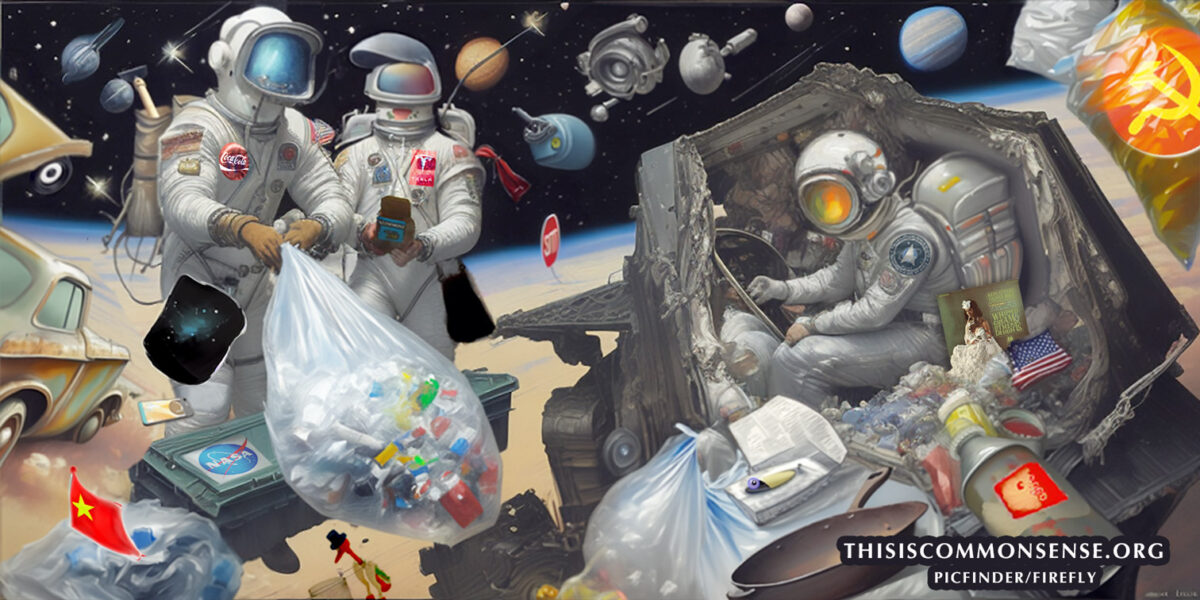
A Space.com news story indicates a big problem and a new role for government — or industry.

“The Infra-Red Calibration Balloon (S73-7) satellite started its journey into the great unknown after launching on April 10, 1974 through the United States Air Force’s Space Test Program,” writes Meredith Garofalo. “While in orbit, the original plan was for S73-7 to inflate and take on the role as a calibration target for remote sensing equipment. After this failed to be achieved during deployment, the satellite faded away into the abyss and joined the graveyard of unwanted space junk until it was rediscovered in April.”

It’s a complicated story; the satellite never really worked properly. Which raises the space junk problem.

The biggest polluter is governments. Space agencies. And the corporations contracting to put up satellites. And the military that puts stuff up we know nothing about.

“[A]s more and more satellites head into space,” explains Garofalo, “the task will become even greater to know what exactly is out there and what threats that could pose.”

When Trump boasted of creating the Space Force in 2019, a lot of people scoffed. I didn’t.*Somebody’s got to do the dirty work, and it does look like Space Force personnel see an important role to be filled, that of garbage men in orbital space. Since the more than 20,000 objects in orbit — and their associated random debris — were put there by governments, maybe governments should clean it up. 

The future of space industry could be hampered, should the problem continue to grow — though, in the end, it may be industry that will take over the task. After all, space litter’s more dangerous than most terrestrial “externalities.”

This is Common Sense. I’m Paul Jacob.


* Also, in no small part, because ceding outer space to China and Russia seems like a bad idea. 

PDF for printing

Illustration created with PicFinder and Firefly

See all recent commentary
(simplified and organized)
See recent popular posts
Categories
free trade & free markets international affairs property rights

Idaho Foils Foul Harvest

One can be for free trade yet still demand, while sticking to principle, certain restrictions on international trade.

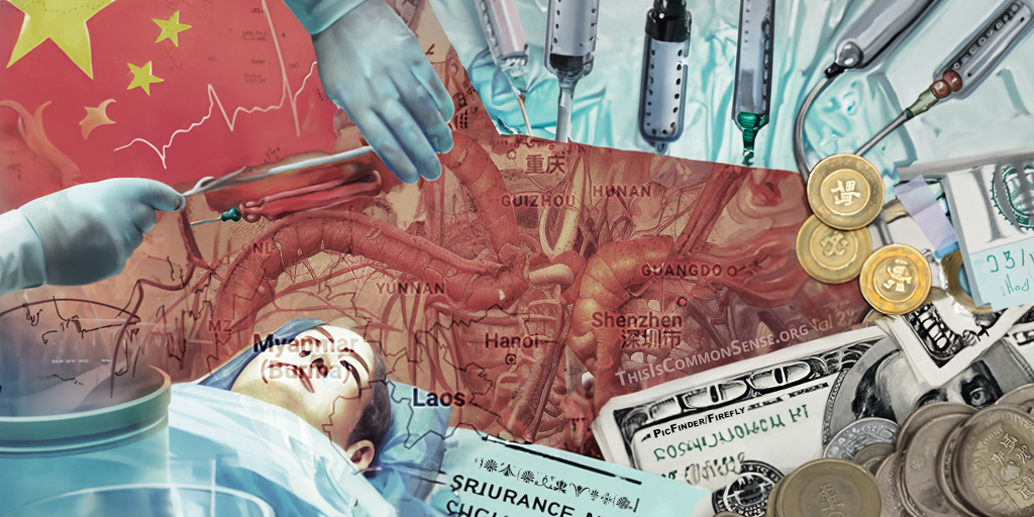
The State of Idaho has demonstrated one sort of restriction compatible with a free society’s free-trade rules. “As of July 1, it will be illegal in Idaho for health insurers to cover an organ transplant or post-transplant care performed in China or any country known to have participated in forced organ harvesting,” explains Frank Fang in The Epoch Times (No. 508, A5). The legislation had been passed unanimously in both legislative houses earlier in the month and was signed by the governor on April 10.

Idaho wasn’t the first state to do this, following Texas last year and Utah this year, with its law going into effect on May 1.

The problem to be addressed? The suspiciously short waiting time for organ transplants in China, especially after the Chinese government cracked down on the Falun Gong decades ago. 

“In 2019, the independent China Tribunal in London concluded that the CCP had been forcibly harvesting organs from prisoners of conscience for years ‘on a substantial scale,’ with Falun Gong practitioners being the ‘principal source’ of human organs,” according to Mr. Fang.

This is not protectionism. And it really isn’t any unwarranted regulation on trade. For even in the freest of societies, with 100 percent free trade and freedom of contract, the sale and purchase of stolen goods is unlawful.

Rightly prohibited.

If anything has been taken away unjustly, it’s the internal organs of political prisoners by the Chinazis.

This is Common Sense. I’m Paul Jacob.


PDF for printing

Illustration created with PicFinder and Firefly

See all recent commentary
(simplified and organized)
See recent popular posts
Categories
free trade & free markets general freedom too much government

Supermarket Slavery

How to sue supermarkets for shutting down:

One. Move to San Francisco.

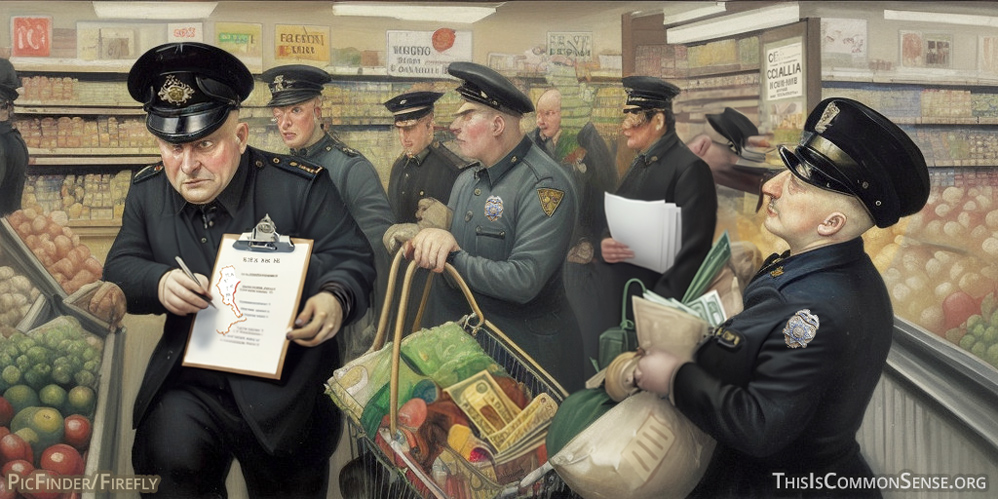
Two. Support a proposed ordinance “amending the Police Code to require large supermarkets to provide six months notice to their customers and the City before permanently closing, and to explore ways to allow for the continued sale of groceries at the location.”

Three. If the ordinance passes, wait for a large supermarket to go out of business without having known six months in advance that it would need to do so.

Four. Sue.

That the proposed law would amend the police code is perversely apt. The idea is use the state’s police power to penalize ending an activity that as a free man, not a slave, you have no obligation to continue.

Ending any project may inconvenience people who benefit from what you’re doing. But unless you are bound by contract, these other people have no right to your further efforts. 

Not for six months, not for six seconds.

The San Francisco ordinance would exempt supermarkets that must close because of a natural disaster or other circumstance not “reasonable foreseeable.” These exemptions don’t solve the problems that the ordinance could cause for innocent businessmen. As Reason magazine notes, any stores that closes “without providing the proper notice” could still be sued for damages, supposedly exempted or not.

In the 1980s, when this notion was originally proposed (unsuccessfully), supermarket executives argued that making it harder for them to shut down would also discourage them from opening a store to begin with.

True. But that’s just common sense.

I’m Paul Jacob.


PDF for printing

Illustration created with PicFinder and Firefly

See all recent commentary
(simplified and organized)
See recent popular posts
Categories
crime and punishment free trade & free markets tax policy

What Pfizer Pfolks Got

Yesterday, a whole lot of people paid a whole lot of taxes. It was Tax Day — filing day — for most Americans.

Truth is, American workers pay income tax with every paycheck. And they pay other taxes too.

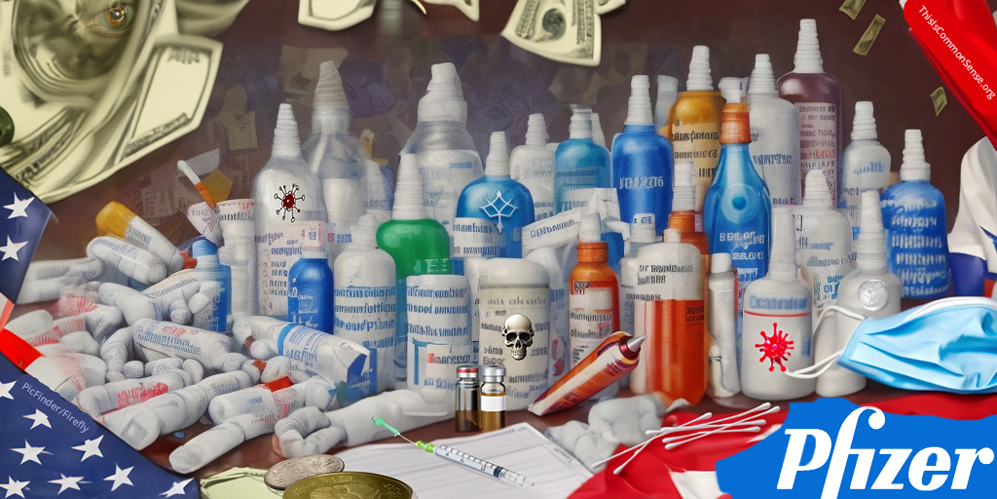
Somehow, though, Pfizer — one of the world’s most profitable companies — did much better than we did. “Drugmakers make big profits in the U.S.,” explains Sydney Lupkin at NPR. “But many pay taxes far below the 21% corporate tax rate. Pfizer’s effective tax rate is so low it’s getting a big refund despite booking $59 billion in revenue.”

Did you get a big refund on top of a huge wage hike? No?

Well, you should lobby Congress more.

Now, Pfizer’s long had a cushy/pushy relationship with the U.S. Government. The company’s had to pay loads of legal penalties for malfeasance, but it’s also received subsidies, immunities, and government-forced clientele — in the rollout of its most famous product. But through thick and thin it faces our byzantine tax code with ease, for it’s that tax complexity that really gives Big Pharma the advantage, compared to smaller companies.

I have never argued for more taxes. I wonder if corporations should even be taxed based on income, which gets complicated to figure since it’s based on profits and losses and investments etc., thus opening the door to corrupt insider politics. Plus, those taxes simply get passed on to us. 

But if corporations are taxed, how indecent that small companies tend not to get huge refunds on years in which they make stellar returns.

Though I suppose if Congress keeps on awarding more to the bigger, that’s a problem that sort of solves itself. 

With the smaller companies just dying out.

This is Common Sense. I’m Paul Jacob.


PDF for printing

Illustration created with Picfinder and Firefly

See all recent commentary
(simplified and organized)
See recent popular posts
Categories
free trade & free markets regulation

Dining Out on Cause and Effect

Could a barren, charred, devastated landscape be the actual intended goal?

In California as in Washington, lawmakers and chief executives apparently have a long list of nice things to destroy and are crossing them off one by one, as if on the payroll of aliens from outer space wanting to conquer earth without doing very much conquest-work themselves.

Part 99-C of the plan is to price entry-level labor and entry-level restaurant dining out of the market by hiking the minimum wage of fast-food workers even further beyond the market rate for the labor and its actual productive value to employers: now to $20 an hour.

Already, prices for restaurant meals are going up, and restaurant workers are being laid off.

The $20 minimum is a compromise that restaurant owners accepted in lieu of probably paying a $22 per hour minimum. Like letting burglars take only most of the silverware and letting them return at will.

Even more looting of employers is to come, if employee and activist Angelica Hernandez has her way. “We’re going to have to keep speaking up and striking to make sure we are heard.” She wants her dough and doesn’t care about the consequences for others. Policymakers rush to appease her and those like her.

So is omni-destruction the actual intended goal?

Or is it that the mental powers of the crusaders and politicians and too many voters don’t extend so far as the relationship between cause and effect?

This is Common Sense. I’m Paul Jacob.


PDF for printing

Illustration created with PicFinder and Firefly

See all recent commentary
(simplified and organized)
See recent popular posts