Categories
Common Sense free trade & free markets government transparency insider corruption local leaders media and media people national politics & policies too much government

Never Trust a Politician

One of my more persistent critics on this site asked, last week, why I might believe anything the current president says — considering all the lies.

For reasons of decorum I won’t repeat his exact wording.

The odd thing about the comment was not the vulgarity, though (unfortunately). It was the idea that I was relying upon belief in Donald Trump’s veracity. The whole point of my commentary regarding Trump’s handling of trade and foreign policy was to read between some lines.

I try never to believe anything . . . er, everything . . . any politician says.

In Donald Trump’s case, though, there are lies and there are fictions and there are exaggerations. And corkers . . . and “negotiating gambits.” Separating the wheat from the chaff from the grindstone is not always easy.

Based not only on some of what he says, but also on results-thus-far from the EU negotiations, Trump’s idea of “fair trade” appears to be multilateral free trade. But he has chosen a bizarre method to get there: the threat of high-tariff protectionism — which in the past has led to multilateral protectionism, not free trade.

Trump sees everything as a contest. Trade isn’t a contest as such. It’s win-win. But trade negotiations are contests. And Trump’s game of chicken is dangerous.

Regarding foreign policy generally, though, he seems to be playing a more familiar game: we can outspend everybody. The recent increase in Pentagon spending is bigger than Russia’s annual military budget!

So, who pays? Americans in

  1. higher taxes and 
  2. the consequences of massive debt, as well as in
  3. the higher prices from his tariffs.

That’s awfully daring of him. For us.

This is Common Sense. I’m Paul Jacob.



PDF for printing


Photo from Max Pixel

 

Categories
free trade & free markets government transparency media and media people national politics & policies too much government

Most Outrageous Negotiation Strategy Yet

The best defense of Donald Trump’s presidency, so far? He is smarter than the rest of us, and knows how to negotiate with bad guys and insider players. We have to discount what he is saying, the theory goes, because he is not telling truths . . . obviously. 

He is negotiating.

Take nothing at face value, including Trump’s professed beliefs.

Protectionism, for example. Trump has long been against NAFTA and the modern version of “free trade.”* But, as I noted in late July, Trump does not seem to be demanding managed trade, or high tariffs as a means to protect American producers, or even tariffs as a means to increase government revenue. He appears — at least some of the time — to be using tariffs as a way to bargain other countries to reduce their tariffs.

This method has not worked in the past.

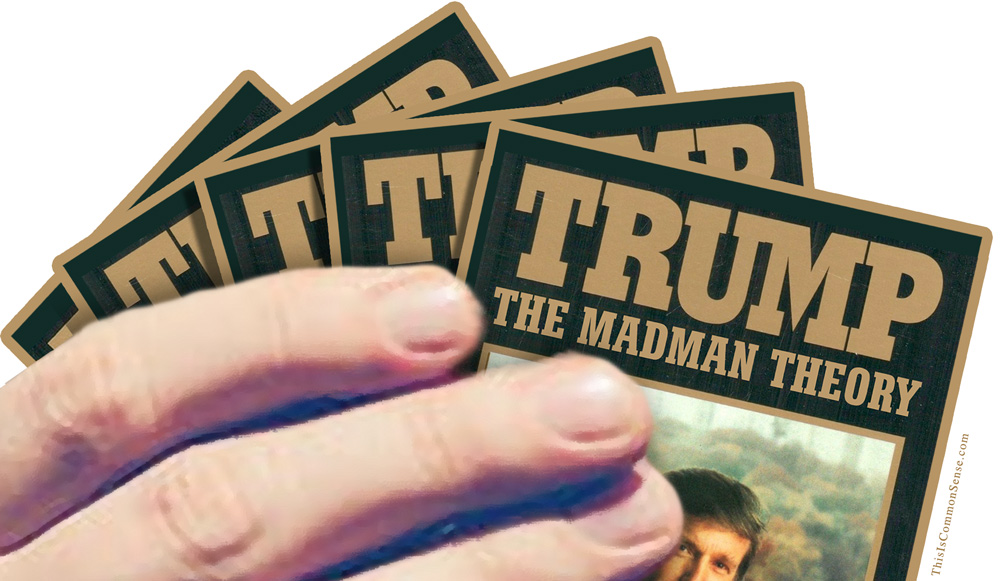
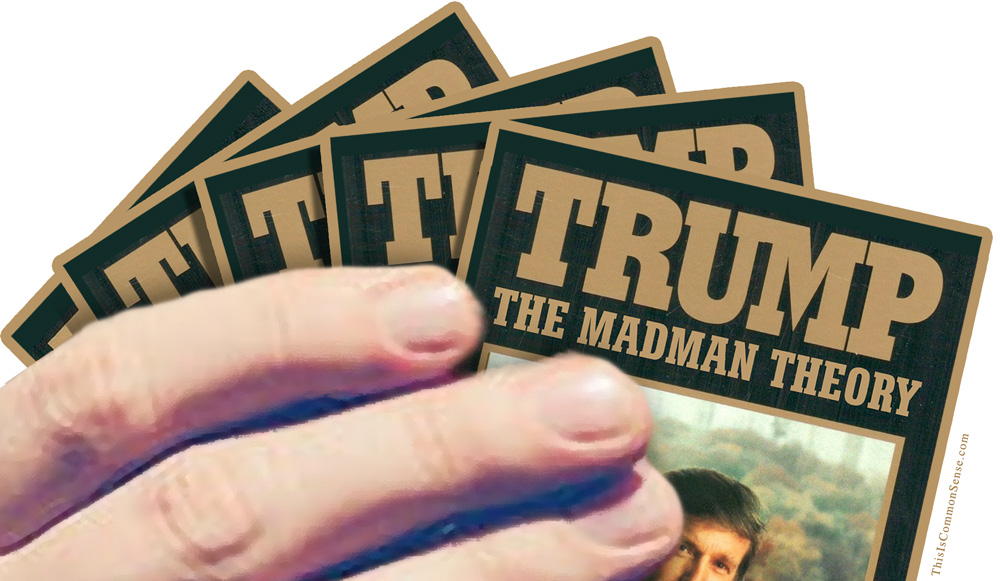
But is Trump different enough a politician to pull off a “madman” strategy to get leaders in other countries to do the right thing and reduce their tariff and regulatory burdens on their own countries?

A long shot — and several sectors of American business are being hurt right now in this “negotiating” (threat) phase of Trump’s outrageous gambit.

Another area where one might express such hope for a master-negotiator president is in reining back the Pentagon. In the run-up to November 2016, Trump sure seemed defiant of the neo-conservative/neo-“liberal”/center-left establishment on foreign policy.

But now he just signed a huge increase in the Pentagon budget: an $82 billion increase.

Is Trump’s plan to bring big-spending military-industrial complex lobbyists to heal by first giving them what they want?

That. Won’t. Work. 

This is Common Sense. I’m Paul Jacob.


* Post-WWII trade policy has consistently defended treaty-based global trade, but with heavy elements of protective tariffs, regulations and subsidies, making the whole thing look less like Free Trade and more like Mis-Managed Trade.

PDF for printing


Categories
Accountability free trade & free markets general freedom responsibility too much government

No Other Options?

Long I have criticized the Washington, DC, Metro — the transit authority in our nation’s imperial capital — most recently in March. But I am foursquare in support of the government body’s recent hazard warning: “Only take Metro if you have no other option.”

Good general principle.

But what’s the particular occasion? There will be “Major 24/7 Construction Activity” for 15 days in mid-August. The service is advising usage of buses and even freely-provided shuttle services to compensate for commuters stuck in the repairs.

Christian Britschgi, writing at Reason, actually dared ride one embattled line. He found what you might expect: a long history of lazy, perverse incompetence at Metro, bordering on corruption. When concrete started falling from the ceiling at one station in 2016, “an internal investigation . . . uncovered Metro safety inspectors at the station had taken to just cutting and pasting positive evaluations from prior year reports instead of actually checking for damage in some hard-to-reach areas of the station,” Britschgi explains

This is the kind of thing you expect to find in government. Why? Because we don’t allow government projects to go under, even after repeated and massive failures. Ignominy.

Should we be shocked, though? No. Spectacular non-success is close enough for government work. Markets work better because of important communication via profit and loss. Without that stick of loss, governments just take our taxes as their carrot. 

Not a whole lot rides on actually serving riders.

This is Common Sense. I’m Paul Jacob.


PDF for printing


Categories
Accountability free trade & free markets general freedom ideological culture media and media people national politics & policies

Driven to Sanity

Having the federal government centrally plan the economy is “a huge waste of everyone’s time and resources” states an amazingly common-sensical Washington Post editorial.

“In a well-functioning modern economy, businesses are generally free to buy and sell the things they need, absent a compelling public need for government intervention,” the editors further expound.

Hmmm, a capitol-town rag that regularly extols the virtues of big government regulation of everything now notices the importance of freedom.

Of avoiding, especially, a system where bureaucrats and other government bullies micromanage commerce.

“Were we directed from Washington when to sow and when to reap,” Thomas Jefferson wrote long ago, “we should all want for bread.”

And aluminum.

“Worse,” the Post argues, the system “also politicizes — and, indeed, corrupts — economic life. Companies that feel threatened by any particular tariff exclusion request have the right to present their objections to the Commerce Department, meaning that each decision represents a high-stakes competition for federal favor between at least two companies with every incentive to influence it through lobbying, campaign contributions, you name it.”

Correct. It seems we may have Donald Trump to thank for opening the Post’s eyes. 

“[T]he way to get ahead in Mr. Trump’s economy,” those editors conclude, “is not making better products for the people, but making better connections in Washington.”

Tragically true.

But, sadly, true long before Mr. Trump entered the White House. No new powers have been given to Trump. 

Let’s drain the stinking Washington swamp. Let’s end the corrupting influence of a regulatory state run amok. Let’s limit the power of the people wielding political power.

How?

Free the markets!

This is Common Sense. I’m Paul Jacob.


PDF for printing


Categories
Accountability free trade & free markets general freedom national politics & policies property rights responsibility too much government U.S. Constitution

The Trump Trade Enigma

President Donald J. Trump, former “reality TV” star, often seems merely to skirt reality.

“Our trade deficit ballooned to $817 billion,” President Trump exaggerated to the “men and women of U.S. Steel” last week. 

“Think of that. We lost $817 billion a year over the last number of years in trade,” he went on. 

“In other words, if we didn’t trade, we’d save a hell of a lot of money.”

This is the sort of dopey bunk a drunk at a bar might say, after the fourth shot had obliterated any remnant of economic understanding from his synapses.

But the president said this in Granite City, Illinois, in front of cameras, a live mic, and a cheering crowd.

And yet, as I wrote yesterday at Townhall, Donald Trump is now explicitly aiming at a worldwide free trade policy, negotiating to break down trade barriers and get rid of subsidies on . . . well, “non-automobile industrial goods.”

I’m almost afraid to ask him why not all industrial (and, for that matter, agricultural) products. Could one expect a coherent answer from someone who does not understand that an $817 billion “trade deficit” means that we, the consumers of the United States of America, got stuff from each billion spent? Each dollar?

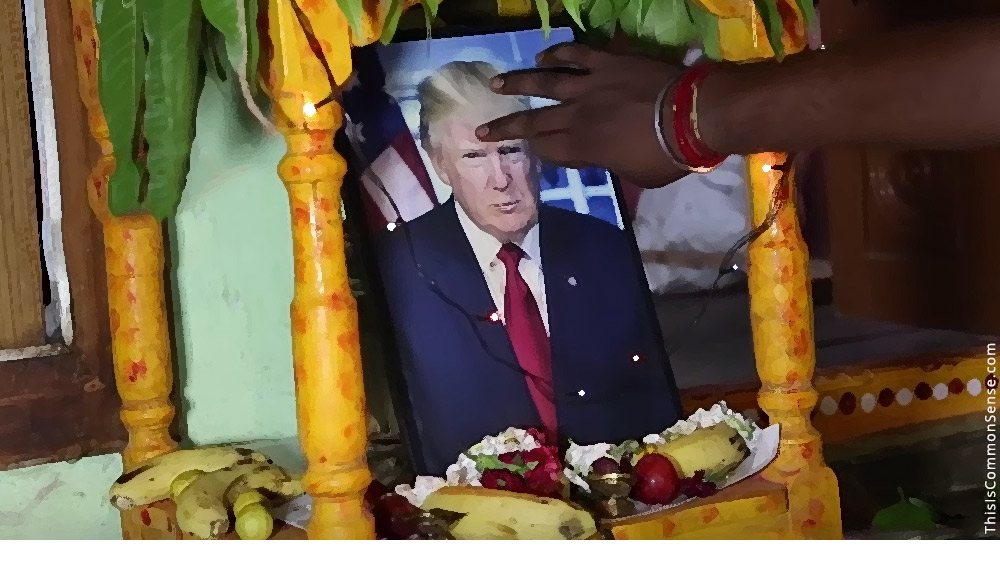
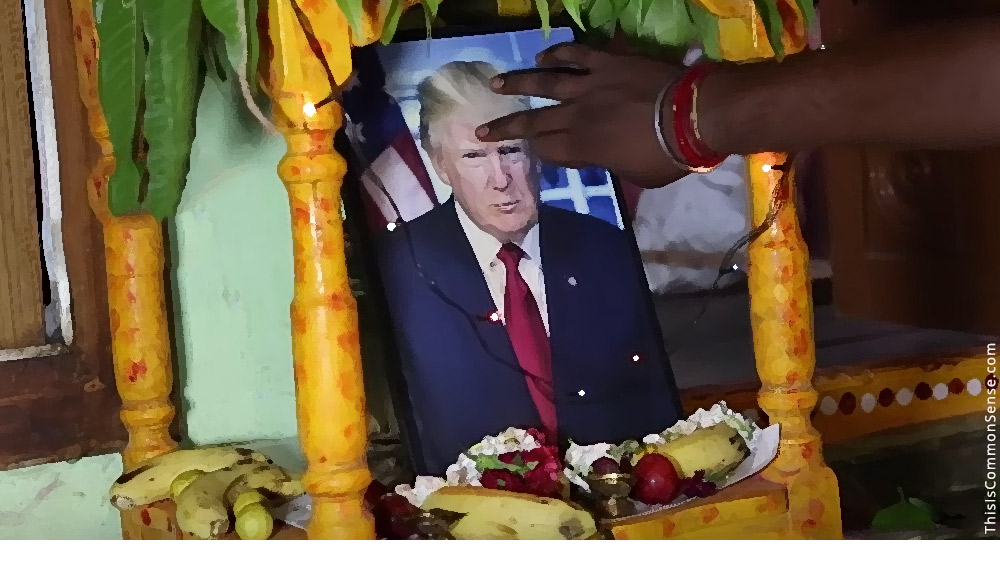
And yet, if he pulls off worldwide free trade agreements — for whatever reason — he may almost be worth the attention that Bussa Krishna, of the southern state of Telangana, India, gives him.

The man set up a shrine to worship Donald Trump.

I will never do the same. But I’d tip my hat to almost anyone who fosters trade, and the peace and progress trade brings to the world.

This is Common Sense. I’m Paul Jacob.


PDF for printing


Categories
free trade & free markets national politics & policies responsibility too much government

Trump’s Biggest Secret?

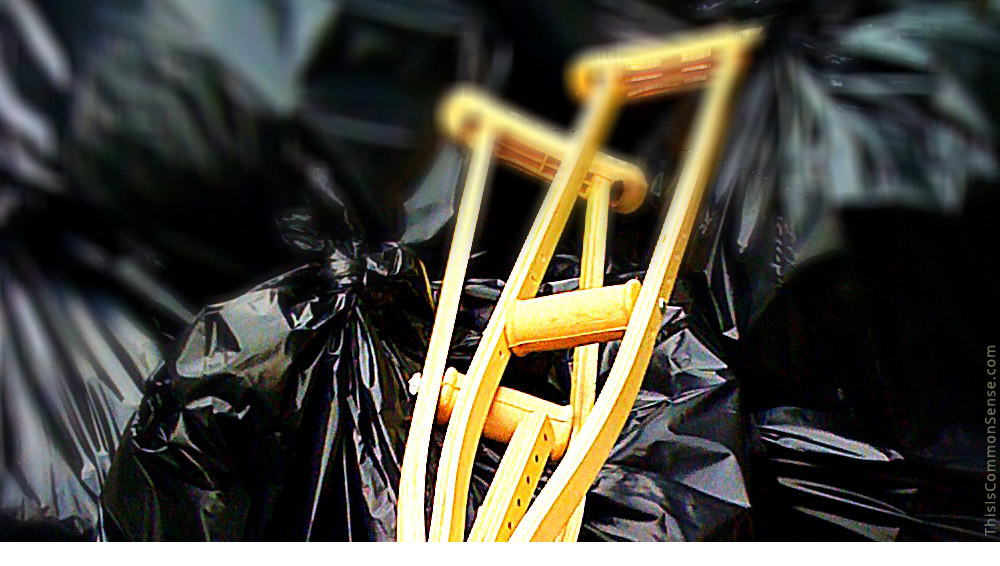
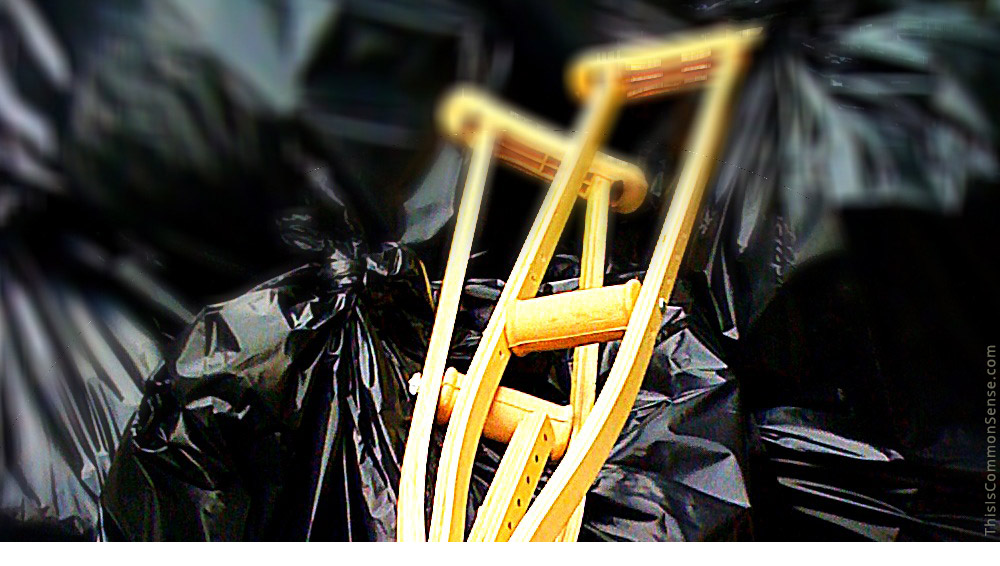
“This trade war is cutting the legs out from under farmers,” says Senator Ben Sasse (R-Neb.), “and White House’s ‘plan’ is to spend $12 billion on gold crutches.”

Referring to Donald Trump’s tariff brinksmanship with China, Sasse is decrying Trump’s request to Congress for compensatory farm subsidies. Sasse insists that “America’s farmers don’t want to be paid to lose” — but regardless of what farmers want, we should want free trade.

Tariffs are taxes. Consumers ultimately pay for them all.

Trump’s requested “crutches” is just another example of a bad government program leading to another, “compensatory” bad government program.

Old story. Too familiar.

The senator is right to be alarmed by the Trump “administration’s tariffs and bailouts,” for the president is playing a most dangerous game. Trade wars are not mutually beneficial. Trade is.  

Of course, if the ultimate result is an end to all trade barriers — as Trump himself demanded regarding the EU — then . . . could it be worth it?

One thing’s for certain: the history of protectionist brinksmanship is not pretty. Sasse himself predicts that Trump’s tariff hikes “aren’t going to make America great again, they’re just going to make it 1929 again.”

Sasse is referring to the passing of the Smoot-Hawley Tariff Act of 1929, which led not only to a spooked Wall Street, but to bank failures and retaliatory protectionism from other countries. 

And a worldwide depression. And world war.

But is Trump really a secret free trader,* using tariffs in a game of chicken with trading partners?

This just in, from The Guardian:Trump and EU officials agree to work toward ‘zero tariff’ deal.”

Stay tuned.

This is Common Sense. I’m Paul Jacob.


* We could be forgiven for thinking him an old-fashioned protectionist, considering his repeated insistence that “Tariffs are the greatest!” But with Trump, maybe we should never take him literally.

PDF for printing


Photo by Carlos Martinez


Categories
Accountability folly free trade & free markets general freedom moral hazard property rights responsibility too much government

Poison Is Poisonous

Venezuela’s socialist economy has been collapsing.

No big mystery. If, out of hostility to capitalism, a society keeps destroying everything that production, trade, and prosperity depend upon, the economy suffers. The benefits of markets don’t flow no matter what.

One assault has taken the form of hyperinflation — runaway printing of currency, done in part to dissolve government debt. Many Venezuelans are resorting to barter. It’s easy to understand why.

Or is it? A Reuters reporter says that economists say that “the central bank [of Venezuela] has not printed bills fast enough to keep up with inflation, which . . . reached an annual rate of almost 25,000 percent in May.”

So go faster!?

Dude. Dude. The massive expansion of Venezuela’s money supply is what’s causing massive jumps in prices. Just like any other economic good, the medium of exchange is subject to the laws of supply and demand.

Other things being equal, enormously increasing a supply of a good will enormously lower its market value or price. Money, too, has a price — in terms of the non-monetary goods being bought. If the pre-hyperinflation price of a dollar in terms of bread is one loaf and the post-hyperinflation price is one bread crumb, you won’t reverse the decline by printing even more dollars or bolívars even faster.

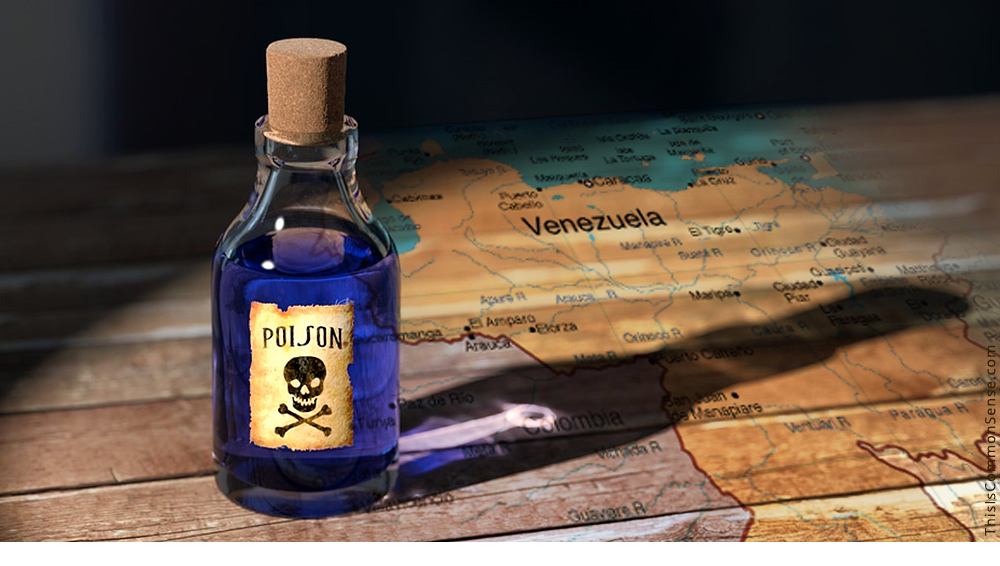
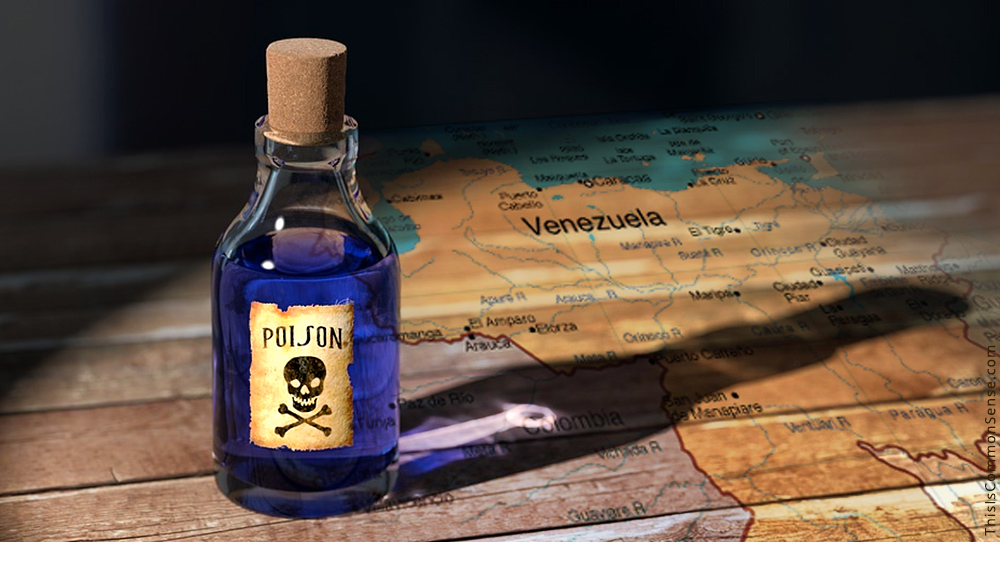
If you’re ingesting poison, you can’t fight the effects by being poisoned more and harder. The very first thing to do is stop ingesting the poison.

This is Common Sense. I’m Paul Jacob.


PDF for printing


Categories
Accountability crime and punishment folly free trade & free markets general freedom local leaders nannyism national politics & policies responsibility too much government

Kick the Addiction, Save Money

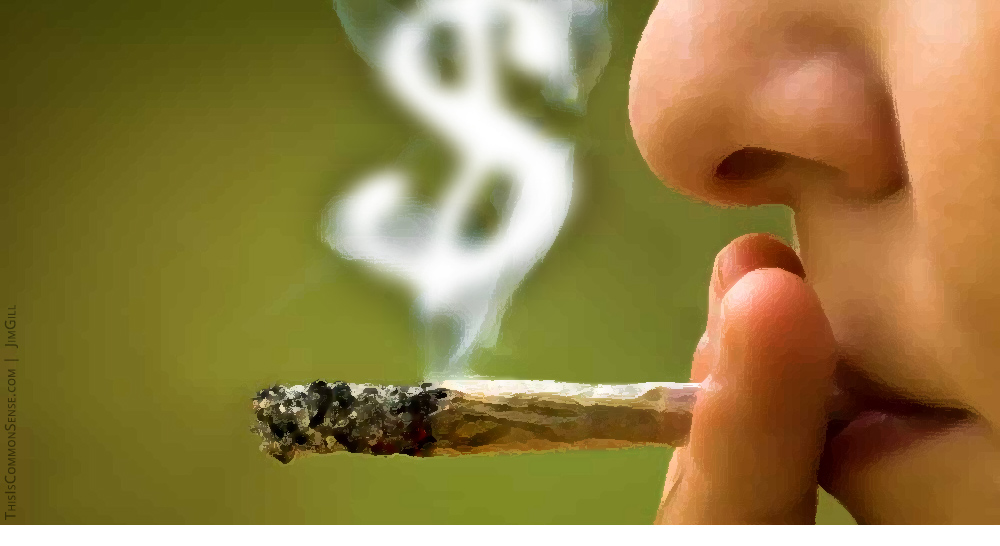
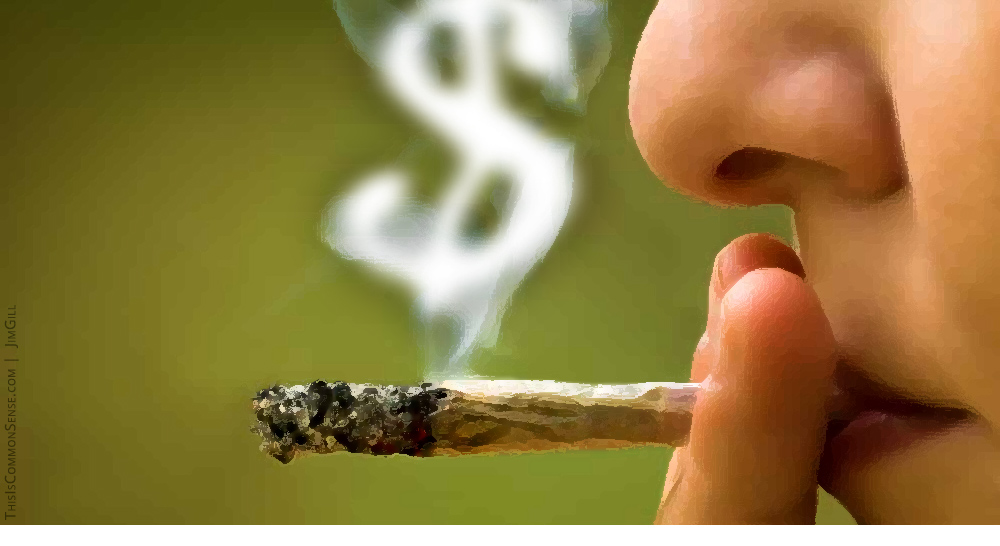
The political case for the War on Drugs has always been intuitive. “Drugs are bad” has trumped practical concerns. But the actual, responsible case for the political crusade has depended upon some concept of “social cost.”

Now that marijuana is being legalized state by state, the case against the greater War on Drugs is being taken seriously — enough to rethink all varieties of costs. Indeed, many now see the opioid epidemic as being driven, in part, by the War on Drugs, and not just as an excuse for a stronger crackdown.

Nevertheless, coming to some accounting — especially “social cost” accounting — remains difficult. This is especially true so long as its effects on freedom and the rule of law do not get figured in.

Somewhat surprisingly, even the budgetary effects of legalization have proven a bit tricky.

So it is welcome to read Harvard economist Jeffrey Miron’s study of marijuana legalization as it has occurred in the states of Washington, Oregon, and Colorado. He compares results of legalization with the predictions he had made eight years ago, in a previous Cato Institute study. It turns out that while tax revenues are far greater than expected, law enforcement costs have not gone down.

“Early experience suggests that governments will reallocate rather than reduce those expenditures,” Miron writes. “That reallocation may be beneficial, but it does not have a direct effect on the budget deficit.”

On a federal level, though, we might expect greater savings. How? We could shut down whole bureaus.

Yet, achieving such savings would require progress on Washington’s biggest addiction:  spending.

This is Common Sense. I’m Paul Jacob.


Studies cited:

Jeffrey Miron, “The Budgetary Effects of Ending Drug Prohibition,” Cato Tax & Budget Bulletin, Number 83, July 23, 2018.

Jeffrey A. Miron and Katherine Waldock, “The Budgetary Impact of Ending Drug Prohibition,” Cato Institute white paper, September 27, 2010.

PDF for printing


Categories
Accountability crime and punishment folly free trade & free markets general freedom moral hazard nannyism responsibility too much government

Taking a (Lemonade) Stand

When life hands you lemons. . . .

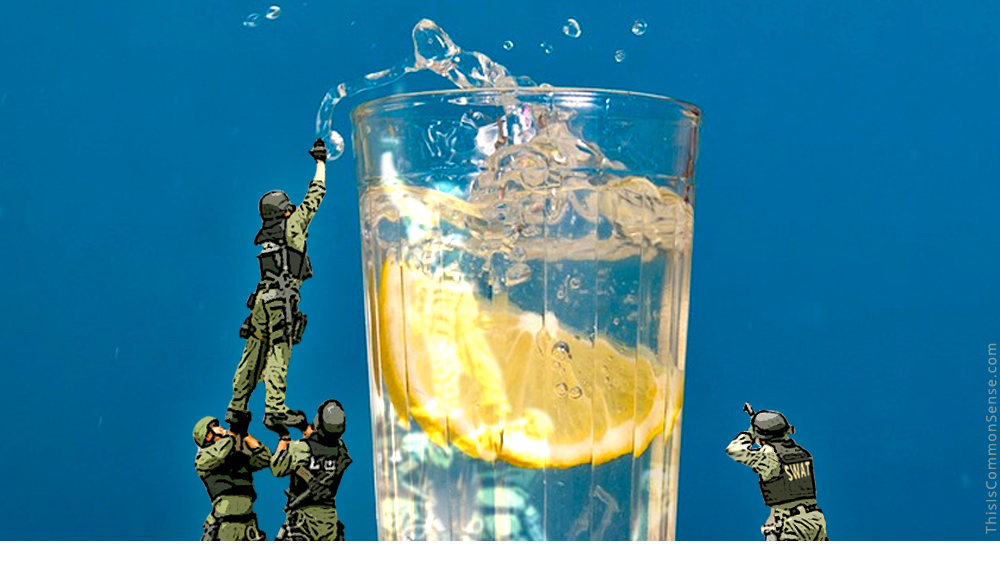
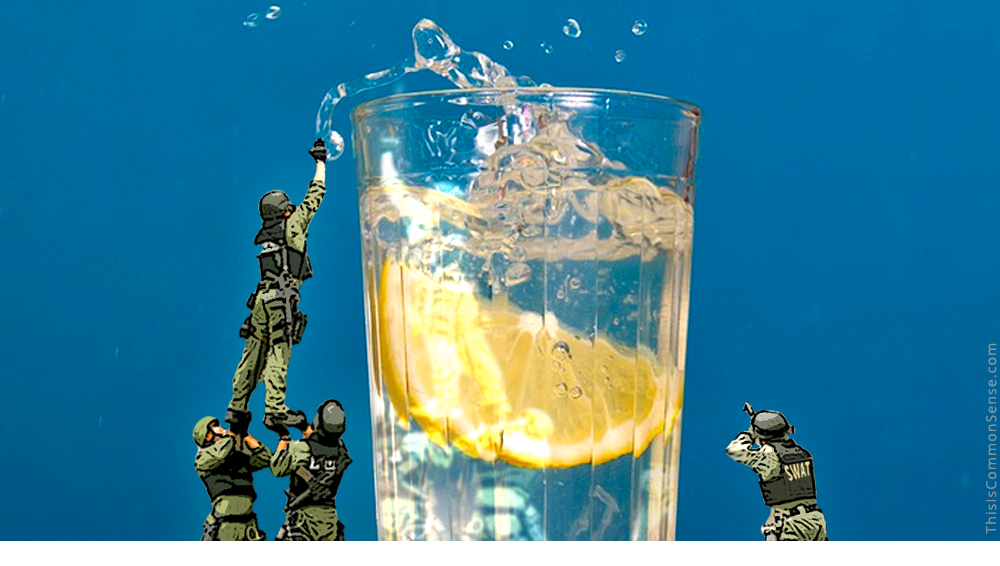
Once upon a time, putting up a summertime lemonade stand was the American way for kids to learn about hard work, good will, and entrepreneurship. Almost every kid had one, making some spendable profit selling the nectar.*

Some of the youngsters grew up to become Bill Gates and Steve Jobs and, well, lemonade’s one heck of a gateway drink.

But then, along came “progress” — that is, mandates and regulations slapped upon businesses. And the hordes of regulators required to enforce the morass of rules — “swarms of Officers.”

Soon lemonade stands were vanquished from our neighborhoods.

And America was made safe (at long last!) for . . . inane bureaucracy.

“Reports of kids’ lemonade stands being shut down for breaking local health or permitting laws have long left grown-ups feeling sour,” today’s Wall Street Journal informs. But the story also details how “a growing movement of adults is fighting back.”

So, when government policies hand you lemons, what do you do?

Make a map of all the lemonade stand clampdowns.

“I think the Constitution covers [lemonade stands] as written,” Dave Roland told the Journal, explaining the map he and his wife Jenifer have produced. “But if there’s any doubt about that, let’s get it fixed.” The Rolands run the Freedom Center in Missouri, but theirs is a regrettably national map.

Last month, the popular lemonade maker Country Time started “Legal-Ade,”  pledging to come to the defense of any kid “busted” for trafficking in lemonade.

Seriously.

“When life gives you arcane laws,” the company’s video says, “make lemonade.”

Taste the Common Sense. I’m Paul Jacob.


* The profit was made possible largely by pushing their costs off onto their parents. But isn’t that sorta what parents are for? And good lessons were still learned.

PDF for printing


Categories
Accountability crime and punishment free trade & free markets general freedom media and media people moral hazard responsibility

Blame the App?

Who spreads “fake news”?

Gossips, politicians, publicity agents, Twitter eggs, partisan bloggers, lying news journalists?

Or . . . the medium of communication they use?

Do envelopes, stationery, telephones, email, and messaging apps have moral agency?

And who commits the crimes that news (true or false) is used to rationalize?

A New York Times story discusses “How WhatsApp Leads Mobs to Murder in India,” which is like saying that civilization, flying lessons and boarding passes “led” terrorists to 9/11.

The Times reports that fake news about children being kidnapped — dramatized by doctored video clips and forwarded via WhatsApp, a messaging app — provoked anger and fear in many Indians. Some were then willing to attack anyone who “seemed” about to kidnap children.

In recent months, dozens of people have been murdered for being in the wrong place at the wrong time.

Without social media and the mega-popular WhatsApp, the murders probably would not have happened, at least not the way they happened. That seems certain. But this doesn’t mean that without WhatsApp, nobody in India would spread false stories or assault innocent people.

Mob violence in the country antedates the Internet.

Perhaps a thousand material circumstances directly or indirectly enable any particular act of wrongdoing. But no such prerequisites “lead to” anything without individual choices.

If someone pretends it’s okay to kill innocent persons — or persons whose guilt or innocence he doesn’t care to know — he, the killer, is the guilty party. The telecommunications network or messenger app used to provide grist for excuse-making is innocent.

Apps don’t murder people. People murder people.

This is Common Sense. I’m Paul Jacob.


PDF for printing