Categories
Fifth Amendment rights First Amendment rights Fourth Amendment rights general freedom

Three Decades of Justice

Since September 1991, the libertarian law firm founded by Chip Mellor and Clint Bolick has been fighting for the rights of its clients against governmental assault.

For no charge, Institute for Justice helps people stripped of options fight for:

● The right to keep one’s land (and what’s on it).

In 2001, the city of Mesa, Arizona launched eminent-​domain proceedings against Bailey’s Brake Service, owned by Randy Bailey. The plan was to destroy the shop and give the land to a hardware store, not a constitutionally permitted “public use.” Bailey and IJ eventually prevailed in court.

● The right to make a living despite arbitrary professional licensing.

The Louisiana State Board of Cosmetology demands that aspiring hair braiders submit to hundreds of hours of training and pay for an expensive license to ply their trade. IJ is challenging the requirement on behalf of clients Ashley N’Dakpri, Lynn Schofield, and Michelle Robertson.

● The right to keep one’s cash despite arbitrary civil forfeiture — i.e., the power of police and prosecutors to grab your money or other belongings without charging you with a crime.

One recent victim is Marine Corps veteran Stephen Laura, whose $86,900 was looted by the Nevada Highway Patrol. The Institute has agreed to help him get it back.

And so on.

It doesn’t look like governments will stop interfering with our ability to live and work any time soon. 

“Eternal Vigilance”? Thy name is IJ.

This is Common Sense. I’m Paul Jacob.


PDF for printing

See all recent commentary
(simplified and organized)
See recent popular posts

Categories
Fourth Amendment rights

Marks of Tyranny

It pays to contest petty (as well as major) civil and criminal charges that your local and state governments lay against you. Sometimes you get off.

People have used some pretty “out there” arguments in their own defense. Example? Risk homeostasis in a speeding case. That was a stretch.

But this Michigan case, though it may seem odd, is as American as Apple pie.

Alison Taylor sued the city of Saginaw over her parking violation citations. Her argument? The Fourth Amendment.

You see, the municipality’s parking officer had used chalk to mark her (and others’) tires. If on a second round the officer sees a car with the mark at the right spot, showing that it had not moved in the allowed period — write up a ticket!

Ms. Taylor had accumulated 14.

So she and her lawyer argued that “using the chalk to mark her tires constituted an unreasonable search without a warrant.”

The U.S. Sixth Circuit Court of Appeals agreed. This traditional method of enforcing parking rules was recognized as an infringement of the right of the people “to be secure in their persons, houses, papers, and effects.”

Trivial? The consequences may not be, as my source for this case, Greg Rasa of Autoblog, points out.

Dubious? Imagine a non-​legal way to fight the chalk-​mark method — non-​officers chalking car tires with multiple marks indistinguishable from the officers’. Cities would object, of course, but their best case against such a practice would be the car owners’ case: defacement of private property. 

Yes, if the saboteurs’ marks are defacement, so are the city’s.

Justifying the appellate court’s ruling.

Chalk one up for constitutionally guaranteed rights?

This is Common Sense. It’s Friday! I’m Paul Jacob.


PDF for printing

See all recent commentary
(simplified and organized)
See recent popular posts
Categories
First Amendment rights Fourth Amendment rights general freedom

Lockdowns Down Under

“Australia is suffering a surge of authoritarianism, in part because of its lack of constitutional protections for liberty,” writes J.D. Tuccille at Reason.

Sydney, Australia, is going through another major round of lockdowns. When you see the popular reaction — the mass protests demonstrate how unpopular the lockdowns are — you might be inclined to think there’s hope.

But Mr. Tuccille finds the hope in Americans’ great historic fortune: we have a Bill of Rights.

Australian politicians, on the other hand, express thankfulness that Australia doesn’t have any deep constitutional limits to their powers.

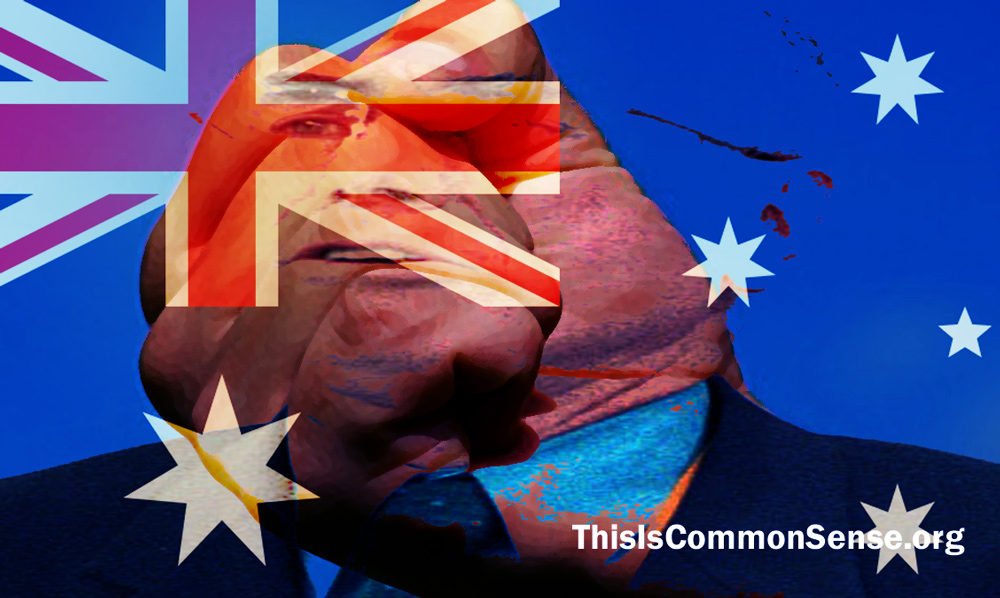
While it is the current Aussie prime minister who plays tyrant today, Aussie tyranny was cogently expressed by a previous holder of the position, John Howard, whom Tuccille quotes — chillingly: 

  1. “The essence of my objection to a Bill of Rights is that, contrary to its very description, it reduces the rights of citizens to determine matters over which they should continue to exercise control.” 
  2. “I also reject a Bill of Rights framework because it elevates rights to the detriment of responsibilities.”

That first point is not made much less bizarre by the prime minister’s elaboration, expressed in a sentence Tuccille did not include, that a Bill of Rights must fail because it delivers “authority to unelected judges, accountable to no one except in the barest theoretical sense.” Yet, lacking a listing of rights, there are few things a beleaguered citizen can do but bend to the cop’s bludgeon and prime minister’s edict. (Hooray for judges?)

That second point is an old canard. Rights and responsibilities go hand in hand; every right has a flip-​side duty.

In the context of a pandemic: people with rights oblige others to negotiate masks and vaccines and the like.

Where? On private property: outside of government. On public property: in legislatures. 

Alas?

This is Common Sense. I’m Paul Jacob.


PDF for printing

See all recent commentary
(simplified and organized)
See recent popular posts

Categories
First Amendment rights Fourth Amendment rights general freedom

Lockdowns Down Under

“Australia is suffering a surge of authoritarianism, in part because of its lack of constitutional protections for liberty,” writes J.D. Tuccille at Reason.

Sydney, Australia, is going through another major round of lockdowns. When you see the popular reaction — the mass protests demonstrate how unpopular the lockdowns are — you might be inclined to think there’s hope.

But Mr. Tuccille finds the hope in Americans’ great historic fortune: we have a Bill of Rights.

Australian politicians, on the other hand, express thankfulness that Australia doesn’t have any deep constitutional limits to their powers.

While it is the current Aussie prime minister who plays tyrant today, Aussie tyranny was cogently expressed by a previous holder of the position, John Howard, whom Tuccille quotes — chillingly: 

  1. “The essence of my objection to a Bill of Rights is that, contrary to its very description, it reduces the rights of citizens to determine matters over which they should continue to exercise control.” 
  2. “I also reject a Bill of Rights framework because it elevates rights to the detriment of responsibilities.”

That first point is not made much less bizarre by the prime minister’s elaboration, expressed in a sentence Tuccille did not include, that a Bill of Rights must fail because it delivers “authority to unelected judges, accountable to no one except in the barest theoretical sense.” Yet, lacking a listing of rights, there are few things a beleaguered citizen can do but bend to the cop’s bludgeon and prime minister’s edict. (Hooray for judges?)

That second point is an old canard. Rights and responsibilities go hand in hand; every right has a flip-​side duty.

In the context of a pandemic: people with rights oblige others to negotiate masks and vaccines and the like.

Where? On private property: outside of government. On public property: in legislatures. 

Alas?

This is Common Sense. I’m Paul Jacob.


PDF for printing

See all recent commentary
(simplified and organized)
See recent popular posts

Categories
Fourth Amendment rights general freedom

Evicting Unjust Evictions

Good news: New York City businessmen can no longer be threatened with eviction and forced to forfeit their rights for the crime of . . . well, for no crime at all.

Sung Cho, owner of a Manhattan laundromat, is one of many victims of an eviction-​and-​extortion racket perpetrated by the city.

For years, business owners have faced eviction because of offenses that occurred on the premises of their business — even if the owner was ignorant of the alleged offenses before they were committed.

In 2013, police entered Cho’s laundromat to sell supposedly stolen goods. After a couple of people unconnected to the business accepted the offer, the NYPD threatened Cho with eviction. Even though neither Cho nor his employees were accused of doing anything illegal.

Cho felt he had no alternative but to waive his right not to be subjected to warrantless searches, and grant police access to his security cameras, and forfeit his right to a hearing if ever penalized for alleged criminal offenses in the future. To avoid eviction, he accepted those obnoxious terms.

But he didn’t leave it there. In 2016, Sung Cho teamed up with the Institute for Justice to sue the city.

After many ups and downs, the final result is that the law so often used as a club against innocent business owners has been changed. Also, the NYPD must obey a binding order that it “shall not enforce or seek to enforce” the terms of agreements imposed under the old law.

A big win for lots of small businesses against tyrannical actions by government.

This is Common Sense. I’m Paul Jacob.


PDF for printing

See all recent commentary
(simplified and organized)
See recent popular posts
Categories
crime and punishment Fourth Amendment rights

Cops vs. Mobs, Tyranny vs. Law?

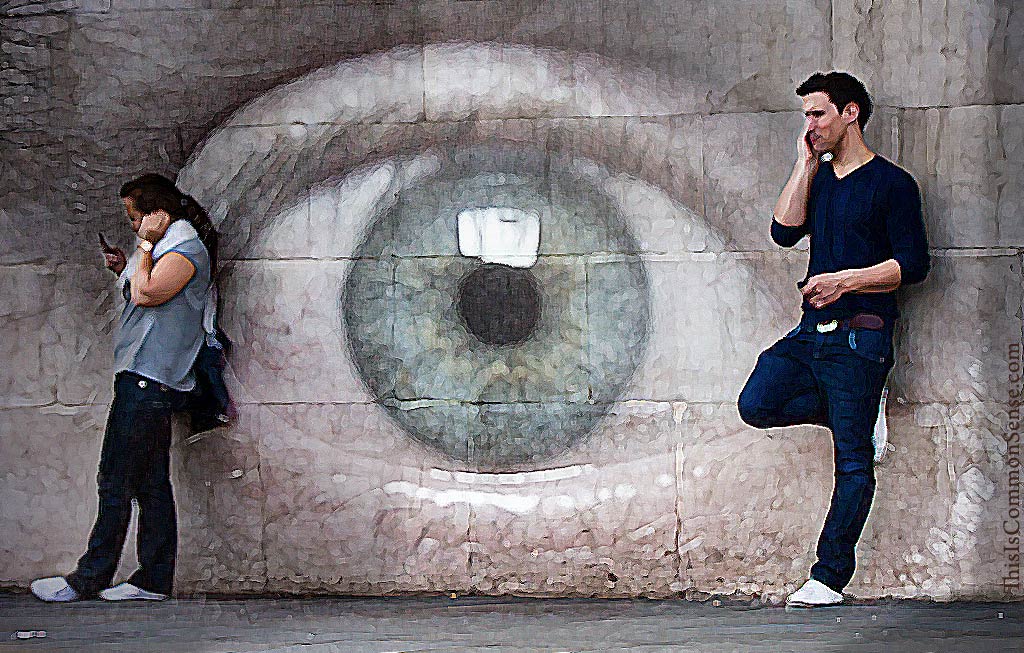
“He was stuffed into what may have been a rental van operated by unmarked federal agents,” explained Cato Institute’s Patrick Eddington, “and taken to the federal courthouse, where he was interrogated without counsel. He wisely refused to answer questions and was then subsequently released without any kind of charges being filed.”

Eddington concluded: “I think most people would call that kidnapping.” 

The “he” — detained and questioned by federal agents* in Portland, Oregon — is Mark Pettibone. Whether the van was rented is irrelevant, nor do these agents or their vehicles require any marking.

And criminal suspects can lawfully be held for questioning. 

“So that we understand how police may remove someone from the streets,” Cato Daily Podcast host Caleb Brown adroitly offered, “we understand that they need to identify themselves.… that people who are placed under arrest retain certain rights to communicate with the outside world, to assert their ability to have a lawyer present for questioning.

“It seems that perhaps,” added Brown, “asking for a lawyer was the trigger here” resulting in Mr. Pettibone’s release.

Eddington agreed, but then announced that it “really does have the feel of Argentina or Chile in the 1970s, with the disappearances that took place. The only thing lacking was Mr. Pettibone being murdered by those agents.”

That is one big “only”!

“This is being done essentially to try to suppress protests in this country,” argued Eddington. “It has nothing to actually do with protecting monuments.” 

“We’re talking only about violent rioters,” Homeland Security Deputy Secretary Ken Cuccinelli told NPR. “We’re not talking about actual protesters. We’re not seeking to interfere at all with anyone peacefully expressing themselves — period, full stop.”

Following the rule of law means protecting peaceful protests. And welcoming an investigation into the federal role in Portland. More concerning than Mr. Pettibone’s detention is the continued use of so-​called non-​lethal weapons, which seriously injured a protester weeks ago.

But the rule of law also means protecting Portlanders and their property against violence and destruction. And welcoming an investigation into the state and local dereliction of duty in Portland. 

This is Common Sense. I’m Paul Jacob.


* The Department of Homeland Security acknowledged that agents with the CBP (Customs and Border Protection) were “cross designated to support FPS” (the Federal Protection Service) in Portland “because of the demand for more manpower in light of the violence.”

Note: Walter Olson, a senior fellow at The Cato Institute’s Robert A. Levy Center for Constitutional Studies and founder of the blog, Over​lawyered​.com, details what we know about the Portland controversy. 

See all recent commentary
(simplified and organized)
See recent popular posts
Categories
Fourth Amendment rights general freedom

Beware Big Bother

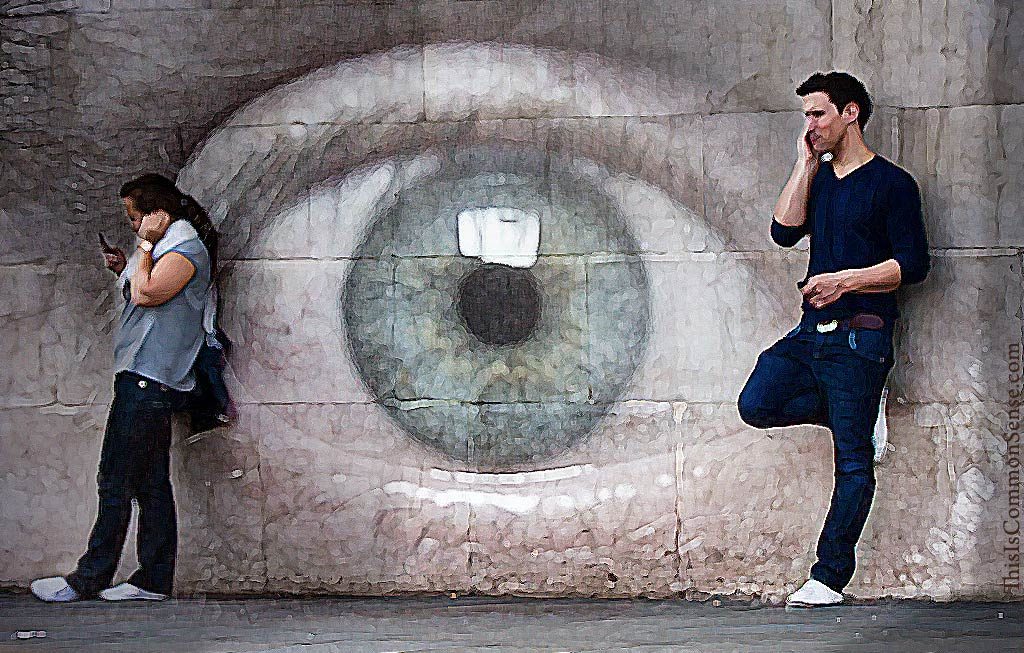
Governments want us to install apps on our mobile devices that would track our movements.

If we do not do so, politicians say, they cannot ‘re-​open’ society.

Better idea: nix the stay-​at-​home orders and entice us to use your Little Brother apps, you intrusive, over-​stepping tyrants.

OK. I confess: they are not called Little Brother apps. Declan McCullagh, writing in Reason, calls them “contact tracking apps,” and notes that, while American states consider them, Australia’s and Singapore’s prime ministers are really pushing them.

And are complaining that voluntary adoption has been lackluster.

As for those low adoption rates? 

Huzzah!

For a variety of reasons, I will be resisting this new tech.

“Different strains of contact-​tracing software are emerging,” explains McCullagh. “All of the more prominent systems rely on a centralized server of some sort, either to perform matching of COVID-​positive identifiers or to distribute lists of COVID-​positive identifiers for matching locally on your device.” The idea is to notify us when coming close to an infected person. 

Further confession: my relationship with computing gadgets being so fraught with … tensions … that such an app would no doubt seem more a Big Bother.

Note the lack of an ‘r.’

It is one thing to offer a new service for our benefit. It is another thing to hold our freedom of movement in hock — install our apps, say these pols, or no return to normalcy!

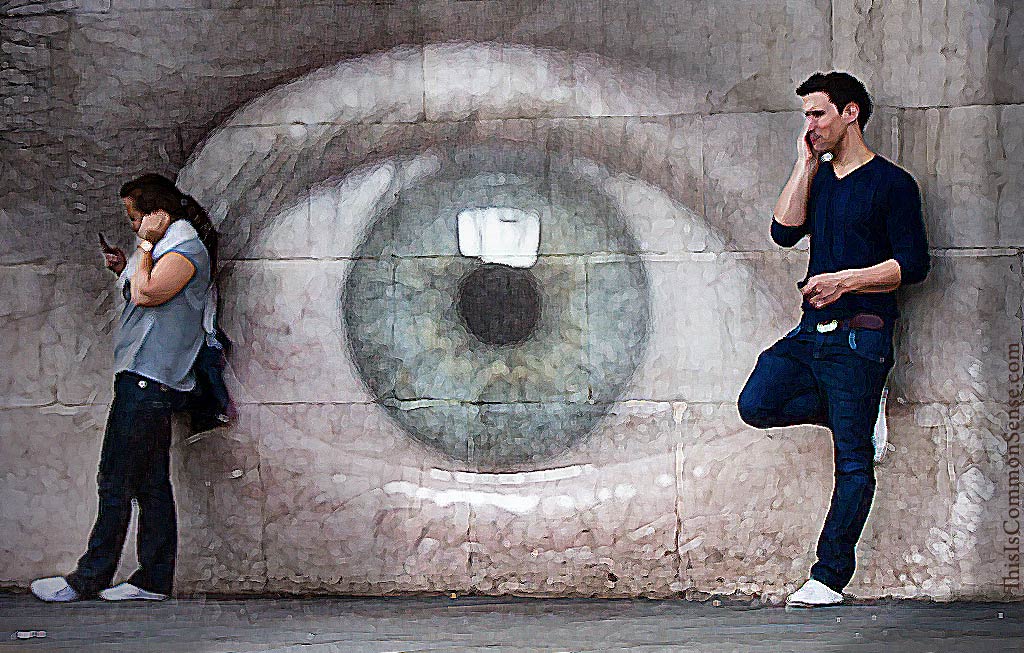
Bothersome Big Brotherish attacks on our privacy get their biggest boosts from governments. 

This is Common Sense. I’m Paul Jacob.


surveillance, metadata, Snowden, Edward Snowden

See all recent commentary
(simplified and organized)
See recent popular posts
Categories
Fourth Amendment rights national politics & policies The Draft

Rich Kids for Ransom

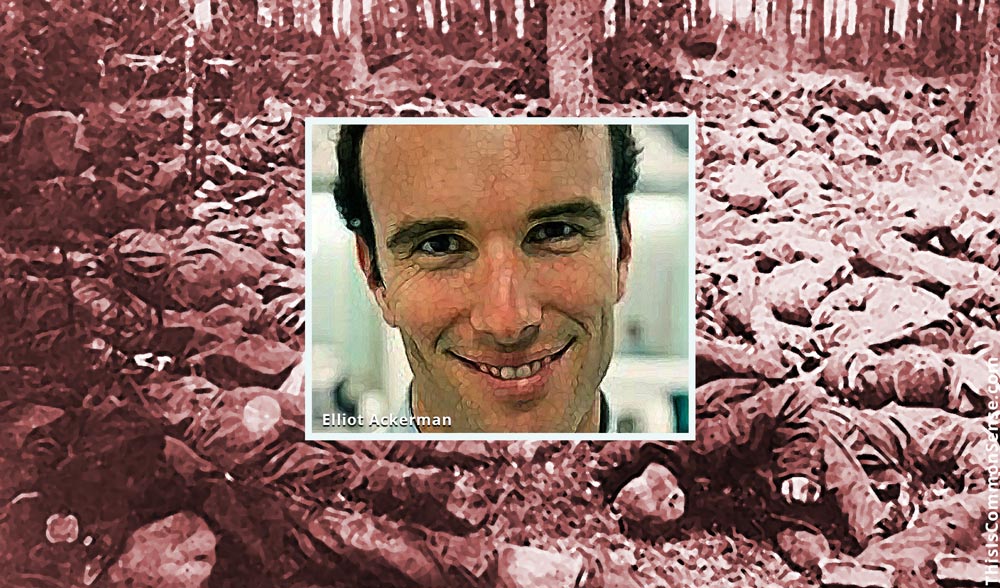
Elliot Ackerman wants peace so badly that he is willing to conscript our sons and daughters into the military in hopes of achieving it. 

“From Somalia to Syria, American forces are engaged in combat,” the author and decorated Marine veteran writes in Time. “With recent military posturing against Iran, against North Korea, it is also easy to imagine our country sleepwalking into another major theater war.”

Mr. Ackerman is not arguing the draft would help in current or future combat operations, or appreciably improve the military. In answer to the obvious question, “Why would you degrade the finest fighting machine the world has ever known?” he replies, “[W]e must move the issues of war and peace from the periphery of our national discourse to its center.”

How? 

Ackerman proposes a “reverse-​engineered draft.” 

His idea is to call up 65,000 young men and women by lottery for two-​year terms of servitude. This would represent roughly 5 percent of the armed forces. “And no one could skip this draft,” he claims … though obviously not everyone sent a “Greetings” letter will be physically able to serve. 

Lastly, he insists that “the only ones eligible” would be “those whose families fall into the top income tax bracket.”

In short, conscript the rich kids!

Of which Ackerman was one.*

Maybe his stance of theatrical class self-​sacrifice distracted him from his proposal’s blatant violation of the 14th Amendment’s equal protection clause. 

All this to stir up more angst from allegedly influential high-​income earners by turning their children into political hostages.

Doesn’t make Common Sense. I’m Paul Jacob.


* In the 1990s, I served with Peter Ackerman, Elliot’s father, on the board of directors of U.S. Term Limits.

PDF for printing

Elliot Ackerman, conscription, war, slavery, soldiers,

See all recent commentary
(simplified and organized)
See recent popular posts

Categories
Fourth Amendment rights initiative, referendum, and recall

Big Brother or Barney Fife?

Alaska, Washington, Oregon, Montana, Missouri, Oklahoma, Louisiana, New Hampshire — these are the states that have shouted a big NO to the Federal Bureau of Investigation’s citizen scanning agenda and its database of 640 million faces. 

“As the FBI amasses hundreds of millions of photos for its facial recognition program (with little in the way of safeguards),” asks J. D. Tuccille in Reason, “is it also going to force us to bare our faces for cameras as we move through an increasingly surveilled country?”

Tuccille suggests wearing hats big enough to cover our faces from intrusive cameras. 

Most states do not prohibit surveilling people en masse or at random. And though Kimberly J. Del Greco, deputy assistant director of the FBI’s Criminal Justice Information Services Division, assures us of the operation’s above-​board character — “there have been no findings of non-​compliance, and no observations of unauthorized requests” — the possibilities of abuse are precedented … by past government surveillance.

So, is it any solace that it has so far proved wildly inaccurate? 

Sure, the aforementioned Del Greco claims the FBI’s algorithm is 99 percent accurate. But another study found one system in place with a sorry 98 percent inaccuracy rate. “It’s a creepy police state as administered by Barney Fife,” writes Tuccille. And while that is “pretty damned funny,” it would be not even a little bit funny if “you’re arrested based on a bad match.”

Constraining governments to forswear such practices on the streets, malls and public places of America is surely a good candidate for citizen use of initiative and referendum rights, where available — in states and cities around the U.S.

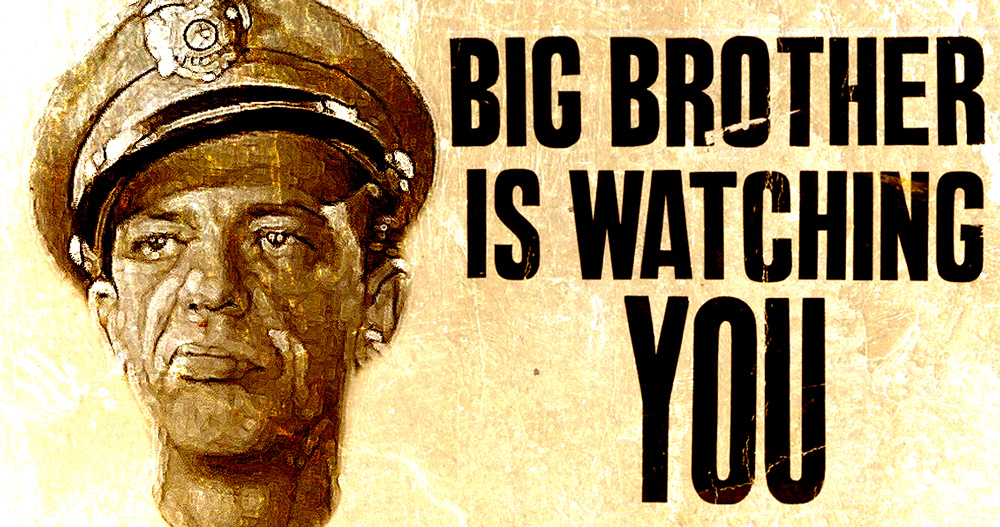
For these are not supposed to be the United States of Big Brother.

This is Common Sense. I’m Paul Jacob.


PDF for printing

big brother, Barnie Fife, surveillance, face recognition,

See all recent commentary
(simplified and organized)
See recent popular posts

Categories
Fourth Amendment rights general freedom national politics & policies Popular too much government

Snowden Won?

“The phone records program” that Edward Snowden risked life, limb and freedom to expose “had never thwarted a terrorist attack,” the New York Times informs in a somewhat startling bit of reportage published on Monday.

But that isn’t the startling part. 

The National Security Administration’s unauthorized metadata phone-​records collection program was a wish-​list snoop system snuck into practice under cover of the Patriot Act. After the Snowden revelation, Congress halted it, replacing it with a similar operation in 2015, via the U.S.A. Freedom Act. But we have long known that U.S. spies could do most of what they “need” without pre- or post-​Snowden versions.

What is startling in the Times article, “Disputed N.S.A. Phone Program Is Shut Down, Aide Says,” is there in the title: the federal government’s top spy agency has allegedly not used the program in its Freedom Act version in months, has even closed it.

And the Freedom Act, up for renewal, may just be allowed to die a quiet death.

Nick Gillespie, at Reason, cautions that “the possible end of the USA Freedom Act doesn’t mean the federal government doesn’t have access to all sorts of tools needed to secretly snoop on you, or that your personal data isn’t being collected in any number of ways you have little control over.” And he cites a recent Reason piece on how Patriot Act survellaince powers have been used to bust up a prostitution ring.

Which shows how terrorism is not the only government target. 

And why giving government vast surveillance powers could be used for anything.

Not to mention that niggly problem of abridging the Fourth Amendment rights that had so concerned Ed Snowden.

This is Common Sense. I’m Paul Jacob.


PDF for printing

surveillance, metadata, Snowden, Edward Snowden

See all recent commentary
(simplified and organized)
See recent popular posts