Categories
Accountability ballot access Common Sense First Amendment rights general freedom initiative, referendum, and recall

Really Protecting Our Rights

Incentives matter. Which is why Ohioans have much to celebrate
this week
.

Federal District Judge Michael Watson turned his previous temporary injunction against enforcement of Senate Bill 47 into a permanent injunction. That statue outlawed non-residents from helping Buckeye State residents by gathering petition signatures for an initiative or referendum.

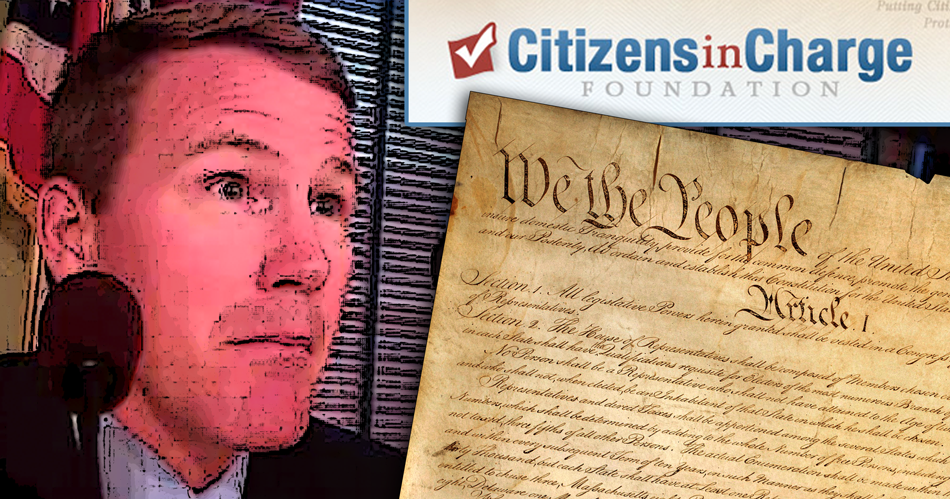
The case is Citizens in Charge v. Husted. Citizens in Charge — where I work — protects initiative rights. Jon Husted is the Ohio Secretary of State.

But Judge Watson went further, declaring Sec. Husted’s office liable for damages to one of our co-plaintiffs, Cincinnati for Pension Reform. The judge found that “a reasonable official would have understood that enforcement of the residency requirement would violate plaintiffs’ First Amendment right to engage in political speech.”

Public officials have what’s known as “qualified immunity,” which protects them from liability when acting in good faith. A spokesman for Husted offered a defense: they were acting “on the assumption that the law is constitutional.”

“Some qualified-immunity cases are difficult,” countered election-law expert Daniel Tokaji. “Not this one.”

Ohio’s residency law was ruled unconstitutional in 2008, after Ralph Nader’s presidential campaign sued. In 2009, the previous secretary of state officially acknowledged the law unenforceable regarding all petitions. Yet, seeking to block citizen petitions, legislators passed it again, and Husted was quick to enforce.

Maurice Thompson of the 1851 Center for Constitutional Law, our attorney, cheered the “deterrence” this decision provides.

“If public officials from the governor down through the police know that they will be liable for enforcing an unconstitutional law,” he explained, “they are far more likely to take Ohioans’ constitutional rights seriously.”

This is Common Sense. I’m Paul Jacob.


Printable PDF

Categories
First Amendment rights Thought

Niels Bohr

An expert is a man who has made all the mistakes which can be made, in a narrow field.

Categories
First Amendment rights general freedom Second Amendment rights

Wanted: Armed Satirists

I have a suggestion. Bear arms.

Commenting on the terrorist attack on Charlie Hebdo, a Reason.com reader points to a profile of Henry Jarvis Raymond (1820-1869) at the website of Green-Wood cemetery.

At the moment, the most urgently relevant detail of Green-Wood’s profile is not Raymond’s co-founding of The New York Times, his politics or his friendship with Abraham Lincoln, but how he defended his paper against threat of assault.

“During the ‘high tide’ of the Confederacy . . . Raymond fought to rally public opinion in favor of the Union. When draft rioting mobs approached the offices of The New York Times in July 1863, Henry Raymond held them off with three Gatling guns he had obtained from the army.”

Charlie Hebdo has been attacked by Islamo-terrorists before. In 2011, its Paris office was badly damaged by a firebomb unleashed in reply to a “Charia Hebdo” issue of the satirical magazine.

At least since that attack, then, the risk to Charlie Hebdo staff for ridiculing Islam, Islamism and/or Muhammad* has not been merely theoretical. I applaud the fact that they have fearlessly persisted in their satiric mission despite what happened — and are fearlessly persisting now despite a much steeper cost.

But if you’re in that situation, please don’t just brave the odds. Even the odds. Ensure that personnel are well-trained in the use of firearms, and that these weapons are easily accessible at all times.

And if you’re a government, make bearing arms easy.

This is Common Sense. I’m Paul Jacob.

* It may be worthwhile pointing out — as many have — that the satirists were not narrowly ridiculing one culture, that of Muslims; they have been and are across-the-board satirists, mocking politicians, clerics and partisans of most (if not all) stripes. Further, though widely considered a left-wing magazine, its editorial policy has never fallen into the lefty rut of blaming only the West and bending backward to defend foreign criminals and tyrants.

Categories
First Amendment rights

Shut Up, the City Council Explained

South Pittsburg council members are tired of criticism.

So they’ve outlawed it.

Officials in the “tidiest town in Tennessee” say that the negativity hampers their work.

According to Ryan Lewis’s report in Times Free Press, the policy, passed in December, forbids city employees, contractors, vendors and “anyone associated with the town in an official capacity who uses social networks” from publishing criticism “about the city, its employees or other associates” on such networks.

Only one council member, Paul King, voted No. The new law is “telling me what I can say at night. I call that freedom of speech. I can’t understand that.”

Jane DawkinsCity officials like Mayor Jane Dawkins (pictured) seem to conflate criticism as such, including merely untrue criticism, with “out-and-out lies,” and to regard censoring all criticism as an okay means of preventing alleged lies. But their blanket action goes way beyond any reasonable resort to defamation laws, which require more than mere putative falsehood, let alone putative negativity, to prove an actionable civil wrong.

Even if affected parties were assenting explicitly to the new policy, no agreement to forfeit one’s basic rights — whether freedom of speech or association, trial by jury, or any other — is properly enforceable.

The proper function of government is to protect these rights.

Not to violate them — even if officials are terribly annoyed by their exercise.

Every South Pittsburg council member who voted for this edict should be tossed out of office in the next election. If not sooner.

This is Common Sense. I’m Paul Jacob.
Categories
First Amendment rights ideological culture

The Preposition Is “Of”

Freedom of speech is not the same as freedom from (disliked) speech. One contradicts the other.

Not that legal strictures against “offensive” speech would be consistently enforced even if the First Amendment were formally rescinded. In practice, whoever had the most political pull would be issuing the shut-up edicts. Although victims might well be offended by the uttering of those edicts, censors would be undeterred by the contradiction.

These thoughts are occasioned by Greg Lukianoff’s new book Freedom from Speech, and the review of same by Allen Mendenhall at Liberty. Lukianoff heads the Foundation for Individual Rights in Education (FIRE), which fights the good fight for civil rights on campus. His book, says Mendenhall, is “a vigorous and cogent refutation of the increasingly popular notion that people have a right not to be offended.”

Lukianoff agrees that hypersensitivity to controversial speech in private institutions, too often punished by private sanctions that are arbitrary and unjust, does not per se violate anyone’s First Amendment rights. It nonetheless undermines the cultural tolerance needed for open discussion. “Only through the rigorous filtering mechanisms of longstanding deliberation and civil confrontation can good ideas be sorted from the bad. Only by maintaining disagreement at a rhetorical and discursive level can we facilitate tolerance and understanding and prevent the imposition of ideas by brute force.”

That is to say, cultural values and political values are not two isolated realms. One influences the other.

Who can disagree? I wouldn’t dare.

This is Common Sense. I’m Paul Jacob.
Categories
First Amendment rights

Will Brits Outlaw Speech?

Actually, the proposal is not to outlaw speech. Just some speech.

Which? “Extreme.”

That is, speech that conveys ideas too fundamentally orthogonal to authorized ideas, or that too brusquely nettles sanctioned sensibilities.

Who’s the censor? Some minor shire functionary? No, it is Theresa May, Home Secretary, who is proposing the “extremism disruption orders.”

Ms. May complains that at present, British officials “will only go after you if you are an extremist that directly supports violence.” (It’s not a bug, it’s a feature, Madam Home Secretary.) Under her plan, if you’re an “extremist” served with an EDO (Extremist Disruption Order), you must obtain an official go-ahead, in advance, for anything you wish to publish in any public forum.

Would pen names also be banned? Then what?

Even the most strenuous society-wide efforts to regulate speech don’t stop people from speaking. They still shop, give directions, exhort children, argue about soccer. The most severely repressive regimes permit plenty of public communication along approved channels on approved topics. People learn what not to say or think to skip a trip to the gulag for re-education. But the freedom to say anything you want if only the censors let you means that you have no government-respected right to say anything.

The British proposal may go nowhere. Like comparable assaults on either side of the Atlantic, if enacted it may be only partially or briefly effective. But all such efforts are baleful in their immediate consequences.

And they pave the way to worse.

As illustrated by May’s gall in advancing her “anti-extremist” program.

This is Common Sense. I’m Paul Jacob.
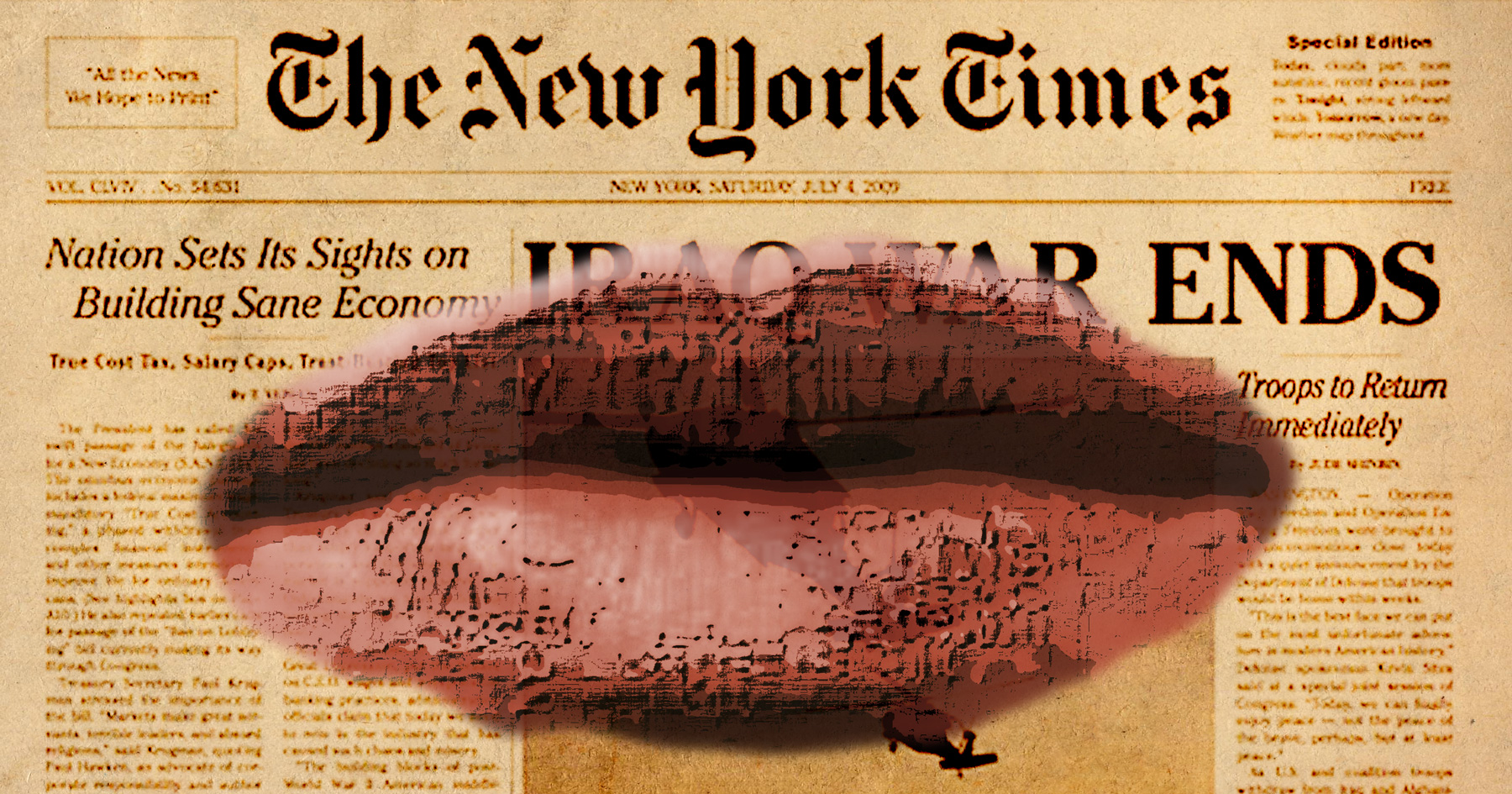


Photo courtesy of Stephen Mcleod, under Creative Commons License; altered.

Categories
First Amendment rights

The Groundhog Day Ban

Sometimes the only way to make your point is to keep repeating yourself. So it is when explaining why the law requires educational institutions that receive federal funding, like Ward Melville High School, to allow clubs such as the one formed by17-year-old student John Raney in 2013.

Students United in Faith meets to discuss faith and to plan charitable endeavors. Last year, Ward Melville officials sought to ban the club because of its religious character, but retreated after getting a letter from the Liberty Institute (dedicated to “restoring religious liberty in America”).

Near the beginning of this academic year, the school again moved to ban the club. Again, Liberty Institute intervened, threatening a lawsuit. Again, the school backed off.

If it were a private school, say, Atheist High, the school would well be within its rights to say “don’t come here unless you are willing to forgo any religious club.” Those hypothetical school officials wouldn’t be violating anyone’s rights.

But a public school funded by taxpayer dollars? Well, if it provides for extracurricular activities like clubs, it is acting as a part of the government to violate the right of freedom of association when it arbitrarily bans a club.

So what’s next? Either the administrators at Ward Melville High will keep trying the ban until they can get away with it; or, having finally learned their lesson, they’ll leave the group alone.

Thank goodness students and parents have the Liberty Institute in their corner.

This is Common Sense. I’m Paul Jacob.
Categories
First Amendment rights

Houston, You’re a Problem

Will this installment of “Common Sense” be subpoenaed by the City of Houston?

The city first subpoenaed the sermons of pastors who oppose a controversial equal-rights ordinance and who have “ties” to conservative activists suing the city. When that raised howls of protest, the city, in its infinite wisdom, issued new subpoenas for “speeches” by these pastors.

The difference between sermons and speeches? None.

PDFThe Houston Equal Rights Ordinance expands what counts as illegal discrimination in the workplace to include any based on sexual orientation or “gender identity or pregnancy.” The ordinance seeks to eradicate the “diminution of dignity, respect and status” that it declares must result from any unequal treatment — regardless of the reason — related to any of 15 or so protected characteristics. The vagueness and catch-all character of this further workplace regimentation would doubtless spawn new lawsuits by dignity-diminished employees eager to interpret motives in the most lawsuit-conducive light.

My point, though, is not about governmental bullying of employers and violation of their rights, but governmental bullying of critics of government policy and violation of their right to speak freely. Speech that vexes you is not thereby properly subject to legal action. Indeed, political speech is precisely the kind of feather-ruffling communication that the First Amendment was designed to protect.

Nobody would bother trying to curb the flow of sermons (or speeches) about the weather.

Houston needs to be sued again — for issuing all of these subpoenas.

This is Common Sense. I’m Paul Jacob.

Categories
First Amendment rights incumbents

Congress Got Your Tongue?

Yesterday’s somber thirteenth anniversary of the 9/11 terrorist attacks was marred by a brand new and savage act of violence against the very essence of America: the First Amendment.

Who orchestrated the attack? Responsibility was not claimed by ISIL or ISIS . . . or North Korea’s Kim Jong-un . . . or even Dennis Rodman.

The culprits? A majority of the United States Senate.

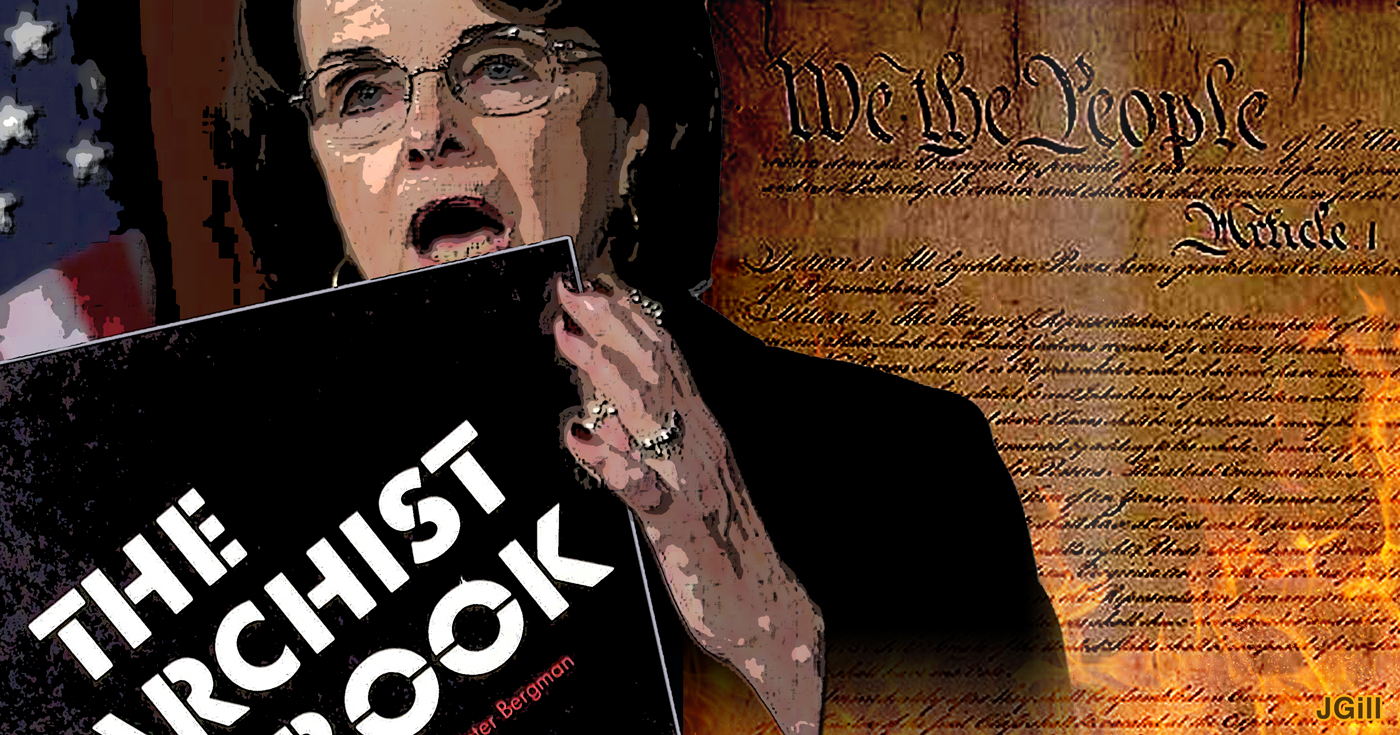
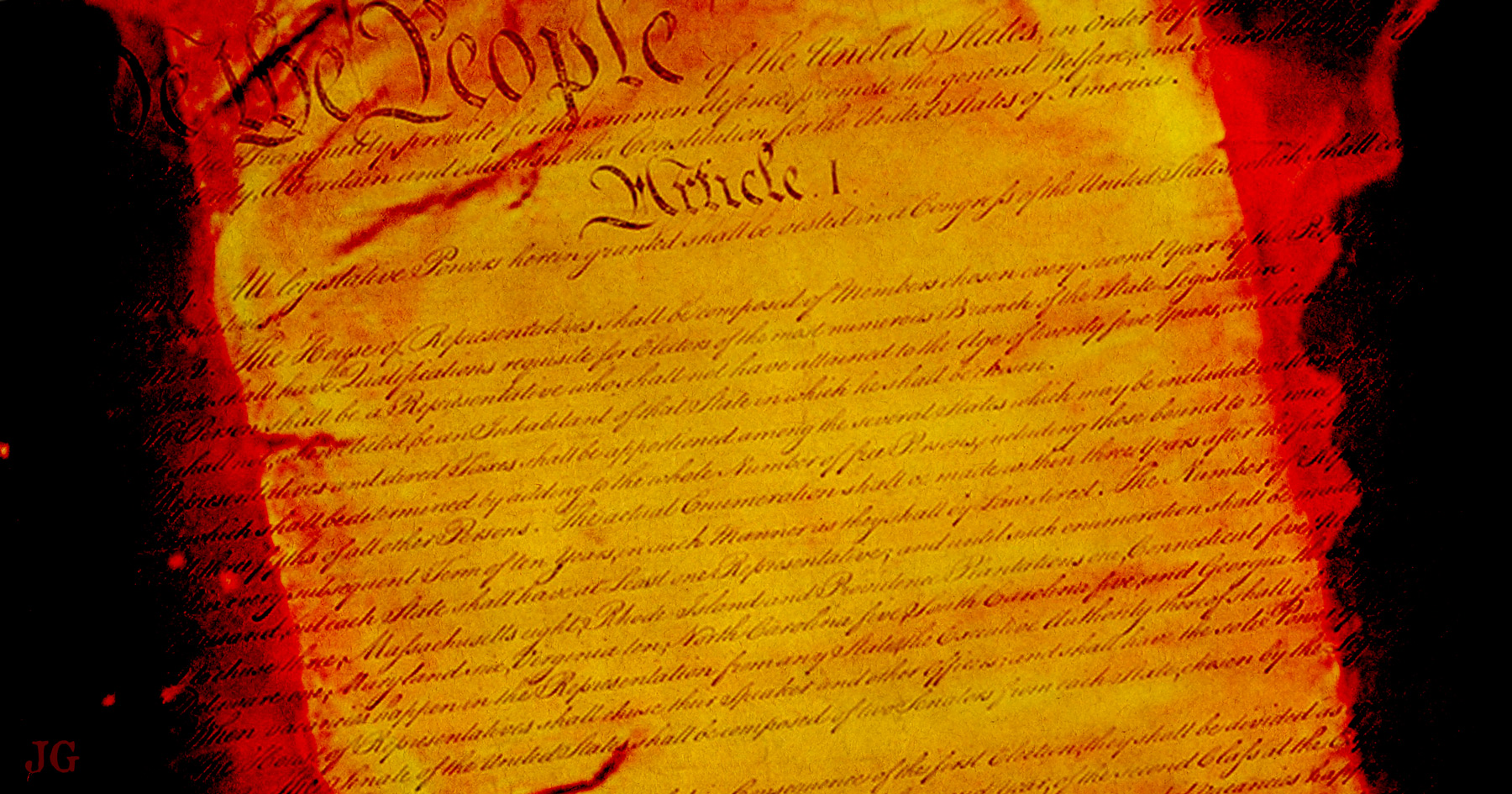
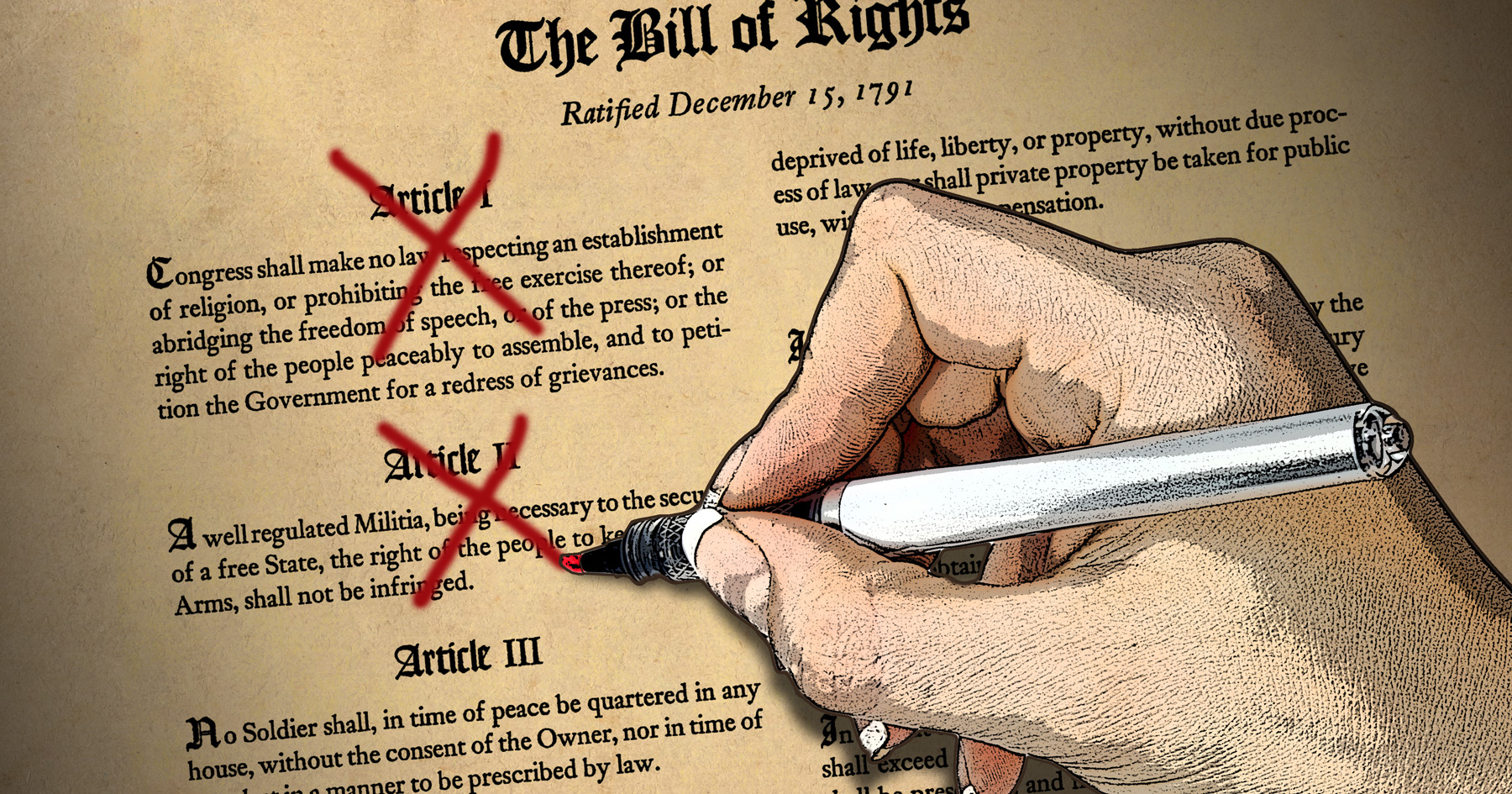
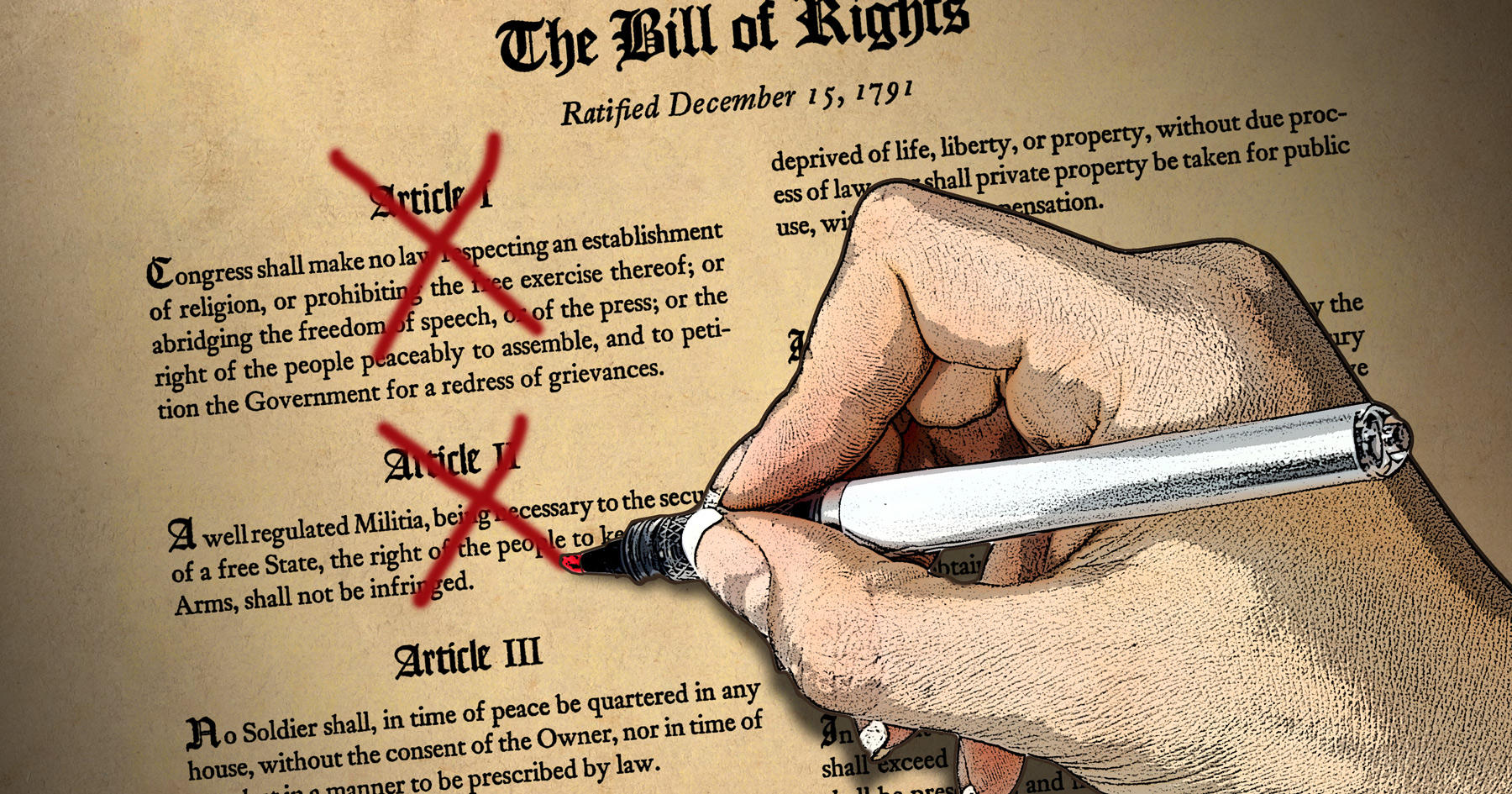
Fifty-four Democrats voted to scratch out the words “freedom of speech” from the First Amendment to be replaced by giving Congress new power to regulate the spending, and thereby the speech, in their own re-election campaigns.

Conflict of interest, s’il vous plaît?

The assault was only thwarted because a simple majority falls short of the two-thirds required to send the constitutional amendment to the House.

Dubbed the “Democracy for All Amendment,” supporters and their many cheerleaders in the media pretended Senate Joint Resolution 19 would overturn the Supreme Court’s Citizens United decision and get big money out of politics. Certainly an amendment could do that, explicitly, but this one would have done no such thing.

Instead, SJR 19 would have empowered our despised Congress to regulate as it pleased, with such sweeping power that the amendment’s authors felt the need to reassure supporters (such as the New York Times) by stating expressly in the amendment that, “Nothing in this article shall be construed to grant Congress or the States the power to abridge the freedom of the press.”

Let’s hope that, for the 54 Senators who voted to repeal freedom of speech, this goes down as a suicide attack . . . politically.

This is Common Sense. I’m Paul Jacob.

Categories
First Amendment rights general freedom ideological culture

Registering Dissent in Russia

Russian politics — does it consist in anything but the progressive unraveling of what modest liberalization of civic life the Russians benefited after the crackup of the Soviet Union?

The latest assault on liberty? The government targeting of Russian bloggers. The most popular ones — those with 3,000 or more daily readers — must now register with the government or risk being shut down. As Bloomberg’s Ilya Khrennikov puts it, “Russian President Vladimir Putin is taking names. Potentially thousands.”

The registrants must supply real names, real addresses.

Mother Russia says it’s doing this to combat inaccurate or defamatory information — i.e., opinions it dislikes; i.e., any too critical of the government. Putin already has authority to shut down “extremist” web pages sans judicial oversight. The new law tightens the noose.

It seems there’s little we can do about this in the West except express our sympathy for Russians fighting the commissars.

Well, one other thing, at least; and not so little. Western tech firms can refrain from abetting such repression the way Yahoo did when, several years ago, it turned over user info on Chinese dissidents Wang Xiaoning and Shi Tao to the Chinese government and thus enabled their imprisonment. Facebook, Google+ and other hosts of Russian-language blogs can flatly reject demands to censor or delete these blogs — or to supply the Russian government with identifying info on the authors.

Obviously, predictions of the end of history have indeed proven premature. We’re not all liberal democrats now.

This is Common Sense. I’m Paul Jacob.