Categories
Accountability folly free trade & free markets moral hazard porkbarrel politics too much government

Crony Corn

The presidential campaign officially begins in Iowa. The Hawkeye State is also the nation’s corn-growing champion. Each year, Iowans sell 47 percent of that crop to produce ethanol, which accounts for a not-insignificant 8 percent of the state’s gross product.

Ethanol has friends in Washington, too. Congressional wizards have mandated that the gasoline pumped into cars throughout the land be diluted with ethanol — talk about a market guarantee!

At National Review, Jeremy Carl explains that “energy-policy experts of all political stripes can agree . . . mandates and subsidies to promote the use of corn ethanol (a policy first implemented by Jimmy Carter) are wasteful boondoggles that harm our environment and food supply while imposing billions of dollars of hidden costs on consumers. However, most energy-policy experts are not running for president in the Iowa caucuses.”

In 2008, both Sen. Hillary Clinton and Sen. John McCain flip-flopped to support the ethanol subsidies they had previously opposed.

But, this year, Sen. Ted Cruz and Sen. Rand Paul haven’t pandered along.

When Cruz rose to first place in the polls, Gov. Terry Branstad attacked, arguing, “It would be a big mistake for Iowa to support [Cruz]” because “his anti-renewable fuel stand . . . will cost us jobs, and will further reduce farm income . . .”

Yesterday, Fox News Sunday host Chris Wallace asked Cruz, “Why should [Iowa] voters side with you over the six-term governor of this state?”

“I think there should be no mandates and no subsidies whatsoever,” Cruz replied.

In today’s Iowa caucus, can Cruz overcome the forces of crony corn?

This is Common Sense. I’m Paul Jacob.


Printable PDF

pig, port, corn, ethanol, subsidies, gas, fuel, Common Sense, Paul Jacob


Categories
crime and punishment folly general freedom ideological culture meme property rights too much government

Human Interest Story

“Local Moralist Doing His Part to End Income Inequality”


Click below for high resolution version of this image:

Income inequality, newspaper clipping, humor, satire, social justice, socialism, Common Sense, meme, illustration, Jim Gill, Paul Jacob


Mugger photo by Flikr user cometstarmoon


Categories
folly free trade & free markets meme moral hazard national politics & policies too much government

Why government is (almost) never the solution. . .

When you systematically reward failure, incompetence and irresponsibility…what results should you expect?

Bank Bailout

QE – Toxic Asset Government Purchases

Moral Hazard


Click below to get a high resolution version of this image:

big government, solutions, toxic assets, bank bailout, meme, illustration, Jim Gill, Paul Jacob, Common Sense


Categories
folly free trade & free markets ideological culture meme moral hazard nannyism responsibility too much government

Flint Water Crisis

Government failure checklist. . .

Reference:

The Government Poisoned Flint’s Water—
So Stop Blaming Everyone Else

Flint’s water crisis isn’t a failure of austerity. It’s a failure of government.


Click below for high resolution version of this image.

Flint, water, crisis, poison, government, free market, austerity, failure, Common Sense, Meme, James Gill, Paul Jacob


Categories
Accountability folly general freedom government transparency moral hazard too much government

Buying Quality of Life

People who spend other people’s money in Indiana are applauding their amazing ability to write big checks and hand them out.

The Regional Cities initiative — enacted by the Republican legislature and heralded by the Republican governor — just awarded grants of $42 million of taxpayer dough to three of seven county consortia in the Hoosier State.

“This is big. This is a big deal in Indiana,” Gov. Mike Pence told reporters, “and I believe it’s part of a third century strategy for growth that will pay dividends for generations.”

Really? Government redistribution will fuel “growth” . . . and “pay dividends”?

The more-spending “strategy” is “geared toward quality of life projects ranging from economic development and job creation, to improved recreational and arts opportunities,” according to WNDU-TV in South Bend, adding that, “The Regional Cities Initiative is aimed at the younger generation and giving those people more reasons to love — than leave the state.”

Love it or leave it, eh?

“The public has been told that we have some sort of $42-million jackpot to spend on wonderful things,” explains Fort Wayne City Councilman Jason Arp in his Indiana Policy Review. “What hasn’t been made clear is that with the award comes [an] obligation not only to match that $42 million with taxpayer and private money but a separate eight-year commitment to a portfolio of $1.4 billion in projects. . . .”

In other words, it’s a classic government-spends-our-money-better-than-we-can program.

The Regional Development Authority will, in the end, “have discouraged actual entrepreneurship, innovation and free enterprise,” Arp explains. In their place? A “sort of unaccountable directorate.”

Growing ever bigger to better spend our hard-earned dough.

This is Common Sense. I’m Paul Jacob.


Printable PDF

Indiana, pork, Mike Pence, Regional Cities initiative, Common Sense, illustration


Categories
Accountability folly free trade & free markets general freedom ideological culture moral hazard national politics & policies political challengers responsibility tax policy too much government

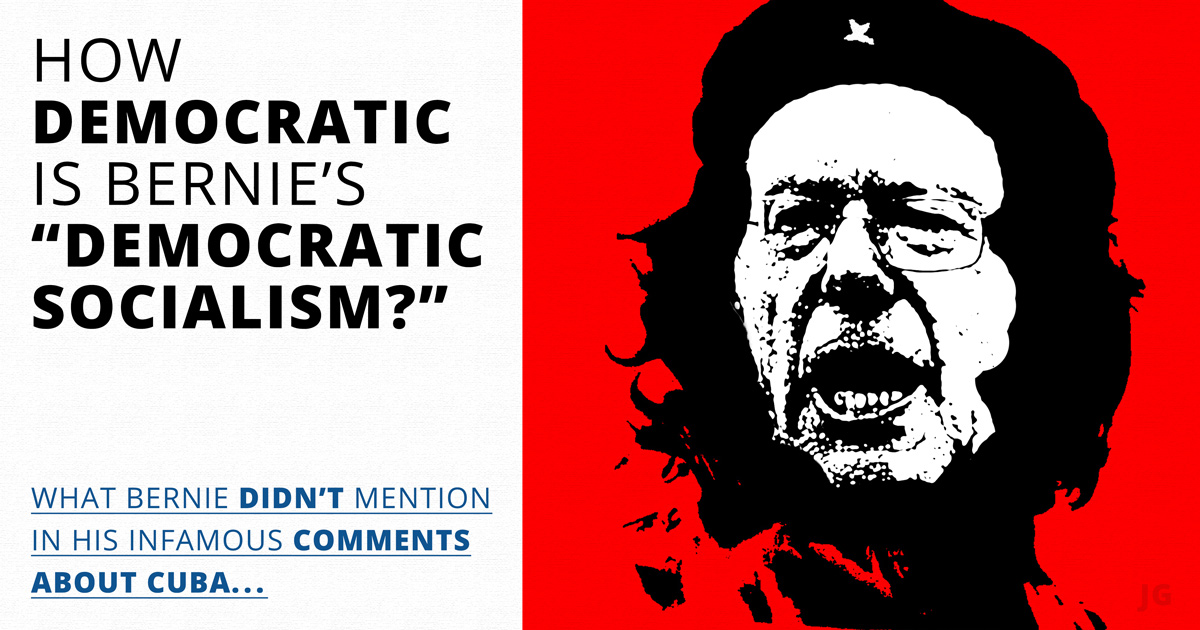
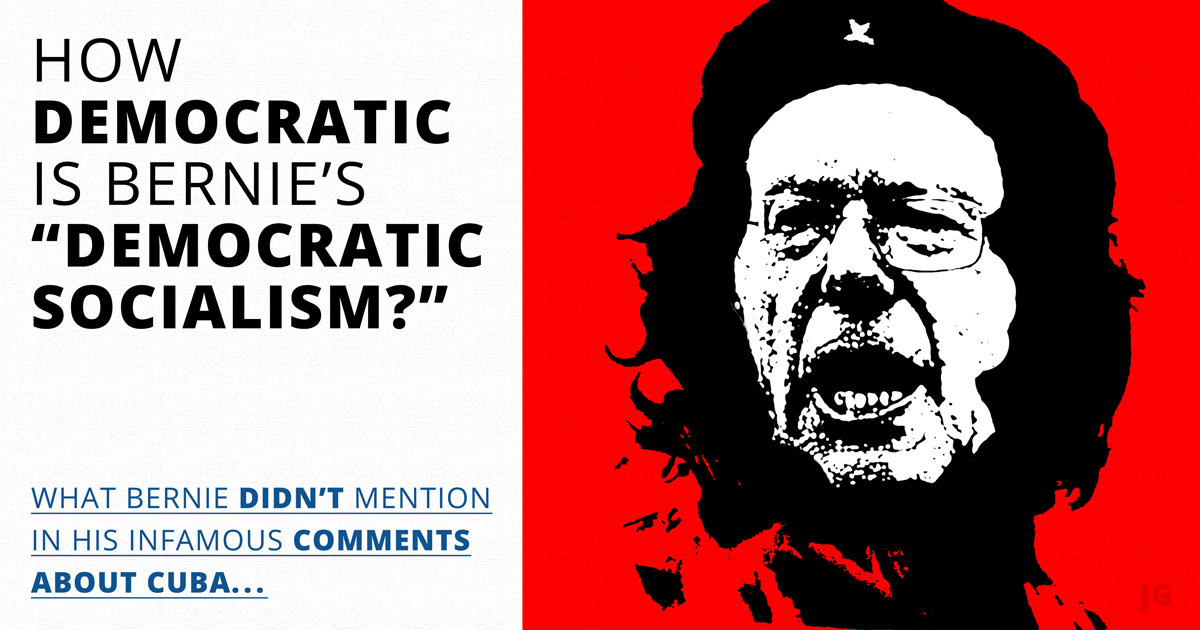
Berating Bernie?

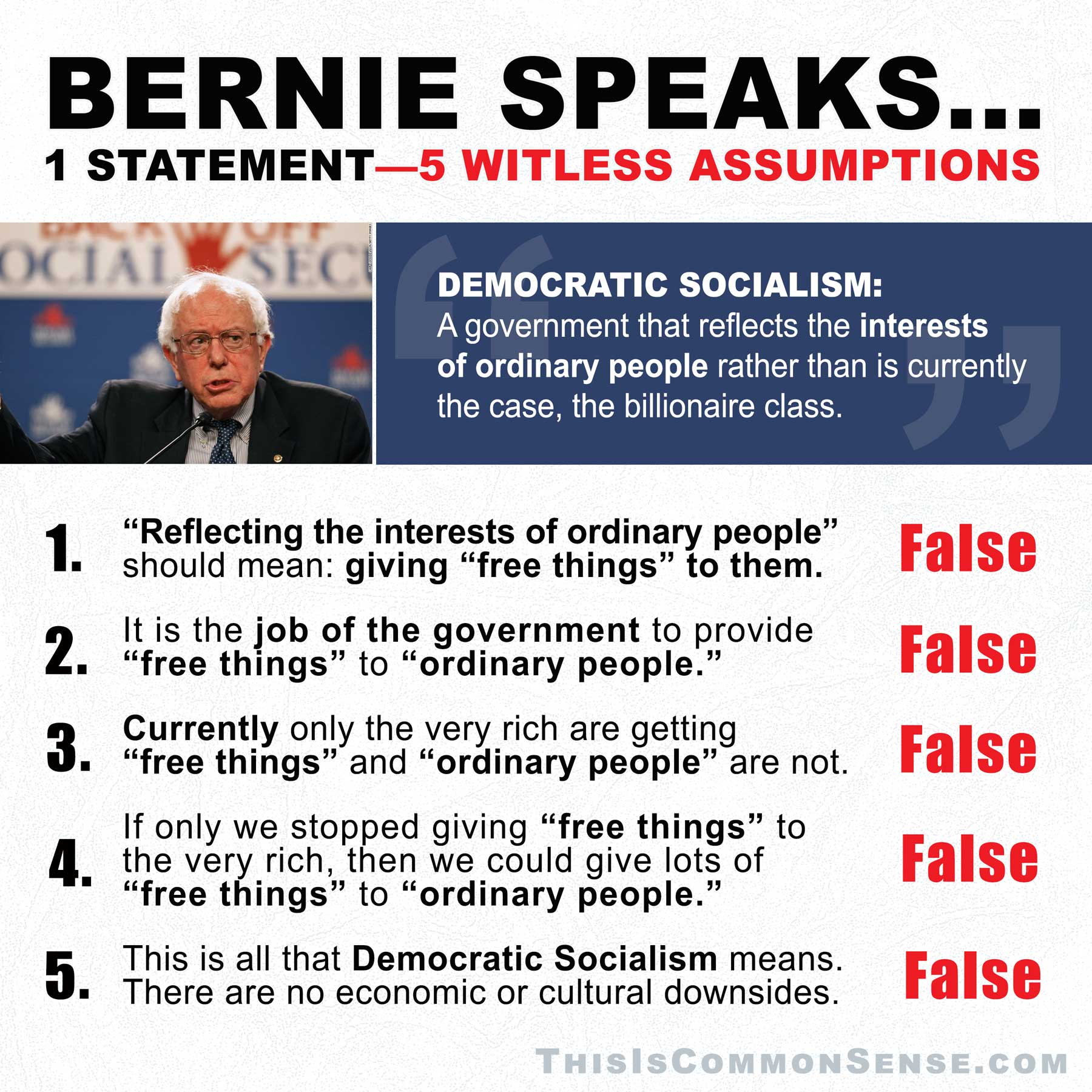
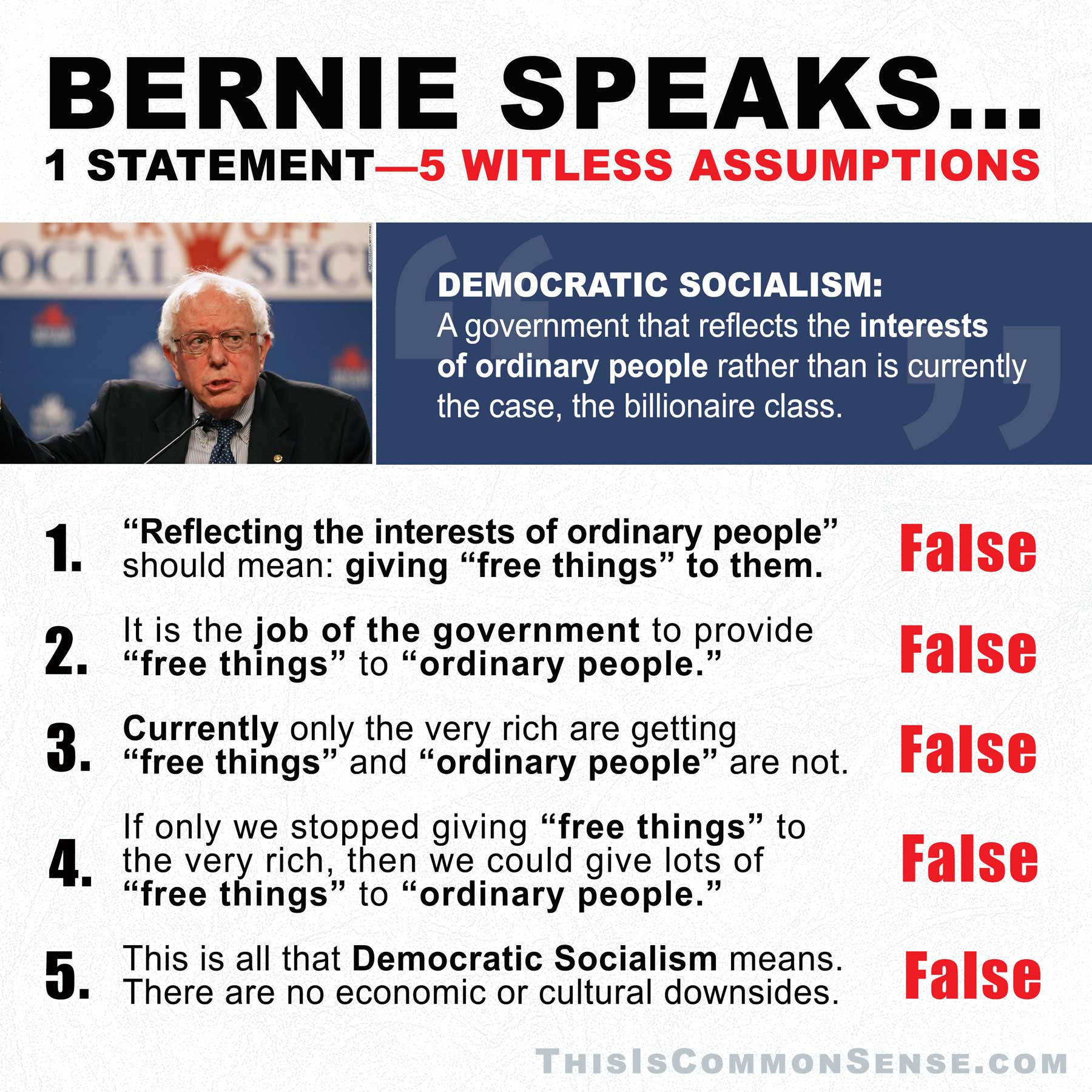
Bernie Sanders has risen in the polls. He may even beat Hillary Clinton in the first caucus and primary contests for the Democratic presidential nomination.

A cause for celebration! Witnessing a huge hunk of Americans accept Mrs. Clinton, the consummate and corrupt insider, is too disheartening.

Bernie Sanders, for all his faults, is at least not an insider like Hillary.

And even when he’s obviously wrong, he’s a breath of fresh atmosphere. Take his recent call for turning the credit ratings institutions into non-profits, or into government-run bureaus. It’s good to hear someone on the left blame something other than the partial repeal of Glass-Steagall as the cause of the Crash of 2008, and (thus?) of the current “Great Recession.” Glass-Steagall was utterly irrelevant to the institutions that were hit hardest in 2008’s collapse; it has, nevertheless, served as leftists’ idée fixe for years now. Embarrassing.

The ratings agencies, on the other hand, did play a part in the crash.

Still, remember: their prominence and importance (and very existence) in financial sectors rests entirely upon one provision of FDR’s New Deal.

More importantly, Bernie’s favored solution — government bureaus — is no solution at all. Europe’s ratings system failed in 2008, too, as Mark A. Calabria has noted, and “it was the international financial regulators, not the rating agencies, who decided that Greek debt was ‘risk-free.’”

Earth to Bernie: government regulatory failure is normal.

Calabria agrees that we need to have a political conversation about the ratings agencies, but insists it be “based on facts,” not ideology.

I’m all for the facts, but ideologies are inevitable. And ideologies promoting Big Government inevitably fail.

This is Common Sense. I’m Paul Jacob.


Printable PDF

Bernie Sanders, Glass Steagall, ratings, agency, Common Sense, illustration, Paul Jacob, James Gill


Categories
crime and punishment general freedom moral hazard national politics & policies The Draft too much government U.S. Constitution

Junk the Law

Would your favorite presidential candidate force women to register for the military draft?

A federal court case, National Coalition for Men v. Selective Service System, is bouncing around the Ninth Circuit. It challenges the male-only draft registration program as discriminatory against men.

Thirty-five years ago, when yours truly was fighting the draft, the U.S. Supreme Court upheld a male-only program because women were then barred from combat. Now the All-Volunteer Force has opened all military fields to women, including combat roles. It follows that the federal courts will likely strike down male-only registration.

What will Congress do? What will the next commander-in-chief advocate? Allow the program to end — or mandate that both young men and young women register?

Hillary Clinton answered this question in 2008, during her first run for the presidency: yes, register women for the military draft.

What about the other presidential hopefuls?

Back in 1980, then-candidate Ronald Reagan pledged to end it, saying that conscription (and registration for it) “destroys the very values our society is committed to defending.”

Sadly, President Reagan continued draft registration, prosecuting me and others.

“The question is nothing less, than whether the most essential rights of personal liberty shall be surrendered,” the great Daniel Webster railed against conscription, “and despotism embraced in its worst form.”

Men and women have an equal right to freedom — not conscription. Free people will always volunteer to defend their country.

This is Common Sense. I’m Paul Jacob.


Printable PDF

conscription, draft, selective service, Common Sense, Paul Jacob


Categories
Accountability folly ideological culture moral hazard nannyism national politics & policies too much government

Bernie’s Bogus “Medicare for All”

Bernie Sanders promises universal health care, but, up until the other day, just waved his hands in the air, without specifics. Now he has a plan.

Sort of.

Ezra Klein, writing at Vox, says Sanders’s “Medicare for All” is not a plan at all. It’s a “gesture towards a future plan.”

But that doesn’t mean that the thing isn’t “well sold.”

After praising the Obamacare/Affordable Health Care Act for giving “health insurance” to more than 17 million people, the preamble of Sanders’s proposal made its most predictable statement: “Twenty-nine million Americans today still do not have health insurance and millions more are underinsured and cannot afford the high copayments and deductibles charged by private health insurance companies that put profits before people.”

Forget that deductibles are integral to the very idea of insurance. Forget that profits are absolutely necessary for the success of an industry. Forget that profits come from serving people.

Remember, instead, the leftist clichés.

Sanders’s plan, such as it is, is a lie — or, in Klein’s phrasing, “has nothing to do with Medicare.” Sanders aims to get rid of deductibles and copays, on which Medicare depends. It’s what makes Medicare distinct from, say, socialized medicine.

Insurance covers individually unforeseeable but actuarially manageable risks. Socialized medicine gets rid of the idea of “payment for service” on every level — and thus the very idea of insurance — and turns the whole thing over into a tax-and-spend program, i.e., what Sanders really wants.

That won’t be cheap, as Megan McArdle demonstrated some time back during the Vermont “single payer” kerfuffle.

The only option for increasing value while lowering prices? Go the opposite direction from socialism.

This is Common Sense. I’m Paul Jacob.


Printable PDF

Medicare for All, Bernie Sanders, healthcare, analysis, bogus, Common Sense, illustration


Categories
general freedom ideological culture national politics & policies too much government

The Great Ideological Divide?

When I was a kid, both Democrats and Republicans sported “conservative” and “liberal” wings as well as “moderate” leaders and representatives.

Now, conservatives have pretty much corralled themselves into the GOP, and liberals into the Democratic Party.

Why? Birds of a feather?

Ezra Klein offers some interesting observations in “This is what makes Republicans and Democrats so different”:

  • “Democrats are motivated by specific policy deliverables while Republicans are motivated by broader philosophical principles”;
  • “Democrats rely on more interest groups than Republicans” do;
  • “Democrats prefer politicians who compromise, and Republicans prefer politicians who stick to their principles”;
  • “Policymaking has a liberal bias — even when Republicans do it.”

Klein also draws on research by political scientists Matthew Grossmann and David Hopkins, who in their paper, “Policymaking in Red and Blue,” conclude that “the Republican Party is dominated by ideologues who are committed to small-government principles, while Democrats represent a coalition of social groups seeking public policies that favor their particular interests.”

Interest groups demanding that their “particular interests” be addressed with more “deliverables” from government would certainly explain a strong Democratic Party bias in favor of more government. Klein seems to be saying that Democrats are led, as if by an invisible hand, in the socialistic direction.

But why does a Republican Party supposedly “dominated” by those with “small-government principles” also advance policies that grow big government? “New policies usually expand the scope of government responsibility, funding, or regulation,” Grossmann and Hopkins point out.

Perhaps Republican politicians are more influenced by their own position in government than by the views of their base voters.

This is Common Sense. I’m Paul Jacob.


Printable PDF

Ideology, left, right, conservative, liberal, big government, Common Sense, illustration


Categories
Accountability folly ideological culture nannyism national politics & policies too much government

Doom in Oil Boom?

Tragedy has hit the environmental movement: The price of oil is going down.

And may go down further.

While environmentalists quiver, science writer Ronald Bailey chortles. “Resource depletionists” — the prophets of “peak oil” — should, he says, hide their heads in shame! They’ve been so very, very wrong in the prophecy biz.

As oil descends towards $20 per barrel, we should ask ourselves: where’s the tragedy? Well, it will postpone the switch to non-fossil fuels. The need is far from obvious, and the incentive is to use energy in its cheapest, most efficient forms.

But if increased CO2 in the atmosphere is destabilizing the planet’s atmosphere and ecosystem, cheaper oil (and thus more burning of it) might lead to the much-ballyhooed tragedy for all.

Still, that’s a big “if” — the more we learn about the climate, the more doubtful the identified CO2 causation and attendant doom.

Besides, global warming catastrophism’s implicit message — the “need” for global political control over everybody and everything to “manage” climate changes — seems awfully convenient for those who just love intrusive government . . . on “principle.”

It echoes the Keynesian technocratic conceit in economics — that experts should manage the economy by fiscal methods (increasing debt) and monetary intervention (central bank interest rate manipulation and bad asset purchase). It’s pretty obvious that they shouldn’t, because they’ve demonstrated they can’t.

As prices for oil defy “peak oil” prophets’ predictions, it becomes obvious: the world works differently than dreamed up by the prophets of doom.

This is Common Sense. I’m Paul Jacob.


Printable PDF

Oil, cheap, energy, climate change, global warming, prices, illustration, Common Sense