Categories
crime and punishment general freedom too much government

Unfriending the Police?

Defund the police?

First, take a moment to celebrate those on the American Left who have finally — miraculously — stumbled onto something they actually want the government to spend less money on. 

Second, consider policing expert and Washington Post columnist Radley Balko’s amply backed-up contention that “the evidence of racial bias in our criminal justice system” is “overwhelming.” 

Nonetheless, Mr. Balko notes that “lots of white people are wrongly accused, arrested and convicted” and “treated unfairly, beaten and unjustifiably shot and killed by police officers. White people too are harmed by policies such as mandatory minimums, asset forfeiture, and abuse of police, prosecutorial and judicial power.”

Even if police violence is “more of a problem for African Americans,” posits David Bernstein at Reason, “it’s not solely a problem for African Americans. Eliminating racism, in short, would still leave the U.S. with far more deaths from police shootings than seems reasonable.”

This is not an argument to ignore racism, but in favor of making effective changes in policy and law.

Maybe the solution to our police violence problems is not defunding departments, in a vast unfriending campaign, but to let up on some of their burdens, require them to do less. De-task.

For starters? Defund the War on Drugs! 

Drug prohibition has been a criminal justice disaster — filling our jails with victimless criminals whose problem is drug addiction. In a myriad of ways, the drug war has spawned greater police corruption and introduced more intrusive and dangerous policing.

Let’s have a frank conversation about . . . making practical changes to our criminal justice system.

This is Common Sense. I’m Paul Jacob.


PDF for printing

See all recent commentary
(simplified and organized)
See recent popular posts
Categories
First Amendment rights national politics & policies too much government

A Modest Extrapolation

The big news from yesterday’s Supreme Court decisions (in June, they typically come in chunks) regards discrimination law, in which the court decided, 6-3, with Neil Gorsuch writing the majority opinion, that discrimination “against an employee for being gay or transgender violates the Civil Rights Act of 1964.” As covered at Reason it makes for fascinating reading.

Still, there are many problems here. The whole employment discrimination issue assumes that people have a right to be judged suitable for employment based only on strict consideration of job performance.

This is intrusive into private decision-making, and opens up hiring and firing to huge legal costs.

But a bigger issue lurks here.

It is now commonplace for employees to be fired under public pressure for merely having political opinions that have little or nothing to do with their jobs.

Anti-discrimination civil rights law was designed to curb this sort of thing — public pressure for reasons of antipathy and social mania — but only on a limited number of criteria, racism and sexism against protected groups being the areas carved out.

Since we have a First Amendment right to speak, mightn’t that right be applied via discrimination law to prohibit mob deplatforming or resulting loss of employment?

Sure, 1964’s Civil Rights Act limited the scope of its intervention into employment contracts and the “public accommodations” realm of commerce to the above-mentioned isms, on grounds of a long history of bigotry and invidious private discrimination. But right now, that sort of discrimination is primarily an ideological matter, not racial or sexual. 

Extending the scope of the First Amendment via an anti-discrimination rationale would seem a natural.

At least for those who favor consistent government intervention over freedom. 

This is Common Sense. I’m Paul Jacob.


PDF for printing

See all recent commentary
(simplified and organized)
See recent popular posts

Categories
nannyism national politics & policies too much government

Regs to the Chopping Block

Donald J. Trump started his presidency with a flurry of activity. One of the things he did was sign an executive order to reduce Americans’ regulatory load.

This move may have been the most important initiative the new president advanced. It led to an economic boom that was not all just smoke and mirrors and “stimulus.” Real factors were involved in the resulting progress.

Now, however, the economy is in tatters. Massive unemployment, rising real poverty. 

But this is not a normal depression. It was the result of the reaction to the coronavirus — largely by the states, but at the recommendation of Trump himself, as advised by Dr. Anthony Fauci. Trump now wants what increasing numbers of Americans want: a return to business and normal life. But “re-opening the economy,” as it is called, is not going quickly or smoothly.

On Tuesday Trump signed an executive order to give his Cabinet secretaries broad permission to cut regulations, “instructing federal agencies to use any and all authority to waive, suspend and eliminate unnecessary regulations that impede economic recovery.”

“And we want to leave it that way.” 

Which is the most promising part of this. 

“Mr. Trump has made nixing regulations,” explains John T. Bennett in The Independent, “especially ones put in place by the Obama administration, a top priority during his over three years in office.”

We could call the nixing of the lockdown orders themselves a “freeing up” of the economy. To help ease over all the damage, also “freeing up” business from regulatory kludge could not hurt.

This is Common Sense. I’m Paul Jacob.


PDF for printing

chopping block, regulations,

See all recent commentary
(simplified and organized)
See recent popular posts

Categories
crime and punishment general freedom too much government

Pocket Prohibition?

Should the FDA outlaw backpack pockets?

Trick question. 

Oh, you said “no”? 

Okay, not that tricky . . .

But a little tricky. The FDA doesn’t want to prohibit backpack pockets as such. Only backpack pockets that can hide vaping equipment, like an e-cigarette.

Such pockets could presumably also hold a pen, thermometer, stick of beef jerky, perhaps even a plastic straw or spindled dollar bill. The list of cacheable contraband is endless. But it’s the thoughtcrime that counts.

The FDA wants to deploy its power to regulate food and drugs to also bully makers of pockets and other things that facilitate peaceful actions of which FDA officials disapprove. For now the agency is sending stern letters to sellers of legal products. 

Tomorrow it may send SWAT teams.

“The FDA is especially disturbed by some of these new products being marketed to children and teens by promoting the ease with which they can be used to conceal product use,” frets Mitch Zeller, king of the FDA’s Center for Tobacco Products. (It’s not an emporium.)

Various products that could help a person vape furtively are on the FDA’s hit list. Many of these products never hurt a fly. Backpack pockets in particular are getting a bad rap. I’m a fan of backpack pockets and hope the production of every kind of backpack pocket will continue unabated.

So, regardless of any animus that certain functionaries may feel about the covert carrying of e-cigarettes, pencils, or swizzle sticks, let them leave backpack pockets alone.

This is Common Sense. I’m Paul Jacob.


PDF for printing

vape, backpack, authoritarianism, surveillance,

See all recent commentary
(simplified and organized)
See recent popular posts

Categories
too much government

Cure and Consequences

“As the nation enters a third month of economic devastation, the coronavirus is proving ruinous to state budgets,” the Associated Press reports, “forcing many governments to consider deep cuts to schools, universities, health care and other basic functions that would have been unthinkable just a few months ago.”

Notice the breezy attribution to the pandemic of the devastation caused by governments’ reactions to the pandemic.

Official tallies have it that COVID-19 has killed over 80,000 Americans. And it will kill more. But state government revenue is nose-diving “because government-ordered lockdowns have wiped out much of the economy and caused tax collections to evaporate.” 

Why make much of this fine distinction between the disease and the response?

Because it is easier to control our response than it is a disease.

The people we elect are supposed to understand such things. 

But, do they?

The fact that this is a political as opposed to medical predicament is clear: “Now state finances are in peril regardless of the actual number of infections.”

And note: a few states aren’t going to experience the problem nearly so badly: Arkansas, Iowa, Nebraska and the Dakotas. Why? These states have done pretty much what Sweden has done: avoided lockdown orders and treated the disease like a health problem and not a political opportunity to flex their “leader” complexes.

No matter how we reacted, the pandemic was going to be devastating. But generally cures shouldn’t be worse than the disease, and we should wonder whether our politicians’ lack of understanding here is indicative of a co-morbidity . . . of the “body politic.”

This is Common Sense. I’m Paul Jacob. 


PDF for printing

body politic, Covid, corona virus, epidemic, pandemic,

See all recent commentary
(simplified and organized)
See recent popular posts

Categories
national politics & policies too much government

The Rationale Has Ended

Early on, we feared the worst. Based in no small part on the extravagant predictions of serial alarmist/lockdown scofflaw Neil Ferguson, a British epidemiologist, the worry quickly became: our hospitals will be swamped!

To prevent that, governments around the world 

  1. instituted lockdown orders, shutting down most commerce and peaceable assembly, to “flatten the curve,” thereby postponing many incidents of coronavirus and giving hospitals a steadier workload over time; and
  2. set up emergency clinics and hospitals, to take on overflow.

In the U.S., the Army Corps of Engineers contracted with private companies to set up field hospitals. Given the alarmist talk of “exponential growth,” that sure seemed like a prudent use of $660 million.

Now?

Well, most never saw a patient.

Many field hospitals are being dismantled.

And so is the case for the lockdowns: the hospitals are generally not being swamped, which means that as summer approaches we can open things up and let herd immunity build up.

Indeed, we may already have reached that condition, according to Nic Lewis writing on Judith Curry’s Climate Etc. blog. 

At issue is the “Herd Immunity Threshold” (HIT). The disgraced Ferguson’s original HIT was over 50 percent, while Lewis argues that the actual HIT level “probably lies somewhere between . . . 7% and 24%,” suggesting that “total fatalities should be well under 0.1% of the population by the time herd immunity is achieved.” 

Why the lower HIT? 

More realistic models take into account human diversity — a point also made by economist Daniel B. Klein, who adds important truths like “[f]or most people COVID-19 is scarcely a disease at all!”

It turns out that being reasonable about this pandemic requires neither complete gloom and doom nor risky response.

This is Common Sense. I’m Paul Jacob.


PDF for printing

hospital, bed, pandemic, corona virus, Covid, lockdown,

See all recent commentary
(simplified and organized)
See recent popular posts
Categories
crime and punishment general freedom too much government

The Wisdom of Freedom

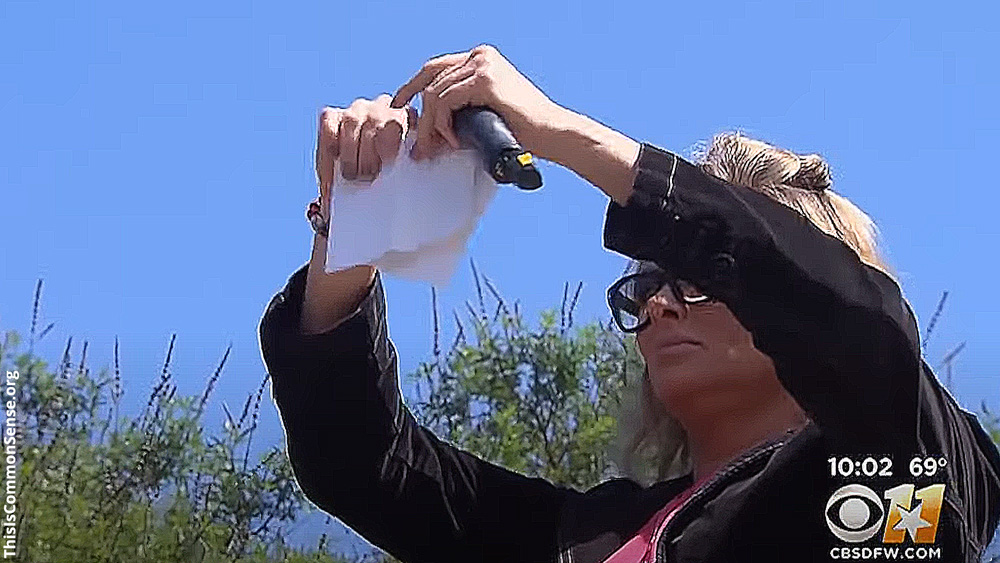
“Salon À la Mode owner Shelley Luther was sentenced to seven days in jail for criminal and civil contempt and a $7,000 fine,” the Dallas-Ft. Worth CBS affiliate reported Tuesday, “for defying Governor Greg Abbott’s stay-at-home rules.”

She dared to open her beauty salon . . . and tore up a county judge’s related and official-looking cease and desist order.

Another judge offered to spare her jail if she would confess that her “actions were selfish” and, the judge lectured, “putting your own interest ahead of those in the community in which you live.” Luther responded decisively: “Feeding my kids isn’t selfish.”

Calling for Luther’s “immediate release,” Attorney General Ken Paxton articulated smart policy: “The judge should not put people in jail like her who are just trying to make a living.”

That should be written in law — sans the “like her” part.

The agile Governor Abbott, the rule’s originator, ducked responsibility with “surely there are less restrictive means to achieving [public safety] than jailing a Texas mother.”

Then, governor, why the command

“I am modifying my executive orders,” Abbott declared yesterday, “to ensure confinement is not a punishment for violating an order.” 

The Lieutenant Governor paid her fine.

Shelley Luther was “free” — and on Fox News last night.

But have we learned anything? 

Why not provide the public with the best information available and allow people to make their own decisions? No orders. Businesspeople would be free to do what they think is best. At-risk folks would be free to be very careful. 

Obviously, governments can help. But best through persuasion, remembering they work for us

Free people.

This is Common Sense. I’m Paul Jacob.


Note: In The Wisdom of Crowds (2004), James Surowiecki posited that “a diverse collection of independently deciding individuals” can make complex decisions better than the experts. Exactly.

PDF for printing

See all recent commentary
(simplified and organized)
See recent popular posts
Categories
too much government

Unnatural Disaster

Just get rid of it.

The “it” is AB-5, the absurd new law attacking California freelancers. 

And those articulating the good riddance are the “151 Ph.D. Economists and Political Scientists in California” who have signed an open letter to California Governor Gavin Newsom and the state legislature.

The lawmakers who last year foisted the measure on Californians pretended that they were doing gig workers a big favor by making it impossible, in many cases, for companies to hire them for regular short-term jobs.

After the legislation passed, many independent contractors quickly lost work — lots of work. For example, Rev, which produces transcripts and captions, said goodbye to all of its freelancers based in California. Many other companies — reluctant to be prosecuted for the crime of engaging in voluntary economic relationships between consenting adults — also ended relationships with freelancers.

Apparently, the anti-gig lawmakers did not realize that losing one’s means of paying for food and rent is not that helpful. 

Tornadoes, hurricanes, and pandemics have a way of highlighting the importance of the economic and other institutions that make human survival and civilization possible. 

AB-5 is like a natural disaster in its effects . . . but not natural.

“By prohibiting the use of independent contractor drivers, health care professionals, and workers in other critical areas,” the open letter explains, “AB-5 is doing substantial, and avoidable, harm to the very people who now have the fewest resources and the worst alternatives available to them.” 

The solution is “suspend AB-5.” 

It was always the solution, the obvious solution. 

But now it is even more obvious.

This is Common Sense. I’m Paul Jacob.


PDF for printing

California, gig, economy, regulations, freelancing, labor, employment,

See all recent commentary
(simplified and organized)
See recent popular posts

Categories
free trade & free markets too much government

Viral Michigan

Michigan is a state divided.

While Gov. Gretchen Whitmer (D) has become a veritable dictator, in her stated desire to curb the contagion, the infection and death rate in the U.P. (which stands for “Upper Peninsula”) would look like a success story . . . were anyone to believe that her policies deserved credit.

But to some extent, “social distancing” is just society-as-usual for rural Yoopers.

Whitmer’s stay-at-home orders are the most restrictive of any of our states. All public gatherings are shut down, as are most stores and shops, though lottery sales are still allowed. And enforcement has not been slack, as Reason informs us: “Police stopped landscaper Brandon Hawley for carrying on with his business, although he lives in the northern city of Alpena, which confirmed its first COVID-19 case on Saturday.”

Not on board with every one of the governor’s executive orders are four sheriffs in westside counties of the main part of the state. They have proclaimed they will not be enforcing every single one of her edicts. “While we understand her desire to protect the public,” they wrote in a joint statement, “we question some restrictions that she has imposed as overstepping her executive authority.”

And Michiganders have started to rebel, with the state experiencing our nation’s largest protests.

So far.

Recognizing that the state has the third highest coronavirus death count, though most are in the southeastern part of the state, does this menace justify the governor’s restrictive measures?

Well, that will be an ongoing debate in Michigan — as elsewhere.*

The perception of costs will grow rapidly as negative results from the shut-down become more numerous and more obvious.

This is Common Sense. I’m Paul Jacob.


* The most startling report shows the virus forming the same pattern of contagion and lethality everywhere, regardless of “mitigation” measures (as Dr Anthony Fauci dubbed them), i.e. shut-down or no shut-down. Meanwhile, a few contrasts: the 2017-2018 flu season was quite bad, with 80,000 deaths, including “high severity across age groups”; the U.S. coronavirus death count hasn’t hit half that yet, which is worth keeping in mind as projections of the contagion’s extent and death rate plummet in most models.

Gretchen Whitmer, pandemic, corona virus, covid, epidemic,

See all recent commentary
(simplified and organized)
See recent popular posts
Categories
general freedom too much government

Tyranny Resurrected

Right after 9/11, much overkill was directed at the unsuspecting.

Friends of the Dumb Joke Brigade told dumb jokes when everybody was On Edge. It soon became clear that tasteless jocularity had morphed into an actionable offense.

And should anyone on September 12 have had the temerity to sit in a theater studying credits when all others had filed out? Heaven forfend! What schemes might the nonconforming cinephile be plotting alone in the dark?

Twenty years later, we’re at it again. 

We can argue (we do) about which social-distancing strictures are properly enforceable in our efforts to slow the pandemic. 

But surely some lines inarguably should not be crossed.

I don’t refer to the lone paddle-boarder or to the man who played catch with his kid in a park. I refer to parishioners who attended worship services at King James Bible Baptist Church in Greenville, Mississippi in their cars. Listened to the sermon on the radio in their cars. If the metal-and-glass shells in which attendees were encased couldn’t block the corona-fumes, what the heck could?

Nonetheless, eight Greenville police officers showed up to distribute $500 fines.

The state’s governor discourages but has not banned drive-in church services. It was Greenville Mayor Errick Simmons who has banned them.

The church is suing. Its lawyer, Jeremy Dys, says, “Americans can tolerate a lot if it means demonstrating love for their fellow man, but they will not . . . tolerate churchgoers being ticketed by the police for following CDC guidelines at church. This has to stop now.”

Beyond violating fundamental human rights, the city’s position also makes no sense.

Unfortunately, nonsense is, in these days of panic, not uncommon.

This is Common Sense. I’m Paul Jacob.


PDF for printing

Corona Virus, Covid, epidemic, pandemic, hysteria, panic, religion, freedom,

Photo from Joel Bradshaw

See all recent commentary
(simplified and organized)
See recent popular posts