Ben Sasse provides some context for the Kavanaugh appointment to the Supreme Court, the brouhaha regarding same, and the predicament of modern America.
Categories
Senator Sasse Has Good News, Bad News
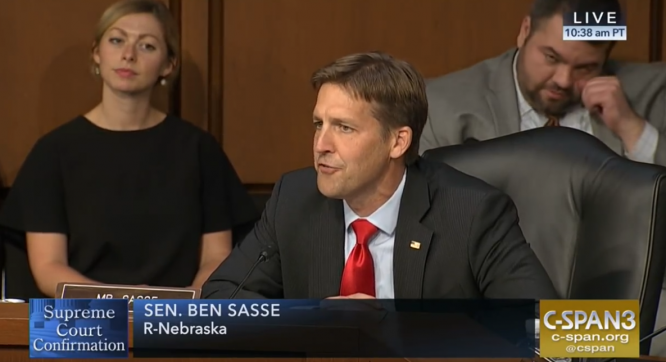
Ben Sasse provides some context for the Kavanaugh appointment to the Supreme Court, the brouhaha regarding same, and the predicament of modern America.
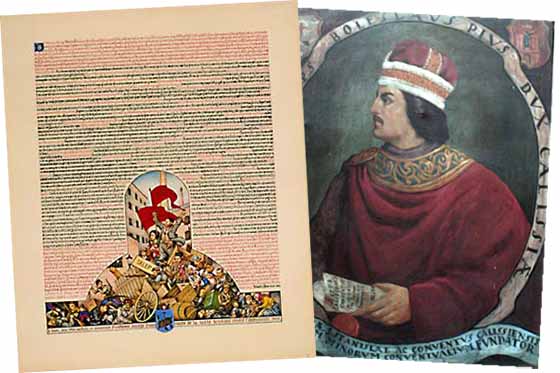
On September 8, 1264, Boleslaus the Pious, Duke of Greater Poland, promulgated the Statute of Kalisz, guaranteeing Jews safety and personal liberties and giving battei din jurisdiction over Jewish matters.
On the same date in 1883, former U.S. President Ulysses S. Grant drove in the final “golden spike” completing the Northern Pacific Railway in a ceremony at Gold Creek, Montana.

We live in a new Age of Offense. A whole lot of people make a whole lot of fuss about what other people say and listen to, view and experience.
Then again, some things are enormously offensive.
One of the latest offense-takings takes place in Israel, where a classical music station played music by Richard Wagner. And so of course had to apologize.
The music played was from the final opera in Wagner’s Ring Cycle. Not my cup of tea. Or coffee. Or latte. As those who follow me on Facebook know, I have varied musical tastes, but more classic rock than classical.
Israelis who listen to classical tend to be none too fond of Wagner not because he was an especially bad composer (I’m told he is a “Great”) but because he was very much an anti-Semite, and Hitler’s favorite composer.
“While there is no law in Israel banning the German composer’s works from being played,” The Telegraph informs us, “orchestras and venues refrain from doing so because of the public outcry and disturbances accompanying past attempts.”
Understandable.
Still, some Israelis do like Wagner’s music. But since the radio station is State-owned and -controlled, the Israel Wagner Society’s president’s admonishment that “Whoever doesn’t want to hear the music can always turn the radio off,” doesn’t quite work.
That would apply only were the station owned by the Israel Wagner Society — willing to bear the loss of customers one might expect in Israel.
In America, of course, Wagner is often on the air.
And those who object . . . turn the dial.
This is Common Sense. I’m Paul Jacob.

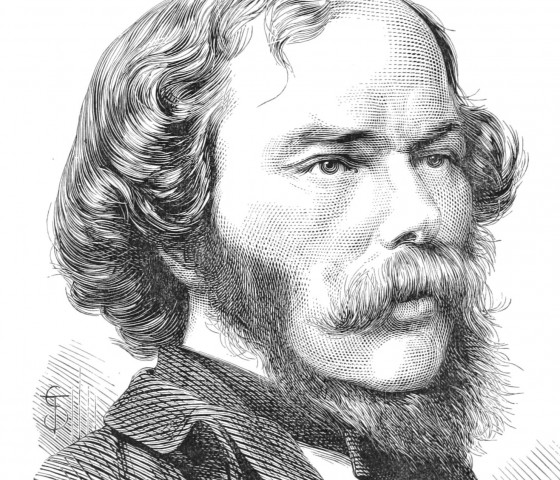
History shows how the human mind, which, at the dawn of civilisation, was a lyre of three chords, became in the progress of civilisation a lyre of seven chords. . . .
G. H. Lewes, Problems of Life and Mind (Third Series) Problem the First — The Study of Psychology: Its Object, Scope, and Method (1879), p. 157.

On September 7, 2008, the US Government “took control” of the two largest mortgage financing companies in the United States, Fannie Mae and Freddie Mac. Both of these had been created by Congress as part of a concerted plan to make home ownership easier, and both had gotten completely out of hand during the many years of their existence, especially under new rules established by politicians in the 1990s. The after-market that they helped create — the packaged mortgage market — was what imploded in 2007–2008, leading to the economic slump that Nicholas Nassim Taleb referred to as setting the U.S. government on President Obama’s economic policy course of “eight years of Novocain.”

The cost of the War on Drugs is not to be reckoned just in dollars. Or in that more serious accounting index: lost lives. The hit to our civil liberties has been enormous, too, and instrumental in setting up the modern Surveillance State.
But beyond these, there is a stranger result: the War on Drugs is also, de facto, a War on Dogs.
“Detroit police officers shot 54 dogs last year, according to public records obtained by Reason,” writes C.J. Ciaramella. “That’s a marked increase over the number reported by the department in 2016 and 2015, and more than twice as many as Chicago, a city with roughly 2 million more people.”
Reason magazine has been covering the War on Dogs by police forces across the country — identified in Ciaramella’s article as “puppycide” — for years, and I’ve mentioned it here on Common Sense, too. The problem is not dogs shot because they are wild, or have rabies, or the like. One expects that sort of thing.
What is problematic is that a third of the Detroit shootings took place in the course of no-knock raids and other common police actions entailed by contraband interdiction. The Detroit number turns out to be “more animal shootings than the entire Los Angeles Police Department performed — 14 total — in 2016,” Ciaramella relates.
Excessive shooting of dogs is costly to cities, of course — to taxpayers, to be precise — in terms of civil lawsuits filed and settled. And to families, some of them quite innocent of any crime, who lose their pets.
It is a sign of a police culture corrupted by . . . the War on Drugs.
This is Common Sense. I’m Paul Jacob.

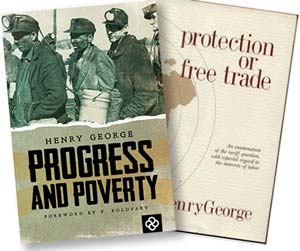
Charity is false, futile, and poisonous when offered as a substitute for justice.
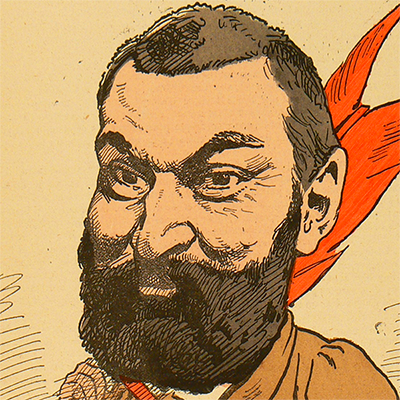
On September 6, 1843, Yves Guyot was born. A journalist, economist, and political activist, he once endured a six-month prison term for his campaign against the prefecture of police. He served as minister of public works under the premiership of P.E. Tirard in 1889, retaining his portfolio in the cabinet of Charles de Freycinet until 1892. A free-trade liberal, he lost his seat in the election of 1893 owing to his militant attitude against socialism. His many books included The Principles of Social Economy (1892), The Tyranny of Socialism (1894), The Comedy of Protection (1906), Socialistic Fallacies (1910), and Where and Why Public Ownership Has Failed (1914). He served as editor of Journal des Économistes, following the Belgian economist Gustave de Molinari.
Illustration is a detail from a caricature by artist André Gill (1840-1885).
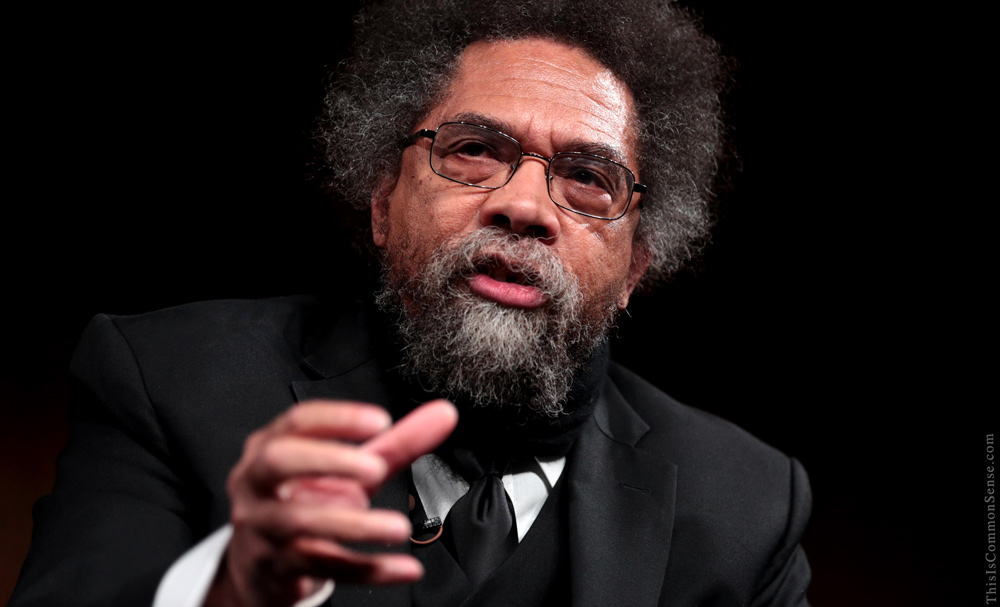
Give democratic socialism a chance?
So says Dr. Cornel West, the “provocative democratic intellectual” who serves as one of eight honorary co-chairs of the Democratic Socialists of America.
This accomplished Professor of the Practice of Public Philosophy at Harvard University, and Professor Emeritus at Princeton, explained to Fox News host Tucker Carlson that socialism’s “fundamental commitment is to the dignity of ordinary people and to make sure they can lead lives of decency.”
“What happened in Venezuela?” Carlson asked West. “They called that democratic socialism. But they don’t have toilet paper and it’s less equal than ever.”
“But part of the problem is though, brother,” the professor responded, “that any time there [have] been attempts by ordinary people to engage in self-determination, they can get crushed by external nations. Look at U.S. policies toward Venezuela [which have] been very, very ugly — Nicaragua in the same way.”
West offered nary a specific to his charge, but was handy stating his conclusion. “So, we have never had a chance to really pull it off,” the “it” being socialism.
“So it’s only been a movement so far.”*
How convenient.
West implicitly acknowledges that those ruling Venezuela and Nicaragua are practicing socialism. But he won’t hold them or the -ism responsible for the economic collapse, the hunger, the exodus of millions of very desperate “ordinary” citizens, the arbitrary arrests, use of torture and murder of innocent citizens.
Dr. West, a follow-up question: Just what specific U.S. policy triggered these socialists to murder and torture their own people?
This is Common Sense. I’m Paul Jacob.
* Dr. West also announced that socialism “is not an ‘ism,’ brother.” I think the professor needs to take a course in ism-ology.
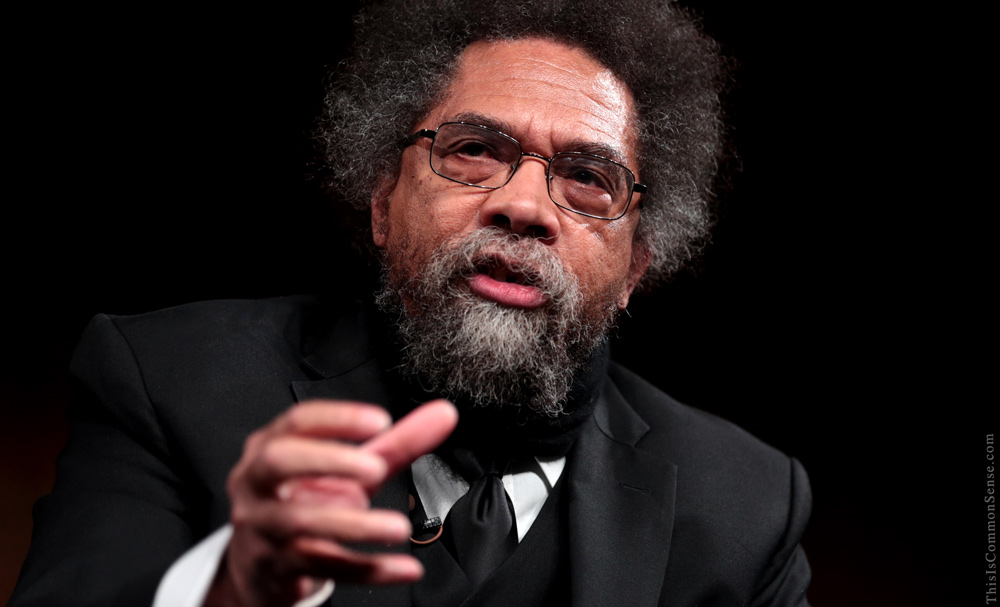
Photo by Gage Skidmore
Ideas are forces: the existence of one determines our reception of others.
G. H. Lewes, Problems of Life and Mind (Third Series) Problem the First — The Study of Psychology: Its Object, Scope, and Method (1879).