September 16 marks the Independence Days for Mexico (celebrating the declaration of independence from Spain in 1810) and Papua New Guinea (commemorating the exit from Australia in 1975).
Categories
Independence Days
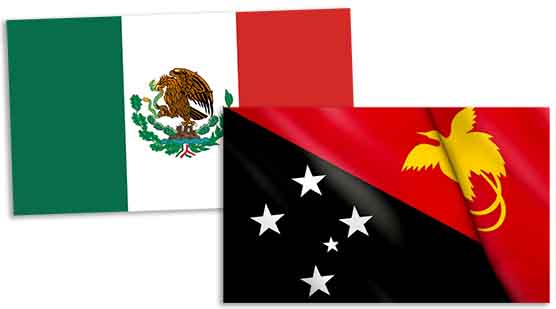
September 16 marks the Independence Days for Mexico (celebrating the declaration of independence from Spain in 1810) and Papua New Guinea (commemorating the exit from Australia in 1975).
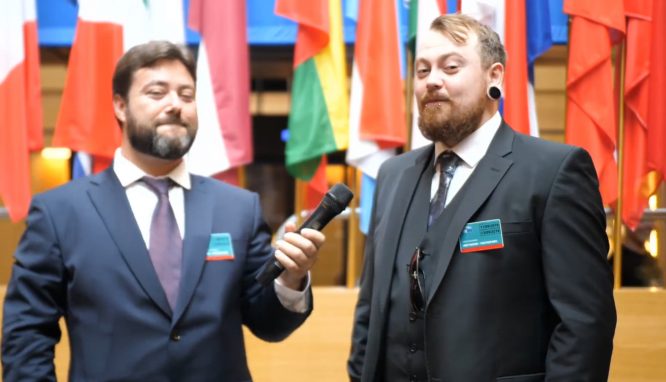
Carl ”Sargon of Akkad” Benjamin and Mark “Count Dankula” Meechan clean up as they get involved in UKIP and in the European Parliament:
https://youtu.be/UHwaA3fMPgc
Each has quite a backstory, which you should look up if you haven’t encountered before.
Also, Carl Benjamin just put this up onto YouTube:
https://youtu.be/RbUGej05bLA
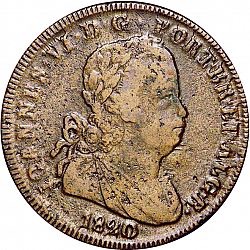
On September 15, 1820, an uprising occurred in Lisbon, Portugal, following similar insurrection in Porto the previous month. This was no bloodthirsty mob, but, instead, a popular demand for constitutional government. Unfortunately, the country was beset with imperial and monarchical problems for some time to come.
The United Nations established September 15 as International Day of Democracy, in 2007. An Independence Day is celebrated on this date in Guatemala (a Patriotic Day), El Salvador, Honduras, Nicaragua, and Costa Rica, commemorating independence from Spain in 1821.
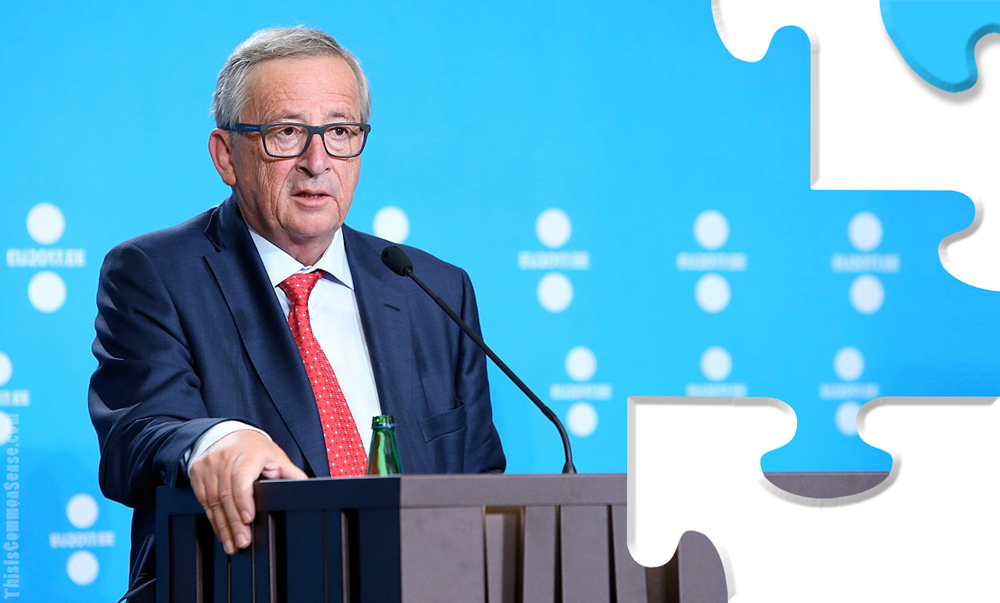
“The geopolitical situation makes this Europe’s hour: the time for European sovereignty has come,” said European Commission President Jean-Claude Juncker this week, staking a big claim for the future in this year’s State of the Union Address.
Juncker wants the EU to be a shiny new “global player,” but shies from the word that comes immediately to mind: “We have to be super,” Juncker clarifies, “but not a superpower.”
The big question is how Juncker’s ramped-up globalism would serve European citizens. Juncker itches to build a “More United, Stronger and More Democratic Union,” but his biggest problem may be that the people seem increasingly iffy on this whole unity thing.
Brexit is only the most spectacular popular rebellion.
“The Visegrad nations of Hungary, Poland and the Czech Republic,” the Washington Times noted yesterday, have balked at EU migration policies, and “all face EU legal sanctions.” Meanwhile, “Populist governments have been elected in Italy and Austria, where voters are sick and tired of the constant intrusions into their lives by Brussels.”
And on Wednesday the EU enacted Article 13, an intrusive copyright law that Net activists have dubbed a “meme killer” capable of destroying “the Internet as we know it.”
While Juncker talks about Europe taking “destiny into its own hands,” Europeans seem more interested in taking their government into their own hands.
After all, it is not as if Europeans cannot prosper in a world economy without confederation — much less something much more, a stronger central bureaucratic authority.
European states could, for instance, adopt free trade. It would make them richer and the world safer.
And they could, in addition, junk Juncker.
This is Common Sense. I’m Paul Jacob.
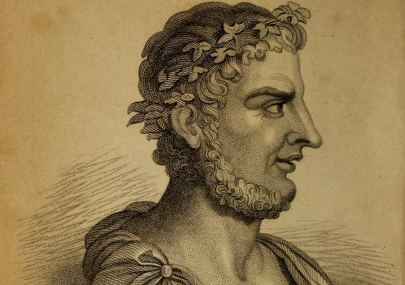
No man will get my help in robbery, and therefore no governor will take me on his staff.
Juvenal, Third Satire, line 46.
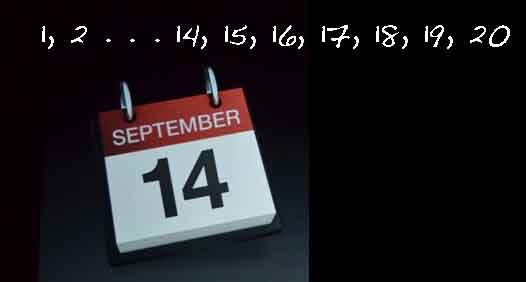
In 1752, throughout the British Empire, September 2 was followed, the next day, by September 14, as the government adopted the Gregorian calendar, skipping eleven days.
On September 14, 1944, Maastricht becomes the first Dutch city to be liberated by allied forces.
On Sunday, former Pres. Barack Obama acknowledged — in the breach — the “wise American tradition of ex-presidents gracefully exiting the political stage and making room for new voices and new ideas.”
The former president’s talk at the University of Illinois made big news in large part because it was a direct attack on the current president.
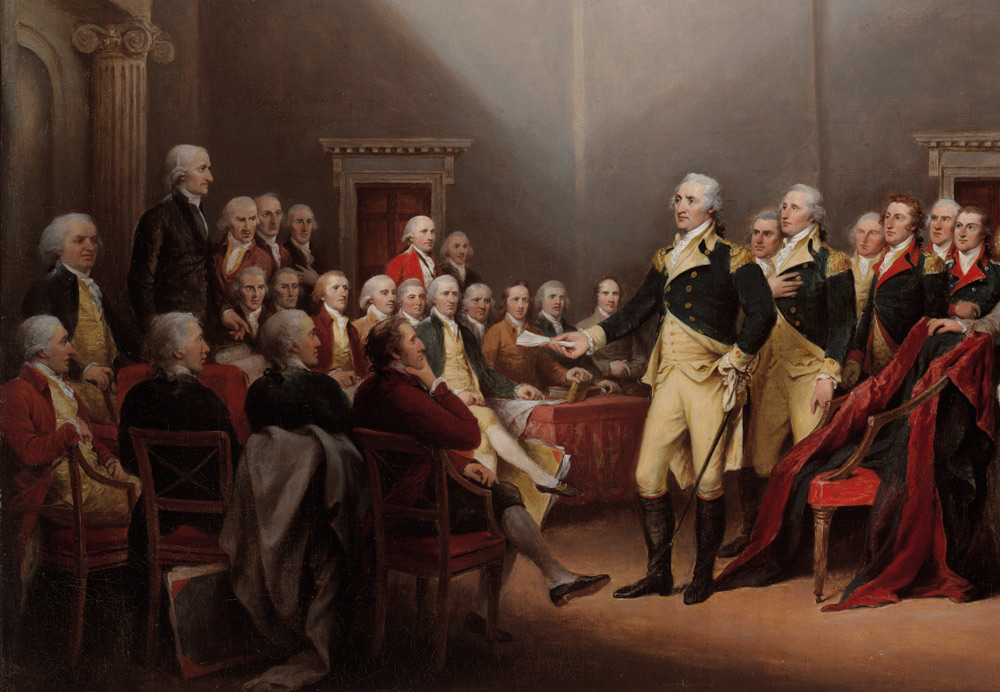
“We have our first president, George Washington, to thank for setting that example,” Mr. Obama explained to the students. “After he led the colonies to victory, as General Washington, there were no constraints on him, really. He was practically a god to those who had followed him into battle. There was no Constitution. There were no democratic norms that guided what he should or could do. And he could have made himself all-powerful; he could have made himself potentially president for life. Instead, he resigned as commander-in-chief and moved back to his country estate.”
Noting that “six years later” Washington was elected president, Obama added, “But after two terms, he resigned again and rode off into the sunset.”
The two-term limit, constitutionally imposed on modern presidents, was established as a tradition when self-imposed by the man known as the father of our country.
“The point Washington made, the point that is essential to American democracy, is that in a government of, and by and for the people, there should be no permanent ruling class,” the former president concluded, “. . . only citizens, who through their elected and temporary representatives determine our course and determine our character.”
On that, Americans across the political spectrum can agree.
It’s called term limits.
This is Common Sense. I’m Paul Jacob.
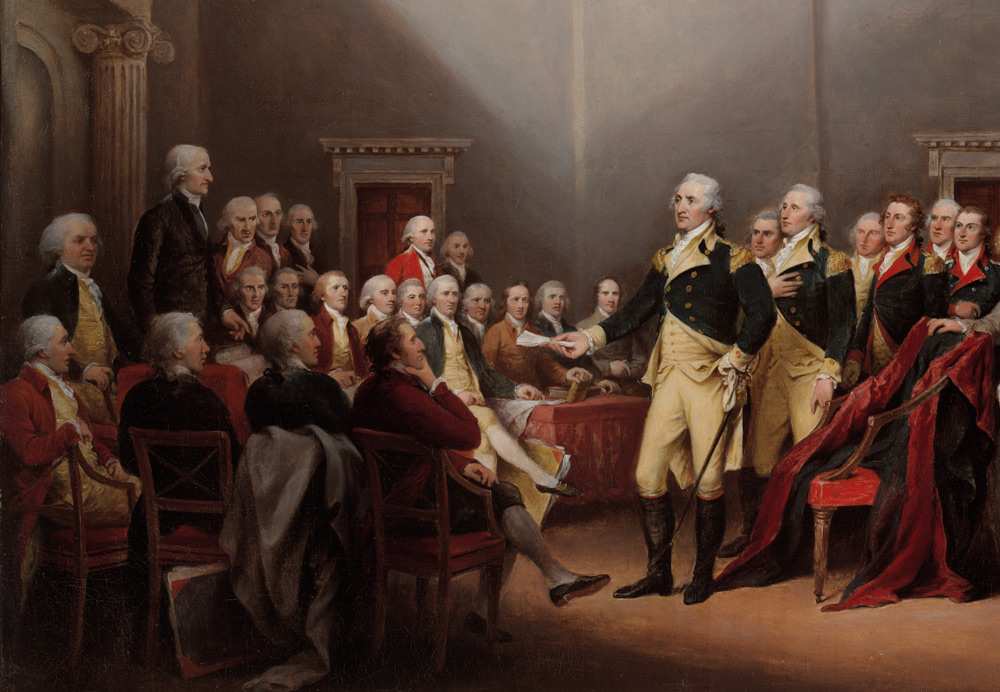
Illustration: detail from “The Resignation of General Washington, December 23, 1783,” oil on canvas, by the American artist John Trumbull.
Circumretit enim vis atque iniuria quemque,
atque, unde exortast, at eum plerumque revertit.
Violence and injury enclose in their net all that do such things, and generally return upon him who began.
Lucretius, De Rerum Natura (On the Nature of Things) (First Century BC), Book V, lines 1152–1153 (tr. Rouse).
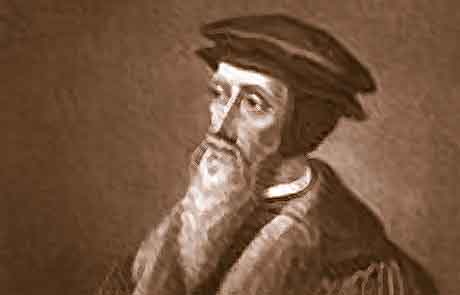
John Calvin [pictured above] returned to Geneva on September 13, 1541, after three years of exile. His subsequent work in church reform and theology became known as Calvinism, and profoundly influenced the course of European and (eventually) American civilization, including several concepts of servitude and liberty.
On the same date in 1989, Desmond Tutu led South Africa’s largest march aganst Apartheid.
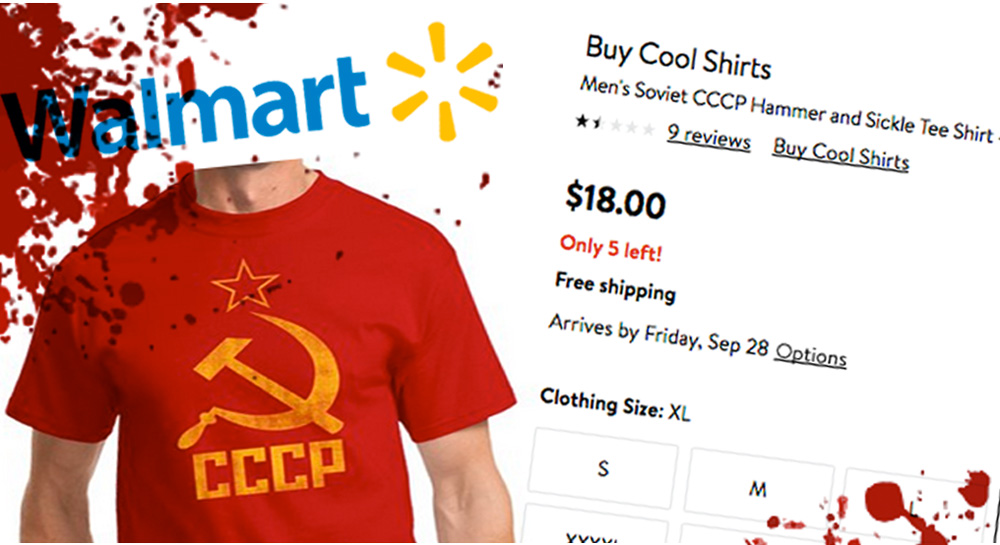
If you have a lick of sense, you wouldn’t emblazon images of Ché Guevara on your chest or your wall — and yet Ché t-shirts and posters have been a pop culture hit for decades now.
He is cool, we are told, because he was ¡Viva la Revolución! and all that.
But it could get worse. You could be emblazoning a hammer and sickle.
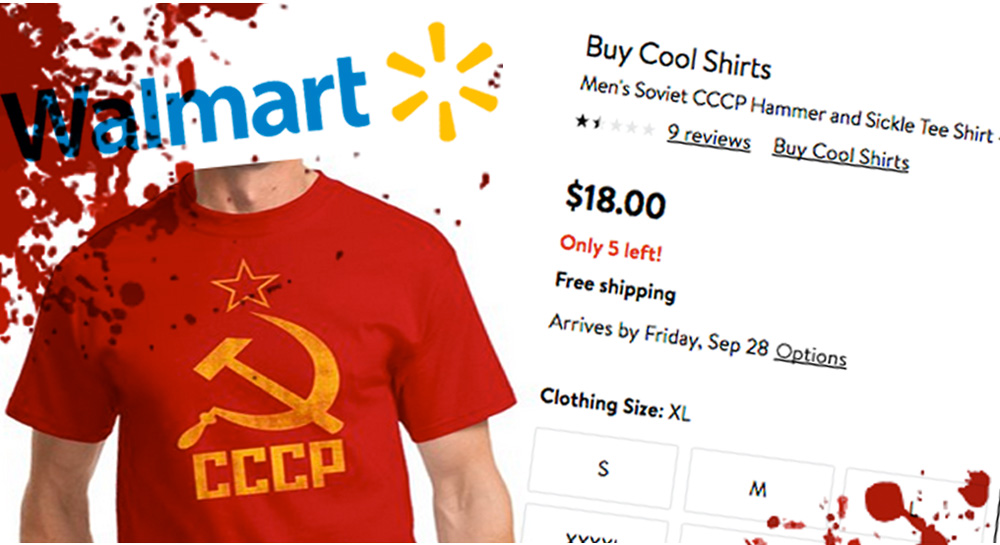
Walmart’s website is there to help. Under “men’s sleeveless,” for example, we see an artistic rendering of the old Communist symbol, frankly identified as a “Soviet Hammer and Sickle,” white on black for $14.97.* Walmart files it under “Pop culture.”
Aren’t men’s sleeveless shirts called “wife beaters”? Should we now call them Kulak Killers?
It’s hip to murder millions!
No wonder Lithuania and several other Baltic countries — who suffered greatly under Soviet rule — object. Indeed, many of these countries go too far in actually banning the symbols. Now, they have contacted Walmart requesting a cessation in hawking the offensive merchandise. “You wouldn’t buy Nazi-themed clothing, would you?” Lithuania’s foreign minister Linas Linkevicius tweeted. Or sell such items.
But a few people might. Certainly, a lot of people do buy stuff that others regard as “Nazi.” Sometimes to be “cool”; other times to make a controversial political point.
At the Uhuru Store, Gavin McInnes’s “ProudBoys Official” sells a “Pinochet Did Nothing Wrong” t-shirt for twice the price of Walmart’s Hammer and Sickle shirt — and that surely has annoyed leftists who have seen it.
I’m waiting for the death of cool.
This is Common Sense. I’m Paul Jacob.
* The shirts also come in Navy, Royal and Gray. I guess to get a red commie shirt you have to go for the sleeves.