On September 19, 1778, the Continental Congress passed the first budget of the United States.
Congress last passed a budget in 1997.

On September 19, 1778, the Continental Congress passed the first budget of the United States.
Congress last passed a budget in 1997.
He indeed who believes that by studying isolated histories he can acquire a fairly just view of history as a whole, is, as it seems to me, much in the case of one, who, after having looked at the dissevered limbs of an animal once alive and beautiful, fancies he has been as good as an eyewitness of the creature itself in all its action and grace.
Polybius, The Histories.

With “democratic socialism” again on the rise, a refresher course in history seems apt: socialism has demonstrated the strong tendency to end up in totalitarian tyranny, poverty, and genocide.
As I mentioned on Monday, Reason’s Nick Gillespie suspects that this response is not very convincing to people tempted by socialism. But really, why not? What about a history of horror could be appealing?
Which is why the question “Do Socialists Mean Well?” as answered by Grant Babcock, might help. Babcock answers in the negative.* “Socialism is not ultimately an end but a means. And as a means, socialism is evil.”
With an evil means, one’s chosen end is irrelevant, because of other results. “If I told you I wanted to end homelessness, you might say I had good intentions,” Babcock explains. But if he confessed to seek that end “by conscripting the homeless into the army . . . [n]ot only should you say I have bad intentions, you shouldn’t give me any moral credit for saying I want to end homelessness.”
True. But Babcock has to engage in his extended argument about means because, for purposes of his essay, anyway, he began with the premise that while fascists are evil because they seek directly to harm some people, socialists do not.
Uh, really? Most socialists make much of taking from “the rich,” however they define the rich — as “the one percent” or “the privileged,” etc.
Call it expropriation; call it theft: that’s a lot of anger and ill will directed to one group of people.
In that way, the appeal of socialism is too much like the appeal of fascism.
This is Common Sense. I’m Paul Jacob.
* Babcock, by the way, denies the label “socialist” to social democrats who call themselves “democratic socialists” — by definition. On this matter, see “Bernie’s Slippery Definition of Democratic Socialism” and “Is Denmark Socialist?” on this site.

Idque apud imperitos humanitas vocabatur, cum pars servitutis esset.
Step by step they were led to things which dispose to vice, the lounge, the bath, the elegant banquet. All this in their ignorance they called civilisation, when it was but a part of their servitude.
Tacitus, De vita et moribus Iulii Agricolae (89 AD), Book 1, paragraph 21.
On September 18, 1793, George Washington laid the cornerstone of the Capitol building.
It has grown, since.
On September 18, 1838, Richard Cobden established the Anti-Corn Law League, which proceeded to bring free trade to Britain.
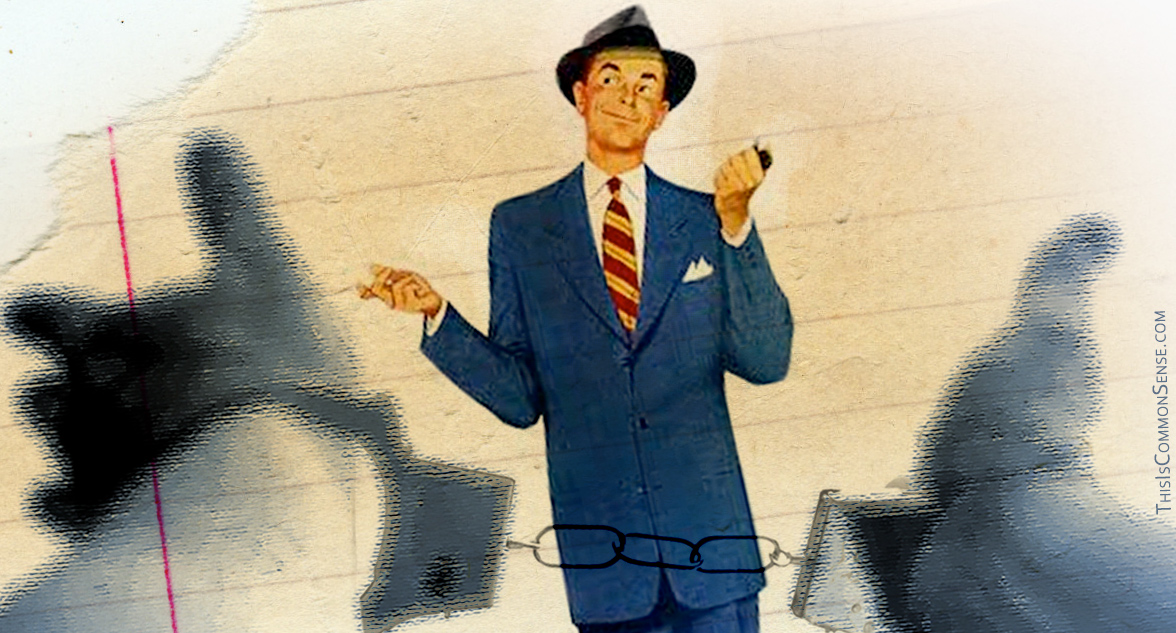
Under capitalism, said the old socialists, “the rich get richer and the poor get poorer.” Today’s socialists admit this hoary “immiseration thesis” is old hat.
“The socialist argument against capitalism isn’t that it makes us poor,” explains City University of New York Professor Corey Robin in the New York Times. “It’s that it makes us unfree.”
Unfree?
Nick Gillespie at Reason tries to make sense of that breathtaking inversion of the usual anti-socialist argument, which Gillespie characterizes as the invocation of “Stalin, the Great Leap Forward, or even Hugo Chavez.”*
But is there really anything new here?
“When my well-being depends upon your whim, when the basic needs of life compel submission to the market and subjugation at work, we live not in freedom but in domination,” writes the tax-funded socialist professor. He wants “to establish freedom from rule by the boss, from the need to smile for the sake of a sale,” which is so very not new. It’s reminiscent of Oscar Wilde’s “The Soul of Man Under Socialism,” which imagined rescue “from that sordid necessity of living for others.”
How real-world socialism “frees” us, though, is palpably oppressive: by burdening business and labor and trade with taxes, prohibitions, regulations.
And constant bullying.
The ironies abound, too. Gillespie notes that “Alexandria Ocasio-Cortez may rail against the gig economy, but just like Bernie and Warren she uses Uber every chance she gets.” Jim Carrey praises “free” medicine in Canada, acknowledging no costs.
The cost of “free stuff” is actual freedom. And the cost of actual freedom is paying for what you get, and not getting what you won’t pay for.
That’s the Irony Law of Socialism.
This is Common Sense. I’m Paul Jacob.
* Gillespie also says it is unpersuasive. Well, unpersuasive to whom? As always, many arguments for the truth are necessary.
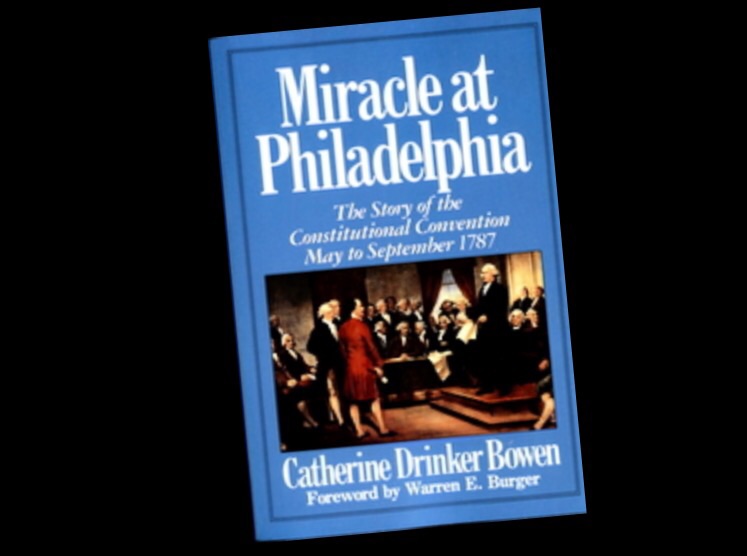
On September 17, 1787, the Constitution of the United States was signed in Philadelphia, Pennsylvania.
In 1849 on this same day in September, Harriet Tubman escaped to freedom in Philadelphia, but soon returned to Maryland to rescue her family. She made at least 13 trips into the slave-owning South to liberate more than 70 slaves before the Civil War (in which she served as a spy for the North).
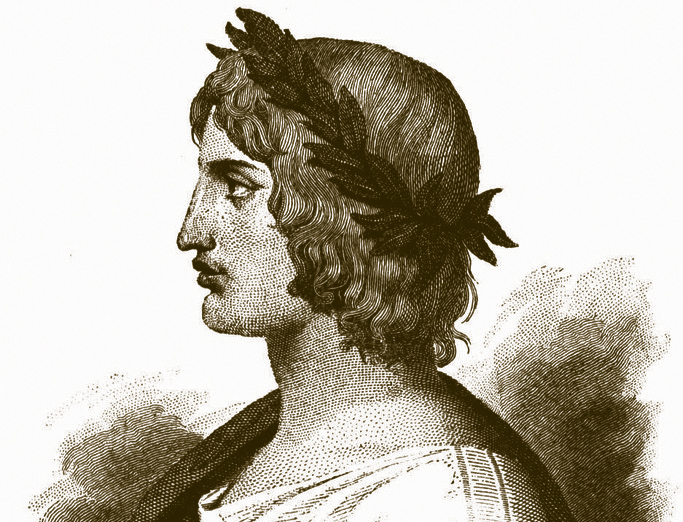
Felix qui potuit rerum cognoscere causas.
Blessed is he who has been able to win knowledge of the causes of things.
Virgil, Georgics (29 BC), Book II, line 490 (tr. H. Rushton Fairclough); homage to Lucretius.
John Dryden’s translation:
Happy the man, who, studying nature’s laws,
Thro’ known effects can trace the secret cause.

Weird to see people sporting murderous images on shirts, with sleeves or without. Click on over to Townhall for the full story, complete with “call outs.”
Then click back here for more:
This Townhall column will be archived on ThisIsCommonSense.com on Tuesday.

Stilicidi casus lapidem cavat.
The steady drip of water causes stone to hollow and yield.
Lucretius, De Rerum Natura (On the Nature of Things) (First Century BC), Book I, line 313 (tr. Stallings).