Categories
Today

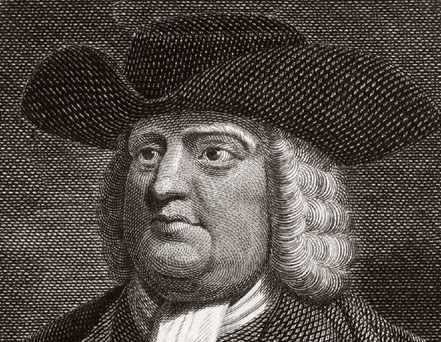
William Penn

On October 14, 1644, Willliam Penn was born. An English real estate entrepreneur, philosopher, and founder of the Province of Pennsylvania (the English North American colony and future Commonwealth of Pennsylvania), he was an early champion of democracy and religious freedom, notable for his good relations and successful treaties with the Lenape Indians. Penn died in 1718.

Categories
video

Viral Moments, German Injustice, and Wackadoo Academics

President Trump is right about Soros, Germany shows a disturbing lack of respect for self-defense, and, yes, the academic ‘“Studies” Studies’ Left is wackadoo crazy.

https://youtu.be/xofaq8Hg9WI

Categories
Today

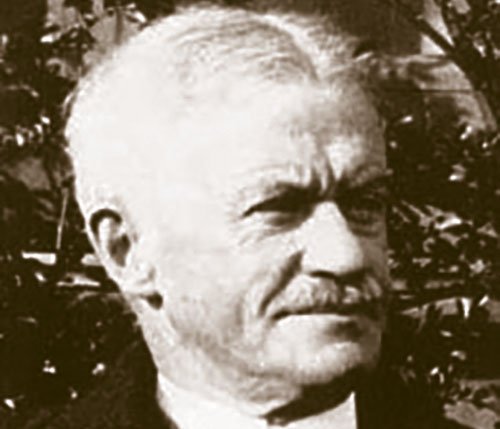
Albert Jay Nock

On October 13, 1870, American social critic and education theorist Albert Jay Nock was born. Nock was the author of a number of books, including Jefferson, the Man and Our Enemy, The State, but was probably most famous for his intellectual autobiography, Memoirs of a Superfluous Man, which was widely read and admired amongst conservatives in the 1950s and ’60s.

Categories
ballot access general freedom initiative, referendum, and recall media and media people Regulating Protest

Three Bad Propositions

Two propositions on this November’s California ballot, Propositions 8 and 11, have found an opponent.

“Both would have voters decide very narrow union-management conflicts in two relatively small medical service sectors,” explains Dan Walters, long the dean of California columnists. Unions are sponsoring Prop 8, which “purports to limit profits in clinics that provide dialysis treatments to sufferers of kidney failure.” Ambulance companies are behind Prop 11, which would “require ambulance crews to remain on call during meal and rest breaks.”

Walters thinks it “foolish to expect November’s nine-plus million voters to make even semi-informed decisions about their provisions, much less understand how dialysis clinics and ambulance services operate, or should operate.”

Well, yes, but this criticism applies to government universally. Legislators don’t understand how every business or industry functions, or should function, either. Even when politicians pretend to comprehend, by what right do they micromanage other people’s businesses and labor contracts?

Freedom, not government regulation, should be the default position.

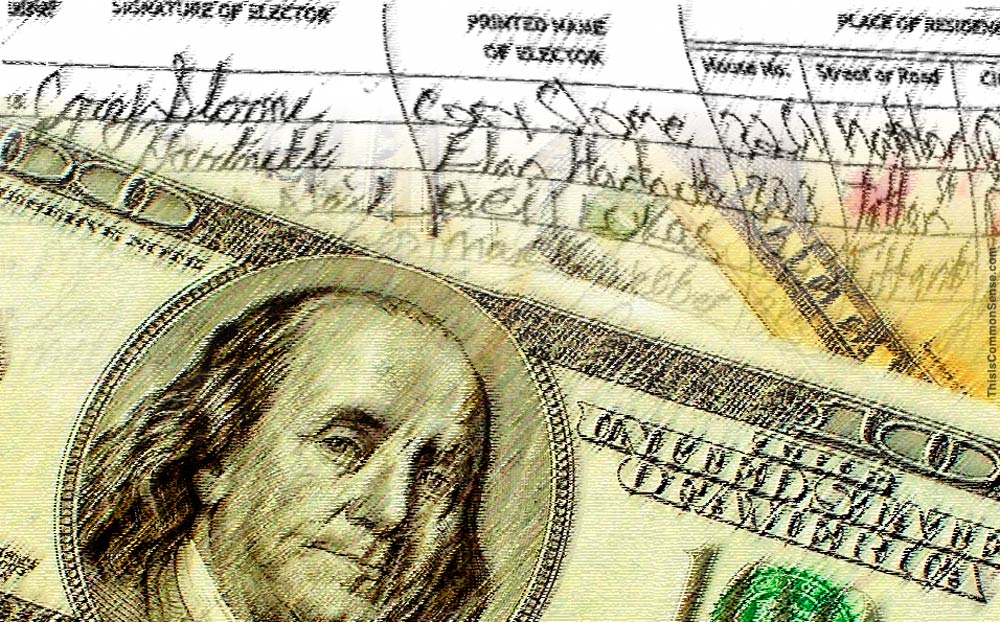
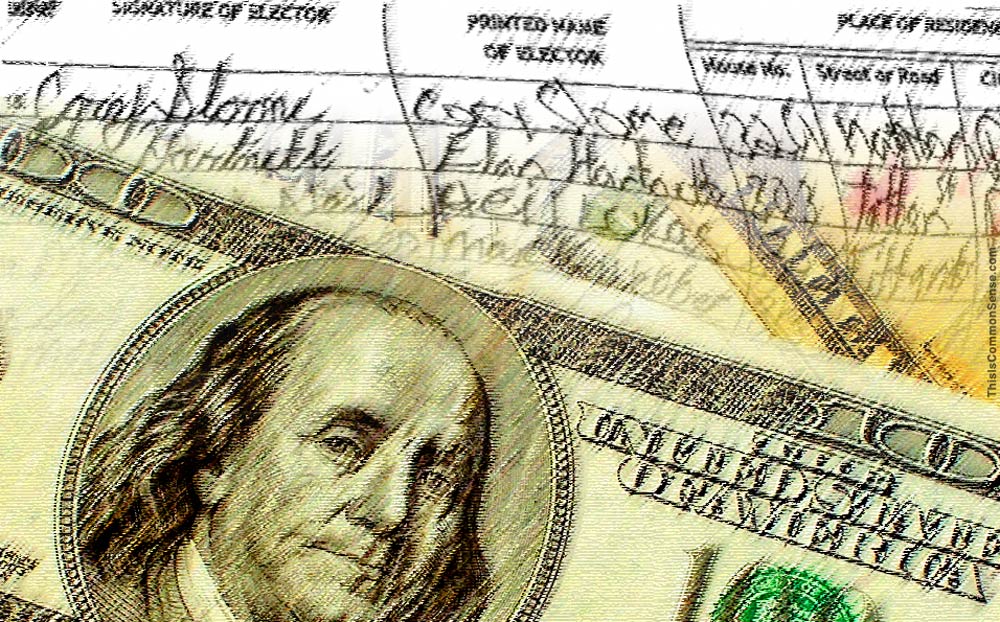
But Walters’ fix runs against this logic. He thinks that upping the required percentage of signatures for ballot placement “by half . . . might discourage the misuse of the system for issues that cannot be fairly and rationally decided by voters.”

Don’t bet on it.

As Walters himself admits, making it tougher and more expensive to petition a measure onto the ballot won’t block the well-heeled: “any interest group with a few million bucks and an axe to grind can qualify a ballot measure, regardless of their merits.”

But it would disenfranchise grassroots groups.

Defeat bad measures; don’t destroy the democratic process.

This is Common Sense. I’m Paul Jacob.


PDF for printing
 

Categories
Thought

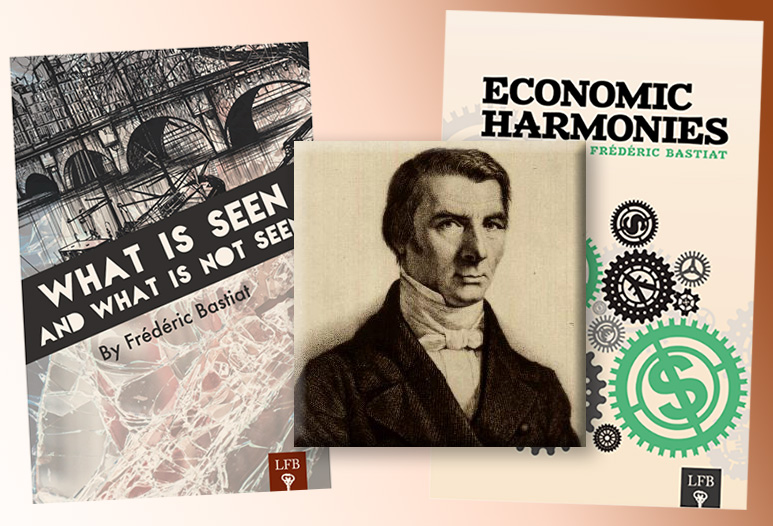
Frédéric Bastiat

[T]he misguided people are rushing into a horrible and absurd struggle, in which victory would be more fatal than defeat; since, according to this supposition, the result would be the realisation of universal evils, the destruction of every means of emancipation, the consummation of its own misery.


Frédéric Bastiat, “Capital and Interest” in Essays on Political Economy (New York:
G. P. Putnams & Sons, 1874). Bastiat is referring to the anti-capitalist ideas of “MM. Proudhon and Thoré” who, he argued, were “deceiving themselves” as well as the people.

Pierre Joseph Proudhon was the first person on record to call himself an “anarchist” and regard it as a good thing, and the first to call the owner of property a “capitalist.” He is known for a number of works promoting “mutualism,” including Systems of Economical Contradictions, or; The Philosophy of Misery, which was translated into English by Benjamin R. Tucker. Étienne-Joseph-Théophile Thoré (better known as Théophile Thoré-Bürger) was a journalist and art critic now known mostly as the re-discoverer of the paintings of Vermeer. Among his writings was La Recherche de la liberté of 1845.

Categories
Today

The New World

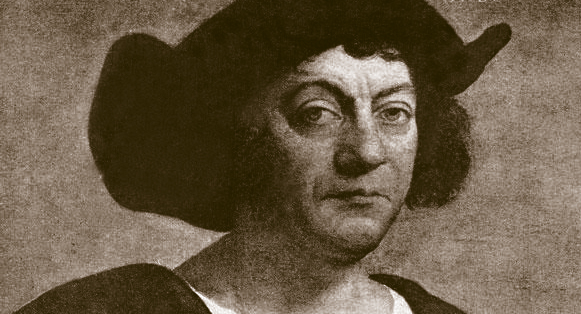
On October 12, 1492, Christopher Columbus landed in the Bahamas, thinking he had reached India.

Exactly two hundred years later, a letter from Massachusetts Governor William Phips ended the Salem Witch Trials.

On this date in 1892, the Pledge of Allegiance was first recited by students in many U.S. public schools, as part of a celebration marking the 400th anniversary of Columbus’s voyage.

The Pledge had been composed that year by Francis Bellamy, a Christian Socialist minister, and was first published in Youth’s Companion magazine, the issue dated September 8, 1892. The recital was accompanied with a salute to the flag known as the Bellamy salute. During World War II, the salute was replaced with a hand-over-heart gesture because the original form (described in detail by Bellamy) involved stretching the arm out towards the flag in a manner that resembled the later Nazi salute. The original form of the Pledge was somewhat less involved than later versions:

I pledge allegiance to my Flag and the republic for which it stands, one nation indivisible, with liberty and justice for all.

In October an editorial addition occurred, the word “to” prefixing “the republic.”

Categories
incumbents insider corruption

The Politics of Exclusion

“The mainstream media screams about Russia stealing elections,” says U.S. senatorial candidate Dale Kerns, “but behind the scenes they pull the strings to keep the duopoly in control.”

Mr. Kerns, who is running in Pennsylvania as a Libertarian in a four-candidate race, has had the rug pulled out from under him. Early on, the League of Women Voters had assured him that he would be able to participate in televised candidate debates in Philadelphia. That opportunity was dashed as the date of the event neared.

“Make no mistake, this is cronyism,” insists Kerns, who notes that “big media corporations collud[e] with big government political parties to keep out competition.”

Eric Boehm covers the scandal/not-a-scandal over at Reason. The early promise of inclusion came from the League, and it was “other organizers” of the event who decided that the Libertarian and Green candidates’ polling numbers were low enough to excuse exclusion.

You might wonder why debate organizers would want to have less interesting debates. But remember: the two entrenched parties’ candidates want to win. Period. The last thing they want are challengers from other parties included, because those challengers can only peel off voters from them.* And though the major-media hosts may wish to seem non-partisan, they almost never refrain from taking a side. 

I do not (and cannot) know which reason contributed more to the Philadelphia renege, so will let you hazard your own guesses. 

This is Common Sense. I’m Paul Jacob.


* Which helps explain why the parties tend to “cheat with both hands,” as Nicholas Sarwark, the Libertarian candidate for the mayorship of Phoenix, Arizona, put it.

PDF for printing


Photo from Max Pixel


Categories
Thought

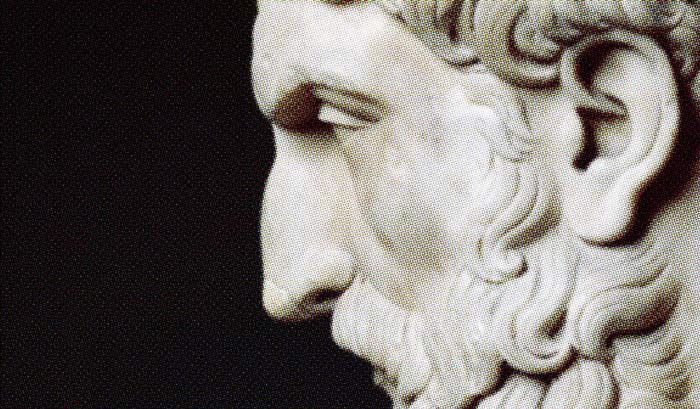
Epicurus

I would prefer to speak openly and like an oracle to give answers serviceable to all mankind, even though no one should understand me, rather than to conform to popular opinions and so win the praise freely scattered by the mob.


Epicurus, “Vatican Sayings,” XXIX

Categories
Today

Remembering the Revolution

October 11, 1890, marks the founding of the Daughters of the American Revolution.

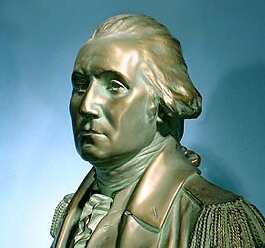
On the same date in 1976, President Gerald R. Ford approved a congressional joint resolution Public Law 94-479 to appoint, posthumously, George Washington to the grade of General of the Armies of the United States, as part of the bicentennial celebrations.

John J. Pershing is the only other American to attain this high title, and the only one to achieve it while alive.

Categories
Thought

Frédéric Bastiat

Government is not maimed, and cannot be so. It has two hands — one to receive and the other to give; in other words, it has a rough hand and a smooth one. The activity of the second is necessarily subordinate to the activity of the first. Strictly, Government may take and not restore. This is evident, and may be explained by the porous and absorbing nature of its hands, which always retain a part, and sometimes the whole, of what they touch. But the thing that never was seen, and never will be seen or conceived, is, that Government can restore more to the public than it has taken from it. It is therefore ridiculous for us to appear before it in the humble attitude of beggars. It is radically impossible for it to confer a particular benefit upon any one of the individualities which constitute the community, without inflicting a greater injury upon the community as a whole.

Frédéric Bastiat, “Government” in Essays on Political Economy (New York:
G. P. Putnams & Sons, 1874).