Categories
Thought

Herbert Spencer

Since the days of persecution, a curious change has taken place in the behavior of so-called orthodoxy towards so-called heterodoxy. The time was when a heretic, forced by torture to recant, satisfied authority by external conformity: apparent agreement sufficed, however profound continued to be the real disagreement. But now that the heretic can no longer be coerced into professing the ordinary belief, his belief is made to appear as much opposed to the ordinary as possible.

Herbert Spencer, The Data of Ethics (1879), Preface to Part I of The Principles of Ethics “When First Issued Separately.”

Categories
general freedom ideological culture Popular too much government

Socialism Is Anti-Democracy

Common sense politics must peer beneath the superficial attractions of “democratic socialism.”

In “Civil Liberties and Socialism Don’t Mix,” Matthew Harwood explains why those who call themselves democratic socialists may “say they believe in civil liberties” nevertheless “will always be hostile to individual freedom.”

In this short Reason piece, Mr. Harwood starts out by showing that socialism cannot merely be “a more generous welfare state along Nordic lines.” For “socialism” to remain distinct socialists must offer a Unique Selling Proposition. You cannot plausibly push a “new” philosophy and stick to pushing the old liberal stand-bys of private property and markets.

Their own pretensions force them back to central planning, to economic planning for all by a few.

Which is not democratic, of course. It goes far further, to anti-majoritarian.

Actual economic planning requires micromanagement. Harwood quotes socialist economist and luminary Robert Heilbroner, who expresses this requirement as “the necessity to intervene deeply, and probably ruthlessly, into the economy in order to establish the socialist order in the first place.”  

But it cannot stop there. Once established, a socialist state must feel a “need to continue a policy of painful intervention” to adjust to “the constricting limits of the environment.”

“Democratic socialism is not freedom,” Harwood concludes. “It is authority paternalistically dressed up in the language of liberation and wielded on behalf of that fuzzy abstraction, ‘the people,’ regardless of what flesh and blood individuals want.”

Sure, democratic socialists may hope that majorities will allow their elites to plan for everybody. 

But once that handoff is made, the power obtained, then the tyranny.

Inescapably.

This is Common Sense. I’m Paul Jacob


PDF for printing


Categories
Today

Thirty Years’ War

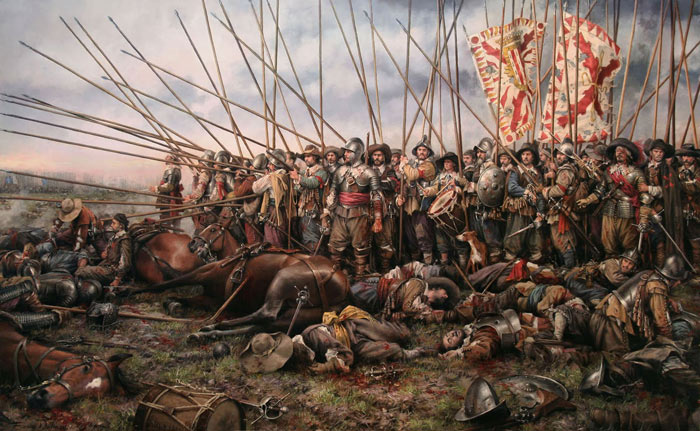
On October 24, 1648, the Peace of Westphalia was signed, marking the end of the Thirty Years’ War.

Categories
Thought

R. Buckminster Fuller

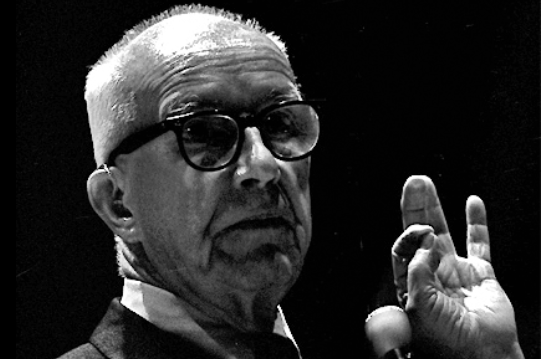
Something hit me very hard once, thinking about what one little man could do. Think of the Queen Mary — the whole ship goes by and then comes the rudder. And there’s a tiny thing at the edge of the rudder called a trimtab.

It’s a miniature rudder. Just moving the little trim tab builds a low pressure that pulls the rudder around. Takes almost no effort at all. So I said that the little individual can be a trimtab. Society thinks it’s going right by you, that it’s left you altogether. But if you’re doing dynamic things mentally, the fact is that you can just put your foot out like that and the whole big ship of state is going to go.

So I said, call me Trimtab.


R. Buckminster Fuller, Barry Farrell interview, Playboy (February 1972).

Categories
general freedom term limits

The Bonesaw Massacre

Last week, the Washington Post published journalist Jamal Khashoggi’s final column. Khashoggi was apparently murdered by dismemberment at the Saudi consulate in Istanbul, Turkey, earlier this month.

“The Arab world is facing its own version of an Iron Curtain,” Khashoggi wrote, “imposed not by external actors but through domestic forces vying for power.”

Decrying that “Arab governments . . . continue silencing the media at an increasing rate,” he called for the U.S. to “[play] an important role in fostering and sustaining the hope of freedom,” advocating the equivalent of a Radio Free Europe to reach nearly 400 million Arabs.

The Saudi dissident highlighted Freedom House’s 2018 report “Freedom in the World,” noting that “only one country in the Arab world . . . has been classified as ‘free.’ That nation is Tunisia. Jordan, Morocco and Kuwait come second, with a classification of ‘partly free.’ The rest of the countries in the Arab world are classified as ‘not free.’”

Perusing that report’s coverage of the Americas, I noticed a section on “Gains and declines show value of electoral turnover.”

“Under new president Lenín Moreno, Ecuador turned away from the personalized and often repressive rule of his predecessor, Rafael Correa,” the report states. “Moreno has eased pressure on the media, promoted greater engagement with civil society, proposed the restoration of term limits, and supported anticorruption efforts . . .”

In Bolivia, sadly, “the constitutional court . . . struck down term limits that would have prevented incumbent leader Evo Morales from seeking reelection. Voters had rejected the lifting of term limits in a 2016 referendum, and international observers called the court’s reasoning a distortion of human rights law.”

Rotation in office — you know, like provided by term limits — appears strongly linked to freedom.

The lack of which having proved tragic for Jamal Khashoggi.

This is Common Sense. I’m Paul Jacob.


PDF for printing


Categories
Today

Uprising(s)

On October 23, 1850, the first National Women’s Rights Convention began in Worcester, Massachusetts.

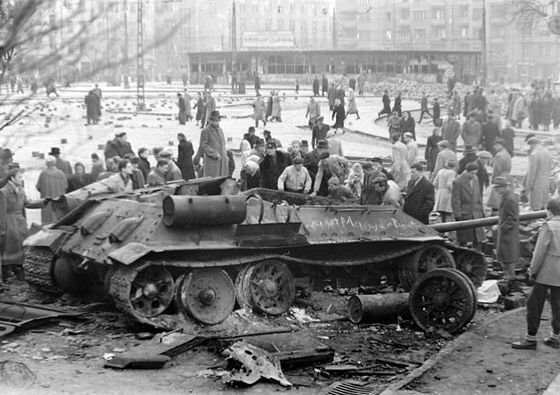
On the same October date 106 years later, thousands of Hungarians rose up against Soviet rule.

Categories
Thought

Carl Menger

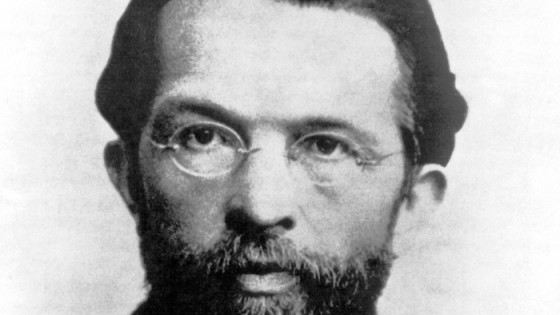
The propensity of men to trade must accordingly have some other reason than enjoyment of trading as such. If trading were a pleasure in itself, hence an end in itself, and not frequently a laborious activity associated with danger and economic sacrifice, there would be no reason why men . . . should not trade back and forth an unlimited number of times. But everywhere in practical life, we can observe that economizing men carefully consider every exchange in advance, and that a limit is finally reached beyond which two individuals will not continue to trade at any given time.


Carl Menger, Principles of Economics (1871; English translation, 1950), Spring 1977, chapter IV, “The Theory of Exchange.”

Categories
initiative, referendum, and recall insider corruption term limits

Corruption, Arkansas-Style

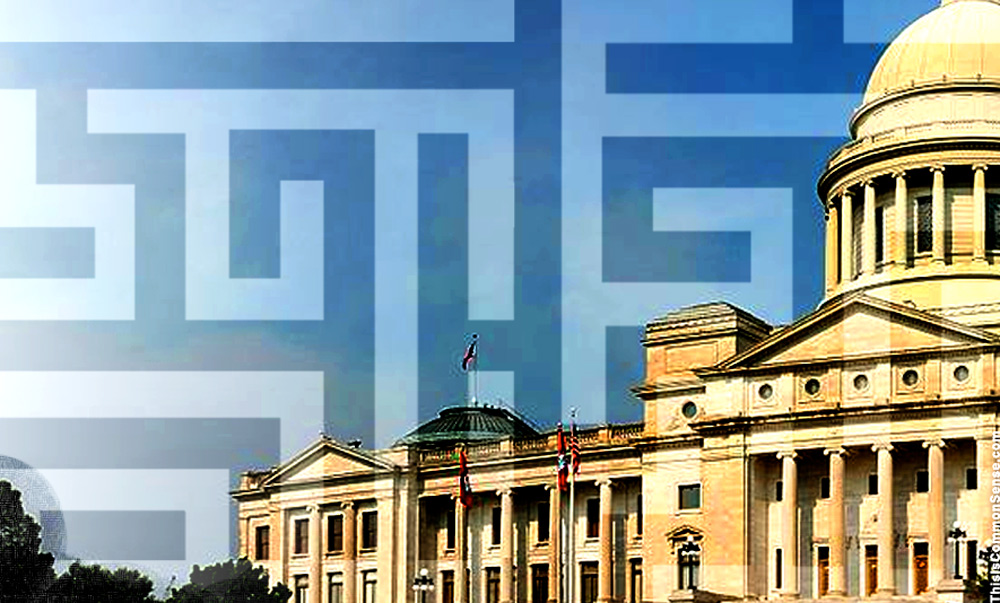
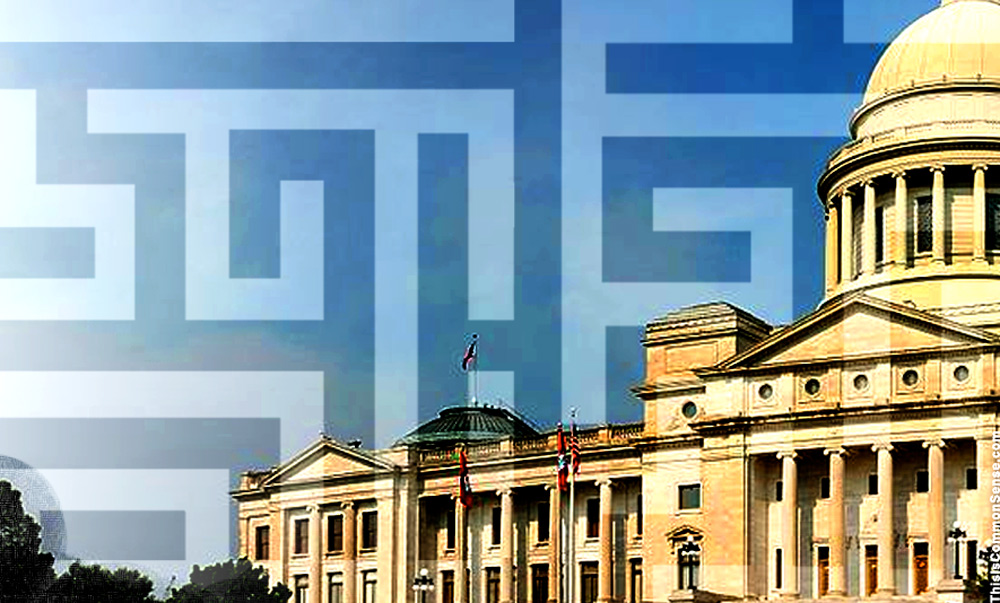
On Friday, the Arkansas Supreme Court struck Issue 3, a citizen-initiated measure to restore legislative term limits, from Arkansas’ November ballot. The Court declared, 4-3, that there weren’t enough “valid” signatures.

This, despite opponents never disputing that more than enough Arkansas voters had signed the petition.

In recent years, legislators have enacted a slew of convoluted laws, purposely designed to wreck the initiative and referendum process.* The regulations give insiders and partisans a myriad of hyper-technical “gotchas” that can be used to disqualify whole sheets of bonafide voter signatures.

“The legislature,” explained former Governor Mike Huckabee recently, “sucker-punched the people of Arkansas and expanded their terms. They did it, I think, very dishonestly — by calling it an ethics bill . . . that had nothing to do with ethics. It was all about giving themselves longer terms.”

Since getting away with that 2014 ballot con job, giving themselves a whopping 16 years in office, seven Arkansas state legislators have been indicted or convicted of corruption. The author of that tricky ballot measure, former Sen. Jon Woods, just began serving an 18-year federal prison sentence for corruption.

Other corruption, that is.

“It’s one reason I think term limits are a very important part of our political system today,” said Huckabee. It is, he argued, “easier to get involved in things that are corrupt the longer you stay.”

Now, sadly, after 2014’s fraudulent ballot measure and two 4-3 state supreme court decisions neutering the entire ballot initiative process, political corruption can continue unabated in the Natural State. 

This is Common Sense. I’m Paul Jacob.


* The state supreme court has ignored the clear language in the state constitution regarding such petitions: “No legislation shall be enacted to restrict, hamper or impair the exercise of the rights herein reserved to the people.”

N.B. For relevant links, check yesterday’s splash page for this weekend’s Townhall column.

PDF for printing
 

Categories
Thought

Albert Camus

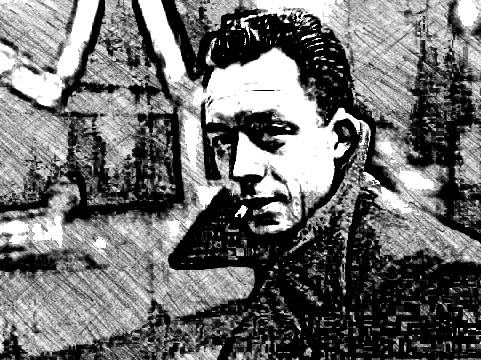
The only way to deal with an unfree world is to become so absolutely free that your very existence is an act of rebellion.

Categories
Today

Sartre Doesn’t Take the Prize

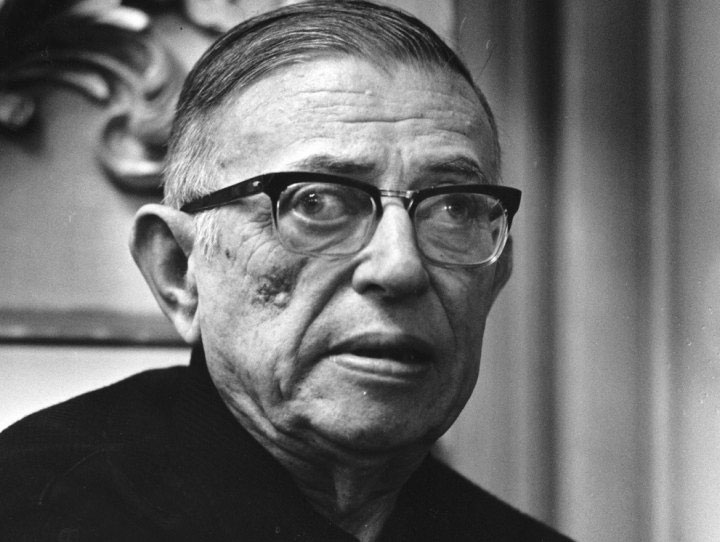
On October 22, 1964, philosopher and novelist Jean-Paul Sartre (1905 – 1980) was awarded the Nobel Prize for Literature, but turned down the honor — establishing a precedent that should have been followed by numerous Peace Prize winners, including Barack Obama and the European Union.

Only one other recipient of the award has turned it down voluntarily, namely Henry Kissinger’s co-winner in 1973, Le Duc Tho, though four other recipients were coerced by their governments from accepting the prize’s monetary award: Richard Kuhn, Adolf Butenandt and Gerhard Domagk, by the Nazi government, and Boris Pasternak, by the Soviet Union.