Progressives have gone so far in the “safe space” direction that they are re-introducing segregation into the cultural center. “Separate but equal” is becoming more and more acceptable. “Normed,” as they say.
But not everyone is on board:
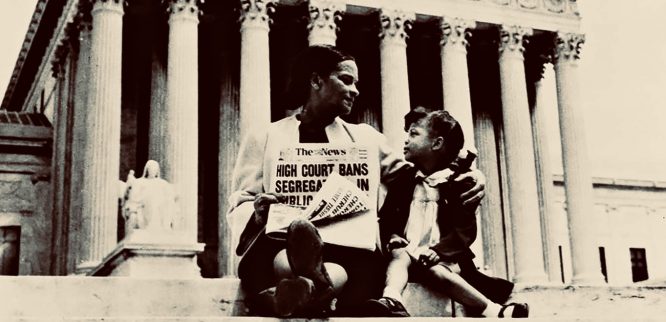
Progressives have gone so far in the “safe space” direction that they are re-introducing segregation into the cultural center. “Separate but equal” is becoming more and more acceptable. “Normed,” as they say.
But not everyone is on board:
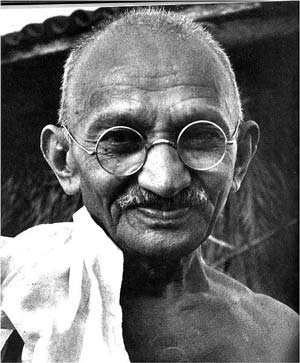
Facts we would always place before our readers, whether they are palatable or not, and it is by placing them constantly before the public in their nakedness that the misunderstanding between the two communities in South Africa can be removed.
Mohandas Karamchand Gandhi, Indian Opinion, October 1, 1903.

On April 6, 1930, Mohandas K. Gandhi raised a lump of mud and salt, declaring, “With this, I am shaking the foundations of the British Empire.”
Thus began the Salt Satyagraha.
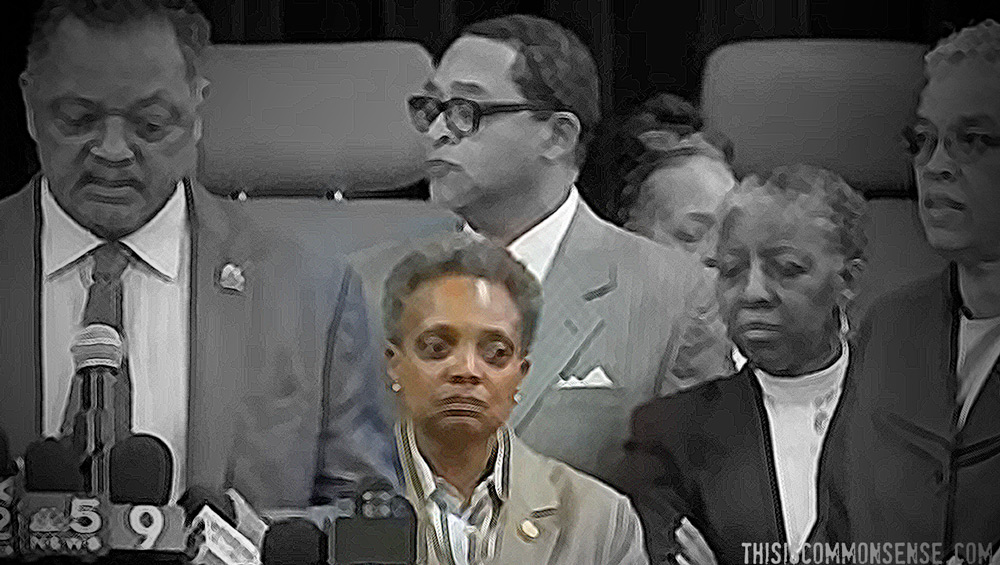
Chicago, the nation’s fabled “second city” — though, now the third largest incorporated metropolis in these United States — sports a new mayor. On Tuesday, Lori Lightfoot won the city’s mayoral runoff by a whopping 47 points, tallying 73 percent of the vote.
As reported, she is a mayor of many firsts. While Chicago has previously elected two African-American men to be mayor as well as one female,* Lightfoot becomes the first female African-American mayor.
Additionally, Lightfoot is the first openly gay Chicago mayor.
And not to put too fine a point on it, she is also without a doubt the first openly gay, African-American female mayor of Chicago named Lori. Or named Lightfoot, for that matter.
But there’s more!
I’m here to tell you that Ms. Lightfoot has captured yet another, far more consequential first. Something not dictated for her by birth — such as skin color, gender or sexual orientation — but chosen in her individual decision-making process.
Lightfoot advocates reform and — unlike any other Chi-town mayor in history, from before the fire to now — she means limits on her own terms in office.
In fact, her campaign’s position paper on “Cleaning Up City Government” puts it first: Impose a Two-Term Limit on the Mayor.
“Chicago is the largest city in the country without mayoral term limits,” she notes, which “has led to entrenched leaders, a lack of new ideas and creative thinking and city government that works for the few, not the many.
“This will change when I am mayor,” she pledges, “and introduce an ordinance that brings Chicago into the mainstream by limiting mayors to serving two terms.”
Let’s do it. And why not limit the terms of city aldermen, too?
This is Common Sense. I’m Paul Jacob.
* In 1979, Jane Byrne became not only the first woman elected mayor of Chicago, but also the first woman elected to head any major U.S. city
See all recent commentary
(simplified and organized)
See recent popular posts
Once we roared like lions for liberty; now we bleat like sheep for security.
On April 5, 1792, George Washington exercised the first presidential veto of a congressional bill, a new plan for dividing seats in the House of Representatives, which would have increased the number of seats for northern states. Washington vetoed only one other bill during his two terms in office, an act that would have reduced the number of cavalry units in the army.
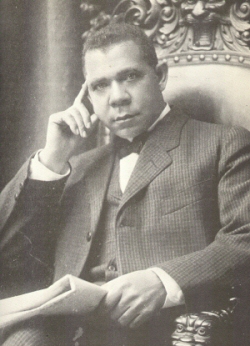
On April 5, 1856, Booker T. Washington, American educator, first leader of the Tuskegee Institute in Alabama, author of 14 books, including his autobiography, “Up From Slavery,” was born a slave in southwestern Virginia. Though Washington faced criticism from leaders of the new NAACP, especially W. E. B. Du Bois, for not protesting the lack of civil rights more strongly, he secretly funded litigation for civil rights cases, such as challenges to southern constitutions and laws that disfranchised blacks.

“We will do that,” he said.
Do what?
“We will look at the average costs of prescription drugs in Canada, the UK, Germany, Japan and France,” says Sen. Bernie Sanders (I/D-Vt.), “which are 50 percent lower than they are in the United States,” he told Margaret Brennan on Face the Nation.
And Sanders promises: “if I am elected president I’m going to cut prescription drug costs in this country by 50 percent so that we are not paying any more than other major countries are paying. Maybe we can do better than that.”
When Ms. Brennan asked how, he replied as above — looking at “average costs” as directly priced to consumers (patients) — and then . . . “we will do that.”
Socialism is so easy!
Why have we waited so long for utopia?
Well, saying is not the same as doing. We must think “beyond Stage One,” as Thomas Sowell advises. For if “Medicare for All” tells a company it will pay only so much for a drug, that company cannot just sell that drug and all others below cost. No wonder that in socialized medicine schemes around the world, not all drugs are even available.
The world prescription drug market is set up . . . peculiarly. Americans in effect pay more (because of patents and trade agreements) thereby covering development costs. If we pay less, others may have to pay more (which would be an odd thing for a “socialist” to want) and we would all come to get even less.
Bernie is no wizard, and socialism has no magic wand with which to wave away scarcity.
This is Common Sense. I’m Paul Jacob.

See all recent commentary
(simplified and organized)
See recent popular posts
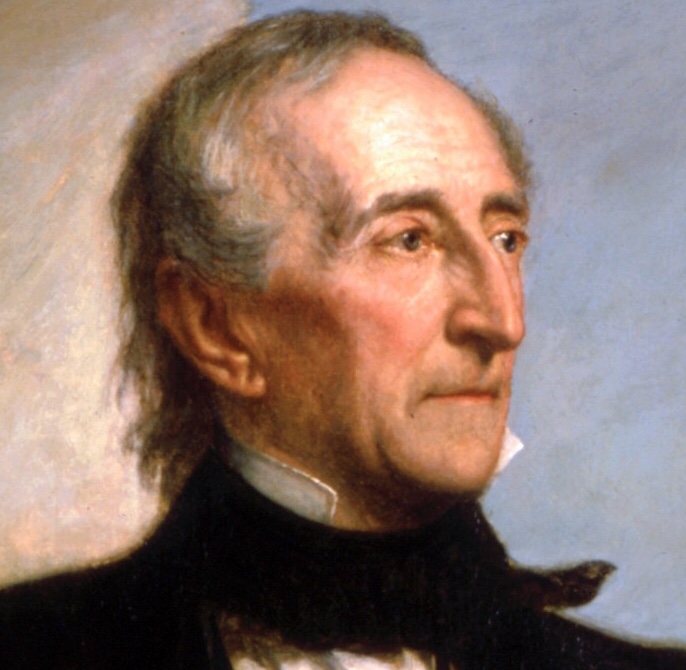
Wealth can only be accumulated by the earnings of industry and the savings of frugality.
U.S. President John Tyler, first annual message to Congress (June 1, 1841).
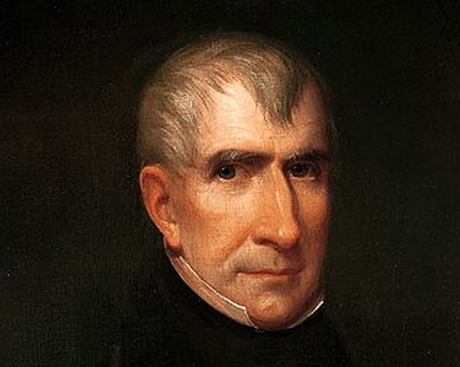
On April 4, 1841, William Henry Harrison died of pneumonia, becoming the first President of the United States to die in office and the one with the shortest term served (he died on his 32nd day as president). A renowned Indian killer (having risen to fame for his part in 1811’s Battle of Tippecanoe), a proponent of the expansion of slavery into Northwest Territories, and a Whig, Harrison won the presidency in part by turning the Democrats’ “log cabin and hard cider” aspersions on his character as the basic symbols of the campaign.
Though hardly a “limited government man,” some limited government history buffs proclaim him the Greatest President, on the ostensibly droll and possibly cynical grounds that he spent so little time in office.
On a much sadder note, Martin Luther King, Jr., was assassinated on this day in 1968.
Reid Wilson’s very welcome reporting in The Hill, recently, was headlined, “GOP legislators clamping down on voter initiatives.”
This disrespect for the people and their basic, democratic check on legislative power is far too common, and something about which people need to know.
For instance, ballot measures in Florida already must garner a supermajority of 60 percent to win, but politicians are now proposing that threshold be hiked still higher to 67 percent. Not to mention bills to burden petitioners with unconstitutional restrictions.
Though most of the attacks are coming from Republican-dominated legislatures, the article also made clear that Democratic Party legislators in several liberal states — California, Oregon, Washington — are also trying to “take power away from voters.”
But the article lacked some very pertinent information, allowing politicians to make some terribly misleading charges against direct democracy.
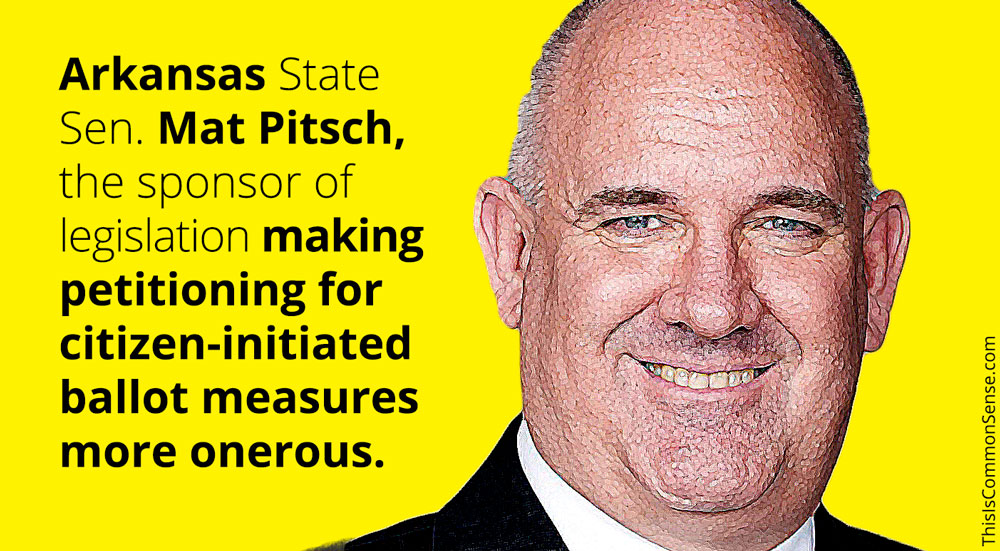
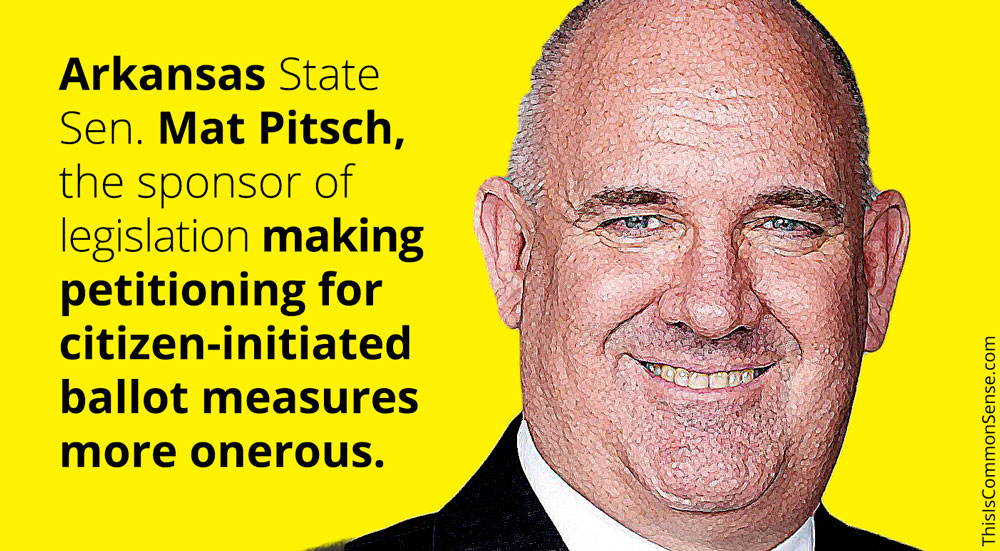
“In the last seven elections, we’ve actually changed our constitution 20 times,” complains Arkansas State Sen. Mat Pitsch, the sponsor of legislation making petitioning for citizen-initiated ballot measures more onerous. “We’re averaging three changes every other year. Things that normally are voted on by elected representatives were making their way through constitutional ballot measures.”
Sen. Pitsch thinks legislators should make these decisions, instead of voters. How convenient.
But the state’s motto is “The People Rule.”
Honest people can disagree about how often state constitutions should be amended, but 20 amendments in 14 years does not make Arkansas one of the more prolific states. Moreover, consider the genesis of those 20 amendments. Only three were citizen-sponsored measures; the other 17, the vast majority, were placed on the ballot by . . . legislators!
A fact the reader should have been told.
This is Common Sense. I’m Paul Jacob.
See all recent commentary
(simplified and organized)
See recent popular posts