Categories
initiative, referendum, and recall national politics & policies Popular

The Cost of Reparations

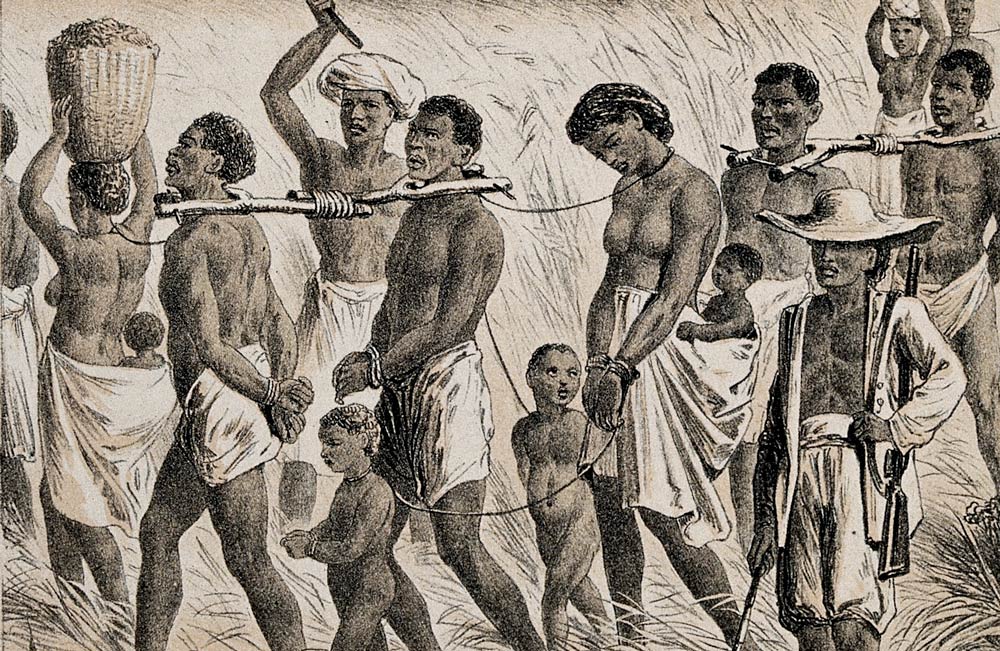
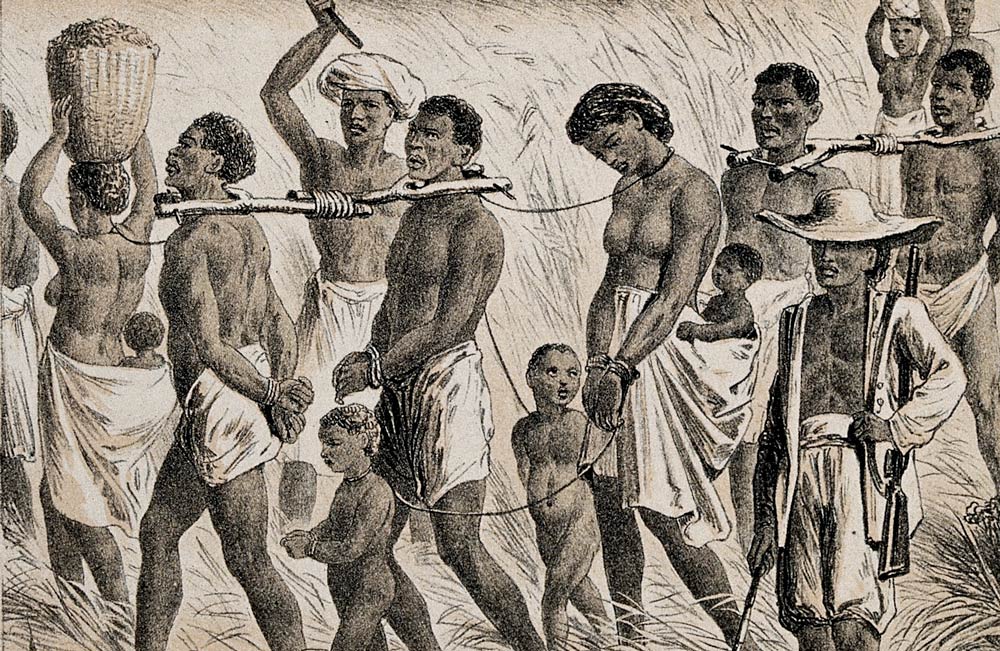
Nearly 180 years ago, the Jesuits who ran Georgetown University sold 272 enslaved persons to save the institution from insolvency. In a non-binding referendum earlier this month, the university’s undergraduate students voted to impose a student fee of $27.20 per semester to fund reparations for the descendants of those slaves.

Small potatoes? Well, when the slavery reparations idea catches fire outside of a student body, the dollar amounts talked about expand beyond mere double digits. 

Which can be awkward. The leader of the Congressional Black Caucus, Rep. Karen Bass (D-Calif.), complains that slavery reparations are often “used . . . to ridicule African-Americans, as if what black people are interested in is a check.”

Nonetheless, White House aspirant Rep. Julián Castro (D-Tex.) reminds Democrats that “when it comes to Medicare for All” as well as “tuition-free or debt-free college, the answer has been, ‘We need to write a big check.’” Castro contends Uncle Sam ought not skimp on “compensating the descendants of slaves.”

The slicker Democratic contenders for the 2020 presidential race have conveniently embraced legislation introduced in the House by Rep. Sheila Jackson Lee (D-Tex.) to establish a commission to study the idea — allowing presidential aspirants to talk up the proposal to black audiences while assuring less enthusiastic audiences that they are merely committed to studying it.

One lesser known candidate, author Marianne Williamson, didn’t get the memo, however. She proposed “a $100 billion plan of reparations to be paid over 10 years,” to be disbursed for purposes of “economic and educational revitalization to be achieved within the black community.”

By federal spending standards, a tiny figure. But even at ten times that figure, check-propelled revitalization seems unlikely.

Students of politics take note.

This is Common Sense. I’m Paul Jacob.

PDF for printing

slavery, reparations, blacks, guilt, white

See all recent commentary
(simplified and organized)
See recent popular posts

Categories
Thought

W. H. Hutt

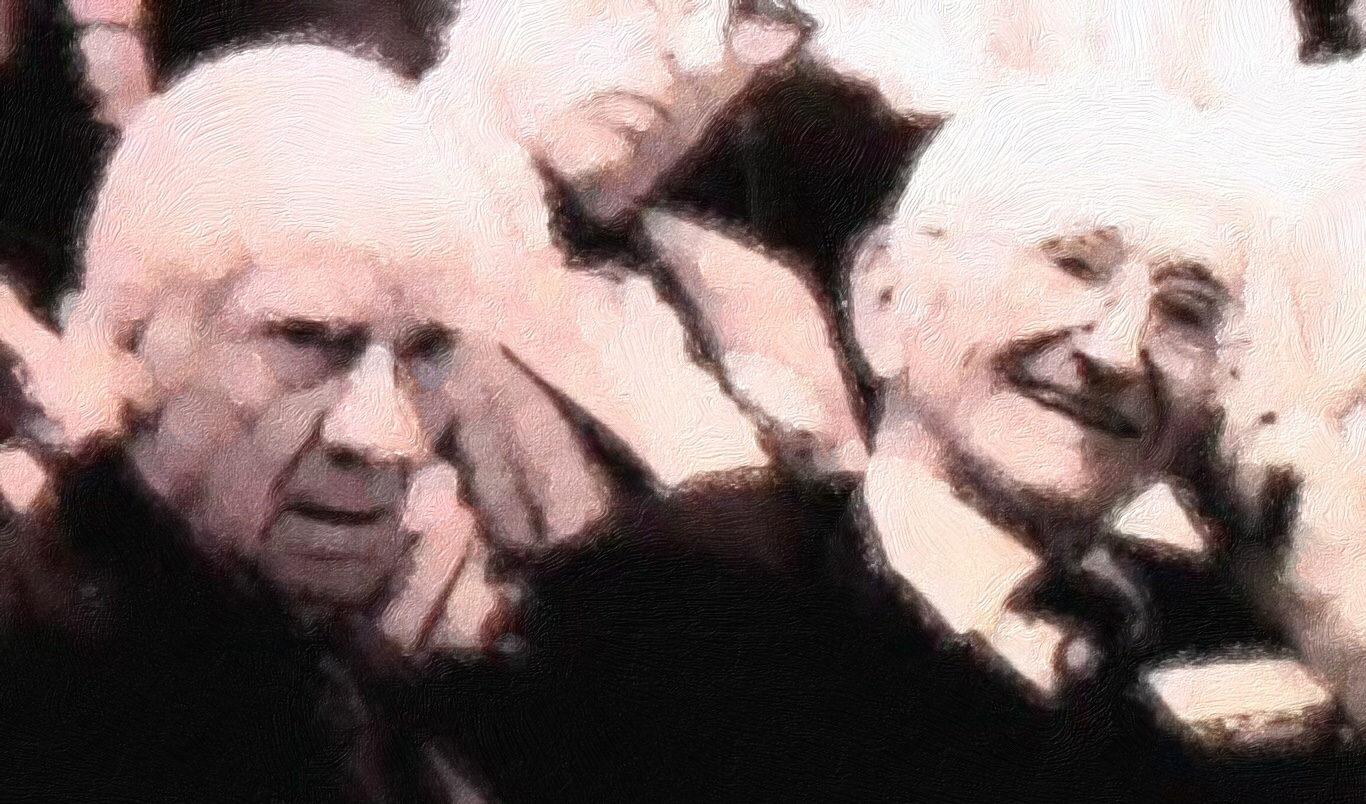
When we buy a product in the free market, we do not ask: What was the colour of the person who made it? Nor do we ask about the sex, race, nationality, religion or political opinions of the producer. All we are interested in is whether it is good value for money. Hence it is in the interest of business men (who must try to produce at least cost in anticipation of demand) not only to seek out and employ the least privileged classes (excluded by custom or legislation from more remunerative employments) but actually to educate them for these opportunities by investing in them.

William H. Hutt (left, above), The Economics of the Colour Bar (1964), p. 173.
Categories
Today

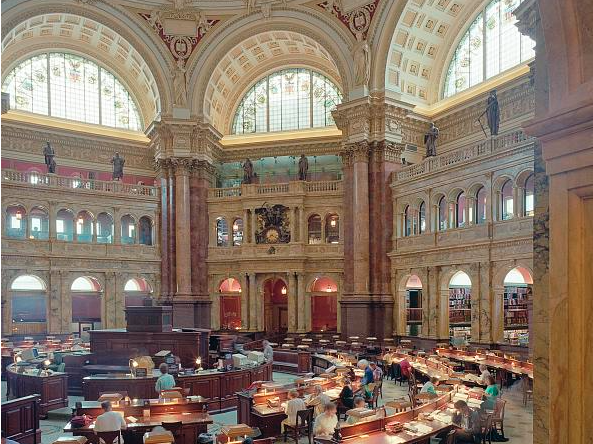
Congress’s Library

On April 24, 1792, the French national anthem, “La Marseillaise,” was composed by Capt. Claude Joseph Rouget de Lisle.

Eight years later to the day, the United States Congress approved a bill establishing the Library of Congress.

Categories
ideological culture national politics & policies Popular

The Debate Begins?

The Green New Deal? So yesterday

“Millionaires and billionaires” paying “their fair share”? Well, after Bernie Sanders’ millionaire status hit the news, Democrats have some reason to shy away to . . . the Universal Basic Income!

“UBI” for short.

Right now the big pusher of the panacea is a Democratic presidential candidate, Andrew Yang.

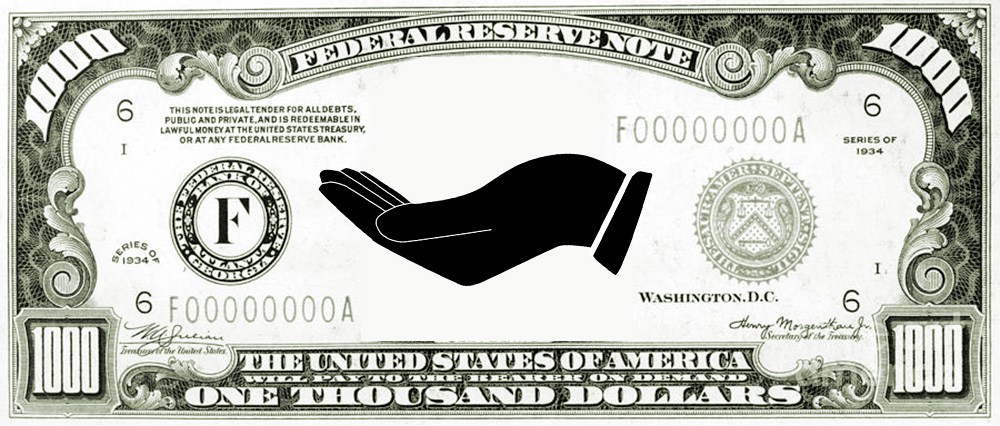
Entrepreneurially minded, he insists that he is “pro-capitalist.” Which is refreshing in the current state of The Democracy, but, uh, he is also pro-UBI. “Nicknamed his ‘Freedom Dividend,’” Reason magazine reports, his proposal would “give $1,000 a month to every adult between the ages of 18 and 64.”

The Reason article contrasts Yang’s version of the UBI with Charles “What It Means To Be a Libertarian” Murray’s, who wants to chuck every welfare state program and replace it with a basic stipend.

Another libertarian, economist and political scientist Mike Munger, makes a similar pitch: replacing all of the welfare state (including Social Security!) with just the one transfer program. Murray and Munger both tout the beneficial effects for those trapped in poverty, earnestly wanting people trapped in the current welfare system to pry themsleves free from its grasp. But this method strikes me as a fantasy: replacement will not happen. It is politically nearly impossible. 

We would be lucky to nix even one measly program. 

For a freedom-oriented case for the program, consult Mike Munger’s debate with Antony Sammeroff, author of Universal Basic Income: For and Against. Unfortunately, you cannot vet a debate between Sammeroff and Andrew Yang, the latter having recently pulled out of a scheduled debate at New York’s Soho Forum.

Maybe before any political decisions, we insist upon a Universal Basic Debate.

This is Common Sense. I’m Paul Jacob.


PDF for printing

UBI, universal basic income, $1000, welfare,

See all recent commentary
(simplified and organized)
See recent popular posts
Categories
Thought

Ludwig von Mises

Capital does not ‘beget profit’ as Marx thought. The capital goods as such are dead things that in themselves do not accomplish anything. If they are utilized according to a good idea, profit results. If they are utilized according to a mistaken idea, no profit or losses result. It is the entrepreneurial decision that creates either profit or loss. It is mental acts, the mind of the entrepreneur, from which profits ultimately originate. Profit is a product of the mind, of success in anticipating the future state of the market. It is a spiritual and intellectual phenomenon.

Ludwig von Mises, “Profit and Loss” (presented at the Mont Pèlerin Society, Beauvallon, France, September 1951)

Categories
Thought

New Coke

On April 23, 1985, Coca-Cola changed its formula in its newly released New Coke. The American response was overwhelmingly negative, and the original formula was back on the market in less than three months. A great demonstration of consumer sovereignty.

Categories
Accountability national politics & policies

Salty Tears of the Guilty

The Mueller report has not calmed the partisan enmity roiling Washington.

Many in Congress complain about Mueller not reaching a prosecutorial decision on the issue of obstruction of justice, thus leaving Attorney General William Barr to determine that actions by President Trump did not reach a criminal threshold. 

But who wrote the rules for such investigations?

“If Congress does not like the decision, because it was made by the attorney general,” explained Jacob Frenkel, an attorney who formerly worked in the independent counsel’s office, “Congress has only itself to blame for not renewing the independent counsel statute.”

“Analysts noted that lawmakers, in effect, gave Barr authority over Mueller when they let the independent counsel law expire in 1999,” reports The Washington Post. “That law created a prosecutor position with even more autonomy than Mueller, who was appointed under more restrictive special counsel regulations.”

Of course, in 1999, Republicans controlled both houses of Congress. Had they a crystal ball to see 20 years into the future, for partisan reasons they might celebrate that they allowed that law to lapse. 

Then again, Democrats have controlled both houses since then, even sporting a filibuster-proof Senate majority in 2009. Yet did nothing to legislate a solution to the problem they see today.

My point isn’t to bemoan the special counsel or independent counsel statute, about which good people might disagree. Instead, let us acknowledge the essential role our system reserves for Congress. Yes, again and again, from tariff policy to foreign policy to these current issues, Congress punts its power away to the executive and judiciary branches. 

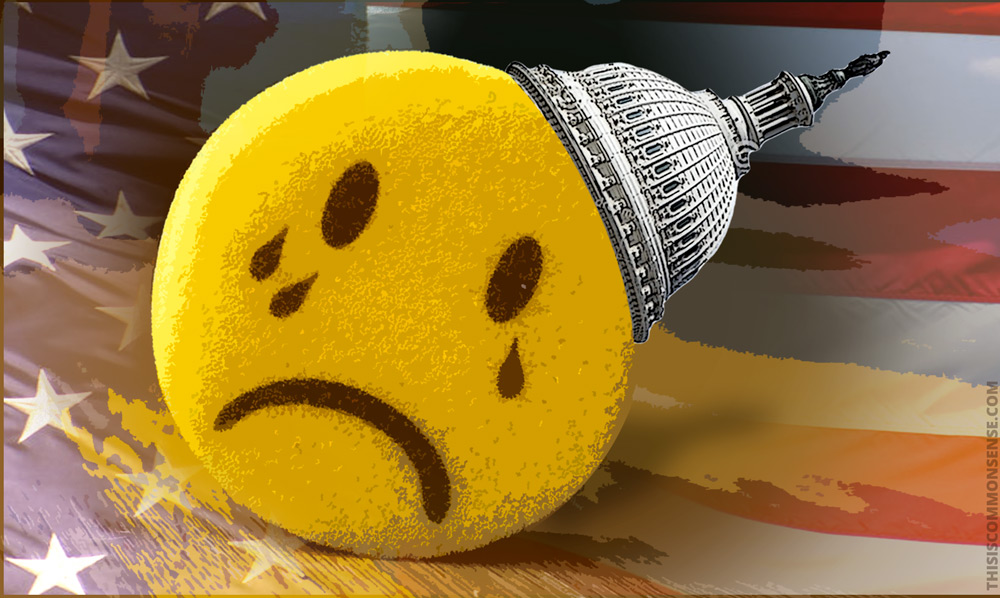
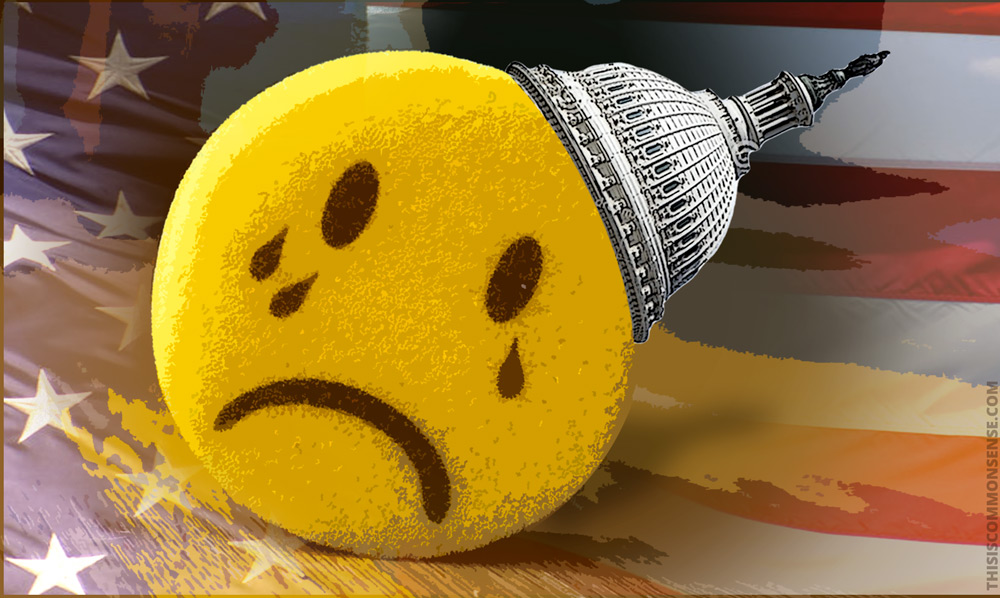
And then cries about it.

Well, wipe your eyes, solons: it’s We the People who feel the pain.

This is Common Sense. I’m Paul Jacob.


PDF for printing

crying smiley, Congress, Independent Counsel, Willam Barr, The Mueller Report,

See all recent commentary
(simplified and organized)
See recent popular posts
Categories
Thought

Benedetto Croce

Morality, and the ideal of freedom which is the political expression of morality, are not the property of a given party or group, but a value that is fundamentally and universally human. . . . No people will be truly free till all are free.

Benedetto Croce was an Italian philosopher and outspoken anti-fascist.
Categories
Today

Immanuel Kant

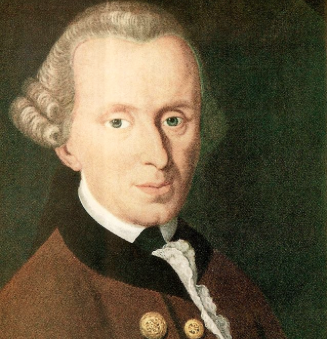
On April 22, 1724, philosopher Immanuel Kant was born.

Aside from being the pre-eminent modern philosopher and originator of transcendental idealism, Kant was also a major figure of Enlightenment thought, a classical liberal, and the originator of the notion of the Categorial Imperative. He was an early and important astronomical theorist in his early career, but produced his greatest works towards the end of his life, including The Critique of Pure Reason and The Groundwork for the Metaphysics of Morals. He was also author of the 1795 essay “Perpetual Peace: A Philosophical Sketch.”

Arthur Schopenhauer is widely known as an admiring and astute critic of Kant’s thought, while philosophical opponents include Friedrich Nietzsche and Ayn Rand. Kant’s approach to ethics continues to excite interest today, with some of the revival a result of the work of John Rawls.

Kant died on February 12, 1804, in Königsberg, Prussia (now Kaliningrad, Russia), where he had lived the bulk of his life.

Categories
links

Townhall: Flavor-of-the-Month Leaves Bad Taste

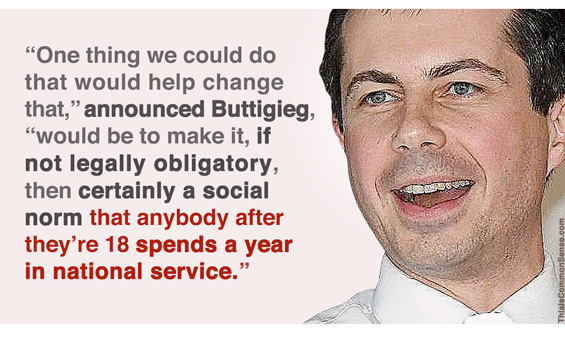
What Democratic presidential candidate Mayor Buttigieg repeatedly offers as a bold new idea is contradictory, and, because of that, dangerous. 

For your kids’ lives and liberties. Click on over to this weekend’s column.

Please give the government a piece of your mind.