In every country of the world, economic self-rule by the people is frustrated to some extent by state intervention to protect sectional interests. By ‘economic self-rule by the people,’ I simply mean the demo-cratic exercise of consumers’ sovereignty. Under a free market system, income receivers as a whole control the economy through the discipline they exercise over decision-makers, through buying or refraining from buying the services and commodities offered in the market. The present is a restrictionist, not an equalitarian or liberal age; and I know of no country in which the state forbids all creation of scarcity, that is, all action for the benefit of at least some politically powerful sections.
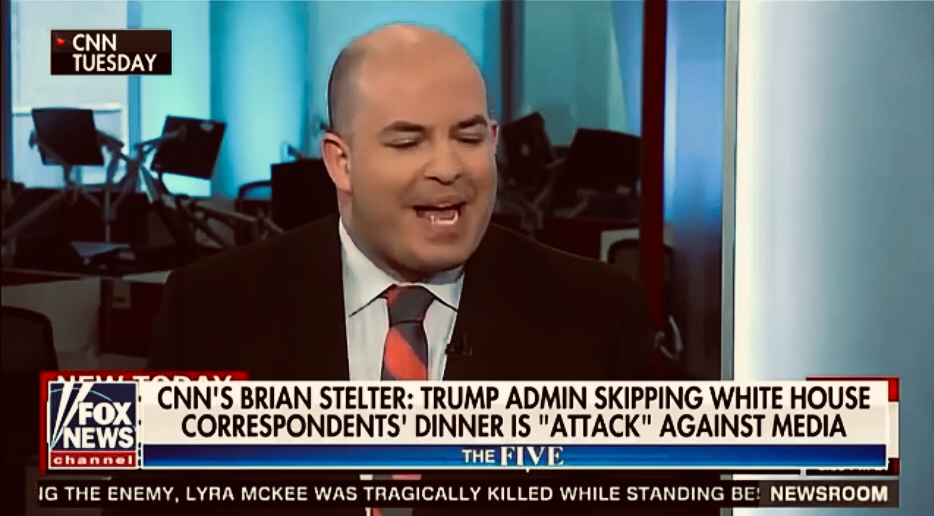
President Donald Trump skipped the White House Correspondents’ Dinner. This is hardly an affront to the First Amendment or openness in government, but that is the way some spin it. Fox’s Greg Gutfeld isn’t having any of it. To him, the jokes-for-charity event has gone from a light-hearted, friendly roast, to a public burning:
Trump left town and held another one of his rallies, instead.
But only after he spoke in front of the NRA and got a phone thrown at him — a miss . . . as good as a smile?
I suppose some of the “correspondents” chuckled at this.
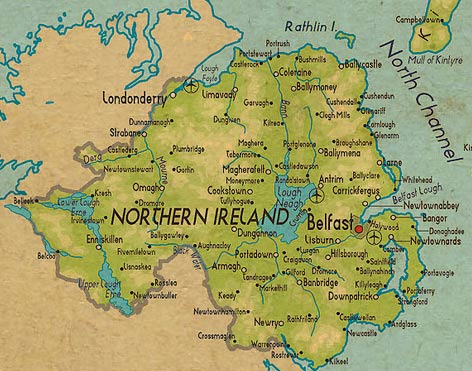
On the hundredth day of 1998, the Northern Ireland peace talks ended with an historic agreement, dubbed the Belfast, or Good Friday Agreement. The accord was reached after nearly two years of talks and 30 years of conflict — 19 years ago today.
The increasingly close governmental control of social and economic life in recent years has tended to strengthen separatism by enhancing the prizes of political power and thus the intensity of the struggle for it, and for this reason it has accentuated concern with ethnic differences between the rulers and the ruled. . . .
Peter T. Bauer, United States Aid and Indian Development, p. 7.
On April 27, 1759, English philosopher and author Mary Wollstonecraft was born. Wollstonecraft married anarchist philosopher William Godwin and the couple had one daughter, Mary Shelley, author of Frankenstein: or, The Modern Prometheus. Wollstonecraft herself wrote one infamous and valiant effort in the emancipation of women, A Vindication of the Rights of Women, in 1792.
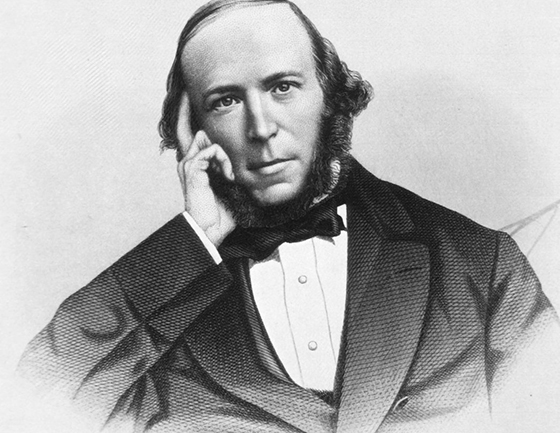
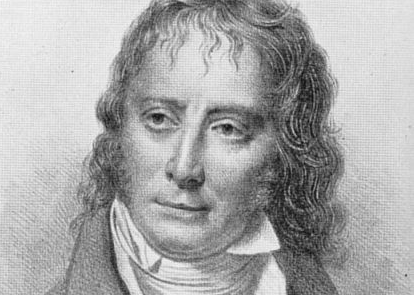
English philosopher, psychologist, sociologist, and political theorist Herbert Spencer was born in Derby, England, on April 27, 1820. Among Spencer’s most famous books are First Principles, Principles of Ethics (chiefly its first part, The Data of Ethics), The Study of Sociology, The Man versus the State, and two editions of Social Statics. Spencer was an evolutionary theorist as well as a religious and political philosopher, and coiner of the phrase “survival of the fittest.” He called the basic principle of a free political order “The Law of Equal Freedom.”
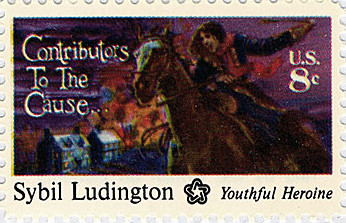
On April 26, 1777, Sibyl Ludington, aged 16, rode 40 miles to alert American colonial forces to the approach of the British. Her ride was over twice as long as the more famous Paul Revere’s.
On the same day in 1805, United States Marines captured Derne under the command of First Lieutenant Presley O’Bannon, an important event in the First Barbary War. In April 26, 1865, Union cavalry troopers cornered John Wilkes Booth, assassin of President Lincoln, in Virginia, shooting him to death. There was no interrogation.
Not only does he apparently not pull the strings of the much-accused-of/now-cleared-of-collusion “Trump Puppet,” Putin also does not write comic lines for the “acting” president of Ukraine.
You see, a few days ago Ukrainians held a run-off election to choose a new leader, and the man who won — Volodymyr Oleksandrovych Zelensky — is, like the U.S. president, a celebrated entertainer.
In 2015, he began playing the role of Vasily Goloborodko in the TV show, Servant of the People. His character is a high-school history teacher who rants in class against government corruption. Soon a video of his extemporaneous tirade goes viral, and, voila, Goloborodko ascends to the presidency!
Zelensky’s actual transit to the real presidency may be less funny but is just as remarkable.
A Kiev teacher quoted by the Los Angeles Times admitted the election was rather crazy. “But at least we have a choice. They don’t have that in Russia.” In the Times’ lede, Putin is identified as “by far the biggest loser of the night.” The anti-Russia trajectory of Ukrainian politics is reported to be steadfast.
The anti-corruption movement, however, may be a bit iffier.
Meanwhile, the eighth season of HBO’s political satire Veep is underway, and I am told it is as chillingly accurate as ever. Last week the anti-heroine Selina Meyer, played by Julia-Luis Dreyfuss, again stumbled her way into political success, this time by “accidentally” “colluding” with the Chinese Government.
Is this meant as a nod to Russiagate or a pointed Hillary Clinton commentary?*
Seems a lot like Ukrainian politics.
This is Common Sense. I’m Paul Jacob.
* Two decades ago the “Chinagate” scandal roiled the second term of the Bill & Hillary Clinton Administration.
The virtues of the free market do not depend upon the virtues of the men at the political top but on the dispersed powers of substitution exercised by men in their role as consumers. In that role, a truly competitive market enables them to exert the energy which enforces the neutrality of business decision-making in respect of race, colour, creed, sex, class, accent, school, or income group