Categories
free trade & free markets national politics & policies

Why Lie?

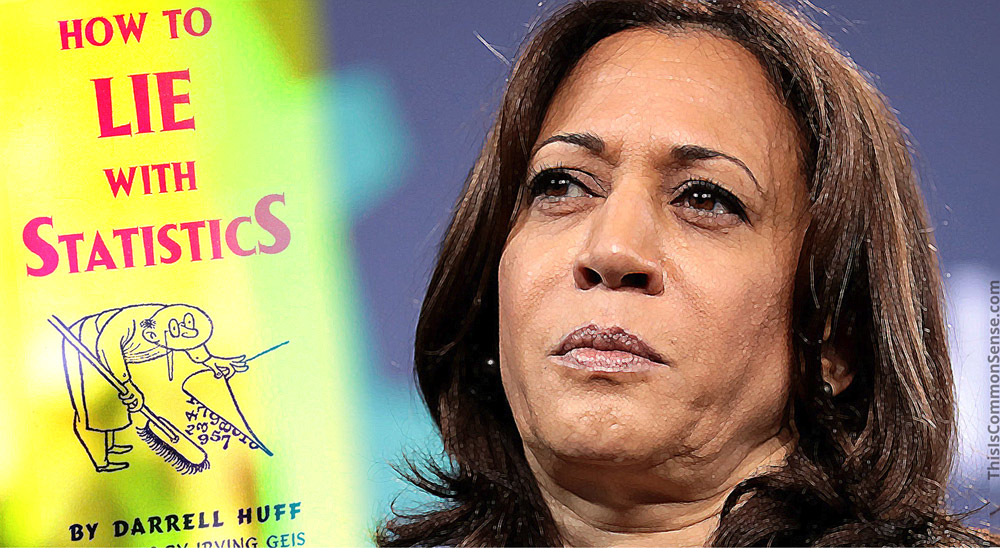
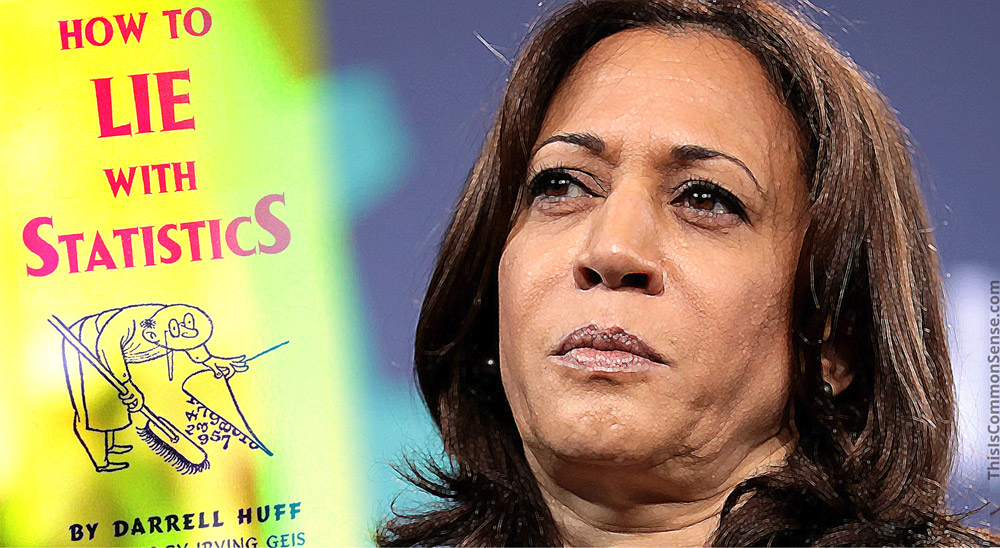
Democratic presidential contender and U.S. Senator from California Kamala Harris leaned in to the big lie.

Debuting a new proposal to “close the gender pay gap,” she declared that, “In America today, women for the same work, for the equal work, on average make 80 cents on the dollar, black women make 61 cents on the dollar, Latinas make 53 cents on the dollar — and this has got to end.”

In fact, Harris emphasized the untruthy part of her statement; her numbers do not represent the “on average” difference in remuneration between the sexes (or races) for the “same” or “equal” work at all. Such a gap has been illegal since the Equal Pay Act of 1963. Harris’s figures are, instead, an average of salaries and wages for all the millions of diverse jobs held by women compared to that same average for all the millions of diverse jobs held by men. 

Men and women tend to make different choices. More women spend time outside the labor market, often laboring in family households without salaries as such. And they tend to choose less remunerative careers: different work.

Why pretend otherwise? Well, such grievance against perceived injustice can sure serve as a motivator . . . for voters that presidential candidate Harris desperately needs to attract. 

And what about her new policy? 

“Harris’s plan puts the responsibility on companies,” MSNBC talking head Stephanie Ruhle explained. “Any company who cannot prove that they pay women at the same rate as men is going to have to pay a fine.”

Is that how the system should work: if you cannot prove your innocence, you are guilty?

This is Common Sense. I’m Paul Jacob.

PDF for printing

Kamala Harris, statistics, pay gap, sexism,

Photo credit: Gage Skidmore

See all recent commentary
(simplified and organized)
See recent popular posts

Categories
Thought

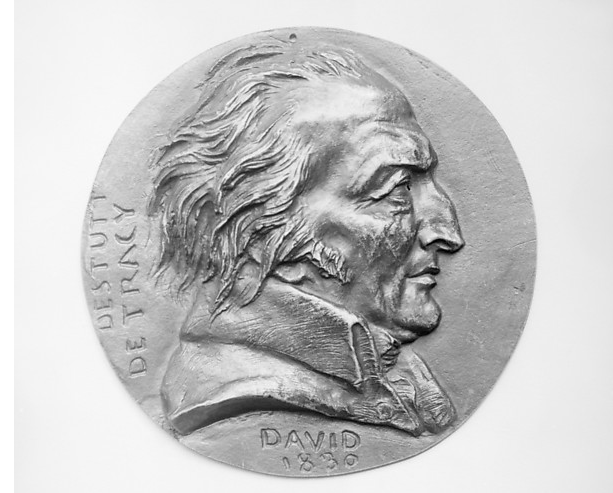
Destutt de Tracy

Society is purely and solely a continual series of exchanges. It is never anything else, in any epoch of its duration, from its commencement the most unformed, to its greatest perfection. And this is the greatest eulogy we can give to it, for exchange is an admirable transaction, in which the two contracting parties always both gain; consequently society is an uninterrupted succession of advantages, unceasingly renewed for all its members.

Categories
Today

Term limits

On May 22, 1995, in the case U.S. Term Limits v. Thornton, the U.S. Supreme Court struck down Arkansas’s congressional term limits law, 5-4, overturning the congressional term limits then the law in 23 states: Arizona, Arkansas, California, Colorado, Florida, Idaho, Louisiana, Maine, Massachusetts, Michigan, Missouri, Montana, Nebraska, Nevada, New Hampshire, North Dakota, Oklahoma, Ohio, Oregon, South Dakota, Utah, Washington and Wyoming.

Other May 22 events include

* 1856: South Carolina Congressman Preston Brooks savagely beat Massachusetts Senator Charles Sumner in the halls of Congress as tensions rise over the expansion of slavery. Sumner did not return to the Senate for three years while he recovered.

* 1848: Slavery was abolished in Martinique.

* 1807: A grand jury indicted former Vice President of the United States Aaron Burr on a charge of treason. Burr (in portrait, above) was later acquitted.


On the hundredth day of 1998, the Northern Ireland peace talks ended with an historic agreement, dubbed the Belfast, or Good Friday Agreement. The accord was reached after nearly two years of talks and 30 years of conflict. A little more than a month later, on May 22, 1998, this Agreement was approved by voters across the island of Ireland in two referendums.

In Northern Ireland, voters were asked whether they supported the multi-party agreement.

In the Republic of Ireland, voters were asked whether they would allow the state to sign the agreement and allow necessary constitutional changes to facilitate it. The people of both jurisdictions needed to approve the Agreement in order to give effect to it.

The British-Irish Agreement came into force on December 2, 1999.

Categories
initiative, referendum, and recall insider corruption

The Man Who Had No Idea

“I have no idea.” 

So responded Florida Rep. Jamie Grant (R-Tampa Bay) to a question about how petition circulators on 2018 ballot initiative campaigns were paid. 

“Is there evidence that signatures collected by a person . . . paid per hour or paid per signature are more fraudulent?” asked Rep. Tina Scott Polsky (D-Boca Raton), following up.

“If you’re asking specifically on the petition process,” Grant admitted, “I don’t know the answer to that.”

Rep. Grant should know. His 18-page amendment — slapped onto completely unrelated legislation, House Bill 5, in the waning hours of the last day of the legislative session —  criminalizes paying petition circulators based on the number of signatures they gather.

Which is precisely what you pay circulators for: gathering as many voter signatures as possible. Grant claims his ban will prevent fraud — without evidence there has been any fraud.

Instead, a tap-dancing Grant blurted out that Wells Fargo, the bank, is “a fantastic example” that “broken commission structures will lead to bad actions.” But his bill doesn’t address banking fraud. 

Not ridiculous enough? He went further, comparing Floridians enacting a constitutional amendment to the Russian government meddling in our elections. 

What does a foreign government’s black-ops scheme have in common with the constitutional ballot initiative process whereby millions of Florida voters sign petitions and then must approve amendments by a supermajority vote of at least 60 percent?

Nothing. 

Which is the sum of Grant’s knowledge. 

Well, there is one thing Rep. Grant testified to with certainty: His legislation will hike the cost of initiative campaigns, making it even more difficult for citizens to check politicians . . . like Grant. 

Don’t sign it, Gov. DeSantis, veto.

This is Common Sense. I’m Paul Jacob.


PDF for printing

lorida Rep. Jamie Grant (R-Tampa Bay)

See all recent commentary
(simplified and organized)
See recent popular posts

Categories
Thought

Saint Basil

There is nothing which a prudent man must shun more carefully than living with a view to popularity and giving serious thought to the things esteemed by the multitude, instead of making sound reason his guide of life, so that, even if he must gainsay all men and fall into disrepute and incur danger for the sake of what is honourable, he will in no wise choose to swerve from what has been recognized as right.

St. Basil of Caesarea, On Greek Literature
Categories
Today

Colombia

On May 21, 1851, slavery was abolished in Colombia, South America.

Categories
incumbents political challengers term limits

Knock Down the Incumbency

Over the weekend, I suffered through Knock Down the House . . . so you don’t have to. 

While the documentary heralding four inexperienced Democratic women running for Congress in 2018 cost Netflix $10 million, I did not have to spend a dime — beyond my regular monthly subscription.

The award-winning film, directed by Rachel Lears, who wrote it along with her husband, Robin Blotnick, is expertly crafted. Unfortunately, it is geared to democratic socialists predisposed to adoring the subjects. 

The star is now Rep. Alexandria Ocasio-Cortez (D-N.Y.), who defeated then Rep. Joe Crowley, a ten-term, 20-year incumbent . . . the Number 4 Democrat in the House of Representatives.

In addition to Ocasio-Cortez, the movie follows Amy Vilela, seeking to replace a retiring Nevada Democrat; Cori Bush, challenging the Clay Family’s hereditary congressional dynasty in Missouri’s 1st district*; and Paula Jean Swearengin, battling incumbent Sen. Joe Machin in West Virginia’s Democratic Party Primary. Of the four challengers chronicled, all of whom received extensive support from two progressive groups, Justice Democrats and Brand New Congress, AOC was the only winner.

“Let’s assume all the energy in this room can get you on the ballot and into office,” offers a fellow at one of Ocasio-Cortez’s early meetings. “How, then, do we overcome the drop in power?”

“I think we really need to have to look at what that power does now,” AOC responds. “When it matters, [Rep. Crowley] doesn’t stand up for us; when it matters, he doesn’t advocate for our interests.”

Whatever one thinks of AOC’s politics, her point here is not without merit: the idea that we citizens benefit from longtime incumbents who ‘bring home the bacon’ is . . . baloney. 

This is Common Sense. I’m Paul Jacob.


* At the completion of this term, Rep. Lacy Clay, Ms. Bush’s opponent, will have served 20 years. His father, Bill Clay, held the seat for 32 years before that. Together, over half a century. The film alludes to the fact that Clay Jr. gained the seat in 2000 only after the surprise retirement of Clay Sr. on the very last day to file for the office . . . with Jr. filing, instead.

PDF for printing

Knock Down the House, socialism, term limits,

See all recent commentary
(simplified and organized)
See recent popular posts


Categories
Today

Mill and Passy

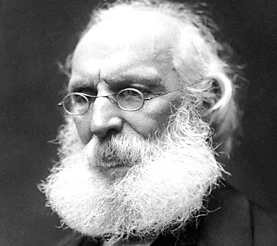
French economist and co-winner of the first (1901) Nobel Prize for Peace, Frédéric Passy (pictured above), was born on May 20, 1822.

English economist and philosopher John Stuart Mill was born exactly 16 years earlier.

Categories
Thought

Bill di Blasio

There’s plenty of money in this country, it’s just in the wrong hands.

New York Mayor Bill di Blasio, presidential campaign ad.


Categories
education and schooling

Down the Up Staircase

or: How I Stopped Worrying and Learned to Love Disadvantage

This weekend at Townhall, Paul Jacob elevates the college admissions discussion. Click on over, then back here for further education upgrades: