Categories
initiative, referendum, and recall political challengers term limits

A Different Conversation

“Here’s the difference between me and the other candidates,” says billionaire investor-turned-presidential aspirant Tom Steyer. “I don’t think we can fix our democracy from the inside. I don’t believe Washington politicians and big corporations will let that happen.”

Of course, if this Democrat becomes president of these United States, that’s hardly the outside.

“For me,” Steyer continues, “this comes down to whether you trust the politicians or the people.”

Well, I certainly trust the people a whole lot more than I trust the politicians.* 

“If you say you trust the people, are you willing to stand up to the insiders and the big corporations and give the people the tools they need to fix our democracy?” Steyer asks. 

Which tools? “A national referendum, term limits, eliminating corporate money in politics, making it easy to vote.”

The toolkit’s a mixed bag.

Eliminating corporate money means repealing part of the First Amendment, and silencing non-profit corporations such as U.S. Term Limits, MoveOn.org, the NRA, Planned Parenthood, National Right to Life, etc., etc. 

Mr. Steyer also worries that, without reform, “We won’t be able to . . . pass any of the great plans proposed by the Democratic candidates running for president.”

We should be so lucky.

Still, here is another Democratic presidential candidate endorsing congressional term limits. And we do need a direct democratic check on Washington, the ability for citizens to initiate reforms such as term limits and take unpopular legislation to a referendum. 

I’m not sanguine that Steyer will get the policy details right, but as fellow Democratic candidate Sen. Kamala Harris is fond of saying, “Let’s have that conversation.”

This is Common Sense. I’m Paul Jacob.


* Constitutional protections for our basic rights, as in The Bill of Rights, mean we do not have to trust government, directly democratic or representative.

PDF or printing

billionaire, Tom Steyer, candidate, president, election, campaign,

See all recent commentary
(simplified and organized)
See recent popular posts

Categories
Thought

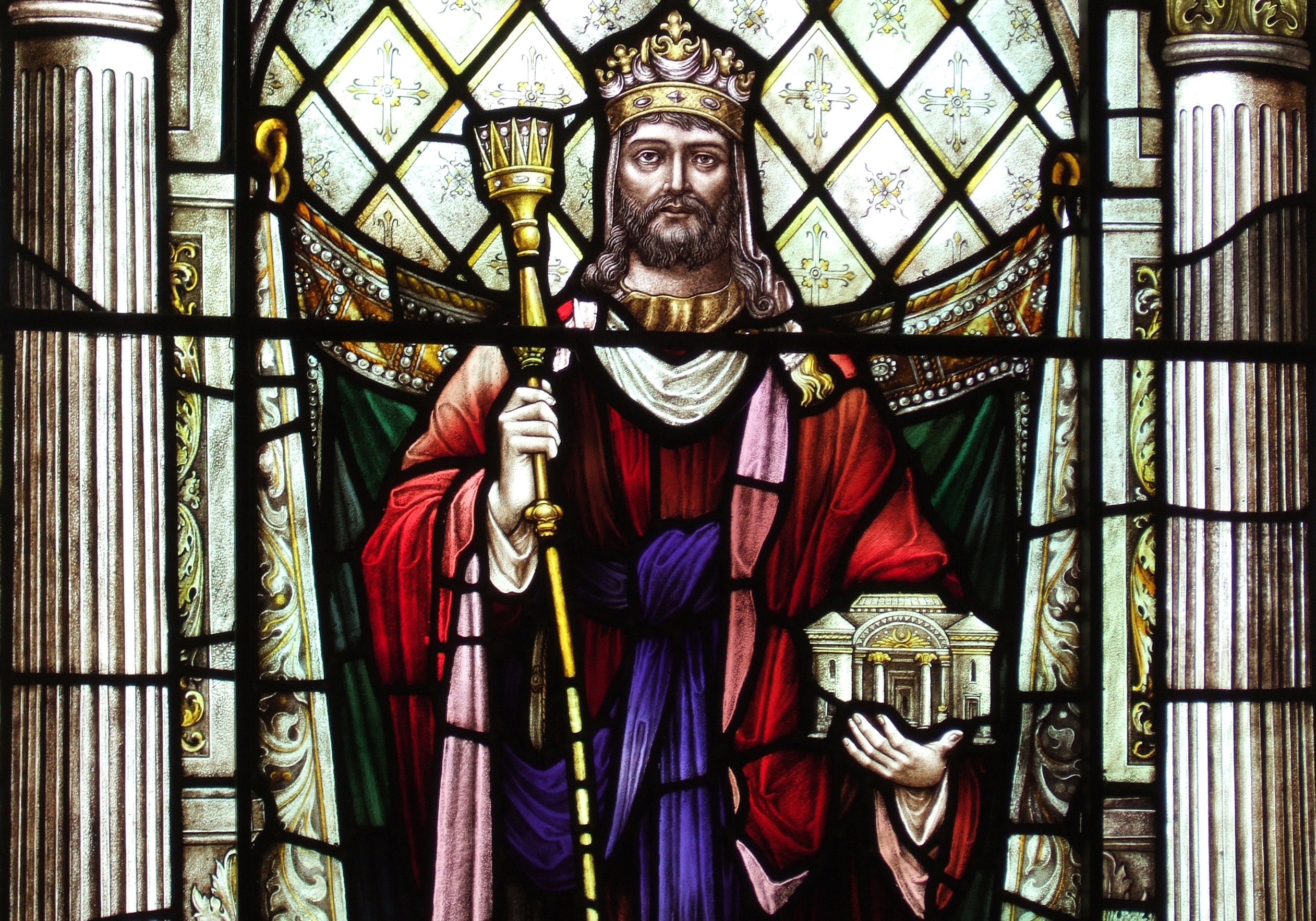
Solomon

Envy thou not the oppressor, and choose none of his ways.

Proverbs 3:31, King James Version
Categories
Today

Ethiopia

On July 16, 1931, Ethiopia’s Emperor Haille Selassie I signed a new Constitution. Not exactly a model of limited government, the new document proved that the emperor was in keeping with the time, which was a period of weakening constitutional limits in America, Europe, and Britain. A flavor of the document can be gained by its most “rights-oriented” measures:

Art. 22. Within the limits laid down by the law, Ethiopian subjects have the right to pass freely from one place to the other.
Art. 23. No Ethiopian subject may be arrested, sentenced, or imprisoned except in pursuance of the law.
Art. 24. No Ethiopian subject may, against his will, be deprived of his right to be tried by a legally established court.
Art. 25. Except in cases provided for by law, no domiciliary searches may be made.
Art. 26. Except in cases provided by the law, no one shall have the right to violate the secrecy of the correspondence of Ethiopian subjects.
Art. 27. Except in cases of public necessity determined by the law, no one shall have the right to deprive an Ethiopian subject of any movable or landed property which he owns.
Art. 28. All Ethiopian subjects have the right to present to the Government petitions in legal form.
Art. 29. The provisions of the present chapter shall in no way limit the measures which the Emperor, by virtue of his supreme power, may take in the event of war or public misfortunes menacing the interests of the nation.

Categories
ideological culture national politics & policies

Inslee, AOC, and the Watermelon

Washington State Governor Jay Inslee is running to lead the Democratic Party in the next presidential election to take back the imperial capital, Washington, D.C. His chief issue? Fighting “man-made climate change.” But he also dares to say goofy things, apparently on the theory that It Works For Trump.

Seeking to promote “more unity across the world and more love rather than hate,” he has said, in an apparent attempt at impish if instructive irony, that his “first act will be to ask Megan Rapinoe to be my secretary of state.”

Inslee is not referring to Ms. Rapinoe’s best-known statement, her infamous scream, upon a sports win last week, “I deserve this!” 

Inslee is referring, instead, to her admonishment for everyone “to be better. We have to love more, hate less. We got to listen more, and talk less. . . .” And so on.

With this sort of inanity awarded by a major Democratic pol, you might wonder, is his primary policy plank equally hollow?

Not according to Saikat Chakrabarti, chief of staff to Rep. Alexandria Ocasio-Cortez (D-N.Y.). 

Talking off the cuff with the climate director for Inslee’s campaign, Chakrabarti praised the Democrat’s “comprehensive plan” for fitting together disparate parts.

As I noted several months ago, AOC’s Green New Deal suffers from an over-abundance of extraneous-to-climate change elements. But Chakrabarti insists that the “interesting thing about the Green New Deal is it wasn’t originally a climate thing at all.” 

It was “a how-do-you-change-the-entire-economy thing.”

Which brings us back to the old Watermelon Theory of environmentalism: “green on the outside but red in the middle.”

This “green” agenda isn’t hollow. It is dangerous.

This is Common Sense. I’m Paul Jacob.


PDF for printing

Jay Inslee, Washington, president, election, socialism, watermelon, green on the outside, red on the inside,

See all recent commentary
(simplified and organized)
See recent popular posts


Categories
Thought

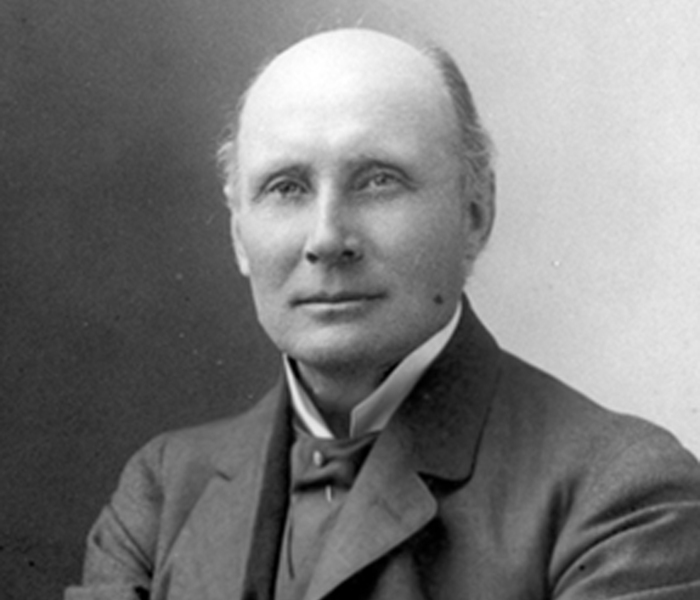
Alfred North Whitehead

In formal logic, a contradiction is the signal of a defeat; but in the evolution of real knowledge it marks the first step in in progress to victory.

Categories
ideological culture national politics & policies

Playing Cards with Democrats

“[T]he thing that really set me off this week,” former Sen. Claire McCaskill (D-Missouri) said on NBC’s Meet the Press, “was them going after Sharice Davids.”

The “them” are four freshman congresswomen — Rep. Alexandria Ocasio-Cortez (D-NY), Rep. Ilhan Omar (D-Minn.), Rep. Ayanna Pressley (D-Mass.) and Rep. Rashida Tlaib (D-Mich.) — but it was specifically Saikat Chakrabarti, Ocasio-Cortez’s chief of staff, who tweeted: “I don’t believe Sharice is a racist person, but her votes* are showing her to enable a racist system.” 

“This is the first Native American woman elected to Congress,” McCaskill exasperatedly explained regarding Rep. Davids. “She is the second openly lesbian member of Congress in history. She represents Kansas, from a district that has been held by the Republicans for cycle after cycle after cycle. . . . The notion that they’re going after her and playing the race card, what are they thinking?”

Perhaps they’re thinking that the race card has worked quite well before.

And isn’t McCaskill tossing out her own “Native American woman” card? Not to mention suggesting that Rep. Davids’ sexual orientation is yet another trump suit, making her further immune to criticism.

Which seems both profoundly racist and sexist.

This comes on top of a wargame of words between Speaker Nancy Pelosi and freshman Rep. Ocasio-Cortez, who, after being belittled by Pelosi on 60 Minutes, charged that the Speaker was “singling out . . . newly elected women of color.”

Perhaps there is another reason as well for this political fixation on race, gender, sexual orientation: the content of their . . . character?

This is Common Sense. I’m Paul Jacob.


* The issue at hand was emergency legislation to increase border funding for detainees at the infamous “concentration camps” (as AOC called them) for people caught illegally crossing the southern border of the U.S. The “them” voted against the funding.

race, card, color, racism, hate,

See all recent commentary
(simplified and organized)
See recent popular posts


Categories
Today

“Malaise”

On July 15, 1976, Jimmy Carter accepted the nomination of the Democratic Party to run for the presidency.

Three years later, as president, he gave his infamous “malaise” speech, in which he focused on energy but did not mention the one thing that actually helped turn the ’70s’ energy crisis around: the phased deregulation of oil prices that had started three months earlier, under his own directive. Instead of touting this deregulatory effort, Carter did the usual politic thing and promised a number of new government programs, extensively ground home a “crisis of confidence” message, and vaguely talked of a spiritual challenge.

The deregulation was startlingly effective, in the long run — though the immediate effect was a rocketing of prices. These high prices presented profit opportunities, and (lo and behold!) domestic production greatly increased, allowing for many, many years of lower prices. Those high prices would have worked better as market signals had not Carter and Congress also established “windfall profits” taxes, to take away those temporary gains to existing business.

Had Carter deregulated prices earlier, he would probably have been re-elected president. Had he emphasized deregulation, he probably would have beat back Ronald Reagan’s free market rhetoric — with actual action.

The price controls had been put in place earlier in the decade by the Republican president at the time, Richard M. Nixon, with the great help of his aides Dick Cheney and Donald Rumsfeld.

Categories
Thought

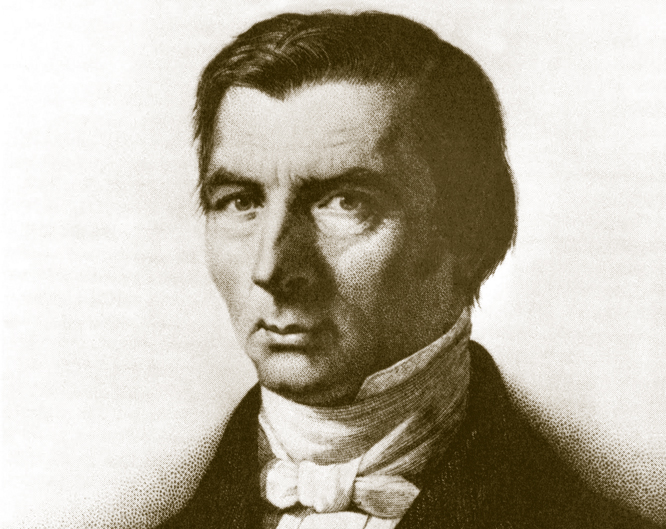
Frédéric Bastiat

He who rejects liberty has no faith in human nature.

Categories
by Paul Jacob video

America the Debatable — This Week

Part Two of Paul’s looking back on the big stories this week.
Categories
Today

The Bastille

On July 14, 1789, Paris citizens stormed the Bastille. On the same date nine years later, in America, the Sedition Act prohibited the writing, publishing, or speaking false or malicious statements about the United States government.

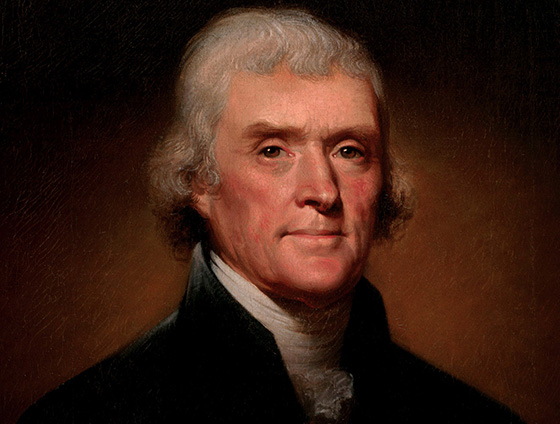
The passage of this repressive law spurred the formation of the first opposition party in the United States, with Thomas Jefferson [above] as its leader and figurehead.