Senator Claire McCaskill? President Donald Trump? “The Squad”?
In this weekend’s “This Week in Common Sense,” Paul covers the most vexatious story of this past week:
Senator Claire McCaskill? President Donald Trump? “The Squad”?
In this weekend’s “This Week in Common Sense,” Paul covers the most vexatious story of this past week:
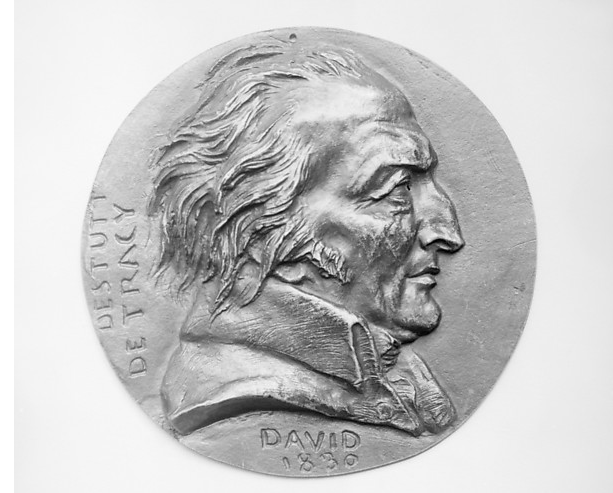
Born on July 20, 1754, Antoine Louis Claude Destutt, comte de Tracy, French philosopher and economist. Perhaps best remembered for coining the term “ideology,” he didn’t mean by that term what scornful Napoleon and communist Karl Marx later turned it into — for Destutt de Tracy ideology meant “the science of ideas,” a unified approach to all knowledge, from epistemology to social theory.
Though his family had been enobled twice, he renounced the title and entered the 1789 Estates General conference as a member of the Third Estate. During the Reign of Terror, he was imprisoned, and would have been executed had not Robespierre got to the scaffold ahead of him.
Two of his books became popular in early 19th century America, his commentaries on Montesquieu’s Spirit of the Laws, and his Traité de la volonté, which Thomas Jefferson, the editor of the American edition, retitled A Treatise on Political Economy. Tracy’s economics was of a deductivist stripe, familiar to readers of later economists such as Nassau Senior and Ludwig von Mises.
Destutt de Tracy’s political philosophy was republican, and his preferred economic policy was laissez-faire.
NASA’s Apollo 11 landed two humans on the Moon — Commander Neil Armstrong and lunar module pilot Buzz Aldrin — on July 20, 1969, at 20:17 UTC. Today is the 50th anniversary of this exploratory achievement.
Whoso loveth instruction loveth knowledge: but he that hateth reproof is brutish.
Proverbs 12:1, King James Version
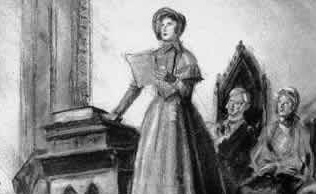
When, in the course of human events, it becomes necessary for one portion of the family of man to assume among the people of the earth a position different from that which they have hitherto occupied, but one to which the laws of nature and of nature’s God entitle them, a decent respect to the opinions of mankind requires that they should declare the causes that impel them to such a course.
Declaration of Sentiments, preamble — Seneca Falls Women’s Rights Converence, July 19-20, 1848.
Today is the 50th anniversary of Apollo 11’s landing upon the Moon, with the touchdown occurring at 20:17 pm Coordinated Universal Time, July 20, 1969.
On Wednesday, I said we should, to borrow the vernacular, “have a conversation” about a national referendum.
Billionaire investor, environmentalist, and Democratic presidential candidate Tom Steyer proposed the idea, which I’ve loved conceptually since my friend, former Alaska Sen. Mike Gravel (also a Democratic presidential candidate), first advocated it decades ago.
But that ol’ devil — he’s in the details. (Decidedly not the latest lingo.) What might a national initiative and/or referendum process look like?
Given that it would require a constitutional amendment — meaning ratification by 38 of the 50 states — the process must win broad support to be enacted.
Here’s what I propose: Allow any statutory initiative measure to be petitioned onto a federal General Election ballot with signatures equaling 6 or 8 percent of the country’s population* and as verified by election officials in each state. Require a concurrent majority, whereby for a measure to pass it must garner not only a majority of the vote nationally, but also a majority vote in at least 20 states — or even in a majority of the states.
An initiative proposing a national constitutional amendment should do more. Require, say, a petition signature threshold of 10 or 15 percent and not merely a majority of the vote nationally to pass, but mirroring the current amendment process, mandate a majority in each of at least 38 states.
If U.S. Term Limits is successful in getting 34 states to call a convention to propose an amendment for congressional term limits, a national referendum process could follow in those footsteps.
Talk about two ideas that will pop blood vessels in the heads of professional politicians and their special interest cronies!
Dare to dream.
This is Common Sense. I’m Paul Jacob.
* This should simply follow the figures of the most recent census, of course.
See all recent commentary
(simplified and organized)
See recent popular posts
On July 19, 1848, a two-day Women’s Rights Convention opened in Seneca Falls, New York.
Abraham Lincoln’s encouraging vision of “government of the people, by the people, for the people” raised hopes that have never been realized. But his name can no longer be used to justify the error that he could not have foreseen in 1863. He could not have envisaged that, a century after he was assassinated, government in the United States, and even more in Great Britain and Europe, would dominate economic life. If he had survived he would not now have approved of the dominant government that democracy has produced. For it is no longer “of” the people, “by” the people, “for” the people.
Gordon Tullock, Government Failure: A Primer in Public Choice (2002)
The application of economics to politics reveals a form of government that Lincoln would not have commended in 1900, 1945, or 2000. Government is now very different from the one based on the common people that Lincoln thought would prevail. Although his vision is still the most common encyclopedia definition of “democracy” Lincoln cannot now be claimed as the father of our 20th-21st-century form of democracy.
Lincoln would now see government not of, by, and for all the people but of, by, and for some kinds of people. He would see it not as of all the people but as of the political activists. He would see government not as by the people but as managed by the politicians and their officials. And he would see government not as for the ordinary people but as for the organized in well-run, well-financed, and influential business organizations, professional associations, and trade unions. It is government “of the Busy (political activists), by the Bossy (government managers), for the Bully (lobbying activists).”
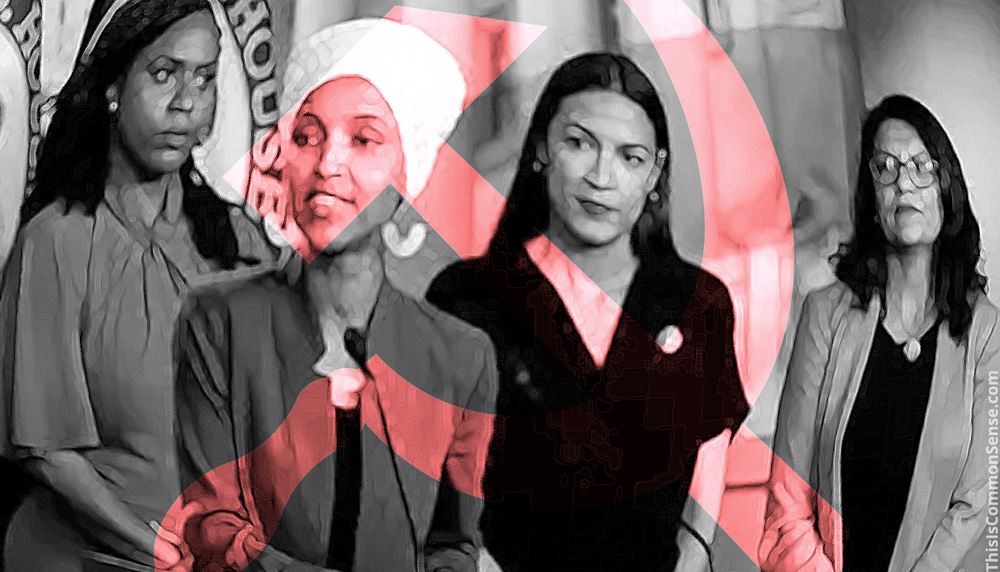
“I hesitate to contribute to this freak show,” Sen. John Kennedy (R-La.) told Tucker Carlson on Tuesday night.
I know the feeling.
“I don’t think President Trump is a racist,” added the senator. “I don’t think his original tweet was racist.”
While I haven’t peered into the president’s soul, I didn’t see racism in his tweet, either. But I did catch a whiff of other wrongs.
Xenophobia, for instance.
And nastiness.
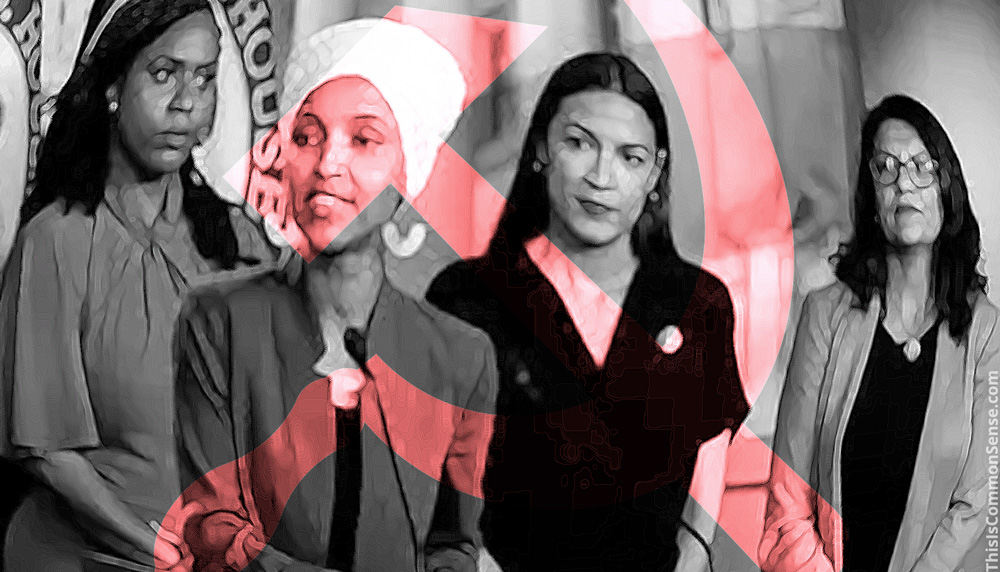
I didn’t like Mr. Trump’s attempt to paint “the Squad” — Congresswomen Alexandria Ocasio-Cortez (D-N.Y.), Ilhan Omar (D-Minn.), Ayanna Pressley (D-Mass.), and Rashida Tlaib (D-Mich.) — as somehow un-American or illegitimate by tweeting: “Why don’t they go back and help fix the totally broken and crime infested places from which they came.”
All but Rep. Omar were born here, and immigrant Omar is just as much an American citizen as was George Washington.
“Our opposition to our socialist colleagues has absolutely nothing to do with their gender, with their religion, or with their race,” Rep. Liz Cheney (R-Wyo.) rightly said. “It has to do with the content of their policies.”*
Let’s note that only two, AOC and Tlaib, have chosen the socialist label. Reps. Omar and Pressley have not, though their policy positions seem in sync.
It may be, as NBC News reporter Jonathan Allen wrote, that Trump’s tweet was designed to “flip the script,” ending the feud between the Squad and Speaker Pelosi, because “he wants the Democratic Party stuck to its progressive fringe.”
But the ends do not justify the means. Two wrongs don’t make a right. And our politics stinks.
This is Common Sense. I’m Paul Jacob.
* Cheney added (and I concur): “They are wrong when they pursue policies that would steal power from the American people and give that power to the government.”
See all recent commentary
(simplified and organized)
See recent popular posts
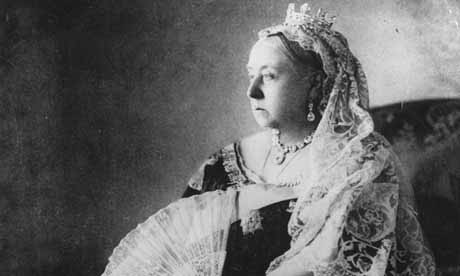
On July 18, 1872, Queen Victoria gave her “Royal Assent” to the Ballot Act, which established secret voting in Great Britain. The bill had been introduced by Prime Minister William Ewart Gladstone — one of the queen’s least favorite prime ministers.