Do not go gentle into that good night, Old age should burn and rave at close of day; Rage, rage against the dying of the light.
Though wise men at their end know dark is right, Because their words had forked no lightning they Do not go gentle into that good night.
Good men, the last wave by, crying how bright Their frail deeds might have danced in a green bay, Rage, rage against the dying of the light.
Wild men who caught and sang the sun in flight, And learn, too late, they grieved it on its way, Do not go gentle into that good night.
Grave men, near death, who see with blinding sight Blind eyes could blaze like meteors and be gay, Rage, rage against the dying of the light.
And you, my father, there on the sad height, Curse, bless, me now with your fierce tears, I pray. Do not go gentle into that good night. Rage, rage against the dying of the light.
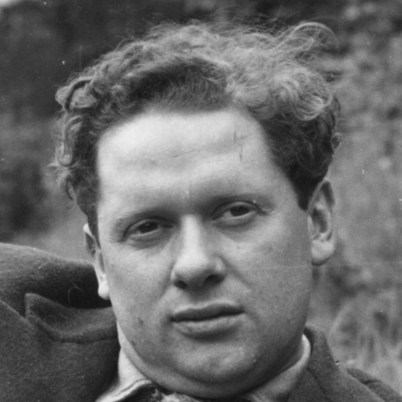
Dylan Thomas, who arrived in New York City for his first reading tour of the U.S. on Feb. 20, 1950.
On February 20, 1991,in the Albanian capital Tirana, a gigantic statue of Albania’s long-time leader, Enver Hoxha, is brought down by mobs of angry protesters.
If I’m ever Back on the Chain Gang, I want to be shackled right next to Chrissie Hynde, the lead singer of The Pretenders, who sang that 1980s song.
Actually, I’m generally a little Middle of the Road on their music. But I enjoy hearing The Pretenders’ hit My City Was Gone used as intro music on Rush Limbaugh’s radio program.
With permission.
Some time back, Hynde gave the okay because her late father was a big Rush fan.
Wait — there’s more!
“Liberal rock star Chrissie Hynde,” the UK’s Daily Mailreports, “has shocked her fans by praising Donald Trump for honoring conservative radio icon Rush Limbaugh, saying her father ‘would have been so delighted.’”
In an open letter to President Trump via a series of tweets, Hynde noted the awarding of the Medal of Freedom to Mr. Limbaugh as one reason that her dad, had he lived to see it, “would have enjoyed your Presidency.”
Hynde explained that she and her father “didn’t always see eye-to-eye. We argued a lot.”
“But isn’t that the American way?” she asked. “The right to disagree without having your head chopped off?”*
Of course, when Rush Limbaugh announced his cancer diagnosis, it did not stop some “progressive” political opponents from mocking him and celebrating his misfortune. Hynde faced plenty of nasty backlash, too.
Still, her obvious caring for humans with whom she happens to politically disagree sparked more support . . . and cogent observations.
“Ohh. Careful ma’am,” Otto replied to @ChrissieHynde and @realDonaldTrump. “If we stop hating each other we might start noticing how corrupt and self serving the political class is.”
It is eminently observable.
This is Common Sense. I’m Paul Jacob.
* The rock star also lobbied the president, calling Wikileaks’ founder Julian Assange “a man who sought to defend Freedom” and arguing that he “should now be set free. Please consider my plea.” I hope Mr. Trump will.
February 19, 1942, was a sad day for constitutional rights, with President Franklin D. Roosevelt signing Executive Order 9066, authorizing the Secretary of War to prescribe certain areas of the country as military zones. These zones were used to incarcerate Japanese Americans in internment camps.
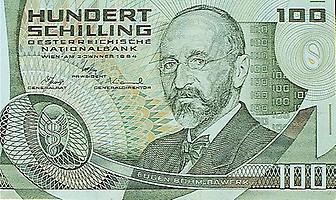
[T]hrift is never popular. . . . If parliaments have historically been the guardians of thrift, they now have turned much rather into its sworn enemies. Nowadays, the political and national parties — maybe not exclusively in our own country, but certainly also here — tend to develop a certain covetousness, almost considered to be dutiful, for all kinds of benefits for their own electorate at the expense of the general public.
Eugen von Böhm-Bawerk, as quoted by Ludwig von Mises, “The Economist Eugen von Böhm-Bawerk” (Neue Freie Presse, Vienna, August 27, 1924) — described by Mises as “the last words that Böhm-Bawerk addressed to Austria’s financial authorities.”
A Maine woman running for the U.S. Senate has chosen for her campaign logo the guillotine.
Yes, she calls herself a ‘democratic socialist.’ Well, on Twitter it is ‘DemSoc.’
Her name . . .
No, start again. On the campaign Twitter page the candidate’s “preferred pronouns” are listed as “they/them.” So, their name is Bre, and they proudly promoted the new logo on February 5th: “I was gonna wait until tomorrow to show off these beauties, but Trump got acquitted and I feel like folks could use something to look forward to.”
But . . . why?
For my part, the blood running in the streets was my least favorite part of the French Revolution, and I would, uh, downplay it, no matter how murderous I might ever feel.
You know, were I a DemSoc.
Upon being challenged with its most famous historical use, she had a . . . politic . . . response: “I’m aware of the French Revolution, and how the story ends. A guillotine t-shirt reminds others about it in hopes that we’ll all be motivated to address the very serious problems with our government before a similarly violent uprising becomes inevitable.”
When asked who it was for, she replied, “More of a ‘what.’ The guillotine is for the plutocratic & kleptocratic norms that have undermined our democratic process. We have to develop ways to subvert the stranglehold of wealth on our government. There will not be a more convenient revolution. The symbol is a reminder.”
I wonder what she would say if her rivals chose as campaign logos the hangman’s noose and the electric chair.
But hey, her, er, their guillotine is attractive, and, because it lacks a drop of red, emphasizes the ‘democratic’ part of ‘democratic socialism’ . . . by hiding the blood.
On Feb. 18, 1943, Hans and Sophie Scholl, a brother and sister, were arrested at the University of Munich for secretly (or not so secretly) putting out leaflets calling on Germans to revolt against Adolf Hitler and the Nazi regime.
In the previous year Hans had founded a group of students, who called themselves “The White Rose.” The group wrote and distributed six leaflets aimed at educated Germans. The leaflets made their way across Germany and to several other occupied countries. The Allies later dropped them all over the Third Reich.
It is the aim of public life to arrange that all forms of power are entrusted, so far as possible, to men who effectively consent to be bound by the obligation towards all human beings which lies upon everyone, and who understand the obligation.
Law is the quality of the permanent provisions for making this aim effective.
Simone Weil, draft for a Statement of Human Obligations (1943).
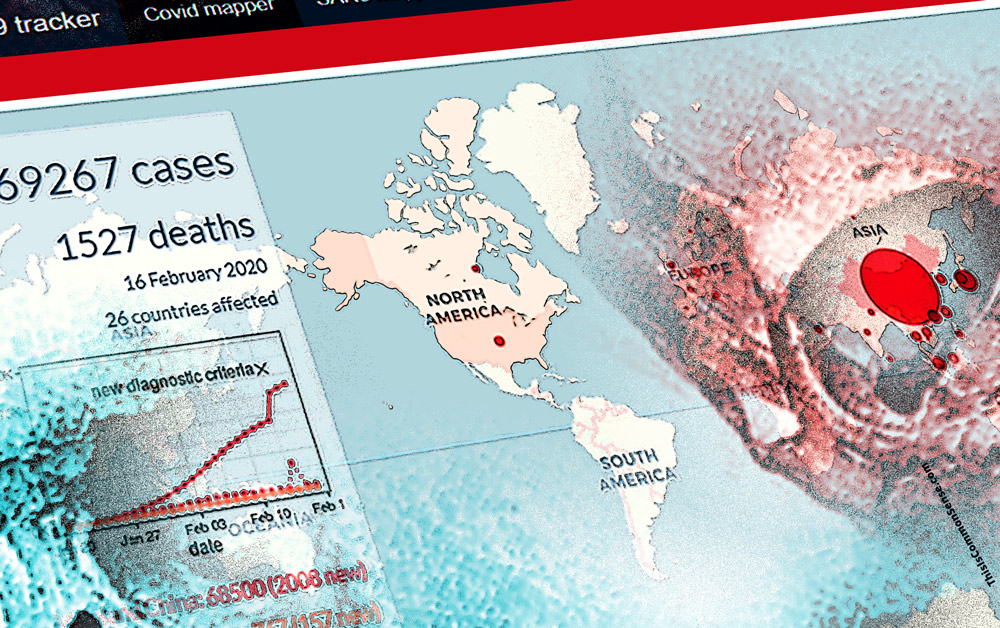
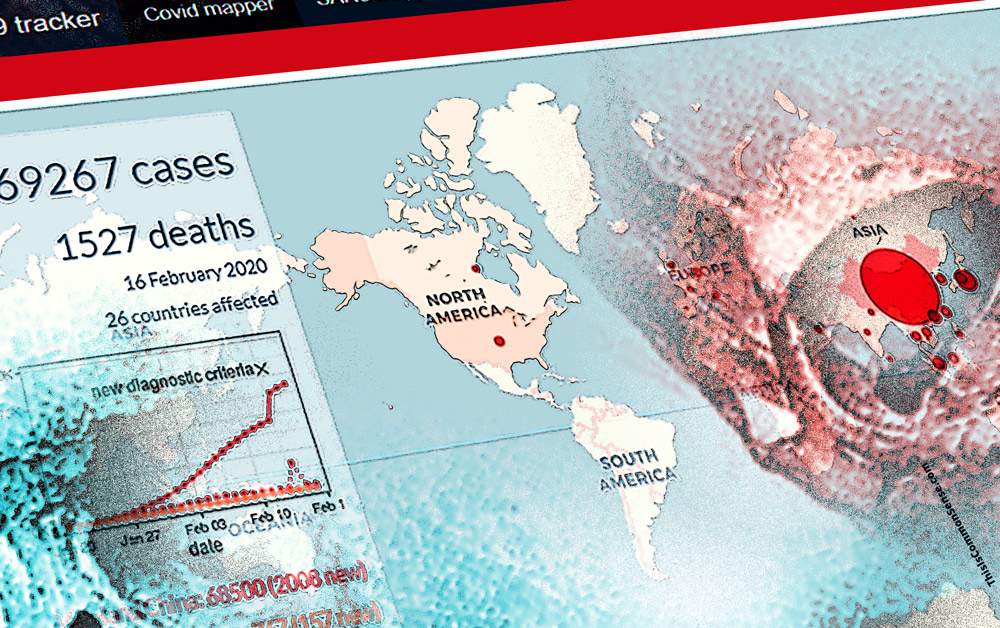
Anyone knowledgeable about medicine — or history, for that matter— is taking very, very seriously the coronavirus outbreak in China, and its subsequent spread across the globe, including to the U.S.
More than 70,000 Chinese have been diagnosed and over 1,700 have died, along with one death in each of France, Japan, Hong Kong and the Philippines.
Over the weekend, Taiwan — the independent island nation a hundred miles off the coast of a hostile, threatening People’s Republic of China (PRC) — announced its first fatality. The deceased Taiwanese taxi driver, whose health was already compromised by diabetes and hepatitis B, likely caught the virus from customers traveling from China.
Last week, China finally allowed the World Health Organization to allow Taiwanese experts to participate in discussions about containing the virus. Unlike China, Taiwan boasts one of the best medical systems in the world.
Also over the weekend, news broke that Chinese President Xi Jinping had mentioned the coronavirus in a speech given many weeks before officials first alerted the public.
That’s how the totalitarian PRC rolls. At all levels. One victim of the virus is Dr. Li Wenliang, who warned back in December that the disease was spreading. First, he was reprimanded and then “apprehended by Wuhan police for spreading ‘rumours,’” reportedAljazeera.
“As more information leaks out from Wuhan, the epicenter of the outbreak,” a recent Taipei Times editorial argues, “it is clear that Beijing was unable to prevent the virus from spreading out of control precisely because it lacks the accountability, freedom of speech and free flow of information that form the bedrock of democracies.”
Yet another way that freedom affirms life and totalitarian tyranny kills.
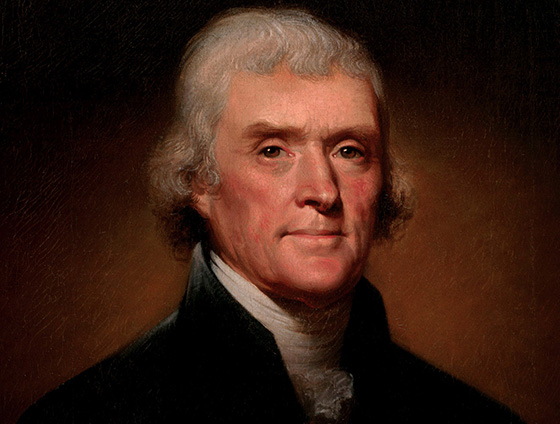
On Feb. 17, 1801, Thomas Jefferson was elected by the U.S. House of Representatives to be the third president of the United States, after an arduous election process that ended only 15 days prior to inauguration.
The fracas included a tie vote in the Electoral College followed by 35 indecisive ballots in the House. At that time, votes were cast for president, with the second place candidate becoming Vice-President. But in the Electoral College, Jefferson tied with his vice-presidential running mate, Aaron Burr. When that sent the balloting to the House of Representatives, the Federalists opposing Jefferson initially threw their support to Burr.
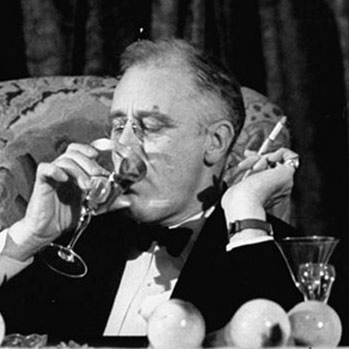
On Feb. 17, 1933, a constitutional amendment to repeal the Eighteenth Amendment to the U.S. Constitution, which had established the national prohibition of alcohol, was passed by the U.S. Senate. Known as the Blaine Act, the prime author was Wisconsin Senator John J. Blaine. By the end of 1933, the repeal of prohibition was adopted as the 21st Amendment to the Constitution.