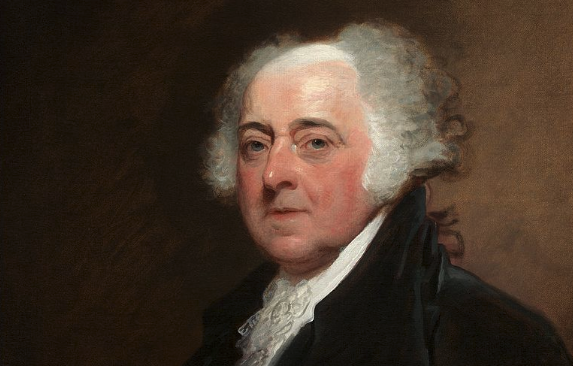
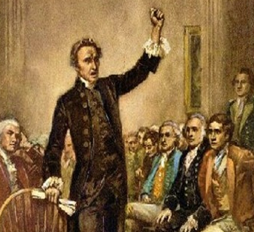
Nip the shoots of arbitrary power in the bud, is the only maxim which can ever preserve the liberties of any people.
John Adams, Novanglus: or, A History of the Dispute with America, From Its Origin, in 1754, to the Present Time (1775), No. 3, first published in the Boston Gazette.
On Feb. 15, 1898, the USS Maine, a battleship, exploded in the Cuba’s Havana harbor, killing 260 American sailors. An official U.S. Naval Court of Inquiry ruled in March 1898 that the ship was blown up by a mine, without directly blaming Spain. Nonetheless, Congress declared war and, within three months, the U.S. had decisively defeated Spanish forces. On December 12, 1898, the Treaty of Paris was signed between the U.S. and Spain, granting the United States its first overseas empire with the ceding of such former Spanish possessions as Puerto Rico, Guam, and the Philippines.
In 1976, a team of American naval investigators concluded that the Maine explosion was likely caused by a fire that ignited its ammunition stocks, not by a Spanish mine or act of sabotage.
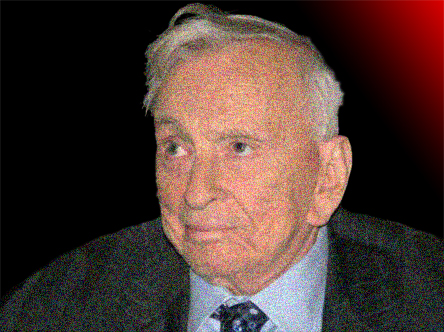
As societies grow decadent, the language grows decadent, too. Words are used to disguise, not to illuminate, action: you liberate a city by destroying it. Words are to confuse, so that at election time people will solemnly vote against their own interests.
“YouTube — Google, one of the largest, most powerful companies on the planet — has just censored political discourse from a U.S. senator on the Senate floor,” reports independent, online journalist Tim Pool.
The case refers to the alleged “whistleblower” Eric Ciaramella, around whom hangs a sort of hush-hush infamy regarding the Ukraine phone call that became the centerpiece of the Democrat’s impeachment of Donald Trump. YouTube, under a self-imposed/tribe-imposed gag order not to mention the man’s name, takes down all videos that dare breach this rule. YouTube just took down a C-Span video featuring Senator Rand Paul discussing Mr. Ciaramella on the Senate floor — in which he defended whistleblower protections, but notes that they do not enforce anonymity.*
“Think about how dangerous that will be.”
“It is a chilling and disturbing day in America when giant web companies such as YouTube decide to censure [sic] speech,” the senator was quoted in The Washington Examiner after YouTube removed the clip. “Now, even protected speech, such as that of a senator on the Senate floor, can be blocked from getting to the American people.”
Rand Paul has been demanding full disclosure of possible conspiracy on the part of Ciaramella — working with Representative Adam Schiff, who led the impeachment push — but has not been getting very far. During the Senate impeachment trial, presiding officer Chief Justice Roberts declined to read a question (“as written”) by the senator that had specified the Unnamable Name without identifying him as the “whistleblower.”
Google is free to play censor, of course, but who wants an information age without the information?
This is Common Sense. I’m Paul Jacob.
* The senator also expressed some incredulity about the near-universal proclamations in support of whistleblower laws, calling Edward Snowden “the greatest whistleblower of all-time” but noting that half the Senate wanted Snowden put to death and the other half to plunk him “in jail forever. So it depends on what you blow the whistle on whether or not they’re for the whistleblower statute.”
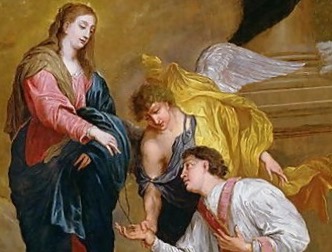
On Feb. 14, 278 A.D., Valentine, a priest in Rome during the reign of Emperor Claudius II, was executed. In order to facilitate the raising of an army for his unpopular military campaigns, the emperor outlawed all marriages and engagements. Valentine defied Claudius’s order and continued to perform marriages for young lovers in secret. Once discovered, Valentine was arrested and condemned by the Prefect of Rome to be beaten to death with clubs and to have his head cut off. The sentence was carried out on February 14. Valentine was named a saint by the Roman Catholic Church after his death.
Though February 14th is celebrated as “St. Valentine’s Day,” in today’s vernacular, the 14th of February, 278, was, ahem, “not his day.”
“If I can make it there,” goes the songNew York, New York, “I’ll make it anywhere.”
But, when it comes to self-dealing, corrupt politics, isn’t it really Washington, D.C. that deserves the moniker of Big Rotten-to-the-Core Apple?
Meet Jack Evans, who is making it . . . er, competing . . . for a seat on the city council in the nation’s capital city.
Which seat, you ask?
His own.
For the last three decades, 29 years to be precise, Evans represented (theoretically, at least) Ward 2 . . . the council’s longest serving member.
Until Councilmember Evans resignedhis position mere weeks ago, on January 17. Under pressure, both from constituents by way of a recall petition and from the council, which was set to expel Evans, after finding him guilty of “prolonged and egregious wrongdoing.”
Not to mention that Evans is also the subject of a federal probe, with the FBI raiding his home last year. And Evans had previously resigned his position as Chairman of the Board of the Washington Metropolitan Area Transit Authority (WMATA) for the same longstanding patternof egregious influence peddling.
Now Capital Jack enters the political arena anew as the consummate professional, undaunted by his unfitness for gainful employment outside of politics.
“It is tremendous chutzpah to do that,” one Ward 2 resident observed of Evans’ quick comeback.
Not to mention that the special election for Mr. Evans to compete for the council seat he resigned from in disgrace will cost city taxpayers a cool million bucks.
“I want to wake up in a city” — hum a few bars! — “where corruption never sleeps.”
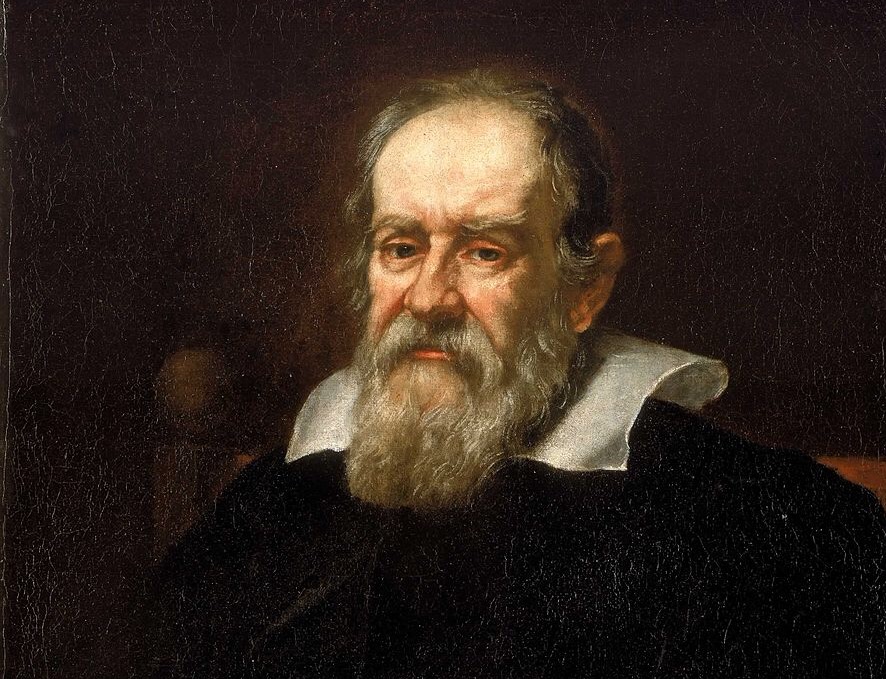
On Feb. 13, 1633, Italian philosopher, astronomer and mathematician Galileo Galilei arrived in Rome to face charges of heresy for advocating Polish astronomer Nicolaus Copernicus’s theory that the Earth revolves around the Sun. In April, Galileo pled guilty before the Roman Inquisition in exchange for a lighter sentence. Put under house arrest indefinitely by Pope Urban VIII, Galileo spent the rest of his life at his villa in Arcetri, near Florence, dying in 1642.