For human nature is strange: the less we are inclined to self-sacrifice, the more we insist on it in others.
Categories
Bolesław Prus
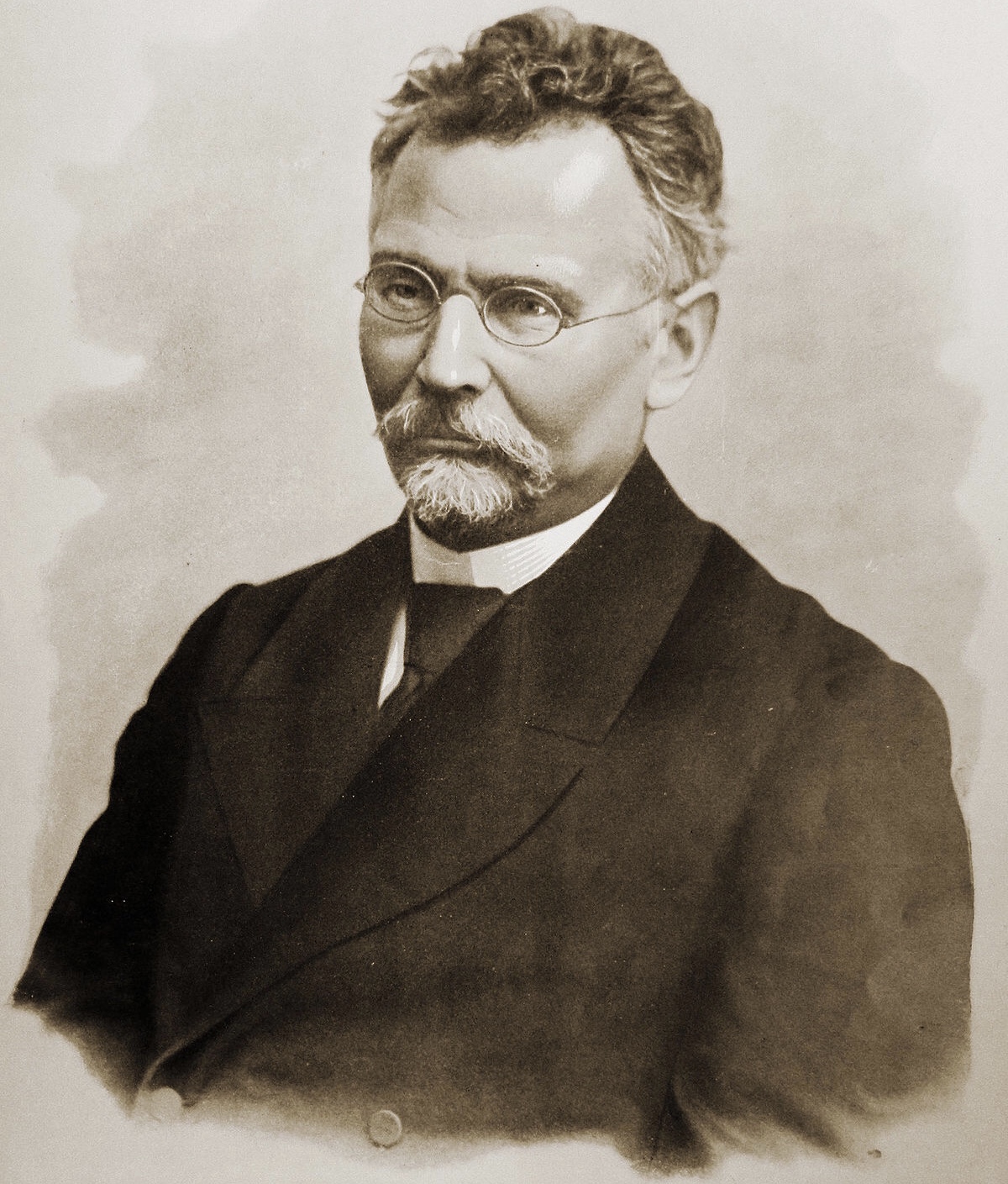
For human nature is strange: the less we are inclined to self-sacrifice, the more we insist on it in others.
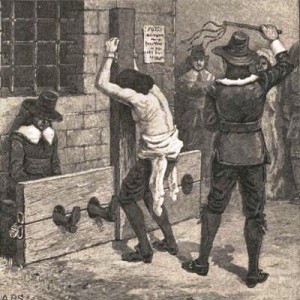
On February 28, 1646, Roger Scott, of Lynn, Massachusetts, was tried for sleeping in church. Awakened in church by a tithingman’s long, knobbed staff hitting him on the head, he struck back at the man, and garnered a whipping as punishment, as well as the dark designation as “a common sleeper at the publick exercise.”

Are you going to make a big fuss?
I mean, about China — dominated by the ruling Chinese Communist Party (CCP). Because some people get all bent out of shape over their totalitarian government placing a million or two Muslim Uighurs into re-education camps surrounded by high walls and razor wire in order to browbeat, brainwash and torture away their ethnic heritage, language, and religious beliefs.
Folks also complain about the insidious social credit system and the massive surveillance state, both of which would make Orwell blush; the ugly history of Chinese repression in Tibet; threats to invade peaceful neighboring Taiwan and snuff out their budding democratic experiment; not to mention Tiananmen Square.
Some cannot get over the estimated 400 million babies murdered by the CCP against the will and amidst the anguished cries of their loving parents. Of course, that old “One Child Policy” has been “liberalized” . . . now permitting two children.
Moreover, the CCP’s assault on free inquiry and public dialogue is no longer limited to just silencing their own citizens — as infamous attempts to squelch criticism from universities in Australia and here in America, as well as basketball players, show.
Presidential candidate and former New York City Mayor Michael Bloomberg said months ago that Chinese President Xi Jinping was “not a dictator” and “has a constituency to answer to.” At Wednesday night’s debate, he was asked about those remarks.
“In terms of whether he’s a dictator,” Bloomberg explained, “he does serve at the behest of the Politburo, of their group of people, but there’s no question he has an enormous amount of power.”
“But he does play to his constituency,” he reiterated. Sure, all 25 unelected communist insiders (ruling over 1.4 billion disenfranchised Chinese).
Acknowledging that their human rights record is “abominable,” Bloomberg agreed that “we should make a fuss, which we have been doing, I suppose.”
But . . . “make no mistake about it, we have to deal with China if we’re ever going to solve the climate crisis. We have to deal with them because our economies are inextricably linked.”
Yes, indeed . . . with eyes wide open to the totalitarian brutality of the CCP’s Xi Jinping-led, 25-person dictatorship.
We need a lot bigger fuss.
This is Common Sense. I’m Paul Jacob.
See all recent commentary
(simplified and organized)
See recent popular posts
Initiative and referendum is the citizen activist’s ‘ace in the hole.’
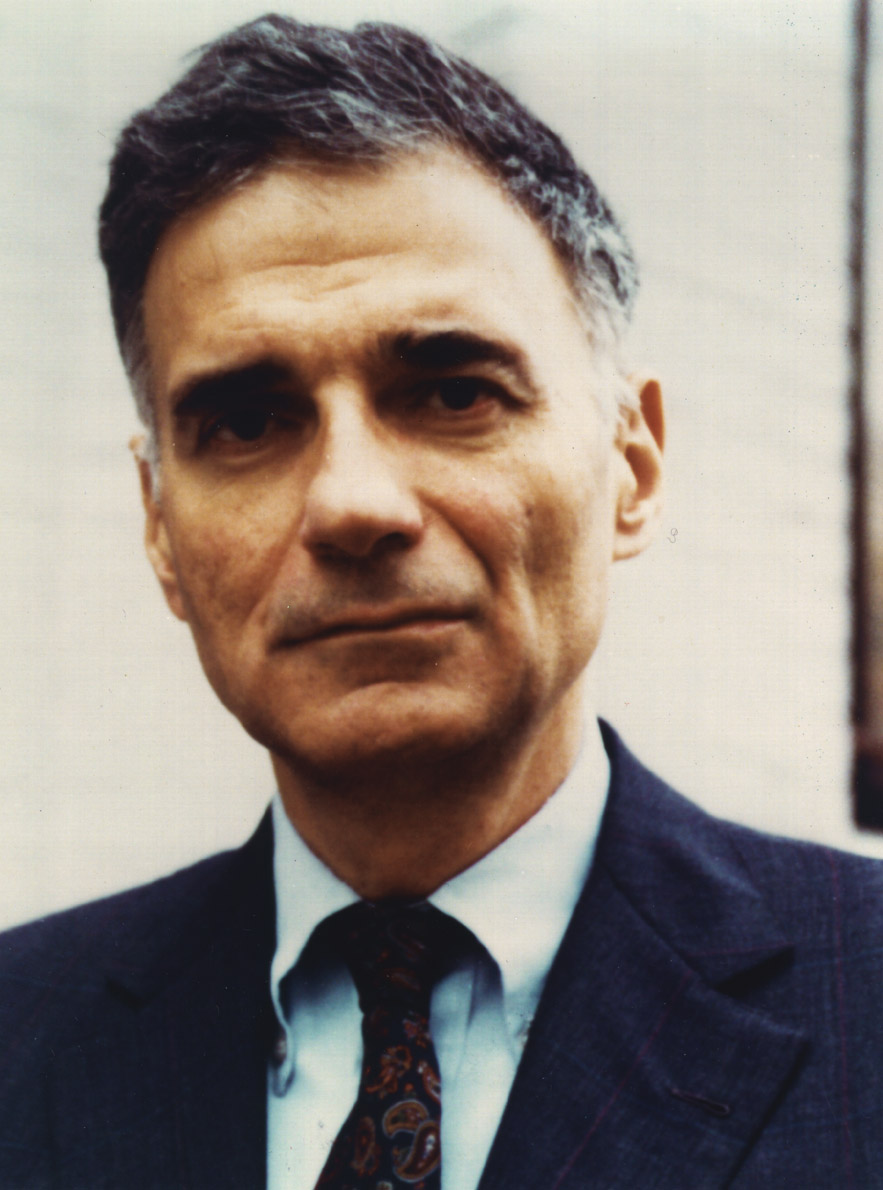
Ralph Nader was born on February 27, 1934 .
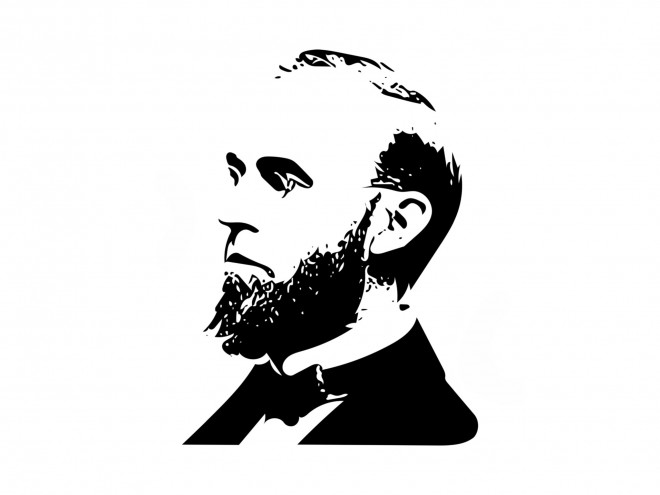
On February 27, 1830, American economist and free trade advocate Arthur Latham Perry was born.
The Twenty-second Amendment (Amendment XXII) of the United States Constitution, which sets a term limit for election and overall time of service to the office of President of the United States, was ratified by the requisite 36 of the then-48 states on February 27, 1951.
Congress had passed the amendment on March 21, 1947.

Back in 2016, this commentary was perhaps the first howl in the political wilderness against the unfairness of the Democratic Party’s use of “superdelegates” — office holders and party officials who by party rules automatically serve as unelected but voting delegates at the national convention . . . which chooses the presidential nominee.
Four years ago, the superdelegates, who account for roughly 15 percent of the total delegate vote, favored Hillary Clinton over Bernie Sanders by an incredible 97 to 3 percent.
Fast forward to 2020 and Dems have made what DNC Chair Tom Perez called “historic” changes to this ‘super-delegation’ — now referred to as “automatic” delegates. These non-elected insiders may not vote on the first ballot.
That’s a big deal.
But with so many candidates still in the contest, and those contests front-loaded — next week’s Super Tuesday features primaries in 14 states, including populous California and Texas — it appears unlikely that any candidate will garner a majority of delegates on the first ballot.
And next come the superdelegates.
And, again, they are likely to hurt the Vermont senator.
“Sanders . . . could win the most pledged delegates — those allocated on the basis of votes during the marathon Democratic primaries,” explains The Guardian, “but be swindled, at the last, by the Democratic party elite.”
That is not all. “DNC members discuss rules change to stop Sanders at convention,” reads a recent Politico headline.
Reporting from the “sidelines of a DNC executive committee meeting,” Politico discloses discussions regarding “the possibility of a policy reversal to ensure that so-called superdelegates can vote on the first ballot at the party’s national convention.”
Democratic process does not appear to be the Democrats’ strong suit.
This is Common Sense. I’m Paul Jacob.

See all recent commentary
(simplified and organized)
See recent popular posts
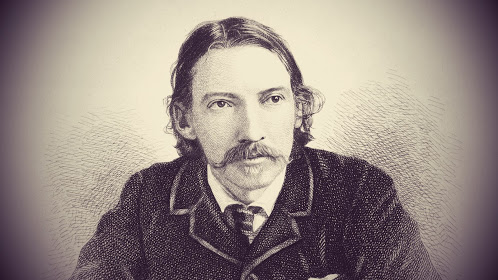
You could read Kant by yourself, if you wanted; but you must share a joke with someone else.
Robert Louis Stevenson, Virginibus Puerisque, Ch. 1. Cornhill Magazine (August 1876)

February 26 marks the Dominican Republic’s Independence Day.
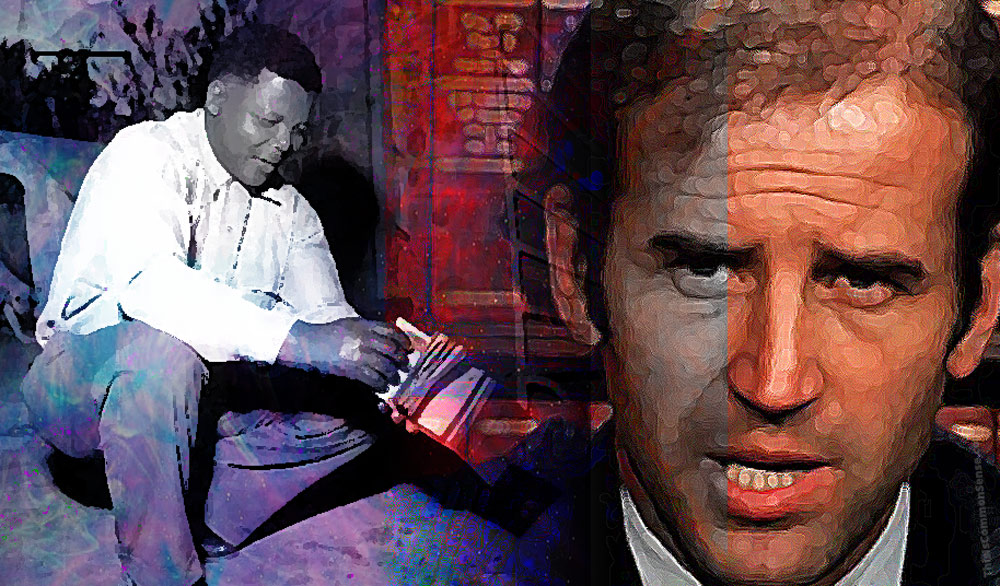
People have been known to plagiarize college term papers. Even a few political speeches have been surreptitiously copied and brazenly re-orated without proper attribution. But you can’t plagiarize getting arrested, can you?
Not really. What you can do is lie about being arrested — just make it up out of whole cloth.
That may be what former Vice-President and once-upon-a-time Democratic Party presidential front-runner Joe Biden has been doing in recent days “as he confronts challenging political headwinds,” following fourth and fifth place finishes in Iowa and New Hampshire, respectively — though he came in (a distant) second in Nevada over the weekend.
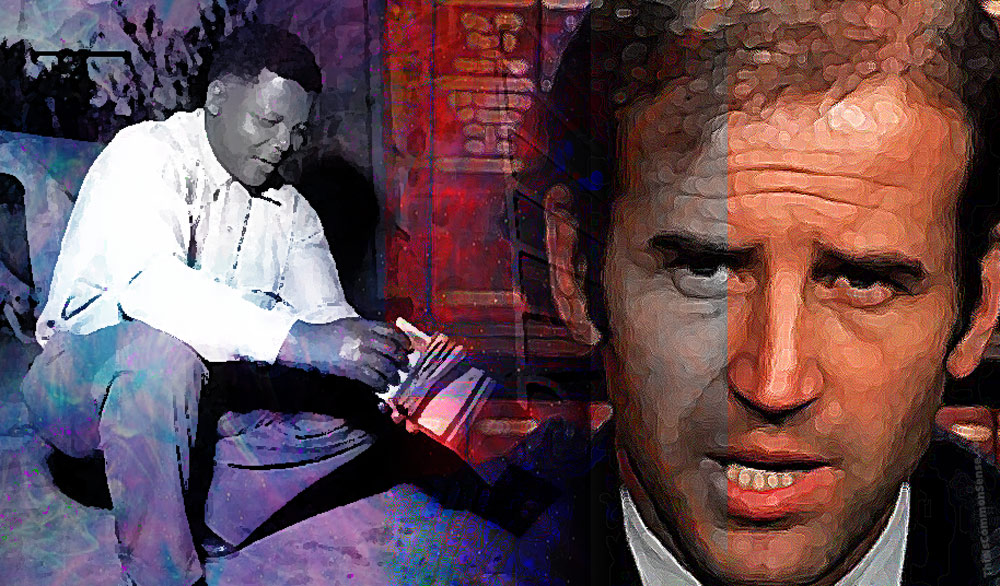
“I had the great honor of meeting [Nelson Mandela],” Biden told a South Carolina crowd last week. “I had the great honor of being arrested with our U.N. ambassador on the streets of Soweto trying to get to see [Mandela] on Robbens Island.”
“No, I was never arrested,” U.N. Ambassador at that time, Andrew Young, now 87, told The New York Times, “and I don’t think he was, either.”
Back in 1977, Mr. Biden was Senator Biden from Delaware. Methinks the arrest of a U.S. Senator by a foreign government might spark at least a single news story. Be informed: “A check of available news accounts by The New York Times turned up no references to an arrest.”
The Times also notes that Biden “did not mention it in his 2007 memoir when writing about a 1970s trip to South Africa.”
Plagiarism sunk Biden’s 1988 presidential campaign. This time out, the politician’s gaffes, bouts of bizarre truculence, and age-related physical failings have hampered his quest. Add to all that, now, the apparent fact that Joe can’t even get arrested.
This is Common Sense. I’m Paul Jacob.
N.B. The upshot of the Biden candidacy may amount to nothing more than an increased interest in “the Mandela Effect.”
See all recent commentary
(simplified and organized)
See recent popular posts
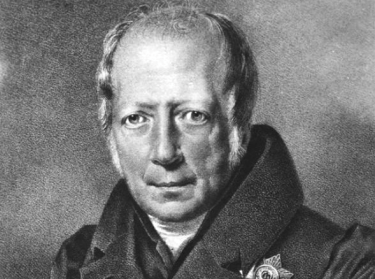
To the yoke of necessity every one willingly bows the head. Still, wherever an actually complicated aspect of things presents itself, it is more difficult to discover exactly what is necessary; but by the very acknowledgment of the principle, the problem invariably becomes simpler and the solution easier
Wilhelm von Humboldt, Joseph Coulthard, translator, The Sphere and Duties of Government (1854).