Categories
Thought

Gustave de Molinari

Every association which carries on an industrial business must devise an administrative system to direct its various services. The State was no exception to this rule. Like all other businesses, the State acknowledged no end but interest, and it identified this with the conservation and enlargement of its profits. But profits can only be increased in two ways. The yield of imposts, whether of labour, of kind, or in money, may be increased; or the area of production may be enlarged. The latter method was preferred by the associations which owned political “businesses,” for the former required capacities for good government of which they were seldom possessed. But, since a community can only extend its domain at the cost of a neighbour, war naturally ensued, and while those communities which excelled in war enlarged their territory and their holdings in subjects, they increased their income at the same time. A merchant or manufacturer cares nothing for the race, language, or individual customs of his customers, and the States had no more regard for those of the persons who lived in the territories which they acquired. Their sole motive was interest, and all their actions were exclusively directed to obtaining those territories of which the conquest and maintenance seemed the most easy, and which promised the highest possibilities for lucrative exploitation. Entire populations, opposed in race, in language, and in customs, were thus drawn, whether they would or no, into the domain of the victorious association, to leave it only in accordance with the arbitrament of a new war, or according to family dispositions when a single house chanced to acquire complete sovereign control within the State.
To-day we consider such a method of constituting a nation, a nationality, or a “country,” to be barbarous.

Gustave de Molinari, The Society of To-morrow (1899)
Categories
responsibility

Don’t Panic, Prepare

The other day, on Neil Cavuto’s Fox News show, Democrat Tulsi Gabbard — my favorite of the “blue” party’s blues-inducing candidates — suggested, inartfully, that the coronavirus is “something that requires all of us as Americans coming together, standing together . . . just as we would in wartime.”

The best way to fight contagion is to “come together”?

Maybe not so much.

What should we do? I mean, separately.

Although there’s a flood of information about the scary new coronavirus (COVID-19), that information is fragmentary.

Reliable tests for the virus are not easily available. It’s unclear how many people are really infected. But the fatality rate is apparently much higher than that of regular flu. The elderly and those with other medical problems are especially vulnerable.

The virus is spreading fast despite (and because of) efforts to contain it. Cases have now been reported in 45 countries.

COVID-19 may not yet be where you are or where I am. But what should we do now to be ready if and when things around us change drastically? 

One, stay informed. 

Two, follow advice about reducing the risk of infection, including such simple measures as carefully and frequently washing your hands.

Three, stock up — on food, water, medicines, other emergency supplies — in case you must hunker down at home for a long time. When panic strikes, grocery shelves can empty out fast. You may not want to go where many people are congregating anyway.

Some vendors specialize in providing bulk supplies of food at a discount: Wellness Meats, Bargain Wholesale, markets in your neighborhood. There’s also Walmart and Amazon, offering a wide variety of staples. You can trade advice and information at sites like emergency-preps.com.

Such preparation won’t be wasted. If we’re lucky and the coronavirus threat fades as flu season wanes, we’ll be ready for some other emergency that comes along.

This is Common Sense. I’m Paul Jacob.


PDF for printing

Corona, Covid, virus, safety, hazmat,

See all recent commentary
(simplified and organized)
See recent popular posts


Categories
Today

Rothbard and Houston

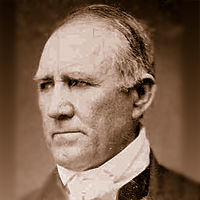
On March 2, 1793, Sam Houston was born.

On March 2, 1926, American economist and political theorist Murray N. Rothbard was born.

As President of the Republic of Texas, Houston (pictured above) cut the size of the Republic’s budget by a whopping amount, including selling the navy for scrap. Rothbard theorized about even more daring — and more permanent — cuts to (and limits upon) government.


On March 2, 1781, the Second Continental Congress convened as the new Congress of the Confederation, under the Articles of Confederation, ratified the day before. The congress elected no new president upon adoption of the Articles. This Confederation Congress oversaw the conclusion of the American Revolution.

Categories
audio podcast

Listen: All the Something in China

Biden, crayons, China, and more!

This Week in Common Sense, February 24 – 28, 2020.
Categories
Today

March First Firsts

March 1st Firsts (and a 17th and a 37th):

| The first United States census was authorized, in 1790.

| Ohio was admitted as the 17th U.S. state, in 1803.

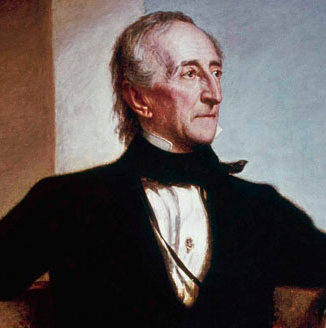
| President John Tyler [pictured above] signed a bill authorizing the United States to annex the Republic of Texas, in 1845.

| The state of Michigan formally abolished capital punishment, 1847.

| Nebraska became the 37th of the United States, in 1867.

On March 1, 1781, the Continental Congress of the United States adopted the Articles of Confederation. With this, the governing body became known, officially, as United States of America in Congress Assembled, more commonly as the Congress of the Confederation. The first session of this newly styled Confederation Congress took over without a break from the Second Continental Congress, adjourning on November 3. Samuel Huntington and Thomas McKean served as presidents during this first session.

Categories
Thought

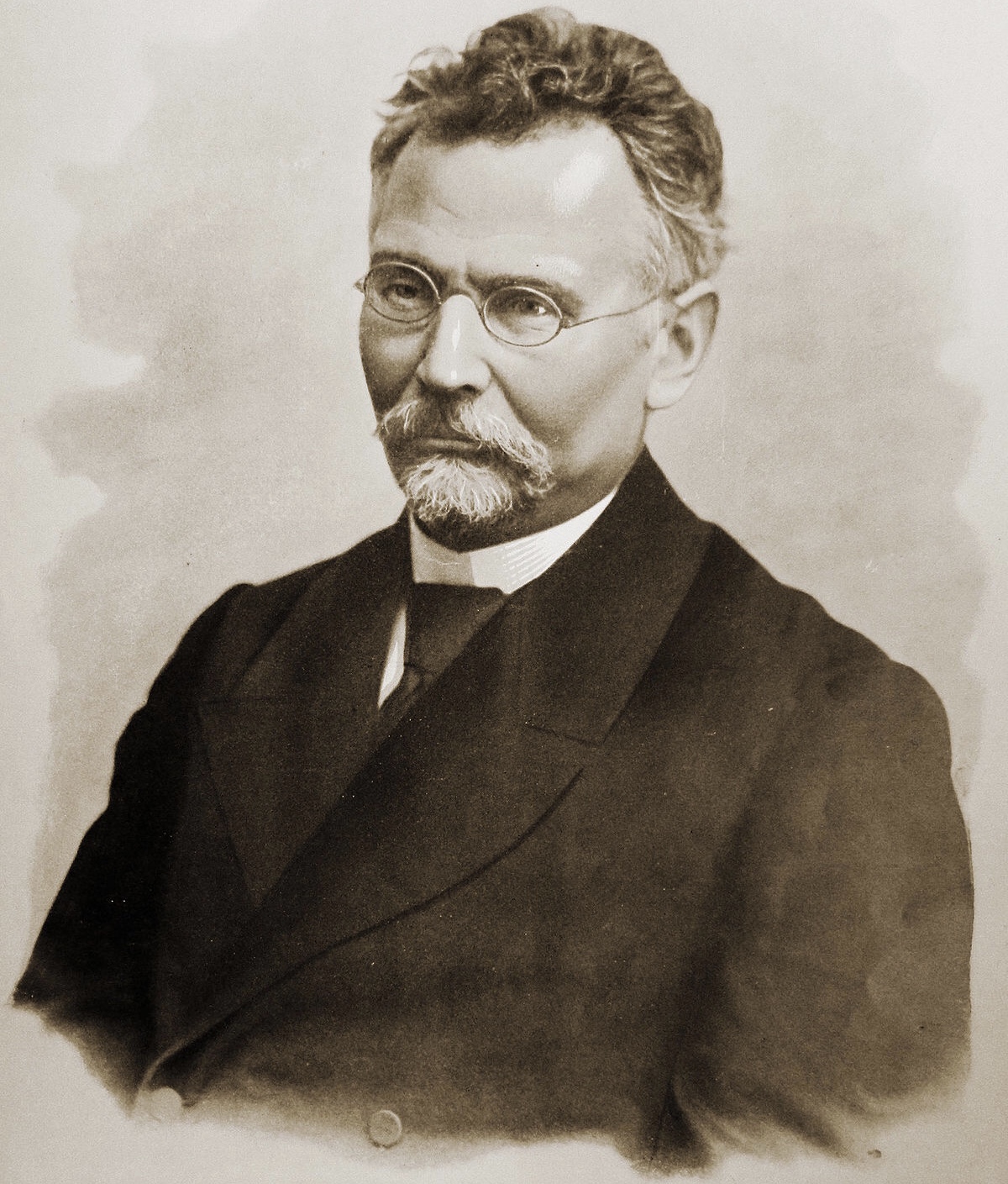
Bolesław Prus

Let people be happy according to their own lights.

Categories
by Paul Jacob video

All the . . . in China

The big stories just got bigger:

This Week in Common Sense, February 24 – 28, 2020.
Categories
Thought

A. J. Wilson

[T]he progress of the human race must be measured by the progress of the individuals composing it. Manly independence, the true spirit of freedom, cannot be drilled into men and women, as a squad of recruits can be taught to march and shoot, at the word of command. When, therefore, a nation deserts its birthright, and, instead of cultivating manliness in the individual, flies to what it calls the “State,” or to combinations, leagues, unions, to do for it this and that, it is, generally speaking, making progress backwards, and putting its future in peril. The honeyed sentimentality of much of our modern Socialism is, no doubt, sweet to the taste, but its effects are deadly. Close at the heels of the Socialist stalks Anarchy, and Anarchy has never yet in the history of the world been crushed save by the heel of the despot.

A. J. Wilson, introduction to Yves Guyot, Labour, Socialism and Strikes (1896).
Categories
Today

The Leap

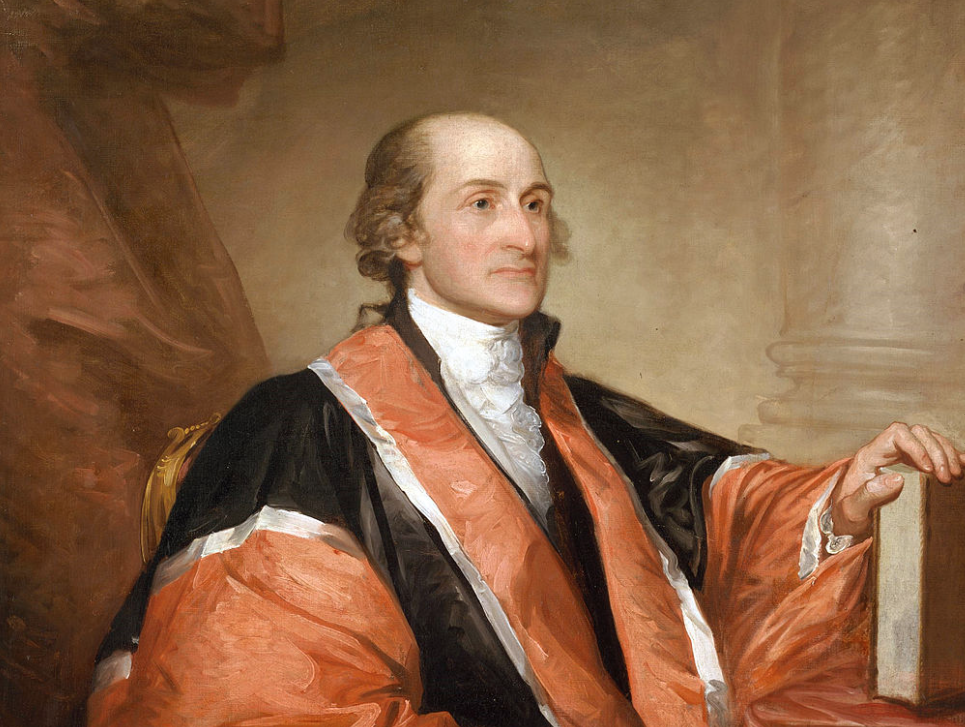
On Leap Year Day 1796, the Jay Treaty between the United States and Great Britain came into force, facilitating ten years of peaceful trade between the two nations.
On January 29, 1968, Ukrainian-American lawyer and “Volokh Conspiracy” blogger, Eugene Volokh, was born. Other “leaplings” include Ann Lee (1736), founder of the Shakers; Gioachino Rossini (1792), Italian composer, best known for his many successful operas, including Il barbiere di Siviglia and Guillaume Tell; and American fantasy novelists Patricia A. McKillip (1948) and Tim Powers (1952).
Pictured: American ‘founding father’ John Jay.

Categories
media and media people national politics & policies

In, Over and About

Sometimes losing track of a story pays off.

Last week, Facebook and Twitter and that minor player, the “major” news media, erupted with Democrats glorying in and gloating over and harrumphing about a story from Reliable Liar & Leaker Adam Schiff — I think that may be his semi-official position in the House of Representatives. 

Schiff’s office confirmed that the House Intelligence Committee — which, in fact, Schiff chairs — had been briefed on February 13th to the effect that Russia favors the Trump Administration and will again, this year, ‘interfere’ in U.S. presidential elections. 

Meanwhile, Senator Bernie Sanders, who is running for the presidency as a Democrat but who calls himself a ‘democratic socialist’ (but of whom Nobel Laureate in Amnesia Paul Krugman dubs a mere ‘social democrat’) . . . well, he got in the news with the story that he had been briefed with “intelligence” that Russia was trying to throw the race towards him. Sanders sputtered his protests.

In 2016, it has been determined, Russian operatives had placed lame social media ‘memes’ into the political mill, impressing no one at the time, but scandalizing Democrats after the ‘inexplicable’ loss of their much-hated candidate, Hillary Clinton.

Perhaps they are priming their Excuse Reservoir for another ignominious defeat?

Anyway, last week I was so distracted that I did not comment on the whole story. Which, conveniently, has now received enough “pushback,” denials and contradictions to close the chapter on it.

In record time, it was over.

That’s about it.

This is Common Sense. I’m Paul Jacob.


PDF for printing

Putin, election, interference,

See all recent commentary
(simplified and organized)
See recent popular posts