I would rather the man who presents something for my consideration subject me to a zephyr of truth and a gentle breeze of responsibility rather than blow me down with a curtain of hot wind.
Categories
Grover Cleveland
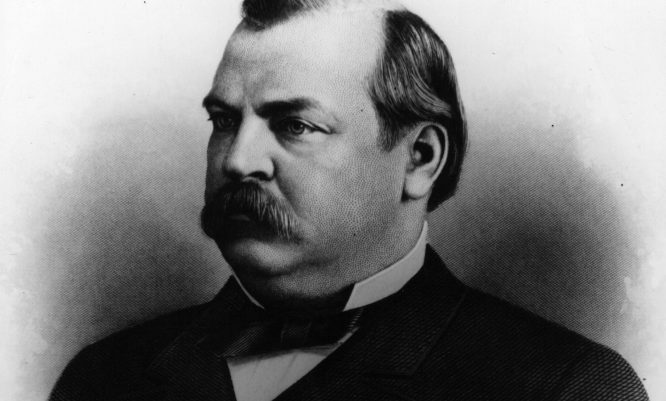
I would rather the man who presents something for my consideration subject me to a zephyr of truth and a gentle breeze of responsibility rather than blow me down with a curtain of hot wind.

Last weekend, riot police broke up a candlelight vigil for Chow Tsz-lok, the Hong Kong University of Science and Technology student, who died back in November. He had fallen a story from a parking garage as Hong Kong police were “clearing a group of anti-government protesters.”
“Police said they seized petrol bombs, bricks and other protest items from the car park where the memorial was held,” reports the South China Morning Post. “Officers then stopped rally-goers from leaving and checked their identity cards and bags, arresting more than 40 people for unlawful assembly.”
If the police can be believed.
They can’t.
As Tom Grundy, editor-in-chief of Hong Kong Free Press, puts it: “[P]eople just don’t trust the Government.”
While people were violently arrested, it wasn’t for violence or weapons. It was for daring to use what we call “freedom of assembly.”
Now with the spread of the COVID-19 virus, protesters have been reluctant to call for mass gatherings. Nicholas Bequelin, a Hong Kong-based regional director of Amnesty International, told the Australian Broadcasting Corporation, “The authorities may be counting on the coronavirus epidemic to extinguish the unrest.”*
On Friday, authorities used the lull to charge three prominent pro-democracy leaders — Jimmy Lai, owner of media highly critical of China; Yeung Sum, the former Democratic Party chairman; and the Labour Party vice-chairman, Lee Cheuk-yan — for taking part in a protest march last year.
They join more than 7,000 demonstrators arrested since the protest movement began last June.
Young people — and some not-so-young — are risking their very lives for freedom, for the right to choose their leaders . . . knowing that without such basic mechanisms, they have no defense against the Butchers of Beijing.
This is Common Sense. I’m Paul Jacob.
* Amnesty International has called for an “independent investigation into police violence.”

See all recent commentary
(simplified and organized)
See recent popular posts

Literature was not born the day when a boy crying “wolf, wolf” came running out of the Neanderthal valley with a big gray wolf at his heels; literature was born on the day when a boy came crying “wolf, wolf” and there was no wolf behind him.
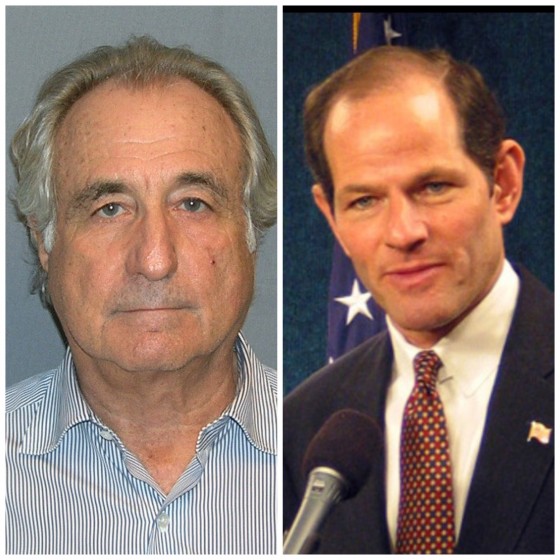
On March 12, 2009, financier Bernard Madoff pled guilty to pulling off perhaps the biggest swindle in U. S. history. One year earlier to the day, in the same city, New York, the state’s governor, Eliot Spitzer, resigned a mere two days after reports had surfaced that he was listed as a client in a high-end escort/call-girl prostitution ring.

Are Democratic Party women . . . misogynists?
Last week, Massachusetts Senator Elizabeth Warren dropped out of the presidential race after coming in third in her home state and faring no better in any of the first 18 state primaries and caucuses.
“Warren seemed to be the ideal candidate,” informed Erin Templeton, a Dean at Converse College, in The Guardian, but, as the headline explained, “there was only one problem . . . she was a woman.”
House Speaker Nancy Pelosi attributed “a certain element of misogyny” to the senator’s defeat.
“For the second time in four years, an exceptionally qualified female candidate lost to her male counterparts — some objectively far less qualified,” argued Ella Nilsen and Li Zhou at Vox.
“Sexism was a big factor in Warren’s loss,” they asserted, concluding: “America apparently isn’t ready for a woman president — at least not yet.”
Yet, it was Democrats, not all Americans, who voted for two white men instead of her. And women constitute a clear majority of Democratic voters.
“She’s female,” Annie Linskey and Amy Wang chorused in The Washington Post, identifying the factor “many believe contributed significantly to her loss.”
Noting that Warren’s “departure came just days after another prominent female senator, Amy Klobuchar, dropped out,” they neglected to discuss why Klobuchar endorsed former Vice-President Joe Biden, a man, and not her homogametic comrade, Senator Warren.
The biggest problem with doling out verbal recriminations against people who did not vote for Warren?
If everything is sexism, nothing is sexism.
Which only makes it harder to fight actual sexism . . . as the Democratic National Committee changes the rules to keep the only remaining woman in the race, Hawaii Rep. Tulsi Gabbard, off the debate stage.
This is Common Sense. I’m Paul Jacob.

See all recent commentary
(simplified and organized)
See recent popular posts
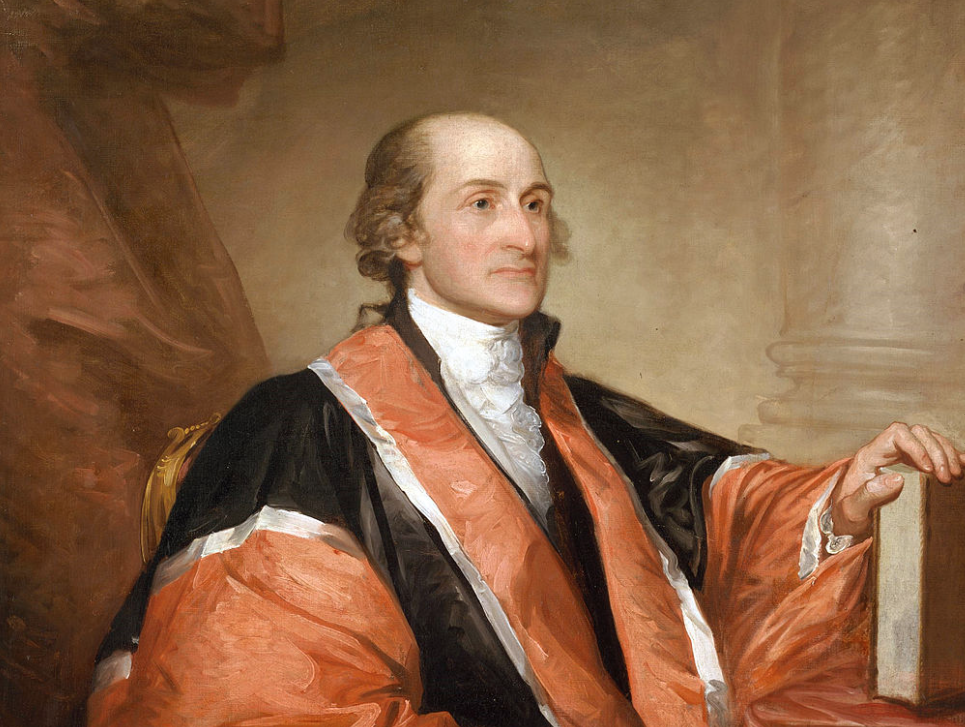
The only way to be loved is to be and to appear lovely; to possess and display kindness, benevolence, tenderness; to be free from selfishness and to be alive to the welfare of others.
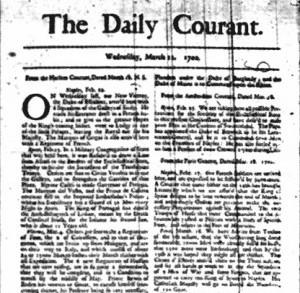
On March 11, 1702, The Daily Courant, England’s first national daily newspaper, was published for the first time. It was a one-sheet, concentrated on foreign news, sans commentary. The reverse side sported advertising. It was produced by Elizabeth Mallet (1672–1706), a printer and bookseller who lived, and published the paper, next to the Kings Arms tavern at Fleet Bridge in London.

When rumor of “Russian interference” in the 2016 presidential election hit the news, my first thought was: electronic/computerized voting machines — they are known to be insecure, easy to rig.
But when it turned out that folks at CNN and MSNBC were hyperventilating about a very clumsy ad campaign on social media, designed to seed discord more than secure an election for any particular candidate, I rolled my eyes.
I also remembered that the Steele Dossier underpinning the whole bizarre “Russia hacked our elections!” investigation was itself an example of foreign state and private actors seeking to “hack our elections.”
Long story short: when we talk about “hacking elections,” we should worry about compromised vote-counting systems, not Facebook ads.
Maybe that’s why when I read “These Canadians can’t vote in U.S. elections, but they’re campaigning for Bernie Sanders” I didn’t panic, I chuckled.
And maybe raised an eyebrow.
My generally ho-hum reaction is the result of my trust in the American people. The voters are in charge, in the end. Sure, young Canadian communists and communitarians and the like cannot vote here, but they sure wish to influence the election.
Interference?
No. Even if they are unwise, and not citizens, let them express their values.
Hey: maybe one reason I am “soft” on “foreign interference in our elections” is that “interfering” in elections is just a nasty way of describing what I do when I petition in Oklahoma or Colorado to help enable citizens to decide an issue, or join a march against totalitarianism in Hong Kong.
The struggle for freedom is worldwide.
Dare to interfere.
This is Common Sense. I’m Paul Jacob.

See all recent commentary
(simplified and organized)
See recent popular posts

On March 10, 1922, Mohandas Karamchand Gandhi (1869-1948), Indian activist and theorist of non-violent revolution, was arrested in India, tried for sedition, and sentenced to six years in prison, only to be released nearly two years later for an appendicitis operation.
One does not humanize carnage, one condemns it, because one humanizes oneself.