Categories
responsibility

Fear Itself

“The only thing we have to fear is fear itself.”

Not often do I quote FDR. Strictly speaking, his statement was false then — at the beginning of the decade-plus-long Great Depression that led to WWII. 

And it is false now. 

There is plenty more to fear than merely fear itself. 

But it does point up the importance of not allowing fear to drive our decisions — as individuals, in families, as well as for governments and civil society.

We are facing a worldwide pandemic, something not seen in over 100 years, which we can only hope is not more global or deadly than the so-called Spanish Flu in 1918. This is largely uncharted territory. 

Therefore, even when public officials make what turn out to be poor decisions, I plan to be as understanding as possible. This is not aimed at any specific public official or specific accompanying criticism. Instead, let it be a broad policy — though, of course, we must hold corrupt or criminally negligent decisions accountable.

It’s a great time to give each other a break from politics and to foster a spirit of love and connectedness to our neighbors — even [gulp] politicians — replacing the natural fear that will otherwise occupy our thoughts and actions.

During this crisis, I hope that officials at all levels will summon ‘We, the People’ to do what we can as volunteers, whether working sequestered in our homes or in roles outside the home. We are an enormous strength.

And please, oh leaders, fill the information vacuum with daily accurate information — keep Anthony Fauci close to a microphone. And help them, journalists.

Let’s rise to the occasion by getting tough and staying united.

This is Common Sense. I’m Paul Jacob.


PDF for printing

Unity

See all recent commentary
(simplified and organized)
See recent popular posts

Categories
Today

Madison and Freeing the Slaves

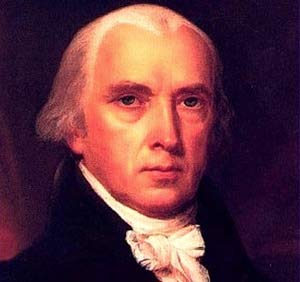
On March 16, 1995, the state of Mississippi formally ratified the Thirteenth Amendment, becoming the last state of the Union to approve the abolition of slavery. The Thirteenth Amendment had been officially ratified in 1865, one hundred thirty years earlier.

James Madison, fourth President of the United States and “Father of the Constitution,” was born on this date in 1751.

Categories
Thought

Utnapishtim

Punish the one who commits the crime;
Punish the evildoer alone.

Ea to Enlil, as related by Utnapishtim in Gilgamesh: Translated from the Sîn-leqi-unninnī version by John Gardner and John Maier (1984), Tablet XI, Column iv.

Pictured above: Babylonian Gilgamesh Tablet, British Museum

Categories
by Paul Jacob video

Watch: Death Race 2020

In this second part of this weekend’s podcast (audio form available on SoundCloud and Stitcher), Paul talks about election interference in its several forms:

This Week in Common Sense, March 9 – 13, 2020: Part Two
Categories
Today

Two Men, Two Republics

March 15 was “the Ides of March” in the Roman calendar. On that date in 44 BC, Julius Caesar, Dictator of the Roman Republic, was stabbed to death by a handful of prominent senators.

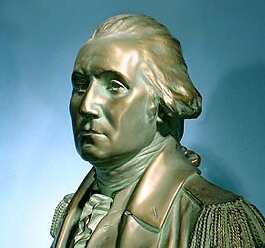
On the same date in 1783, General George Washington eloquently entreated his officers not to support the Newburgh Conspiracy. His plea was successful and the threatened coup d’état never took place.

Categories
audio podcast

Listen to the Election Interference!

This weekend’s podcast is a doozy. Subscribe on Stitcher. Or listen on SoundCloud:

This Week in Common Sense, March 9 – 13, 2020.
Categories
by Paul Jacob video

Watch: Two Pols in a Pod

Part One of this weekend’s podcast (audio form available on SoundCloud and Stitcher) — and no, it has nothing to do with Trump. We just liked the picture. The second pol is an American who is not Donald Trump.

Anyway, here it is:

This Week in Common Sense, March 9 – 13, 2020: Part One.
Categories
Today

Gold

On March 14, 1900, the Gold Standard Act was ratified, ending the long practice of bimetallism by placing the United States Treasury — and banking and currency — on the gold standard.

Categories
term limits

Putin (and Householder) for Life

For the last 20 years, Vladimir V. Putin has served (himself) as either Russian president or prime minister, switching offices to get around the nation’s term limits. 

“In the past, Mr. Putin proceeded cautiously, seeking to preserve a veneer of legitimacy,” explains The New York Times. “Confronting term limits in 2008, Mr. Putin opted for a four-year hiatus as prime minister while his protégé, Dmitri A. Medvedev, became the caretaker president.”

Required to step down in 2024, at the close of his second consecutive six-year term, Putin is not leaving. 

Legislation proposed and passed this week by the Duma, if approved by Russia’s Constitutional Court and by voters in an April plebiscite, would re-start the autocrat’s term limits clock, allowing the 67-year-old to stay in power until 2036 . . . to the ripe old age of 83. 

Putin told the Duma that someday “presidential authority in Russia will not be, as they say, so personified — not so bound up in a single person,” but that day is clearly not at hand.

“If he serves until then,” the Times informs, “Mr. Putin will have held the nation’s highest office for 32 years, longer than Stalin but still short of Peter the Great, who reigned for 43 years.”

The Times also notes that “Mr. Putin joined President Xi Jinping of China and President Recep Tayyip Erdogan of Turkey, authoritarian leaders who have extended their rule.”

Not mentioned? Ohio’s Republican House Speaker Larry Householder,* who calls his state’s voter-enacted term limits “pretty oppressive,” and is pushing an initiative amendment for this November’s ballot that will do in Ohio precisely what is being done in Russia: ignore all previous years in office, allowing Householder to hold power through 2036. 

Just like Putin. Two pols in a pod.

This is Common Sense. I’m Paul Jacob.


* Mr. Householder’s GOP credentials are somewhat questionable. A recent headline asks, “Will the Marriage Last Between Larry Householder and Democrats?”

PDF for printing

Putin, term limits, power,

Photo by Global Panorama

See all recent commentary
(simplified and organized)
See recent popular posts

Categories
Today

1862

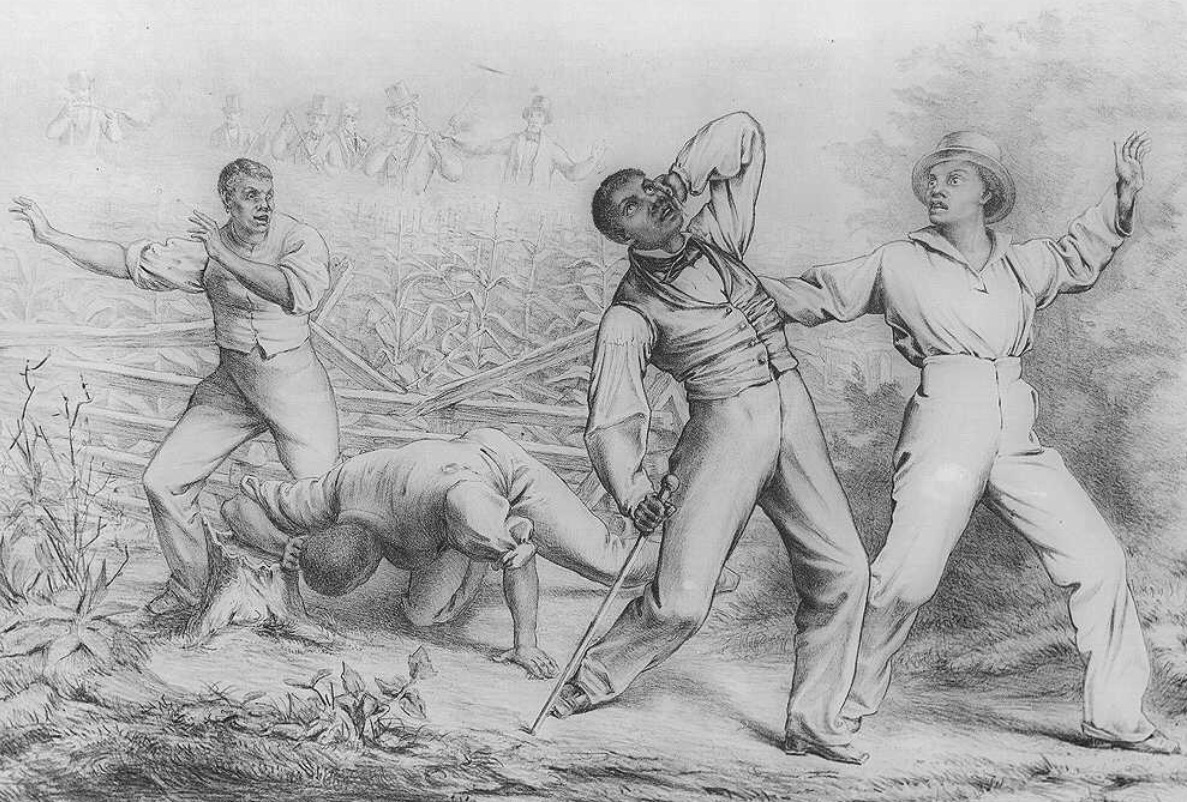
On March 13, 1862, the U.S. federal government forbade all Union army officers from returning fugitive slaves, thus effectively annulling the Fugitive Slave Act of 1850 and setting the stage for the Emancipation Proclamation.