On May 22, 1995, in the case U.S. Term Limits v. Thornton, the U.S. Supreme Court struck down Arkansas’s congressional term limits law, 5-4, overturning the congressional term limits then the law in 23 states: Arizona, Arkansas, California, Colorado, Florida, Idaho, Louisiana, Maine, Massachusetts, Michigan, Missouri, Montana, Nebraska, Nevada, New Hampshire, North Dakota, Oklahoma, Ohio, Oregon, South Dakota, Utah, Washington and Wyoming.
Other May 22 events include
* 1856: South Carolina Congressman Preston Brooks savagely beat Massachusetts Senator Charles Sumner in the halls of Congress as tensions rise over the expansion of slavery. Sumner did not return to the Senate for three years while he recovered.
* 1848: Slavery was abolished in Martinique.
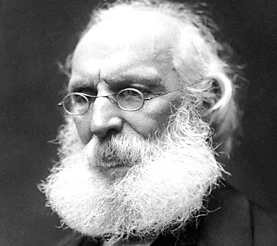
* 1807: A grand jury indicted former Vice President of the United States Aaron Burr on a charge of treason. Burr (in portrait, above) was later acquitted.
Donald J. Trump started his presidency with a flurry of activity. One of the things he did was sign an executive order to reduce Americans’ regulatory load.
This move may have been the most important initiative the new president advanced. It led to an economic boom that was not all just smoke and mirrors and “stimulus.” Real factors were involved in the resulting progress.
Now, however, the economy is in tatters. Massive unemployment, rising real poverty.
But this is not a normal depression. It was the result of the reaction to the coronavirus — largely by the states, but at the recommendation of Trump himself, as advised by Dr. Anthony Fauci. Trump now wants what increasing numbers of Americans want: a return to business and normal life. But “re-opening the economy,” as it is called, is not going quickly or smoothly.
On Tuesday Trump signed an executive order to give his Cabinet secretaries broad permission to cut regulations, “instructing federal agencies to use any and all authority to waive, suspend and eliminate unnecessary regulations that impede economic recovery.”
“And we want to leave it that way.”
Which is the most promising part of this.
“Mr. Trump has made nixing regulations,” explains John T. Bennett in The Independent, “especially ones put in place by the Obama administration, a top priority during his over three years in office.”
We could call the nixing of the lockdown orders themselves a “freeing up” of the economy. To help ease over all the damage, also “freeing up” business from regulatory kludge could not hurt.
For a moment there — a few weeks — a comparatively youthful candidate with a gentle, conscientious and respectful temperament seemed poised to challenge the major parties’ sausage-twisting septuagenarians,The Donald and Sleepy Joe. A congressman from Michigan had entered the Libertarian Party’s hat-strewn ring, offering us something serious for Death Race 2020.
Then, Saturday, Rep. Justin Amash sent a series of tweets announcing that he was ending his presidential bid.
Presidential campaigns aren’t easy. And between outrageous anti-democratic ballot access hurdles and the pandemic, it has gotten even more difficult.
Win or lose — and Amash was going to lose — I’ll miss what the Great Lakes State representative might have gotten a chance to say to audiences across the country.
About partisanship.
About political control.
In Washington.
“That’s why we have so much discord,” Amash told constituents at a 2019 town hall, “because members of Congress are just following the party line all of the time.”
Party bosses?
“Right now, you have a system in which the Speaker of the House controls the entire process,” charges Amash. “That was true under Republicans and it’s true under Democrats. Under [Speaker] Paul Ryan, for example, we had for the first time in Congress’s history an entire term where we weren’t allowed to amend any legislation on the House floor.
“And so far under Speaker Pelosi the same thing has happened,” he added. “No amendments have been allowed on the House floor.”
“You need the House to be a deliberative body where everyone participates,” Amash declares, “and everyone has a chance to offer their amendments, to offer their ideas.”
On May 19, 1897, Irish author, playwright, and poet Oscar Wilde (October 16, 1854 – November 30, 1900) was released from Reading Prison, where he had finished, in ill health, his hard labor sentence for “gross indecency.” His “Ballad of Reading Gaol,” first published pseudonymously in a periodical with wide circulation amongst criminals, quickly achieved the status of a classic.
He died less than three years later, in exile in Europe. His most famous works include the play The Importance of Being Earnest, the novel The Picture of Dorian Gray, and the fascinating essay “The Soul of Man Under Socialism.”
On May 18, 1652, Rhode Island passed the first law in English-speaking North America making slavery illegal.
On May 18, 1593, playwright Thomas Kyd’s accusations of heresy led to an arrest warrant for fellow playwright Christopher (“Kit”) Marlowe.
Kyd was the famed author of The Spanish Tragedy, and Kit Marlowe [pictured] was known for a number of plays, including The Jew of Malta and The Tragicall History of the Life and Death of Doctor Faustus.
Marlowe died a few weeks later, on May 30, without having been arrested. The circumstances of his death were bizarre, suspicious — as if written by a playwright.
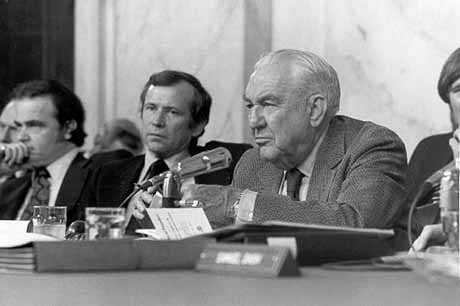
On May 17, 1973, televised hearings regarding the Watergate scandal began in the United States Senate. Sen. Sam Ervin chaired.
Little did participants know that the name of the hotel in which the White House-arranged break-ins occurred would provide a template for most future political scandals: “-gate” would be suffixed to nearly every other possible designator of scandal. The Democratic vendetta against Republican Donald Trump for winning the 2016 election has been called “Russiagate,” for example.
And on May 11, 2020, Trump retweeted a previous post with one additional word: “OBAMAGATE!”
This could be called a “suffixmeme.” Or “insufferable meme,” if you prefer.
This week began with medical devices and loose Trump talk and the predictable idiotic reactions, and ended with idiotic regulations by the FDA. Paul recaps and expands upon the week’s stories: