Categories
international affairs

Strait Democracy

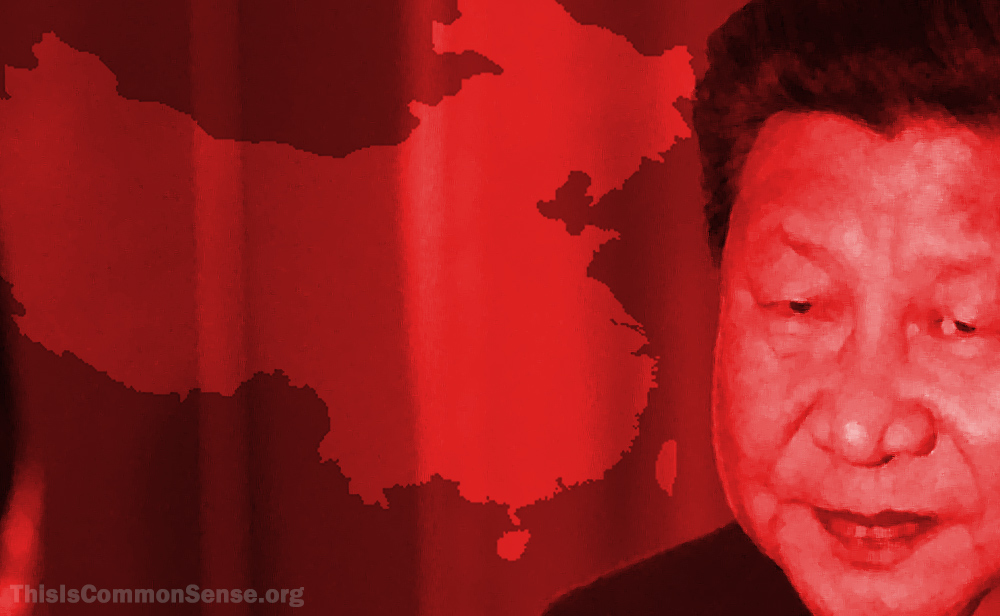
“China vows ‘peaceful reunification’ with Taiwan,” was The New York Post’s takeaway from Chinese ruler Xi Jinping’s speech at the Great Hall of the People in Beijing over the weekend.

What fantabulous news! Peace for our time . . . in Asia. 

That same message was echoed by The Washington Post, which also noted that Xi’s statement comes “days after sending a surge of warplanes near the island.”

With China’s massive military build-up, ongoing threats to attack, invasion drills around Taiwan, not to mention flying squadrons of warplanes across the Taiwan Strait and into the island nation’s air defense identification zone — 150 such incursions last week — tensions have escalated to a fever pitch. 

“We are very concerned,” warned Taiwan’s Foreign Minister Joseph Wu, “that China is going to launch a war against Taiwan at some point.” 

Thank goodness, then, that at this scary moment, our Fourth Estate can herald Xi’s promise of peace!

The only problem? 

The Chinese dictator gave no such assurance. 

Xi merely stated a preference for Taiwan’s peaceful surrender to his one-country, one-system totalitarianism — over having to snuff out Taiwan’s freedom by missile attack and invasion, murdering millions. Which the genocidal autocrat is still threatening to do whenever the opportunity presents.

Cancel the parade. 

Still, if Xi’s rhetoric constitutes “a more conciliatory approach” from Beijing, chock it up to free countries finally waking up and pushing back against the Chinazis. 

Taiwanese President Tsai Ing-wen, noting her nation’s position “on the front lines of democracy and freedom,” focused on the fight against Chinese “coercion.” As she eloquently wrote in Foreign Affairs: “[T]he future of Taiwan is to be decided by the Taiwanese through democratic means.” 

Provided there is the military might to deter Chinese aggression.

This is Common Sense. I’m Paul Jacob.


PDF for printing

See all recent commentary
(simplified and organized)
See recent popular posts
Categories
Thought

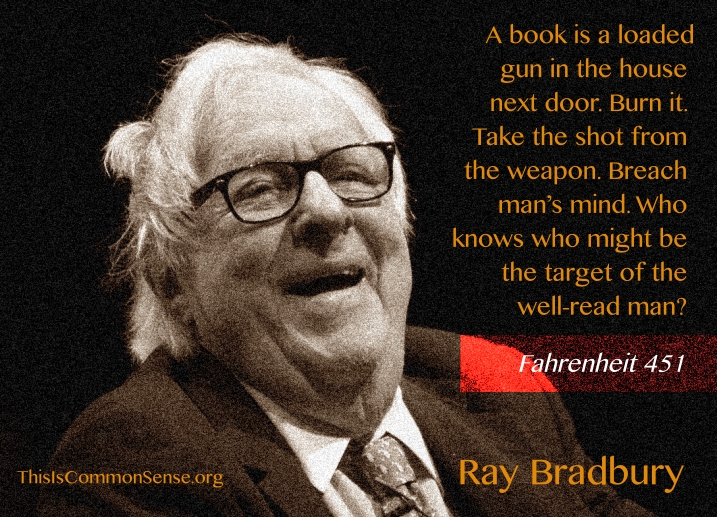
Ray Bradbury

A book is a loaded gun in the house next door. Burn it. Take the shot from the weapon. Breach man’s mind. Who knows who might be the target of the well-read man? Me? I won’t stomach them for a minute.

From the novel Fahrenheit 451 (1953) by Ray Bradbury.
Categories
Today

The New World

On October 12, 1492, Christopher Columbus landed in the Bahamas, thinking he had reached India.

Exactly two hundred years later, a letter from Massachusetts Governor William Phips ended the Salem Witch Trials.

On this date in 1892, the Pledge of Allegiance was first recited by students in many U.S. public schools, as part of a celebration marking the 400th anniversary of Columbus’s voyage.

The Pledge had been composed that year by Francis Bellamy, a Christian Socialist minister, and was first published in Youth’s Companion magazine, the issue dated September 8, 1892. The recital was accompanied with a salute to the flag known as the Bellamy salute. During World War II, the salute was replaced with a hand-over-heart gesture because the original form (described in detail by Bellamy) involved stretching the arm out towards the flag in a manner that resembled the later Nazi salute. The original form of the Pledge was somewhat less involved than later versions:

I pledge allegiance to my Flag and the republic for which it stands, one nation indivisible, with liberty and justice for all.

In October an editorial addition occurred, the word “to” prefixing “the republic.”

Categories
education and schooling First Amendment rights social media

Our Authoritarian Moment

Was it something I said?

Yesterday, YouTube removed the video of my latest episode of This Week in Common Sense. Why? The platform claims I violated its “terms of service” and “community standards” by providing “medical misinformation.”

Funny, YouTube did not specify which statement in the video was incorrect, much less provide any citation to back up its “misinformation” claim.

This sort of authoritarianism is quite common these days. We’re just supposed to take the Authority’s word that It Possesses the Whole Truth.

No debate. No dissent.

There is not even a reference or consult.

Which is what Dr. Byram W. Bridle, PhD, Associate Professor of Viral Immunology Department of Pathobiology at the University of Guelph discovered.

He refused to provide evidence of vaccination. So his Canadian university “banned” him “from campus for at least a year.” And sat by while colleagues and students abused him for being “anti-science.”

Thing is, as he points out in his Open Letter to the academic institution, not one of the tenured immunologists of the University of Guelph thinks there should be mandatory vaccination. All are very concerned about the goal of universal vaccination. Since not one of the available vaccines appears effective enough to produce sufficient immunity in recipients “herd immunity,” the goal must be mere “herd vaccination.” 

Dr. Bridle is especially annoyed that the university does not allow him to demonstrate his natural immunity to the disease, which simply does not interest the pro-vaccination bureaucrats.

Worse yet, at no point in the university’s deliberations over the vaccine mandate did administrators consult their own immunology department!

That’s not “following the science.”

Like at YouTube, it’s a political campaign: science not required.

This is Common Sense. I’m Paul Jacob.


Note: I first heard about both stories from my podcasting sparring partner, who produced two stories on his website regarding Dr. Bridle and tipped the hat to historian Tom Woods.

PDF for printing

See all recent commentary
(simplified and organized)
See recent popular posts
Categories
Thought

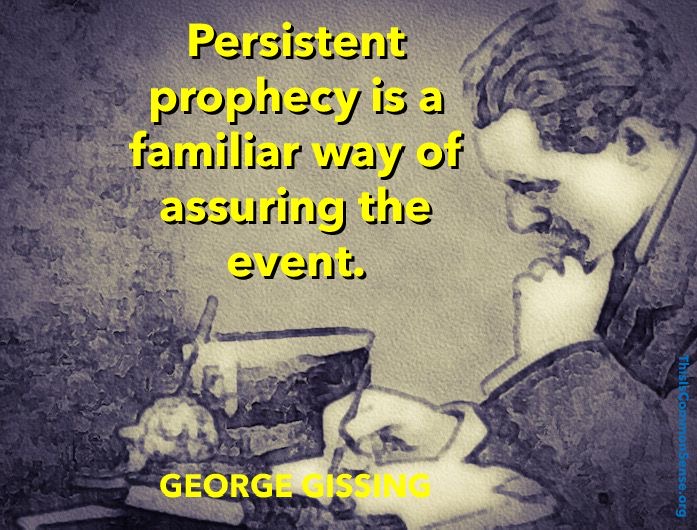
George Gissing

Persistent prophecy is a familiar way of assuring the event.

George Gissing, The Private Papers of Henry Ryecroft (1903).
Categories
Today

The Revolution Remembered

October 11, 1890, marks the founding of the Daughters of the American Revolution.

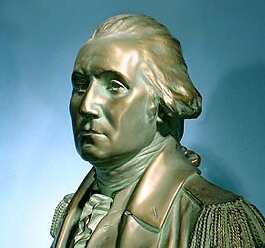
On the same date in 1976, President Gerald R. Ford approved a congressional joint resolution Public Law 94–479 to appoint, posthumously, George Washington to the grade of General of the Armies of the United States, as part of the bicentennial celebrations.

John J. Pershing (1860 – 1948) is the only other American to attain this high title, and the only one to achieve it while alive.

Categories
by Paul Jacob video

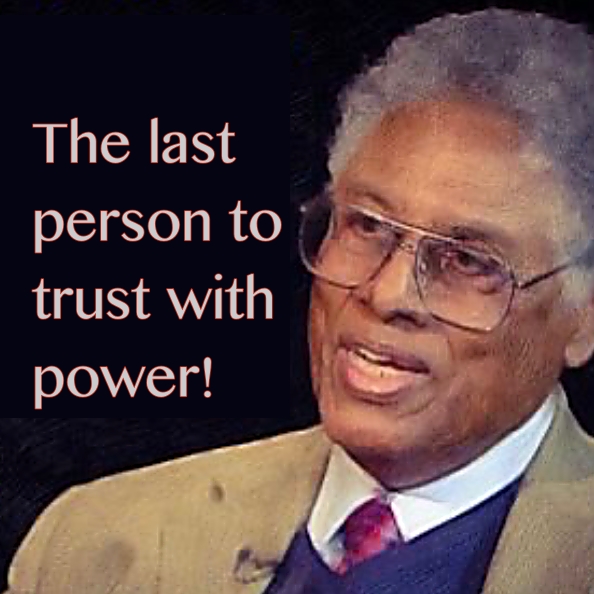
Watch: The Last Person to Trust with Power!

Paul Jacob begins with Thomas Sowell and ends with government-supported anarchists. In-between? The big issues of the day: but you cannot watch it on YouTube:

Why? Well, YouTube has taken it down:

No specific claim was cited as in error, nor any medical authority cited to back up the accusation. Of course.

The video is now available on Rumble:

The audio podcast is still available via podcatcher and as hosted on SoundCloud. See yesterday’s post for the link.

Categories
Today

Atlas?

On October 10, 1957, Ayn Rand’s dystopian/utopian novel Atlas Shrugged was published. Written to expound and defend an individualist, freedom/free-market point of view, it is one of the most influential and literarily successful didactic novels ever written.

On October 10, 1973, Austrian-born American economist, Ludwig von Mises* (pictured above) died.

Two-hundred fifty-nine years earlier, the French law-maker and Jansenist Pierre le Pesant, sieur de Boisguilbert died.

Both economists were known for their defenses of freer markets: le Pesant for pioneering the critique of mercantilism, arguing that a nation’s wealth consisted in what its people produce and trade; Mises for systematizing economic theory and advancing the critique of both socialism and latter-day mercantilism (what he called “interventionism”).


In January 1958, following the publication of Atlas Shrugged, Mises wrote Ayn Rand a letter of congratulations.

Categories
Thought

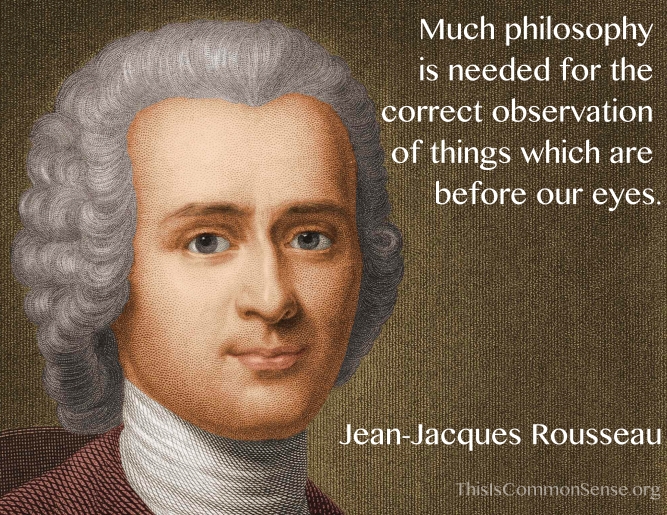
Jean-Jacques Rousseau

Il faut beaucoup de philosophie pour observer
les faits qui sont trop près de nous.

Much philosophy is needed for the correct observation of things which are before our eyes.

Jean-Jacques Rousseau, as quoted by Frédéric Bastiat, Harmonies of Political Economy (1850).
Categories
Today

The Banishment of Roger Williams

On October 9, 1635, Protestant theologian Roger Williams was banished from the Massachusetts Bay Colony as a religious dissident after he spoke out against punishments for religious offenses and giving away Native American land. He moved south, founding Providence Plantations, where he worked for separation of church and state, the rights of aboriginal Americans, and against slavery.