On January 16, 1786, Virginia enacted the Statute for Religious Freedom authored by Thomas Jefferson.
Categories
Religious Freedom
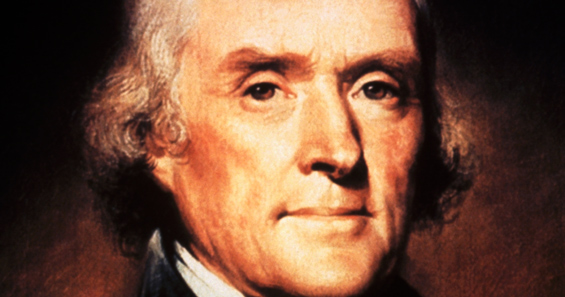
On January 16, 1786, Virginia enacted the Statute for Religious Freedom authored by Thomas Jefferson.

What is? you may ask. Well, a new virus. But so also are lies. And corruption. And love of big government über alles.
Which is why you should listen to Paul Jacob every weekend. Paul rethinks the big stories of the week, and serves as a watchdog on government and corruption run amok. His podcast This Week in Common Sense can be found on most podcatchers as well as on SoundCloud, where it is hosted:
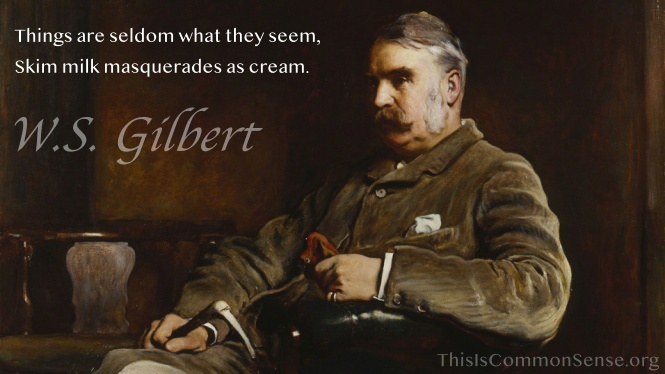
Things are seldom what they seem,
Sir William Schwenck Gilbert, opening lines to the famous duet between Buttercup and the Captain in the “Gilbert and Sullivan” operetta H.M.S. Pinafore (1878; Sir Arthur Sullivan, composer).
Skim milk masquerades as cream.

In a society in which there is no law, and in theory no compulsion, the only arbiter of behaviour is public opinion. But public opinion, because of the tremendous urge to conformity in gregarious animals, is less tolerant than any system of law. When human beings are governed by ‘thou shalt not’, the individual can practise a certain amount of eccentricity: when they are supposedly governed by ‘love’ or ‘reason’, he is under continuous pressure to make him behave and think in exactly the same way as everyone else.
George Orwell on “the totalitarian tendency which is implicit in the Anarchist or pacifist vision of society,” Collected Essays, Journalism and Letters, Vol. 4, p. 252.
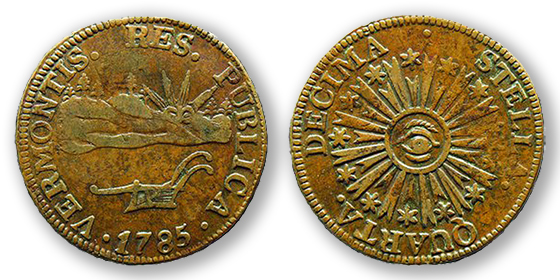
On January 15, 1777, New Connecticut declared independence from the crown of Great Britain and the colony of New York.
Delegates first named the independent state New Connecticut and, in June 1777, finally settled on the name Vermaont, an imperfect translation of the French for Green Mountain.
This new “Vermont Republic” minted copper coins (see above), first struck in 1785. The people of Vermont took part in the American Revolution although the Continental Congress did not recognize the jurisdiction, because of vehement objections from New York, which had conflicting property claims.
In 1791, Vermont was admitted to the United States as the 14th state, upon which its minting of coins ceased.
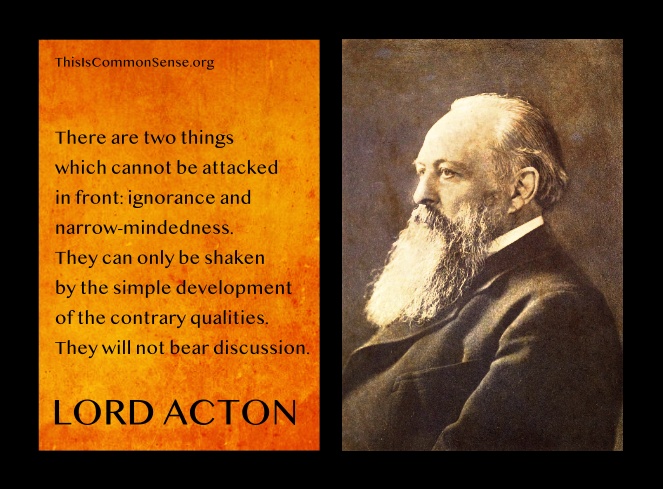
There are two things which cannot be attacked in front: ignorance and narrow-mindedness. They can only be shaken by the simple development of the contrary qualities. They will not bear discussion.
John Emerich Edward Dalberg Acton, 1st Baron Acton (January 10, 1834 – June 19, 1902), Letter (23 January 1861), published in Lord Acton and his Circle (1906), by Abbot Francis Aidan Gasquet, Letter 74.
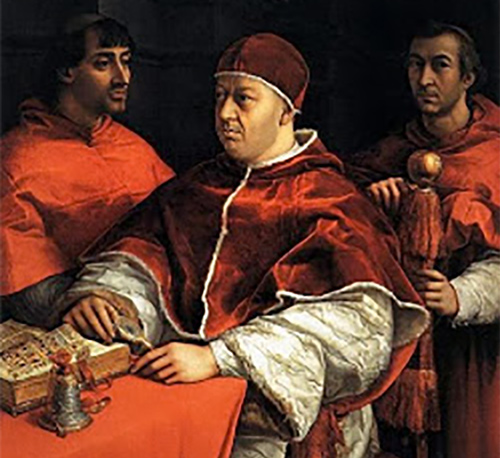
On January 14, 1514, Pope Leo X issued a papal bull against slavery.
On the same date in 1639, the first written constitution to create a government, the “Fundamental Orders,” was adopted in Connecticut.

It is a general law in politics, that the power most to be distrusted, is that which, possessing the greatest force, is the least responsible.
James Fenimore Cooper, The American Democrat (1838).
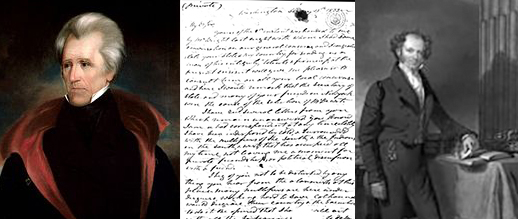
On January 13, 1833, United States President Andrew Jackson (pictured, top left) wrote to Vice President Martin Van Buren (pictured, top right) expressing his opposition to South Carolina’s defiance of federal authority in the Nullification Crisis. Jackson insisted that “the crisis must be now met with firmness” and “the modern doctrine of nullification & succession put down forever.”
South Carolina had blamed protectionist high tariffs for the severity of the economic slump of the time, and Andrew Jackson’s compromise Tariff of 1832 was still too much special-interest “protectionism” for South Carolina, which threatened to nullify the law as unconstitutional. Jackson, a nationalist at heart, had no sympathy for dissidents in the southern states. (The tariffs were designed by northern politicians to encourage the growth of industry. The belief among most economists of that time was that such high “protective” tariffs favored certain businesses at the expense of the general consumer, particularly farmers and agricultural producers.) After the crisis subsided, tariffs were further reduced from the 1832 level, much lower than of 1828’s “Tariff of Abominations,” which had been signed into law by President John Quincy Adams — and written mainly by Martin Van Buren as a way to precipitate the election of Jackson.
Since the somewhat ambiguous end to the Nullification Crisis, the doctrine of state prerogatives — “states’ rights” — has been asserted by opponents of the Fugitive Slave Act of 1850, proponents of California’s Specific Contract Act of 1863 (which nullified the Legal Tender Act of 1862), opponents of Federal acts prohibiting the sale and possession of marijuana in the first decade of the 21st century, and opponents of implementation of laws and regulations pertaining to firearms from the late 1900s up to 2013. State opposition to ObamaCare has also recently conjured up the issue.
On January 13, 1898, Émile Zola’s J’accuse exposed the Dreyfus affair.
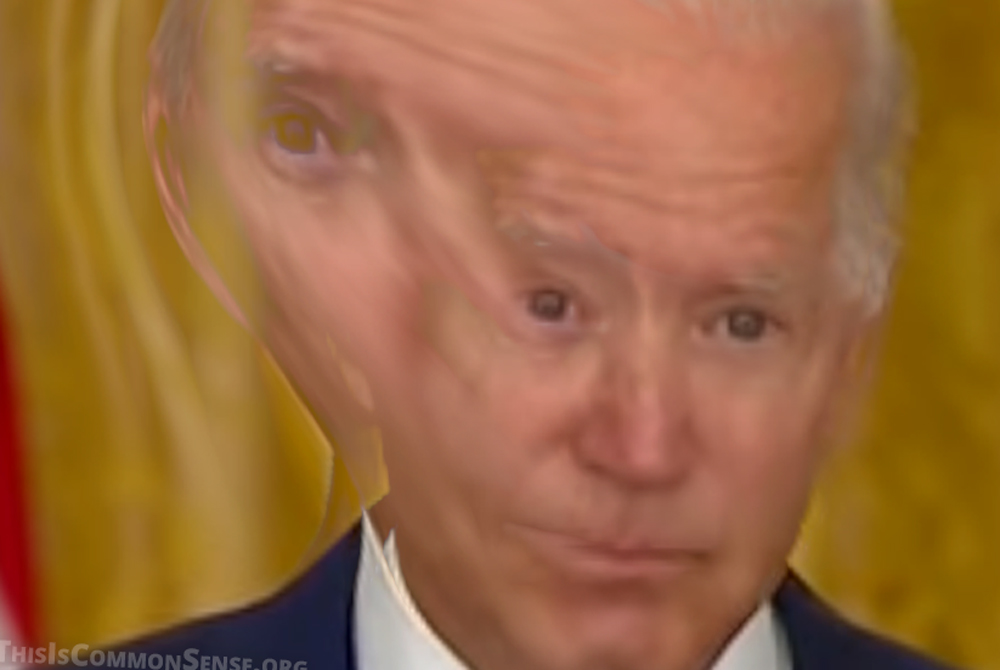
“Let me be clear,” President Joe Biden told a Georgia crowd yesterday, addressing changes proposed by the Democrats to election laws nationally, “this is not about me or Vice-President Harris or our party.”
Of course not. Who would even suggest such a thing?
On this same “voting rights” subject six months ago, Biden called Republicans “bullies and merchants of fear and peddlers of lies” who “are threatening the very foundation of our country.” Though less colorful, yesterday’s address was merely more of the same.
“Pass the Freedom to Vote Act! Pass it now!” the president shouted, arguing that it “would prevent voter suppression.”
How? Well, that’s less than clear.
For years, Democrats slammed laws requiring voters to show photo identification as “racist,” contending the requirement disproportionately suppressed black voters. But then, when polls demonstrated that voters “of color” are even more supportive of Voter ID laws than are whites, Democrats quickly insisted they had always been for such laws.
Now — keep up! — voter ID laws are back to being suppressive. And the very purpose of the Dems’ Freedom to Vote Act is to strike down all such state laws.
When Georgia’s Secretary of State called for photo ID requirements last Sunday on CBS’s Face the Nation, host Margaret Brennan offered, “The Freedom to Vote Act actually does promote a national standard for states that have an ID requirement for in-person voting,” adding, “You could use a bank statement or utility bill.”
Neither of which constitutes a photo ID, as the secretary pointed out.
Democrats battling former President Trump’s so-called Big Lie have concocted one of their very own.
This is Common Sense. I’m Paul Jacob.
See all recent commentary
(simplified and organized)
See recent popular posts