Categories
Thought

Lord Acton

At all times sincere friends of freedom have been rare, and its triumphs have been due to minorities, that have prevailed by associating themselves with auxiliaries whose objects often differed from their own; and this association, which is always dangerous, has been sometimes disastrous, by giving to opponents just grounds of opposition, and by kindling dispute over the spoils in the hour of success.

John Emerich Edward Dalberg Acton, 1st Baron Acton (January 10, 1834 – June 19, 1902), The History of Freedom in Antiquity (1877).
Categories
Today

Fast Ford

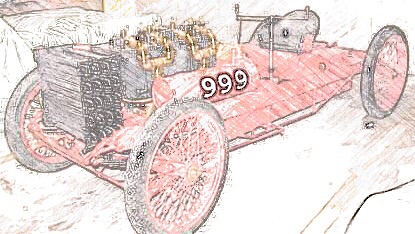
On January 12, 1904, Henry Ford set a land-speed record of 91.37 mph on the frozen surface of Lake St. Clair in Michigan, driving a four-wheel vehicle, dubbed the “999,” with a wooden chassis but no body or hood. Ford’s record was broken within a month, but the publicity from Ford’s achievement was valuable to the auto pioneer, who had incorporated the Ford Motor Company the previous year.

Categories
ballot access partisanship

Sore Losers Lumped

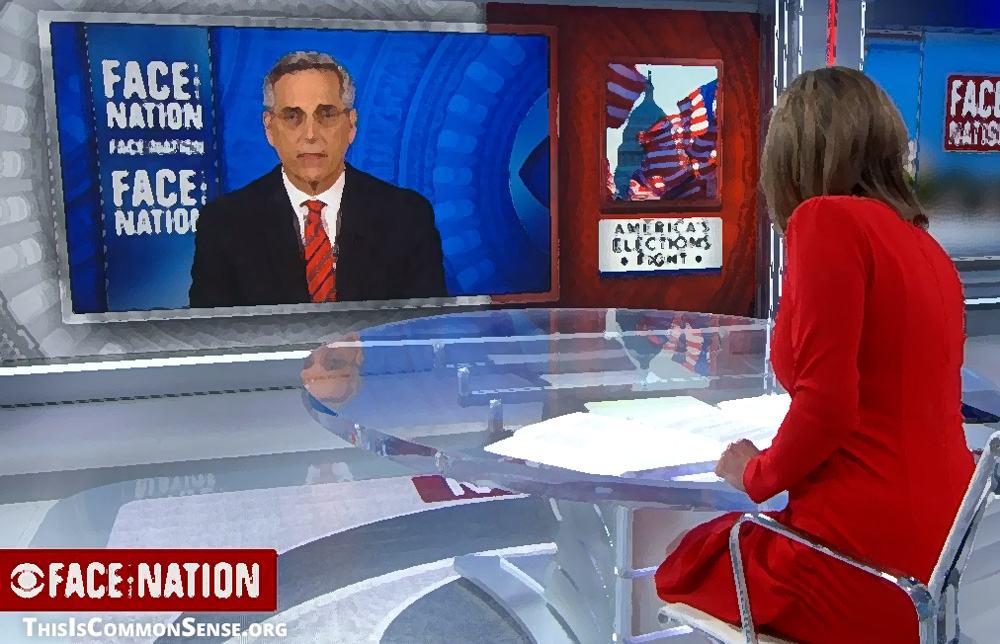
“[R]ight now,” Georgia Secretary of State Brad Raffensperger expressed to Margaret Brennan, host of CBS’s Face the Nation, last Sunday, “we need to restore trust wherever we can.”

Having “stood up to” pressure from President Trump after the 2020 election, and now persona-non-grata in his own party, Raffensperger has become a popular guest on progressives’ legacy media . . . though, not always providing the soundbites they crave.  

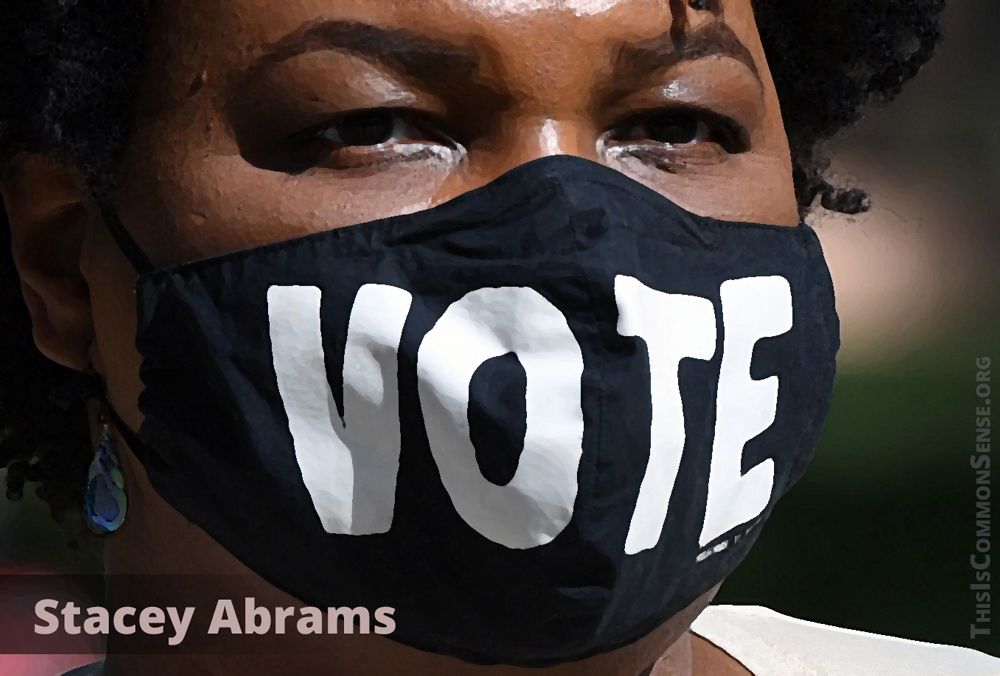
“In Georgia, we’ve been fighting this — this theme of, you know, stolen election claims — from Stacey Abrams about voter suppression [in 2018], and then 2020 it was about voter fraud,” explained the secretary. 

“Both of them undermine voter trust.”

“They may both undermine voter trust,” Brennan quickly countered, “but I’m sure you draw a distinction between someone who doesn’t hold any kind of office and the president of the United States actively putting pressure on you to find and manufacture votes. They’re not equivalent,” she added.

Raffensperger acknowledged that the president’s “positional power is just much higher than a candidate running for governor. But be that as it may,” he continued, “when people lose races, I think the proper thing to do is admit that you lose. And if you want to run again, by all means do so.”

Partisans will debate whether Abrams’ claims of voter suppression are more right or wrong, defensible or incredible, honest or dishonest than Trump’s charges of vote fraud. But both have been blindly accepted not only by their own political side, but by the rah-rah crowd in the respective partisan corners — er, halves — of the media as well.

Leaving other elected officials to grab their midnight trains to somewhere else, the lonely Georgia Secretary of State stands his ground, making a non-partisan, principled point.

This is Common Sense. I’m Paul Jacob. 


PDF for printing

See all recent commentary
(simplified and organized)
See recent popular posts

Categories
Thought

Umberto Eco

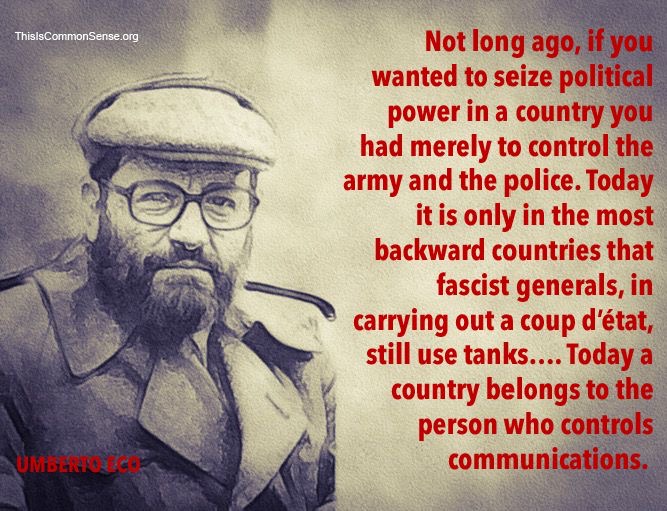
A democratic civilization will save itself only if it makes the language of the image into a stimulus for critical reflection — not an invitation for hypnosis.

Umberto Eco, “Can Television Teach?” in Screen Education 31 (1979), p. 12.
Categories
Today

An Austrian Freedom

On January 11, 1571, the freedom of religion was granted to Austrian nobility.

Two years earlier, the first recorded lottery in England was held.

In Philadelphia, Pennsylvania, on the eleventh day of the first month of 1759, the first American life insurance company was incorporated.

On January 11, 1935, Amelia Earhart became the first person to fly solo from Hawaii to California.

On this date in 2003, Illinois Governor George Ryan commuted the death sentences of 167 prisoners on Illinois’s death row based on the Jon Burge scandal.

Categories
ballot access initiative, referendum, and recall

Reforms from Ground Zero

“Georgia has become ground zero in the fight over election integrity,” Margaret Brennan, host of Face the Nation on CBS, alerted her audience on Sunday, introducing the state’s Secretary of State Brad Raffensperger, a Republican who, she reminded, “became known nationally in the wake of that election because [he] refused to succumb to pressure from President Trump.”

Given the walk that Mr. Raffensperger has walked, his talk should carry some street cred with media outlets that are truly non-partisan and interested in election reform. 

Raffensperger proposed three reforms to secure elections: (1) No ballot harvesting, wherein a person gathers up or “harvests” many mail-ballots not his or her own; (2) “a constitutional amendment . . . that only American citizens vote in our elections,” and (3) “photo I.D. for all forms of voting.”

“Only U.S. citizens do currently vote in elections,” Brennan critically interjected (incorrectly), “but go on.”

Raffensperger did, explaining that “cities are trying to push noncitizen voting.” A few years ago, the council in Clarkston, Ga., voted to study allowing non-citizens to vote. Just last month, the New York City Council gave the right to vote in city elections to 800,000 non-citizens (including 110,000 Chinese nationals); last year, the Vermont Legislature approved non-citizen voting in two cities; and non-citizens (documented and undocumented) have been voting in San Francisco; and in 11 more cities across the country.

The Secretary of State noted that citizen-only voting, “just like photo I.D.,” is “supported by all demographic groups and a majority of both political parties.”

Citizen-only voting belongs in our state constitutions so that any future decisions on providing the vote to non-citizens requires a vote of the people, and therefore, cannot be made by politicians alone.

This is Common Sense. I’m Paul Jacob.


Note: Illustrating the usual split between politicians and voters, the New York City Council enacted a law for non-citizen voting while a poll of New Yorkers showed more than 60 percent opposed the measure.

PDF for printing

See all recent commentary
(simplified and organized)
See recent popular posts
Categories
Thought

Ortega y Gasset

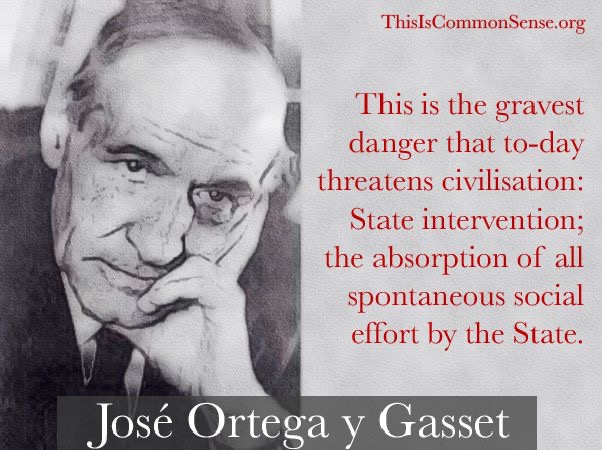
This is the gravest danger that to-day threatens civilisation: State intervention; the absorption of all spontaneous social effort by the State.

José Ortega y Gasset, The Revolt of the Masses (1929).
Categories
by Paul Jacob video

Watch: Myth, Fact, Meaning About “The Sixth”

Paul Jacob sorts it all out on This Week in Common Sense this weekend:

Categories
Today

Auberon Herbert

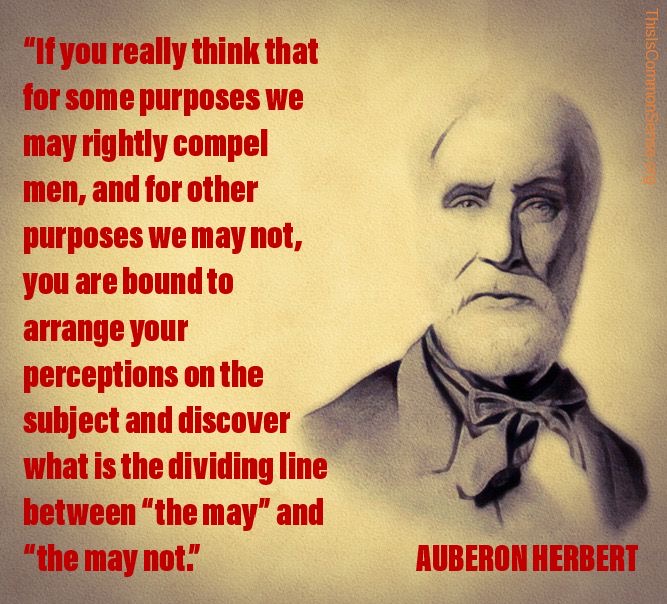
If you really think that for some purposes we may rightly compel men, and for other purposes we may not, you are bound to arrange your perceptions on the subject and discover what is the dividing line between “the may” and “the may not.”

Auberon Herbert, The Right and Wrong of Compulsion by the State (1885).
Categories
Today

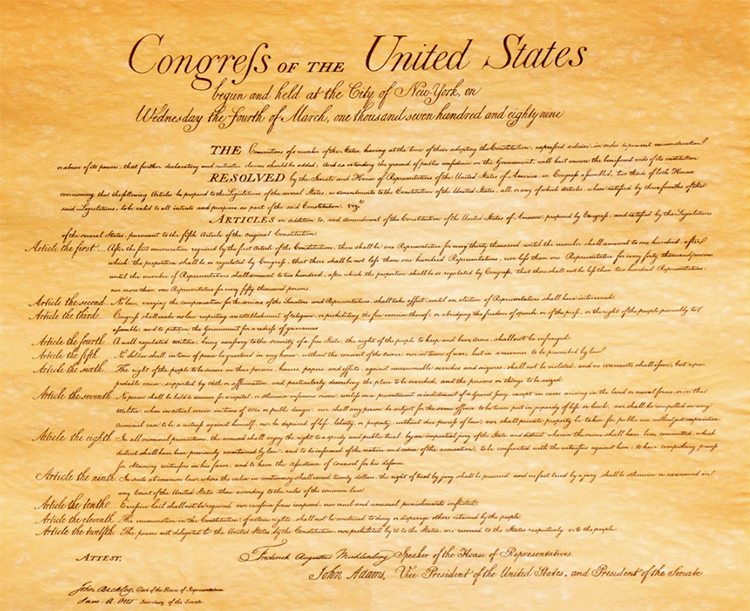
Fifth to Ratify

On January 9, 1788, Connecticut became the fifth state to be admitted to the United States under the new Constitution. Connecticut was one of the first nine states of the original union, under the Articles of Confederation, to accept the Constitution, and thus officially ratify it. All 13 original states had ratified that new compact, officially, by May 29, 1790. The first state to be added to the original 13 was Vermont, in 1791.