We try to make virtues out of the faults we have no wish to correct.
Categories
François de La Rochefoucauld

We try to make virtues out of the faults we have no wish to correct.
On March 3, 1924, the 407-year-old Islamic caliphate collapsed when Caliph Abdülmecid II of the Ottoman Caliphate was deposed. The last remnant of the old regime gives way to the reformed ofKemal Atatürk.
On the same day, the Free State of Fiume was annexed by the Kingdom of Italy.
On March 3 of 1931, the United States adopted The Star-Spangled Banner as its national anthem.
Mohandas K. Gandhi began his hunger strike in Bombay to protest at the autocratic rule in British India on this day in 1939.
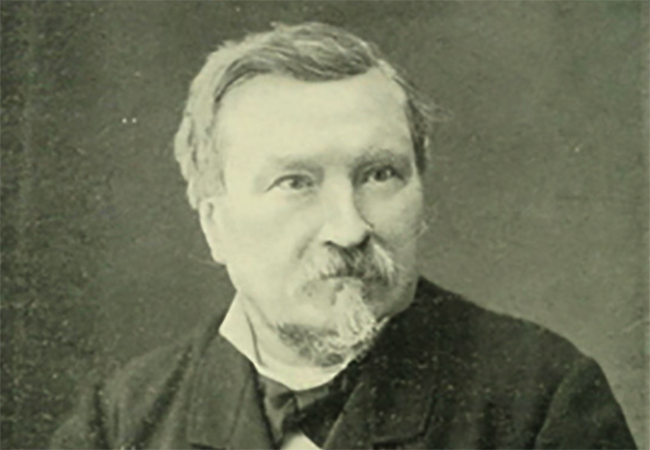
Belgian economist Gustave de Molinari (pictured above) was born on March 3, 1819. Associated with French laissez-faire economists Frédéric Bastiat and Yves Guyot, he was the longest-serving editor of Guillamin’s Journal des économistes. While today chiefly known in the English-speaking world for his authorship of one article, “The Production of Security” (1849), he was, as Ludwig von Mises described, the most productive economist in his school. Despite this, and his worldwide recognition, only one of his many books was translated from the French into English during his lifetime, The Society of To-morrow (1904), his final book.
In the book he advanced the idea of “the free constitution of nationality.”
Molinari died on January 28, 1912.
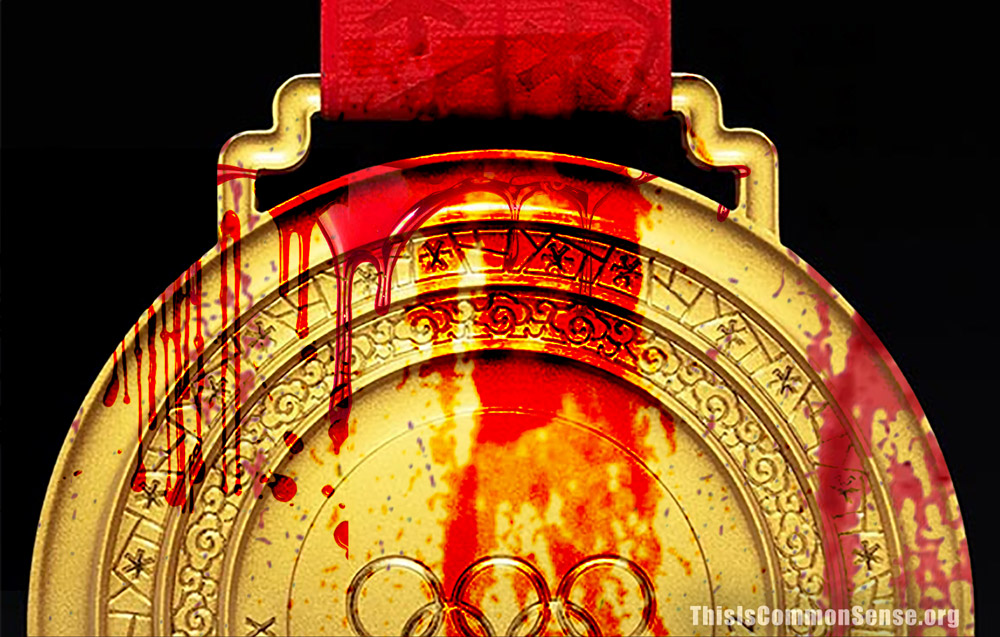
An Olympic athlete has found a way to both heed and spurn this counsel.
In what the New York Times calls a “rare rebuke,” Swedish speedskater Nils van der Poel has given one of his gold medals to the daughter of a Chinese-born Swedish publisher being imprisoned by the Chinese government.
Last November, Nils saw a production by Civil Rights Defenders that told of how Gui Minhai, a publisher of works criticizing the Chinazi regime, is now incarcerated in China. He had been abducted by Chinese operatives while vacationing in Thailand.
The skater felt obliged to do something in protest “since I had the opportunity that very few people have.”
Gui’s daughter, Angela, shrugs off any suggestion that the skater’s gesture, lacking immediate power to free her father, must be naïve.
“A little bit of naïveté is important to try to effect change,” she says. “I think it’s very important that Nils giving me his medal to honor my father is understood as honoring political prisoners like him, many of whom are increasingly Hong Kongers and Uyghurs.”
What about it, fellow Olympic winners? If you follow Nils’s example, you’ll no longer have your medal. But you’ll still have your victory.
And a little more.
This is Common Sense. I’m Paul Jacob.
See all recent commentary
(simplified and organized)
See recent popular posts
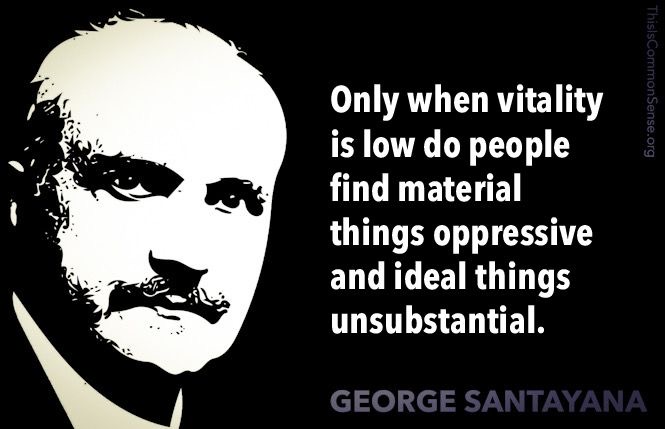
Only when vitality is low do people find material things oppressive and ideal things unsubstantial.
George Santayana, Winds of Doctrine (1913).
Only when vitality is low do people find material things oppressive and ideal things unsubstantial.
George Santayana, Winds of Doctrine (1913).
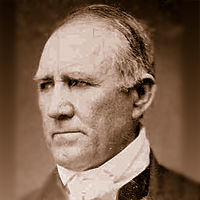
On March 2, 1793, Sam Houston was born.
On March 2, 1926, American economist and political theorist Murray N. Rothbard was born.
As President of the Republic of Texas, Houston (pictured above) cut the size of the Republic’s budget by a whopping amount, including selling the navy for scrap. Rothbard theorized about even more daring — and more permanent — cuts to (and limits upon) government.
On March 2, 1781, the Second Continental Congress convened as the new Congress of the Confederation, under the Articles of Confederation, ratified the day before. The congress elected no new president upon adoption of the Articles. This Confederation Congress oversaw the conclusion of the American Revolution.
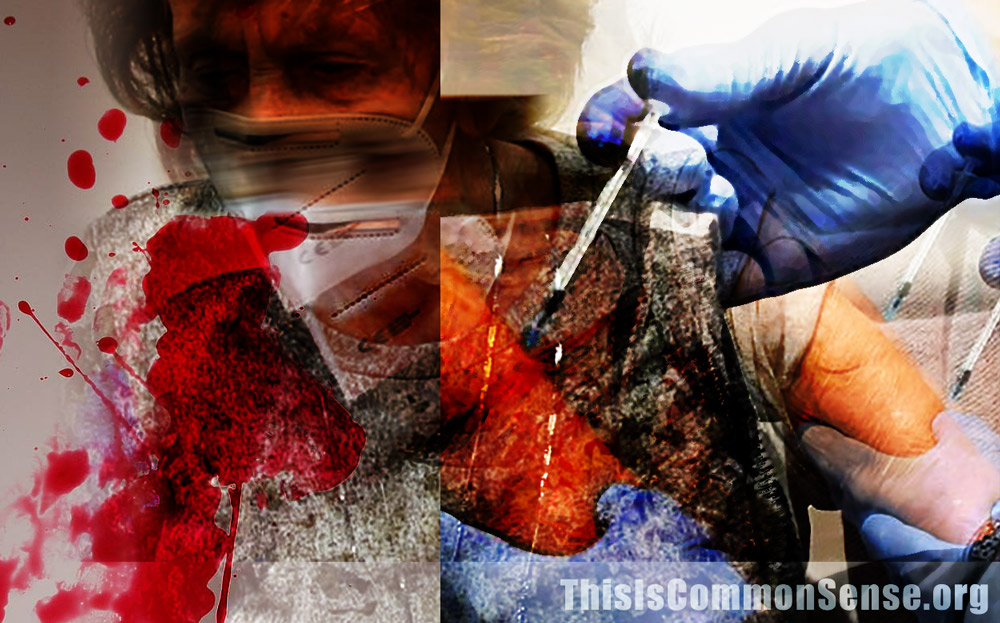
But there’s another way suicide has become an issue with the pandemic. It’s a little roundabout.
Adverse effects of the vaccines have been severely under-reported. A number of maladies are associated with the various vaccines, including micro-clotting and myocarditis — that latter up especially in younger people who have been vaccinated.*
But some adverse reactions are fatal — those up 40 percent in the adult population, says the CEO of one life insurance company.
Our leaders and vaccine promoters don’t talk about this: if they admitted fatal side-effects, the push for universal, mandatory vaccination might be generally considered inhumane,even monstrous. But insurance companies have a more pressing concern.
Last month, a Frenchman with a large life insurance policy died of the jab. His family cannot sue the drug company — legal immunity having been granted during the emergency — so his heirs and assigns sued to collect on the insurance. The court denied the claim.
“The side effects of the experimental vaccine are published and the deceased could not claim to have known nothing about it when he voluntarily took the vaccine,” the court’s logic runs. “There is no law or mandate in France that compelled him to be vaccinated. Hence his death is essentially suicide.”
And suicide is not covered in most term life insurance policies.
The message: you take your chances with the vaxxes.
If more such cases come to light, this may be the issue that fatally undermines the Vaccine Mandate Narrative.
This is Common Sense. I’m Paul Jacob.
See all recent commentary
(simplified and organized)
See recent popular posts
In all history there is no war which was not hatched by the governments, the governments alone, independent of the interests of the people, to whom war is always pernicious even when successful.
Lev Nikolayevitch Tolstoy, Christianity and Patriotism (1895), as translated in The Novels and Other Works of Lyof N. Tolstoï, Vol. 20, p. 44
March 1st Firsts (and a 17th and a 37th):
| The first United States census was authorized, in 1790.
| Ohio was admitted as the 17th U.S. state, in 1803.
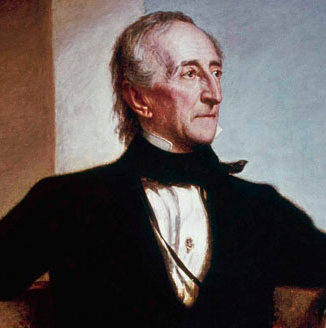
| President John Tyler [pictured above] signed a bill authorizing the United States to annex the Republic of Texas, in 1845.
| The state of Michigan formally abolished capital punishment, 1847.
| Nebraska became the 37th of the United States, in 1867.
On March 1, 1781, the Continental Congress of the United States adopted the Articles of Confederation. With this, the governing body became known, officially, as United States of America in Congress Assembled, more commonly as the Congress of the Confederation. The first session of this newly styled Confederation Congress took over without a break from the Second Continental Congress, adjourning on November 3. Samuel Huntington and Thomas McKean served as presidents during this first session.

Last Wednesday, Twitter said it had “erred when it deleted about a dozen accounts that were posting information about Russian troop movements.” Obviously, the Russian invaders already know about their own troop movements. Losing this info could only hurt the people in Ukraine trying to defend themselves or run for their lives.
Innocent error? Anyway, Twitter said, in effect, “Our bad” and that it was now “proactively reinstating” affected accounts.
On the plus side, though, Ukraine official Mykhailo Federov was able to use Twitter to ask Elon Musk for help when the Russian assault knocked out the Internet in parts of the country.
“@elonmusk, while you try to colonize Mars,” Federov tweeted, “Russia try to occupy Ukraine! While your rockets successfully land from space — Russian rockets attack Ukrainian civil people! We ask you to provide Ukraine with Starlink stations. . . .”
That’s one way to get around the secretary barrier. And it worked.
“Starlink service is now active in Ukraine. More terminals en route,” was Musk’s tweet-response last Saturday.
Starlink satellites provides Internet access from space. No cables or optic fiber needed. Nothing for saboteurs to snip.
Good thinking, Mr. Federov. Thank you for the unreliably available platform, Twitter. Thank you, Elon Musk, for answering Ukraine’s cry for help and doing so as swiftly as possible.
This is Common Sense. I’m Paul Jacob.
See all recent commentary
(simplified and organized)
See recent popular posts