Categories
by Paul Jacob video

Watch: What Elites Have Excluded

Charles Fort wrote a book called The Book of the Damned, and by “damned” he meant “what science has excluded.” In this weekend’s episode of This Week in Common Sense, Paul Jacob considers what the establishment elites won’t talk about. The YouTube upload is the shorter version of the video:

The full version of the video podcast is on Rumble:

This Week in Common Sense, full episode, March 6, 2022.
Categories
Thought

Albert Camus

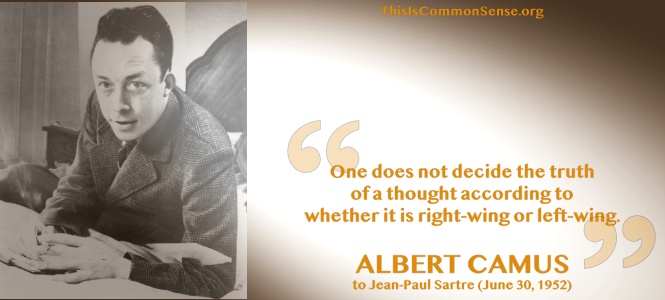
One does not decide the truth of a thought according to whether it is right-wing or left-wing.

Albert Camus to Jean-Paul Sartre, in a letter (June 30, 1952).

Categories
Today

Svetlana Made a Break for It (& Paul made his debut)

On March 6, 1967, Soviet Premiere Joseph Stalin’s only daughter, Svetlana Alliluyeva (February 28, 1926 – November 22, 2011), defected to the United States. She later took the name Lana Peters, upon marriage to William Wesley Peters. The marriage was short-lived.

The March 6 date also marks term limits advocate and initiative organizer Paul Jacob’s birthday. He was born on the anniversary of the births of Michaelangelo, Cryano de Bergerac, and Alan Greenspan. He is also, obviously, one reason that this site, ThisIsCommonSense.com, exists. (It continues, however, only through the continued support of readers like you.)

Categories
audio podcast

Listen: Evidence of the Damned!

And by the “damned” we mean what our rulers have excluded!

Paul Jacob covers the biggest story of the week, the Ukraine, in more depth than allowed this week on Common Sense with Paul Jacob. He starts by asking a question, and Timothy Virkkala has trouble getting on board with helping the Ukraine in any big way. Listen — and comment — on SoundCloud:

You can also obtain the podcast from your favorite podcatchers.
Categories
Thought

Albert Camus

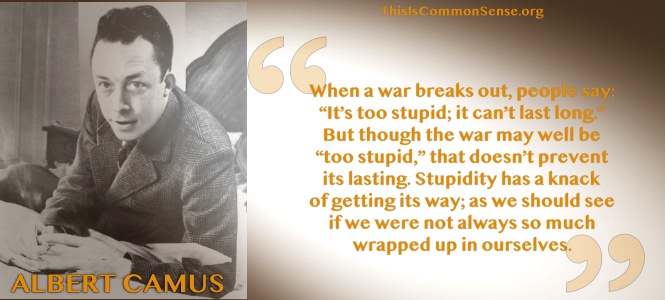
When a war breaks out, people say: “It’s too stupid; it can’t last long.” But though the war may well be “too stupid,” that doesn’t prevent its lasting. Stupidity has a knack of getting its way; as we should see if we were not always so much wrapped up in ourselves.

Albert Camus, The Plague (1947).

Categories
Today

A Banned Book

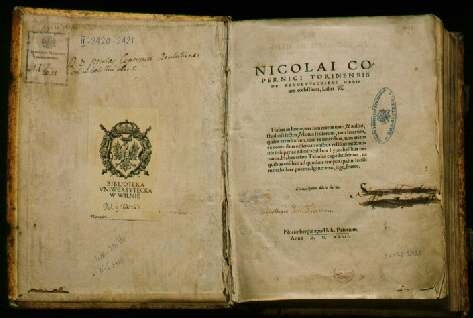
On March 5, 1616, Nicolaus Copernicus’s book, De revolutionibus orbium coelestium, was placed on the Catholic Church’s Index of Forbidden Books. This censorship notwithstanding, the Earth continued to revolve around the Sun. The book had been first published in 1543 in Nuremberg.

| In 1770, the Boston Massacre took place on March 5.

| Joseph Stalin, the longest serving leader of the Soviet Union, died at his Volynskoe dacha in Moscow on this date in 1953, after a cerebral hemorrhage.

| March 5 is magician Penn Jillette’s birthday. He turns 67 today, beginning his 68th year of life.

Categories
government transparency international affairs

U.S. Patent 9,587,003 B2

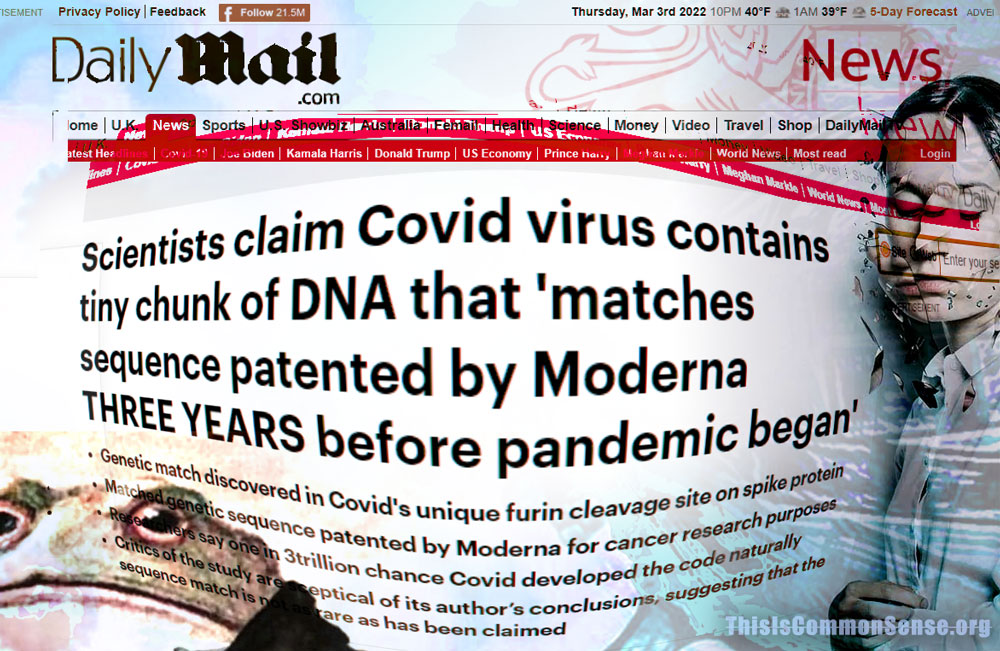
“Study finds genetic code in Covid’s spike protein linked to Moderna patent,” reads the headline in the Daily Mail. The story is another in a long chain of revelations linking American researchers and funding to the laboratory in Wuhan, China, that likely created the novel coronavirus.

But wait! some readers will shout. Isn’t the big COVID Origin story right now the new studies strongly pushing the Bat Soup (wet market) origin?

No. Those studies are slapdash — perhaps designed to balance against the continuing scientific revelations pointing to SARS-CoV-2 as a gain-of-function job funded in part by American taxpayers.

The far more important story tells us that an “international team of researchers” discovered a tell-tale string of genetic code “in SARS-CoV-2’s unique furin cleavage site, the part that makes it so good at infecting people and separates it from other coronaviruses.” It’s a key part of the infamous “spiked protein.” The Daily Mail piece by Connor Boyd explains that this “structure has been one of the focal points of debate about the virus’s origin, with some scientists claiming it could not have been acquired naturally.”

The research team claims that “there is a one-in-three-trillion chance Moderna’s sequence randomly appeared through natural evolution.”

And by “Moderna’s sequence” the scientists mean a genetic product that the company patented in its cancer research projects. 

This is all still controversial, of course, but it is worth noting that much of past controversy consisted of desperate attempts by the Dr. Fauci/Peter Daszak faction to avoid any responsibility for what may be history’s greatest medical malpractice case.

This is Common Sense. I’m Paul Jacob.


PDF for printing

See all recent commentary
(simplified and organized)
See recent popular posts

Categories
Thought

George Santayana

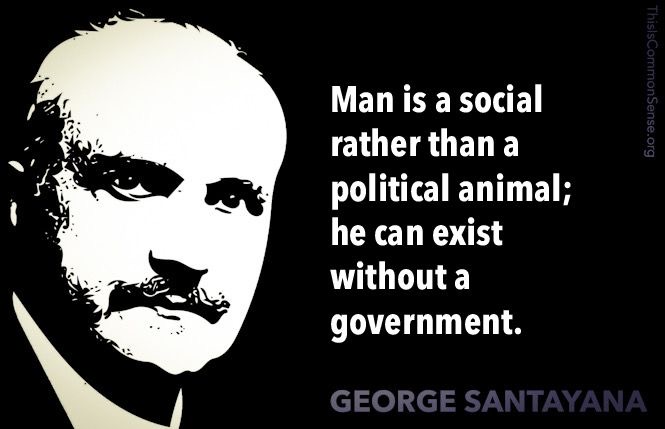
Man is a social rather than a political animal; he can exist without a government.

George Santayana, Obiter Scripta (1936).

Categories
Today

FDR Praised in Italy

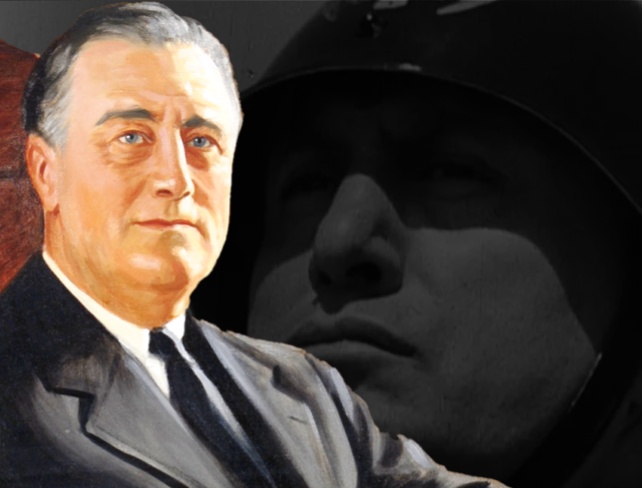
On March 4, 1933, newly inaugurated President Franklin Delano Roosevelt gave his customary address. The speech “brought a decidedly favorable reaction in the Italian press, especially his declaration that he will seek extraordinary powers to deal with the situation if necessary,” wrote The New York Times the next day. The Times went on to quote “Premier Mussolini’s Milan newspaper, Popolo d’Italia,” which stated that “The American people place their hope in decisive action by the new President and his speech truly satisfied public opinion.”

The Italian newspaper “said the bank moratorium in New York contributed perhaps more than any other factor in convincing even the most reluctant of the urgent necessity for the whole nation to rally around Mr. Roosevelt.” A Turin paper succinctly stated its appreciation for FDR: “Mr. Roosevelt is following the great principles established by the Fascist revolution and the genius of Il Duce.”


On March 4, 1789, the first bicameral Congress of the United States met in New York, New York, in accordance with the new Constitution.

Two years later on the same date, Vermont was admitted as the fourteenth state of the union.

In a twist in World War II allegiances, Finland declared war on Nazi Germany on March 4, 1945, beginning the Lapland War.

Categories
deficits and debt free trade & free markets national politics & policies too much government

Inflation Evasion…Depression

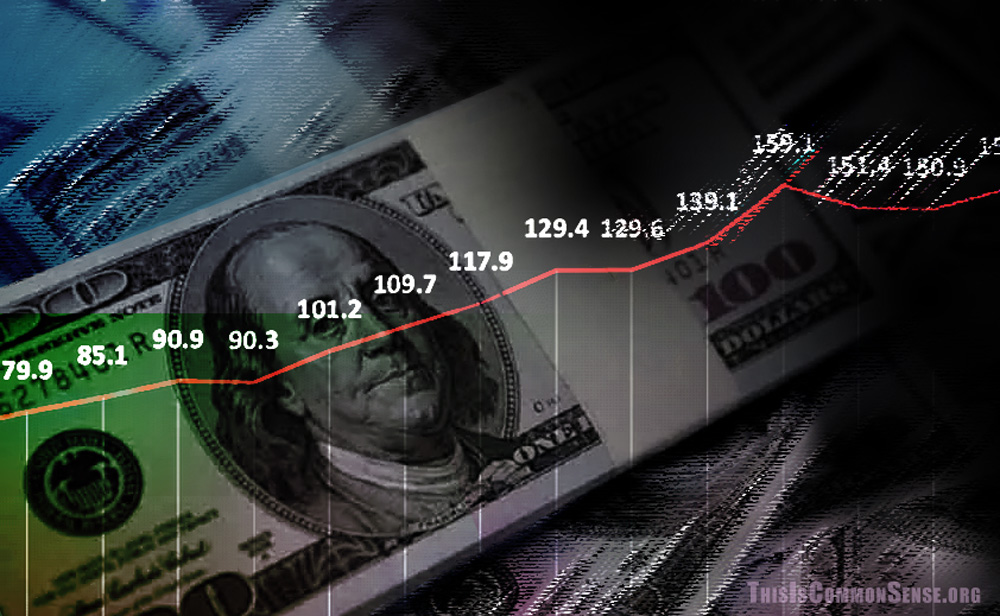
Going into the lockdowns and bailouts, a consensus of politicians and their court wizards, the economists, had belittled the specter of inflation.

Nowadays, when folks use the term “inflation,” they really mean upward movement on the consumer price index (CPI). Some economists, who have a sense of history,* reserve the word not for price level increases, but for increases in the supply of money. And the two concepts are tightly linked. 

But a whole lot of people seek to blame CPI rate increases on anything but monetary policy, as Veronique de Rugy notes in an article at The American Spectator.

“Theories for why we shouldn’t worry abounded,” de Rugy writes. “It was caused by a base-effect price increase, supply-chain restraints, a drought in Taiwan — everything but the Fed’s expansionary policies and Congress’ overspending, in part because some of these experts had cheered for these actions all along.”

And then inflation came back.

Big time.

While expressing some humility and an unwillingness to make predictions, de Rugy insists that “the amount of money printed, borrowed, and spent during the last few years led to a one-time price level rise, and we may have a way to go until we are done.” 

She also insists that the Pollyanna phrase “transitory inflation” is no comfort: “inflation was always going to be transitory. Even the inflation of the 1970s ended in the ’80s. What mattered is whether transitory inflation meant a few weeks, months, or years.”

And, I cautiously add, how de-stabilizing it is. Consumers rightly worry about rising prices, but inflation doesn’t hit all sectors the same. Credit expansion leads to imbalances that are hard to correct. 

And the correction is “depression.”

This is Common Sense. I’m Paul Jacob.


* Including the history of their own discipline. Readers of Austrian economists such asF.A. Hayek get a better sense of past debates than from other economists.

PDF for printing